Skip to content
DevMeme
2387 of 7435
The Inevitable Undeletion Request
Stakeholders Clients Post #2653, on Jan 22, 2021 in TG

The Inevitable Undeletion Request

Why is this Stakeholders Clients meme funny?

Level 1: Make Up Your Mind

Imagine you spent all afternoon building a big LEGO castle with your friend. Then your friend says, “We don’t need this castle anymore, let’s tear it down.” So you sigh and help break it apart, putting all the LEGO pieces back in the box. But the very next day, that same friend suddenly says, “Actually, I really miss the castle — can you build it again?” You would probably feel really frustrated, right? You only destroyed it because your friend insisted it wasn’t needed, and now they changed their mind. You might not actually punch a hole in the wall like a cartoon character, but you’d definitely want to stomp your foot and yell, “Make up your mind!” This meme is showing that exact feeling in a software project: the developer is upset because they had to undo their work and then redo it, all because someone couldn’t decide what they really wanted.

Level 2: Feature Flip-Flop

In simpler terms, this meme is about a client suddenly changing their mind and causing extra work for the developer. The client (or stakeholder) is the person who requested the software and its features. Originally, the client told the team to drop a certain feature from the project, saying something like “We will never use it.” A feature here means a specific function or capability in the software (for example, a report generator, a search bar, or any tool the software provides). The developers listened to the client and removed that part of the code. Removing a feature isn’t done on a whim; it involves deleting code, updating documentation, maybe altering the user interface, and generally cleaning up any traces of that functionality. Everyone moves on, thinking it’s gone for good.

However, later on, the client decides they do want that feature after all. This kind of back-and-forth request is often jokingly called a feature flip-flop or an instance of scope creep. Scope creep means the project’s scope (the agreed-upon list of features and requirements) keeps changing over time, usually by adding more tasks. It’s a common project management headache. Here it’s a bit ironic: instead of adding a brand-new requirement out of nowhere, the client is asking to put back something that was in the plan, then taken out, and now back in. It still counts as scope creep (or maybe “scope boomerang” in this case) because the plan changed unpredictably and the team has to scramble to adjust.

Let’s break down why the developer is so frustrated in this scenario:

  1. “We’ll never use it” – Removal: The client confidently said that the feature was unnecessary. In software development, there’s a guideline called YAGNI – “You Aren’t Gonna Need It.” This principle encourages teams not to build or keep functionality that the customer says they won’t need, to save time and reduce complexity. Following this advice, the developer likely felt it was both safe and smart to delete the feature’s code to keep the project lean and focused on what’s truly needed.
  2. “Actually, we need it” – Reversal: Now the client basically says “Oops, we do need that after all.” The developer has to bring that feature back into the project. But the code for it was deleted! Thankfully, developers use version control systems (like Git) to manage their code. Version control is like a time machine for code — it tracks every change to the codebase. Using Git, a developer can dig through the project history to find the old code for the feature that was removed. It’s not gone forever; it’s stored in past commits (records of changes). However, retrieving it isn’t as simple as copy-paste. The rest of the software may have changed in the meantime — other new features were added, or the underlying system was refactored. The old code might no longer plug in perfectly. So the developer must spend time carefully merging it back in or even rewriting parts of it to make it work with the current version of the app.
  3. Double work and wasted effort: The team already spent time building the feature originally, then spent more time taking it out when told it wasn’t needed. Now they have to spend time yet again to rebuild or restore it. That’s like doing the same job two or three times. In a fast-paced Agile project environment (Agile is a way of managing software projects that emphasizes flexibility and frequent reassessment of priorities), changes are normal – but even in Agile you try to avoid undoing and redoing the exact same work. It feels like running in circles. The developer’s reaction in the meme (literally punching a hole in the wall) is obviously exaggerated for comedy, but it represents that deep frustration. In reality, a developer in this situation might vent to a coworker, roll their eyes, or bang their head on the desk (figuratively) at having to redo work that they thought was settled.
  4. Communication breakdown: This situation also highlights a communication and planning issue. Perhaps the client didn’t realize the value of the feature until after it was gone, or maybe their needs genuinely changed (for example, their end-users or boss suddenly asked for that capability). Requirements can change with new information; that’s understandable. But when the client said “never” so definitively, the developers took them at their word. It’s possible the team even double-checked: “Are you sure you’ll never want this?” If the answer was an emphatic “Yes, remove it,” then having the client reverse course later feels exasperating. It’s as if the stakeholder set an expectation (“we absolutely don’t need this”) and then completely changed direction. That kind of flip-flop can shake the team’s confidence in the stakeholder’s decisions. It also shows why requirements change management is important — there need to be discussions or processes when making significant changes, to avoid misunderstandings and wasted work.

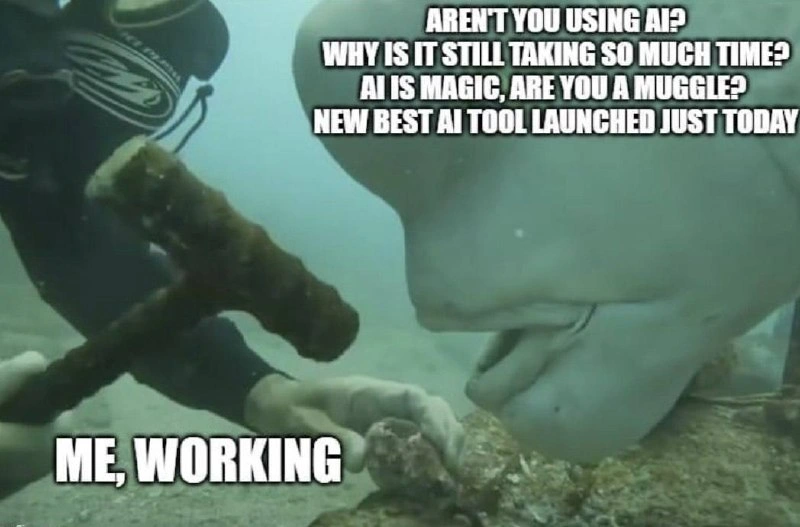
Now, about the image itself: it shows a young anime-style girl at her desk with a laptop. On the laptop is a sticker with a steaming coffee cup logo – likely a fun nod to how developers often run on coffee (and it’s also reminiscent of the Java programming language logo, which is a coffee cup). The girl’s face is blurred out, which is a common meme style to either anonymize a character or just emphasize her dramatic reaction. When the client asks for the deleted feature back, the character’s frustration is depicted by her smashing her fist backward through the wall behind her. The wall is left with a circular spiderweb of cracks, showing just how “explosive” her anger is. Of course, in real life developers don’t punch walls when clients change their minds (at least, we hope not!). The extreme action is there to make us laugh and to communicate the internal feeling of aggravation in a silly, over-the-top visual way. It’s taking a relatable situation and cranking it up to cartoon levels of drama for humor.

Overall, this meme is a form of project management humor. It highlights how unpredictable stakeholder expectations can cause headaches in a project. Even though Agile teams are used to change, nobody likes having their work thrown away and then having to redo it because of a sudden “actually, never mind” from the client. It’s relatable to developers (and anyone who’s had a boss or client change their mind) because it captures that “Are you kidding me?!” moment in a single image. The phrase “Make up your mind!” perfectly encapsulates what the developer is feeling. In the end, the meme is funny because it uses an exaggerated anime punch to vent a very real frustration: being told to undo something and later being asked to rebuild it. It’s a lighthearted reminder to stakeholders to be careful with saying “never,” and a wink to developers that says, “We’ve been there too, and it’s okay to feel frustrated when it happens.”

Level 3: Feature Necromancy

Every seasoned developer has faced this feature resurrection horror story. A client or stakeholder firmly declares, “We will never use this feature,” effectively ordering the development team to purge it from the codebase. Dutifully, the developers comply — applying the YAGNI principle (“You Aren’t Gonna Need It”) to avoid maintaining unnecessary code. For a while, the project proceeds leaner and cleaner. Then comes the twist: out of nowhere, that same client demands the very feature back, as if summoning a zombie from the code graveyard.

Client: “Remove Feature X; we’ll never need it.”
Two sprints later...
Client: “Actually, can we have Feature X back? It’s critical now.”

This meme nails the absurdity of such requirements flip-flops. The anime-style developer’s reaction — punching straight through a wall — is an exaggeration of the real-world frustration and unspoken developer burnout that can result from constant back-and-forth demands. It humorously visualizes the urge to break something when months of careful work are invalidated by a sudden change of heart. The web of wall-cracks behind her is like the cracks in a dev’s sanity after dealing with chronic scope creep.

From a senior dev perspective, this scenario is painfully familiar. We recognize the pattern:

  • Scope Creep Strikes Back: Initially, the client insisted on trimming scope (the “We’ll never use it” edict) — likely to save time or budget. But inevitably, new business needs or second thoughts creep in. The once-axed capability becomes “must-have” after all. This unpredictable expansion of requirements after an earlier reduction is a whiplash-inducing form of scope creep.
  • Stakeholder Expectation Whiplash: Non-technical stakeholders often underestimate the cost of reversing decisions. They might assume if a feature existed once, it can be magically resurrected at the snap of a finger. In reality, bringing back a deleted feature is often as complex as implementing it from scratch (if not more, due to integration conflicts with all the new changes since). The developer in the meme isn’t just angry about doing extra work; they’re also grappling with the knowledge that this rework could’ve been avoided with better foresight.
  • YAGNI Gone Wrong: The YAGNI principle is a cornerstone of Agile development and Extreme Programming. We avoid building or keeping features “just in case” to keep the system simple. But YAGNI assumes that the deciders truly know what won’t be needed. Here that assumption broke down. The team followed best practice by removing dead code, only to have that best practice bite them when the requirement boomeranged back. It’s a cruel irony: the one time you actually delete unused code, someone immediately wants it again. As a result, the dev now has to perform Git archaeology — digging through version control history to unearth the old implementation (and praying it still works with the current codebase).
  • Technical Thrash and Debt: Each major back-and-forth decision introduces risk and toil. Perhaps the original code was not just deleted but replaced or refactored away. Under pressure to revive it, the team might hack it back in hastily, potentially introducing bugs or ugly workarounds – a form of technical debt. The developer’s fury is partly knowing that “undoing the undo” will make the codebase messier or require late nights to do properly. It’s a lose-lose: either waste more hours rebuilding a supposedly “unneeded” feature, or rush a quick fix and pay in maintenance nightmares later.

In practice, teams try to mitigate this whiplash. A wary dev might hide the functionality behind a feature flag (toggling it off rather than fully deleting it) if they suspect the client’s conviction might waver. This behind-the-scenes compromise violates pure YAGNI philosophy (since the code lingers in a deactivated state), but it can save you from having to rewrite everything when the stakeholder inevitably says, “About that feature… we need it after all.” Still, not every situation allows this; sometimes carrying unused code is too costly or risky. Therefore, once a client says “axe it”, you axe it and hope they truly mean it. When they don’t, well, cue the developer frustration — symbolized perfectly by our wall-punching heroine in the meme.

The humor here resonates with developers because it’s an exaggerated replay of real meetings and email threads we’ve all experienced. It satirizes the unrealistic expectation that software is infinitely malleable without consequence. Sure, Agile methodology encourages embracing change, but it doesn’t mean changes come free of charge. The project management punchline lies in how the stakeholder’s own words (“never use it”) come back to haunt the project. It’s a relatable “I told you so” moment: internally, the dev team might be thinking, “We suspected this would happen, but you insisted on removal, and now we’re paying the price.”

In summary, the meme uses a dramatic anime visual to highlight a very real tech-world absurdity. The combination of the coffee-cup laptop sticker (a nod to Java or just to developers’ love of coffee) and a mild-mannered character suddenly going ballistic on an office wall illustrates the jarring contrast between professional obedience (“Sure, we’ll remove the feature as you wish”) and private outrage (“I can’t believe we have to rebuild it!”). It’s cathartic comedy for any engineer who’s had to retrieve a deleted feature on demand, and a tongue-in-cheek cautionary tale about poor requirements change management turning into self-inflicted pain.

Description

This two-part meme captures a classic developer frustration. The top text reads, 'When the client asks for the feature that you deleted from the project, because they said "We will never use it"'. Below the text is an image of a female anime character with brown hair in a ponytail, sitting at a desk with a laptop. She has a wide-eyed, panicked expression and a strained smile, while simultaneously punching the wall behind her with enough force to cause it to shatter and crack dramatically. The image powerfully visualizes the internal rage and despair a developer feels when a client reverses a major decision. The scenario is a common one: a stakeholder confidently declares a feature useless, the developer deletes the corresponding code to clean up the project, and then, inevitably, the stakeholder changes their mind and asks for the feature back. This meme resonates with experienced developers who understand that deleting code is easy, but restoring it (and its dependencies) can be a significant, unforeseen task, highlighting the importance of robust version control and the communication gap between developers and clients
Comments

12
Anonymous ★ Top Pick This is why my commit message for deleting a feature is 'temporary code removal' and I don't squash the branch for at least two sprints
  1. Anonymous ★ Top Pick

    This is why my commit message for deleting a feature is 'temporary code removal' and I don't squash the branch for at least two sprints

  2. Anonymous

    Stakeholder: “We actually need that feature we killed during the YAGNI purge.” Me: “No problem - let me just necromance commit 3f4d7c from 2019, thread it through today’s microservice mesh, and pray the schema migrations don’t reenact Pompeii.”

  3. Anonymous

    The only thing more permanent than a 'temporary workaround' is a feature the client swore they'd never need - right up until the moment you finish purging it from version control, including all the branches where it might have survived

  4. Anonymous

    This is why senior engineers maintain a 'graveyard branch' with a 90-day retention policy for 'definitely unused' features. Because in software development, 'we'll never use it' has the same energy as 'it works on my machine' - technically true until the moment it catastrophically isn't. The real pro move? Implementing feature flags from day one, so when the client inevitably asks for that 'never needed' functionality at 4:45 PM on Friday, you're just toggling a boolean instead of archaeology-ing through six months of git history while your wall develops structural integrity issues

  5. Anonymous

    YAGNI: the principle clients treat as a suggestion, not a contract

  6. Anonymous

    Schrödinger’s requirement: YAGNI in grooming, P0 the moment git gc finally prunes the branch

  7. Anonymous

    The fastest way to summon a P0 is a PR titled “remove unused feature” - keep it behind a flag and a deprecation window, or watch requirements achieve instant consistency the moment you merge

  8. @serghei_k 5y

    But Git remembers everything 🤷‍♂️

    1. @mr_oz 5y

      💪

  9. @ilalex 5y

    Use feature flags, Luke

    1. @zunkree 5y

      and support unnecessary code, that is so simple to keep it up to date

  10. M 5y

    That unfortunately happened to me once!!!

Use J and K for navigation