Skip to content
DevMeme
5368 of 7435
ChatGPT flags an “Ubuntu leak,” senior devs spot the meta-hallucination instantly
AI ML Post #5887, on Feb 13, 2024 in TG

ChatGPT flags an “Ubuntu leak,” senior devs spot the meta-hallucination instantly

Why is this AI ML meme funny?

Level 1: No Secret at All

Imagine you have a big library full of books that anyone can read. Now picture a helper robot that is writing a report about “stolen books,” and it lists a book that has been sitting openly on the library shelf the whole time. Pretty silly, right? You’d probably giggle and say, “How can it be stolen if everyone can already read it?” That’s exactly what happened here. The AI (like a robot friend that talks) claimed a “secret” was leaked from Ubuntu Linux – but Ubuntu’s code was never a secret at all! It’s like the AI thought a publicly available open thing was a private secret. The reason this is funny is the same as if someone loudly announced, “I found out a secret recipe!” when that recipe was actually printed on the restaurant’s menu for all to see. 🕵️‍♂️🤦 The more experienced people are laughing because they already knew it wasn’t secret. In simple terms: the AI made a goofy mistake, telling us something was “leaked” when it was really available to everybody from the start.

Level 2: Leaking an Open Secret

Let’s break down the terms and scene for those newer to these concepts. ChatGPT is an AI program – essentially a smart chatbot – that tries to answer questions and list information. It learns from tons of text data. Sometimes it gets things right, but other times it might hallucinate, meaning it will confidently give an answer that isn’t actually true (because it doesn’t truly know facts, it’s just really good at guessing patterns). This meme shows an example of that happening in a funny way.

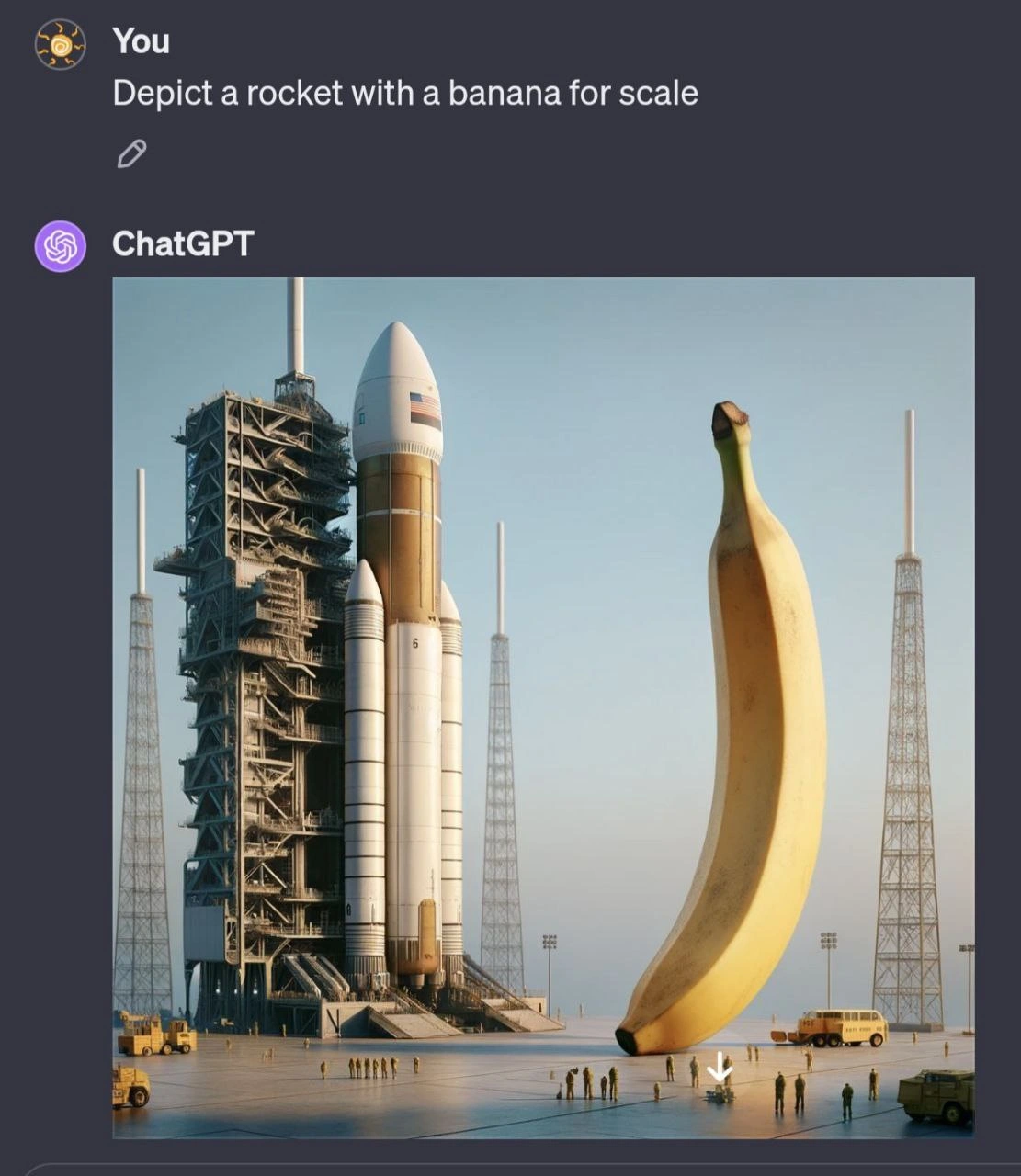
The screenshot is ChatGPT in dark mode listing historical instances of source code leaks. A “source code leak” means some software’s secret code was released without permission. Companies guard their important code (like a video game’s code or an operating system’s internals) because they don’t want competitors or hackers seeing it. When such private code leaks, it’s like when a secret recipe gets out – it’s big news and often embarrassing or risky for the company. For example, the list’s first item mentions Sony PlayStation 3 firmware in 2011. Firmware is the software running the PlayStation console. Sony definitely didn’t want that code public, but hackers obtained and shared it. That leak made it much easier for people to jailbreak the PS3 (modify it to run unofficial games or software). So item 1 is a genuine case of a leak: closed, proprietary code escaping into the wild.

Now item 2 on ChatGPT’s list is Ubuntu Linux (Canonical, 2007), claiming parts of Ubuntu’s source code were leaked and this raised concerns in the open-source community. This is where the record-scratch moment happens. Ubuntu Linux is an open-source operating system. Open-source means the source code is publicly available by design – the developers (Canonical is the company behind Ubuntu) want people to see, use, and collaborate on the code. Ubuntu’s code isn’t locked away or secret; anyone could download it in 2007 (just as they can today) quite legally. In fact, Ubuntu is distributed under the GNU GPL license, which requires that the source code be available to users. So you can’t “leak” something that’s not secret! It would be like saying “someone leaked Wikipedia” – but Wikipedia is a public website; you can’t leak what everyone already has access to. The open-source community wouldn’t be concerned about seeing Ubuntu code online; they put it there!

The meme highlights this silly mix-up by drawing a big red outline around the Ubuntu entry. It’s as if an instructor marked it with red pen saying, “This one is wrong.” What happened is ChatGPT made a mistake: a little AI blooper. It likely knew “Ubuntu…2007…source code” from something it read, and mixed it into a story about a leak, even though that makes no sense. This is a prime example of an AI_limitation where the model doesn’t have true understanding. It was tasked to produce 25 examples, and not wanting to disappoint, it invented one that sounds superficially plausible. But to anyone who knows what OpenSource means, it’s immediately clear that this entry is bogus.

To put it simply, ChatGPT confused open-source code with closed-source code. Here’s a comparison to make it clearer:

Code Type What It Means Can it “Leak”?
Closed-Source Code
(Proprietary)
Code is kept secret by a company. Only the company’s developers have it. Example: Sony’s PS3 firmware. Yes – if someone steals or shares it without permission, that’s a leak (a big problem!).
Open-Source Code
(Public/GPL)
Code is openly shared for anyone to view, use, or modify. Example: Ubuntu Linux code. Not really – it’s already available to everyone by design, so there’s nothing secret to leak.

In the table above, Ubuntu clearly falls into the Open-Source column. Putting Ubuntu on a “leaks” list is like reporting a freely available textbook as “stolen.” 😅 It just doesn’t add up. The meme’s joke is exactly that: ChatGPT reported a non-issue as if it were a dramatic leak. For a junior developer or someone new to these terms, the takeaway is: always double-check AI-generated answers, especially when something sounds off. In tech (and especially in OpenSourceCulture), context matters. Here the context is that Ubuntu’s code is public. If you knew that, you’d spot the error instantly. If you didn’t, you might think “Wow, I never heard Ubuntu had a leak” – and you’d be walking away with misinformation.

So, this image is also a gentle teaching moment. It shows how an AI can fumble facts: a bug in its output, so to speak. Large language models don’t truly understand the difference between public info and private info unless it was very explicitly spelled out in their training. They might just mash up credible-sounding phrases. Developers categorize this under AI trust issues – you can’t blindly trust an answer just because it’s neatly formatted or confidently stated. Sometimes the answer is a harmless mix-up like this one; other times it could be more serious. The good news is that a bit of engineering knowledge (like knowing what “open-source” means) can help you filter out these errors. As a new dev, you learn to be skeptical of any one source (even a smart AI) until you confirm the details. And if something seems fishy – like “leaked Ubuntu code” – it probably is fishy! The experienced folks are laughing here because the mistake is so obvious to them. Stick around the tech world and soon you’ll get these jokes too, as you accumulate knowledge about how things like open source actually work.

Level 3: One of These Is Not a Leak

To a senior developer, the humor jumps out immediately: in the screenshot, ChatGPT is listing “instances where source code was leaked,” and it includes something that blatantly doesn’t belong. We have a classic case of “one of these is not like the others.” Item 1 on the list (the Sony PlayStation 3 firmware leak, 2011) is a legitimate example – a piece of proprietary console software that really did slip out, enabling all sorts of jailbreak hacks. That entry makes sense. But then item 2 claims an Ubuntu Linux (Canonical, 2007) source code leak. Cue the raised eyebrows. Ubuntu’s source code is – and always has been – open source, living out in the open on public repositories. Including it in a list of “leaks” is an absurdity that only an uninformed bot (or a very confused human) would make. It’s the kind of answer that makes experienced engineers smirk and go, “Ah, the AI has no idea what it’s talking about here.” It’s essentially an AI gpt_answer_blunder. The meme even visually highlights this line with a bright red rectangle, as if drawing a big red pen around a wrong answer on a quiz.

Why is this funny to developers? It’s playing on the contrast between proprietary code and open-source code. In the software world, a source code leak usually means some secret, internal code (say, Microsoft Windows or a closed game engine) got out without permission – a big deal leading to security patches, legal action, or at least a lot of drama. By contrast, Ubuntu is a popular Linux distribution whose code is freely available under the GPL (General Public License). Anyone can legally obtain, inspect, or modify it. So the notion of “leaked Ubuntu code” is like talking about a bank heist at an open vault: it’s a non-event. The open-source community would not be “raising concerns” if Ubuntu’s code appeared online in 2007 – they’d likely be saying, “Uh, you mean the code we upload ourselves to Launchpad or GitHub?” The senior devs in the meme’s title spot this meta-irony instantly: ChatGPT is treating a well-known OpenSourceCulture fact as if it were a clandestine secret. It’s a textbook example of AIHumor in tech – the AI confidently delivers a fish-out-of-water answer, and those in the know catch the joke.

This also subtly satirizes the current state of AI trust in programming circles. Many veterans have learned to be a bit cynical (or at least AI_limitations-aware) about tools like ChatGPT. Sure, these models are brilliant at refactoring code or explaining documentation, but when it comes to factual accuracy, you often hear the refrain: “Double-check everything.” Here, the model’s lack of real-world context turned into a comical mistake. It flags an “Ubuntu leak” as if reporting a serious breach, but in reality it’s announcing a non-issue. It’s as if a junior developer sprinted into the office to report, “Guys, our public Git repo is on the internet!” – a facepalm moment that would be met with chuckles and gentle correction. The meme captures that exact facepalm flavor. In practical terms, this is a reminder of an important bug in current AI assistants: they can and do present falsehoods with a straight face. That’s why seasoned devs treat outputs from an LLM the same way they treat Stack Overflow snippets – useful hints, but trust issues abound until you verify the details yourself. And if an answer claims something bizarre (like an open project being leaked), you know to raise the BS alarm. As the saying goes in tech circles, “garbage in, garbage out” – or in this case, hallucination in, laughters out. The community-wide shared experience of catching AI mistakes is part of why this meme resonates: it’s a nod to everyone who has yelled at their screen, “No, that’s just wrong – Ubuntu is open source, you silly AI!” and then shared the anecdote as a cautionary tale.

Level 4: The Stochastic Parrot Paradox

Deep under the hood, ChatGPT is a large language model (LLM) that generates text by predicting the most likely next words based on patterns in its training data. It doesn’t truly “know” facts the way a database does – instead, it’s essentially a sophisticated autocomplete. This design leads to the hallucination phenomenon: the AI can produce information that sounds perfectly plausible, yet is entirely fabricated. In our meme’s case, the model confidently listed an “Ubuntu source code leak (2007)” because it fit the pattern of a source-code breach, not because such an event actually occurred. This is often called the stochastic parrot problem in AI research – the model fluently repeats and recombines bits of training data without understanding. The paradox is that AIGeneratedContent can be articulate and authoritative while being utterly wrong. Here, the token sequence “Ubuntu” + “source code” + “were leaked” was statistically probable given the prompt, so the model ran with it. There’s no malicious intent or even awareness; the transformer architecture isn’t cross-checking an encyclopedia of open-source projects. It’s prediction, not verification. The fundamental limitation is epistemic: the AI lacks a built-in fact-check or a concept of real-world context like “Ubuntu is open-source (public), so it can’t be leaked.” This example beautifully exposes the reliability challenges of LLMs in technical domains – the AI’s neural network weights have entangled OpenSource facts and fiction, and without an external truth filter, it will cheerfully output a polite nonsense answer. For AI/ML engineers, this is a classic illustration of why factual hallucination_fail occurs: the model is optimizing for linguistic realism, not factual accuracy. Ironically, the more data it’s trained on, the more confident and detailed its confabulations can become. To experienced eyes, this looks like a meta-bug in the system – the AI’s own answer is flagging a scenario that by definition can’t exist, a kind of self-contradictory glitch. Researchers in AI_ML are actively exploring solutions (like grounding the model with real-time data or strict knowledge bases) to prevent these blunders. Until then, as this meme highlights, even an advanced AI can fall prey to a meta-hallucination, where it invents a leak about something that was never private to begin with.

Description

Dark-theme ChatGPT window shows the assistant saying, “Here are 25 additional instances where source code was leaked:” followed by a numbered list. Item 1 reads, “Sony PlayStation 3 (Sony, 2011): The PS3’s firmware was leaked, leading to a surge in jailbreaking activities.” Item 2 reads, “Ubuntu Linux (Canonical, 2007): Parts of the Ubuntu source code were leaked, raising concerns in the open-source community.” The second line is outlined with a bright red rectangular highlight, visually calling out the irony that Ubuntu’s *already-public* GPL code cannot truly be “leaked.” For experienced engineers, the image wryly illustrates large-language-model hallucinations, the difference between proprietary and open-source codebases, and the reliability challenges of AI-generated content in technical domains
Comments

6
Anonymous ★ Top Pick It’s the first time I’ve seen GPL-licensed code described as a breach - clearly the model hasn’t run ‘sudo apt-get update-its-facts.’
  1. Anonymous ★ Top Pick

    It’s the first time I’ve seen GPL-licensed code described as a breach - clearly the model hasn’t run ‘sudo apt-get update-its-facts.’

  2. Anonymous

    "Breaking: Ubuntu source code leaked to the public via dangerous attack vectors known as 'apt-get source' and 'git clone'. Canonical frantically trying to contain the damage by... continuing to host it on GitHub."

  3. Anonymous

    ChatGPT just discovered that Ubuntu 'leaked' its source code in 2007 - apparently someone forgot to tell the AI that GPL-licensed software being publicly available isn't a security incident, it's literally the entire point. Next up: breaking news that GitHub is hosting millions of leaked repositories

  4. Anonymous

    Only an LLM could classify ‘git clone ubuntu/ubuntu’ as data exfiltration with a CVSS 9.8

  5. Anonymous

    Ubuntu source leak in 2007? Open source's way of saying 'sync mirrors without asking permission first.'

  6. Anonymous

    Only an LLM could escalate 'git clone ubuntu' into a P1 security incident

Use J and K for navigation