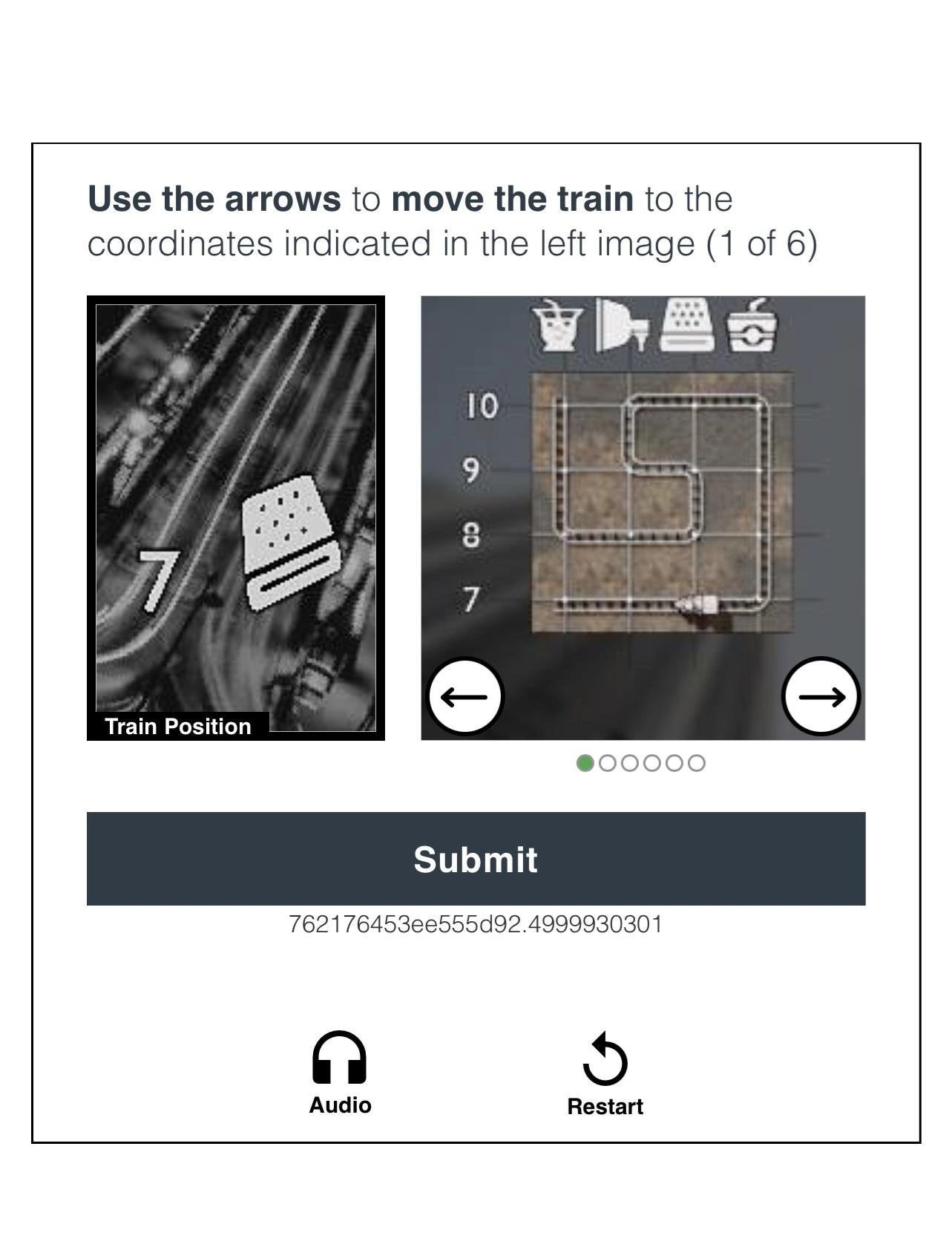
CAPTCHA demands pathfinding skills worthy of a senior gameplay engineer
Why is this Security meme funny?
Level 1: The Login Maze
Imagine you want to open a door, but before you can, someone hands you a toy train set and says, “Prove you’re not a bad guy by steering this little train through a maze to that spot over there. And oh, you’ll have to do it six times!” 😅 Sounds silly, right? That’s exactly the joke here. Logging into an account online is supposed to be quick, like unlocking a door with a key. But in this picture, the lock has turned into a whole puzzle game. It’s like if every time you tried to log in to your favorite game or email, you first had to play a mini train game perfectly. The reason this is funny is because it’s so over-the-top: nobody expects to need video game skills just to sign in! It’s a bit like a teacher making you solve a riddle at the classroom door before you can enter – after the first time it might be kinda fun, but doing it every single day would be frustrating. So the meme is joking that some security tests on websites have become as complicated as a puzzle, making people feel exasperated. In simple terms, it’s funny because logging in shouldn’t feel like beating a level in a game, but here it does – and we can all laugh at how ridiculous that idea is.
Level 2: Security vs Usability Showdown
In plainer terms, this meme is poking fun at an overly complicated CAPTCHA challenge. A CAPTCHA (Completely Automated Public Turing test to tell Computers and Humans Apart) is that little test like “select all the crosswalks” or “type the wavy letters” you often get when logging in or signing up, meant to verify you’re a real person and not a bot. Here, instead of the usual one-step test, the CAPTCHA has become a six-step puzzle game. The instruction says: “Use the arrows to move the train to the coordinates indicated in the left image (1 of 6).” On the left side of the captcha, there’s a small blurry image labeled "Train Position" with a number 7 and a tiny train icon. On the right side, there’s a grid (10×10 squares) drawn over what looks like train tracks, kind of like a little map or maze. You’ve got big arrow buttons to presumably move a train icon around on that grid. There are even random household-item icons along the top (perhaps just decorative or indicating different puzzle themes for each level). Below the grid, you see six little dots (like a progress bar for steps; the first dot is filled in, meaning you’re on step 1 out of 6). Then there’s a big Submit button, and underneath it a long weird string of letters and numbers (762176453ee555d92.4999930301) which looks like some tracking or session ID for the CAPTCHA. At the bottom, you notice an Audio icon (so you could get an audio-based challenge if the visual one is too hard or if you have accessibility needs) and a Restart icon (to reload a new challenge if you’re stuck or failed). In short, the whole thing looks like a mini video game you have to beat before you log in.
Now, why is this funny (or painful)? Because it’s a prime example of Security vs. Usability. Security-wise, websites use CAPTCHAs to block automated programs (bots) that might try to break in or spam. Usability-wise (which is about the user experience, often abbreviated UX), a login should be quick and simple for real users. This meme shows a total UX failure: the CAPTCHA is so over-the-top that it hurts the user experience. It’s basically a usability_nightmare. Imagine the average person confronted with this: “Huh, I have to play train conductor and navigate to grid coordinate 7... and do this six times?!” Many users would be confused or annoyed (it’s not even immediately clear what the coordinate system is or what moving the train accomplishes until you try it).
For a developer or anyone in tech, there’s extra humor because of the reference to a "senior gameplay engineer." That’s someone who designs or programs complex game mechanics (like pathfinding for characters) in video games. Suggesting you need that level of skill just to pass a login test is a tongue-in-cheek way to say the CAPTCHA is ridiculously over-engineered. It’s like requiring a pilot’s license to fly a paper airplane. The term overengineered_bot_check fits perfectly: it means the anti-bot measure (bot check) is far more elaborate than necessary. A normal CAPTCHA might have been a single click or a quick puzzle, but this one is multi-step and gamified to an extreme. It turns the login flow (the process of logging in) into a sort of challenge gauntlet, which is considered an anti-pattern (a bad practice) in design because it creates friction for legitimate users.
The categories and tags attached (Security, UX/UI, DeveloperExperience) all point to the clash demonstrated here. Security is about keeping the site safe (here, by making sure only real humans get through). UX/UI is about designing something user-friendly (here, the UI has arrows and grids and multiple pages – not very friendly for a quick login). And DeveloperExperience_DX or developer frustration refers to how developers feel about this. Developers are users, too, and often have to log into many systems; encountering something like this, they’ll likely roll their eyes or tear their hair out. Some might sarcastically joke, “Why not ask me to solve a Rubik’s cube while you’re at it?” We recognize a login_flow_antipattern when we see one. It’s funny in a comic sense, but also a bit ominous – if every website made us do this, getting anything done would be like beating a video game level. So this meme is essentially a jokey warning: in trying to keep bots out, don’t make the humans wish they’d never visited your site!
Level 3: Gamified Authentication Gauntlet
This meme strikes a chord with developers because it satirizes a growing Security vs Usability problem: the tendency to overengineer bot checks to the point of absurdity. The CAPTCHA here isn’t a simple “I am not a robot” checkbox or a one-and-done image click; it’s a full-fledged mini-game, a multi_step_captcha saga with six levels of puzzle-solving. Picture a weary user exclaiming, “I have to beat six levels just to log in?!” It’s humorous precisely because it feels like a login_flow_antipattern turned up to eleven. We’ve all dealt with those frustrating “‘Select all squares with traffic lights.’ Now select all squares with buses. Great, one more round…” moments. This meme cranks that frustration up to a heroic quest: use arrow keys to navigate a train through a maze. It’s the ultimate usability_nightmare — turning a quick authentication step into a protracted ordeal.
From a senior developer’s perspective, the humor also stems from recognizing real-world patterns taken to the extreme. We know why CAPTCHAs get tougher over time: bots and scripts keep getting smarter. There’s an ongoing cat-and-mouse game between security engineers and attackers. But here the pendulum has swung so far to the security side that the user experience is sacrificed on the altar of paranoia. It’s a gamified_auth_flow gone wild. Instead of a short, mildly annoying check, it’s essentially asking users to play an RTS-style pathfinding mission before they can access their email or dashboard. Experienced devs will recall horror stories of such UX failures: login systems that drove users away because they were too cumbersome. This one feels like the love-child of a paranoid security team and a game developer — an overzealous solution where a simple one would do.
The DeveloperFrustration is real here. Imagine being on-call at 3 AM, needing to quickly log into a server, and being greeted by “Level 1 of 6: Guide the train to coordinate 7.” It’s the stuff of on-call nightmares. And who do you blame? The poor engineer who implemented this likely had good intentions (or marching orders to stop a bot army at all costs). Perhaps a rash of spam or brute-force attacks led someone to say, “Let’s make sure only real humans get through, no matter what!” But the result is a login flow antipattern that punishes legitimate users more than deter actual bots. In meetings, any seasoned UX designer or Developer Experience advocate would scream, “This is a usability disaster!” Six interactive steps before pressing Submit is basically a denial-of-service attack on the user’s patience. It’s funny in hindsight because it’s true: sometimes our industry’s solutions to bots and spam can feel like using a flamethrower to kill a fly, burning the house down in the process. The meme perfectly captures that absurd gap — engineers shaking their heads at how a simple authentication check turned into a gameified obstacle course. It’s a comedic reminder that just because we can add more security puzzles, doesn’t mean we should. In practice, effective security finds a balance; here the balance is so off-kilter that logging in starts to resemble a boss fight in a video game. “One of 6” puzzles to go? Security has officially driven the train of user experience off the rails, and every dev who’s wrestled with onerous login procedures is laughing (and crying) along.
Level 4: Turing Test on Tracks
At its core, this meme highlights an absurd escalation in CAPTCHA complexity, effectively turning a simple Turing test into a full-blown algorithmic challenge. CAPTCHAs are meant to be Human Interactive Proofs—tasks easy for humans but hard for bots. Traditionally, this meant identifying distorted text or selecting images of traffic lights. Here, though, the challenge is essentially a pathfinding problem on a grid, something a computer science grad might solve with Dijkstra’s or the A* search algorithm. It’s as if the system is outsourcing a classic graph traversal algorithm to the user’s brain. The irony? Pathfinding is a task computers excel at; a well-written script could calculate the shortest rail route in milliseconds, while a human might spend minutes clicking arrow buttons through trial-and-error. This inverted difficulty (easy for silicon, tedious for carbon-based life forms) undercuts the very purpose of a CAPTCHA. It’s a Turing Test gone off the rails — literally putting the test on tracks and hoping bots can’t keep up. In security terms, the designers aimed to create an “AI-hard” puzzle (one that artificial intelligence struggles with) by combining visual recognition with interactive input. The left image — a grainy rail yard with a “7” marker — requires human-like perception to interpret; a bot would need advanced computer vision to locate that target. But once the target coordinate is known, plotting a route there is child’s play for a bot’s logic. As a result, this overzealous approach is a textbook case of security theater: an elaborate challenge that looks intimidating but may not significantly improve real security. It also betrays a misunderstanding of the security vs. usability trade-off: pushing user effort to extreme levels can backfire. In an arms race between bots and CAPTCHA designers, this scenario is like using a sledgehammer to crack a nut — an overly heavyweight solution that might crack the user’s patience instead. By demanding pathfinding skills worthy of a senior gameplay engineer, the system dramatically overshoots the mark, providing a cautionary (and comedic) lesson in how not to design human verification.
Description
The screenshot shows a CAPTCHA-style challenge with the instruction, "Use the arrows to move the train to the coordinates indicated in the left image (1 of 6)." On the left, a grainy black-and-white thumbnail labeled "Train Position" shows a rail yard and the number "7" over a pixelated train car icon. On the right is a 10×10 grid map overlaid on tracks; household-item icons line the top, and two large arrow buttons sit on either side for navigation. A pagination indicator (six dots, first one highlighted) sits below, followed by a dark "Submit" button and a long hexadecimal tracking string "762176453ee555d92.4999930301." Audio and Restart icons occupy the footer. The visual humor comes from the absurd complexity - six stages of grid navigation - illustrating the security-vs-usability gulf engineers routinely lament when CAPTCHA designers turn login into a mini RTS path-finding exercise
Comments
6Comment deleted
When your CAPTCHA requires A* search, you know the security team just discovered game-dev pathfinding algorithms and couldn’t resist a production rollout
We've successfully trained our ML model to solve CAPTCHAs, but now we need a second model to solve the CAPTCHAs that protect the first model's training data
Ah yes, the modern CAPTCHA: proof that we've successfully trained humans to solve increasingly complex puzzles to prove they're not robots, while actual ML models trained on CAPTCHA datasets laugh in 99.8% accuracy. This six-step train-positioning nightmare is what happens when security teams discover game engines but forget about user experience - because nothing says 'legitimate user' like someone willing to spend five minutes playing a coordinate-matching minigame just to submit a form. Meanwhile, the bots are already inside, having exploited the API endpoint that doesn't check for CAPTCHA tokens
When your login gate requires pathfinding a toy train to coordinate 7, that’s not bot defense - it’s security theater that 403s humans, breaks Selenium, and gets solved by a cheap API faster than the page loads
Nothing says bot protection like a six‑step A* on a canvas - great at locking out customers, trivial for a script with OpenCV and a heuristic
hCaptcha's CAP theorem: Consistency unavailable, Availability path-dependent, Partitioning your sanity