Skip to content
DevMeme
5353 of 7435
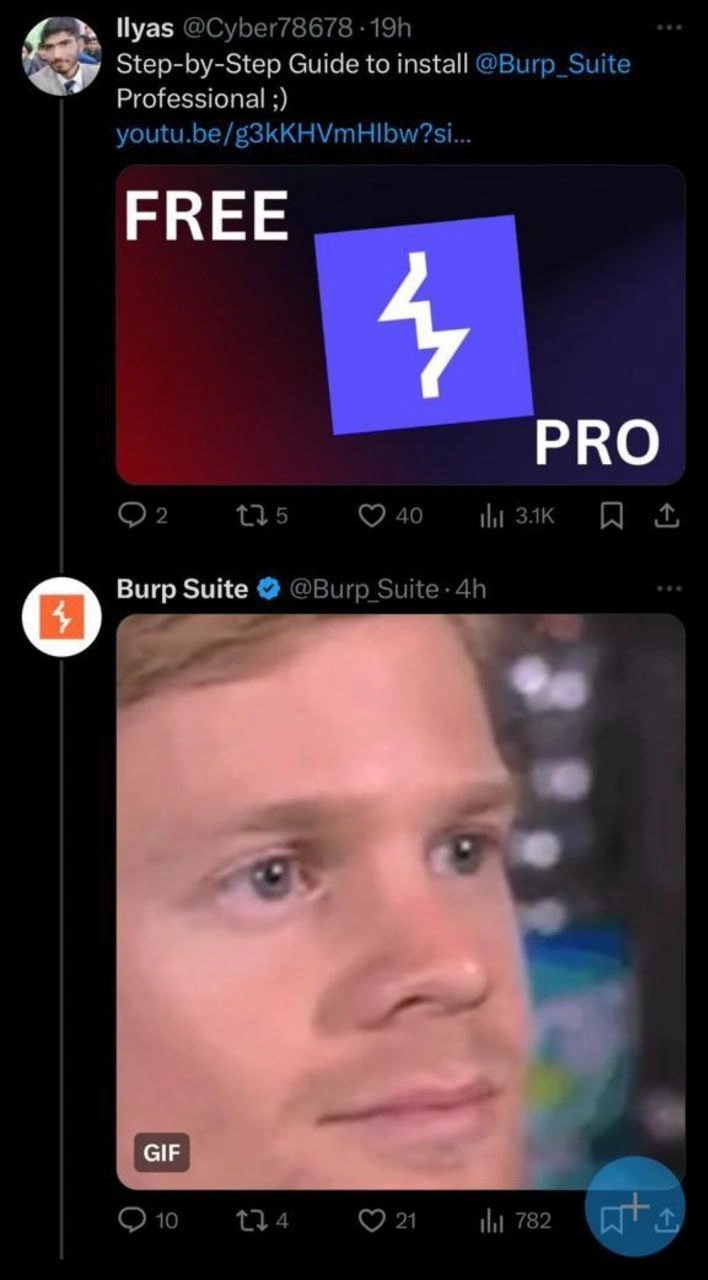
Tweeting a Burp Pro crack tutorial, Burp Suite claps back instantly
Security Post #5870, on Feb 3, 2024 in TG

Tweeting a Burp Pro crack tutorial, Burp Suite claps back instantly

Why is this Security meme funny?

Imagine you found a way to get a cookie from the cookie jar without your parent’s permission, and you even made a little how-to video about it. Now picture you went and showed that video to your mom and dad, bragging about “Look, I can get cookies for free!” What do you think would happen? They’d notice right away and give you that wide-eyed “Are you serious?” look. You basically proved you were doing something wrong, right in front of them.

That’s exactly what happened in this meme, but with grown-ups and computers. The person tried to “steal” a paid tool (like sneaking a cookie) and even tagged the owners of that tool (like telling the parents). So the owners responded quickly with a stunned face, just like a parent catching you red-handed. It’s funny because it was so obvious – like a kid with their hand in the cookie jar while the parent is standing right there. The lesson? If you’re going to do something mischievous, maybe don’t wave a flag and shout about it to the people who are in charge! In simple terms: they got caught immediately, and everyone had a laugh at how silly the situation was.

Level 2: Piracy in Plain Sight

Let’s break this down in simpler terms. Burp Suite is a popular pen-testing tool – basically a program that helps security professionals (and hackers) test the security of websites and applications. Think of Burp Suite as a friendly hacker’s Swiss Army knife: it can intercept web traffic, modify data on the fly, and do a bunch of cool tricks to find vulnerabilities. There’s a free version (called the Community edition) which has basic features, and a paid Professional version with more powerful capabilities (like faster automation, advanced scanning, and the ability to save your work). The Pro version costs money, and not everyone wants to pay for it – which is where cracking software comes in. Software cracking means finding a way to use paid software without actually buying it, usually by removing or bypassing the code that checks for a license. It’s essentially a form of software piracy (using software illegally for free).

In the meme, a Twitter user named Ilyas posted a tweet that was basically, “Hey, here’s how to get Burp Suite Professional for free!” He even says “Step-by-Step Guide to install @Burp_Suite Professional ;)” with a wink, and links to a YouTube tutorial. The image he attached shows Burp’s lightning-bolt logo split into a red “FREE” side and a purple “PRO” side – implying you can turn the free version into the pro version. So, he’s advertising a Pro version crack, i.e., instructions to unlock the paid features without a legit license. This is the kind of thing you’d usually expect to see in shady corners of the internet, not in a public tweet tagging the official company account! By tagging @Burp_Suite, he basically ensured the official vendor would see it. That’s what we mean by “piracy in plain sight” – he’s doing an illicit thing right out in the open.

Now, what happened next is the funny part: Burp Suite’s official Twitter account replied within hours. Their response was not a written scolding, but a GIF (a short animated image). The screenshot shows a blurred image of a man’s face with wide eyes – this is a known reaction meme (often called the “blinking white guy” meme). In context, that face usually means astonishment or disbelief, like “Did I really just see that?” or “Bro, what are you doing?”. It’s a humorous, somewhat sarcastic way for the company to express “Wow, you really posted a crack tutorial for our paid product and mentioned us? Bold move.” Essentially, Burp Suite clapped back with internet humor. The reply from them had its own likes and retweets, meaning lots of people saw the company’s witty response and appreciated it.

For a junior developer or someone new to cybersecurity, there are a few lessons here. License bypass techniques (the kind shown in the YouTube video) involve modifying or tricking the software to think you’ve paid when you haven’t. It’s illegal and against terms of service, and it’s definitely not something you brag about on official channels. Companies do not take software piracy lightly. In many cases, if you post such content, you could get a DMCA notice (that’s a legal takedown for copyright infringement) or other legal troubles. At the very least, you might get the content removed. Here, the company chose a lighthearted public response – possibly to embarrass the user or discourage others – instead of immediately dropping a legal hammer. It’s a form of community moderation through humor.

This also highlights how dev communities on platforms like Twitter (now X) operate. People share tips and tricks, but there are unspoken rules. Sharing how to do something unethical or illegal, especially while openly involving the affected party, is a big no-no. The community often sides with the responsible party in these cases – notice how people liked the Burp Suite reply. It’s clear most viewers found the situation funny and perhaps thought the original poster had crossed a line. Hacker culture does value cleverness, but even hackers (especially ethical ones) respect certain boundaries, like not openly disrespecting tool creators who support the community.

Let’s clarify a couple of terms from the tags: “CrackingSoftware” means the act of breaking software protections (like we described for getting Burp Pro free). “HackerCulture” refers to the community and values among hackers and security enthusiasts – it can include a free-flow of information, clever problem solving, but also ethical debates about what’s okay to do or share. In hacker culture, irony and humor are common – like the irony of a hacking tool being hacked. “Infosec” is short for information security, and an infosec meme like this one hits close to home for people in that field. They find it humorous because it’s a twist on the usual: instead of using Burp Suite to catch someone else’s security flaw, someone tried to expose a “flaw” (or loophole) in how Burp Suite is sold, and got caught immediately.

Finally, “tweet backfire” is exactly what it sounds like: the tweet did the opposite of what the poster likely intended. He probably wanted to gain followers or gratitude for sharing a hacky tip. Instead, he got the attention of the company and possibly the wider security community telling him it wasn’t cool. This whole thing became a bit of a cautionary tale. If you’re a newcomer excited to show off a trick, make sure that trick isn’t blatantly illegal or against a company’s rules – and definitely don’t wave it in front of the company’s face! As a junior dev or security student, it’s good to channel that curiosity into legal avenues: for example, Burp Suite has a Community edition for learning, and many companies offer student versions or trial licenses. The bottom line: the internet has eyes everywhere, and here the very people you’d expect to avoid (the software makers) were watching from the start. It’s a lesson in security and community etiquette, delivered with a side of comedy.

Level 3: Lightning Strikes Back

This scenario is a perfect storm of infosec irony and instant karma that every seasoned security developer can appreciate. A user openly tweets a step-by-step guide to pirate Burp Suite’s paid Professional version – even cheekily tagging @Burp_Suite – and just hours later, the official account swoops in with a response. The humor is multifaceted: first, Burp Suite’s logo is a lightning bolt, and true to form, their social media strike was lightning-fast. Secondly, it’s the penetration testing tool famous for catching others’ vulnerabilities now catching someone trying to exploit its software licensing. It’s like watching a thief pick a lock, only for the lock to yell, “Gotcha!”

By tweeting a YouTube tutorial for a Burp Suite Pro crack, the user walked straight into the spotlight. In the DevCommunities and security circles on Twitter, this is considered both brazen and a bit naïve. It’s one thing to quietly discuss cracks on obscure forums or private channels; it’s another to announce “FREE Burp Suite Professional” on the bird app with the vendor’s handle attached. That’s practically an engraved invitation for the vendor to notice. Seasoned developers have an almost face-palm reaction here: Did he really just tag the company while advertising an illegal license bypass? It’s the textbook definition of a tweet backfire – instead of getting clout or gratitude, he got the attention of exactly the people you don’t want to poke when doing something shady.

The official Burp Suite account’s reply is golden. They didn’t respond with a cease-and-desist or heavy-handed threat (though that might come later behind the scenes); instead, they used meme language to clap back. The blurred thumbnail in their tweet likely hides a reaction GIF – by all indications, it’s the famous “disappointed/astonished blinking guy” meme. In developer meme-speak, that GIF wordlessly says: “Excuse me… what? Are you serious right now?” It’s a hilarious, somewhat passive-aggressive way for the vendor to express a “we’re watching you”. The community loves this kind of exchange because it humanizes the company. Burp Suite’s social media manager essentially did a mic-drop, showing they’re savvy enough to respond with humor while highlighting the issue. The tweet’s engagement (replies, retweets, likes) also suggests many in the security community saw it, likely amplifying the embarrassment for the original poster.

Underlying the humor are real-world tensions. Burp Suite Professional is a valuable tool for security testing – it’s not cheap – so there’s a long-running trend of people seeking out cracks. Hacker culture has that rebellious streak: “If it’s locked, we’ll find a way to pick it.” But there’s also an ethical side in the InfoSec community: many professionals frown upon using pirated tools, because if you’re making a living finding vulnerabilities, you should probably respect intellectual property and security of the tools you use. Plus, the irony of potentially downloading malware to get a security tool “for free” is not lost on veterans (lots of crack downloads end up being trojans – a classic “get hacked while hacking” karma). So this public attempt to enable software piracy for a security tool crosses multiple unwritten rules. It’s a bit like a junior locksmith bragging about stealing the master key – not exactly going to impress the master locksmiths.

From an industry perspective, this is also about vendor vigilance. Companies like PortSwigger (the makers of Burp) actively monitor social media for mentions of their products. The fact that they responded within the same day shows that they have a keen ear to the ground – or at least a alert for their Twitter handle. It’s a subtle warning to others: not only do we have technical safeguards, we’re also keeping an eye on the community. And let’s be honest, it’s free PR for Burp Suite too. By responding in a fun way, they rallied legitimate users to their side (notice the likes and retweets on the Burp Suite reply – people love a good official clapback). It turns a would-be license bypass tutorial into an advertisement for why you shouldn’t mess with the folks who make your favorite hacking tool.

In essence, the meme captures a teachable moment wrapped in humor. The security community gets a laugh and a reminder: even on the wild west of Twitter, there are boundaries. If you try to publicly “out-hack” a security company, don’t be surprised when that company’s social media manager (or legal team lurking behind them) pops up like a vigilant NPC, saying “We saw that, and oh boy, the audacity…”. The combination of the user’s winking confidence (“Professional ;)” with a sly emoji) and the official account’s deadpan meme reply is comedic perfection. It’s a small saga of cause-and-effect that every developer who’s seen software cracking or piracy dramas play out can appreciate – with the twist that it happened in broad daylight on a platform where everyone, including the software maker, could see it. Lightning struck back indeed, and it struck in the form of a viral reply tweet.

Level 4: Break Crypto? Patch Code

At the core of this meme is a classic software piracy showdown between strong defenses and clever workarounds. Modern security tools like Burp Suite Professional usually protect their premium features with cryptographic license checks. Instead of using a simple password, they generate license keys using asymmetric encryption (e.g. RSA signatures). This means the app can verify a key with a public key, but only the vendor can create valid keys with their private key. In theory, that makes forging a valid license mathematically infeasible – you’d have to literally break strong encryption. But pirates rarely bother trying to break the crypto itself; they aim for the softer target: the code implementing it.

Reverse engineering comes into play. Crackers will dissect the Burp Suite application (likely Java bytecode, since Burp is Java-based) to find where it checks the license. Why attack the unbreakable math when you can simply bypass the license check entirely? They might decompile classes or attach a debugger to trace the moment Burp says “Is this license legit?”. Once found, a little binary patch or bytecode tweak can flip the outcome. Instead of rejecting an invalid license, the cracked version might just always say “✅ Valid!” and unlock the Pro features. It’s the digital equivalent of picking a lock by removing the door from its hinges – you’re not decoding the key, you’re sidestepping the whole lock mechanism.

For example, a simplified license check in code might look like this:

boolean valid = verifyLicenseKey(userInputKey); // Cryptographic signature check
if (!valid) {
    System.err.println("License invalid! Exiting...");
    // *Crack bypass:* A pirate would patch or skip the next line
    System.exit(1);
}
launchProFeatures(); // Continue running Burp Suite Pro normally

A proper crack could force valid = true or remove the System.exit(1) so the program never quits. License bypass achieved! Notice how the cryptography (the verifyLicenseKey step) wasn’t actually defeated – it was simply rendered irrelevant by altering the program’s control flow. This highlights a fundamental reality of software protection: once an attacker has your code running on their machine, they can eventually make it do whatever they want. Security researchers know this as the “weakest link” problem in DRM (Digital Rights Management): why try to mathematically crack the lock when you can just remove the lock from the doorframe?

Software vendors are well aware of this cat-and-mouse game. They employ tricks like code obfuscation, integrity checks, or white-box cryptography to make patching harder. Burp Suite’s creators (PortSwigger) likely have anti-tamper measures and unique build identifiers to slow down crackers. But determined hackers in the HackerCulture thrive on these challenges. Historically, every time a new version releases, crack groups race to patch it – a tradition going back to the early days of shareware and warez scene. It’s almost a sport in some corners of the cybersecurity world: breaking the very tools designed for breaking others. The infosec irony is strong here – using advanced hacking techniques not to penetrate a web app, but to unlock a feature set without paying.

Yet, here’s the twist: pure technical prowess isn’t the end of the story. Companies know that no local protection is unbreakable, so they also lean on legal and social defenses. The instant official vendor reply in this meme is a form of countermeasure too. It’s effectively saying, “We see you, and we’re not going to ignore this.” Often, a swift public clap-back is a prelude to a DMCA takedown or at least a deterrent to others. After all, if you can’t keep pirates out with code, you can call them out in public. In security terms, this is defense-in-depth: cryptographic locks and active monitoring. The meme’s comedy is rooted in this multi-layered battle – the license algorithm might be robust, but human boldness (or naïveté) in tweeting a Pro version crack is a vulnerability of its own. Who hacks the hackers’ tool? In theory, anyone with skill and patience. But who advertises that hack on Twitter with a tag to the vendor? Only someone who forgot that in this game, the defenders are always watching too.

Description

Screenshot of an X/Twitter thread in dark mode. The first tweet, from “Ilyas @Cyber78678 · 19h”, reads: “Step-by-Step Guide to install @Burp_Suite Professional ;)” followed by a shortened YouTube link. Attached is a red-to-black gradient graphic of the Burp Suite lightning-bolt logo; white text on the left says “FREE” and on the right says “PRO”. Under the tweet, engagement counters show 2 replies, 5 retweets, 40 likes, and 3.1K views. Directly beneath, the verified “Burp Suite @Burp_Suite · 4h” account responds with a blurred video thumbnail (content obscured). Visually, the joke lands because a user publicly advertises a method to obtain the paid penetration-testing tool for free, only for the official vendor to notice almost immediately. Technically, it highlights license-cracking culture, the vigilance of security vendors, and the irony of trying to pirate a tool whose very purpose is to inspect and intercept traffic
Comments

8
Anonymous ★ Top Pick Bold move: publicly posting a crack for the proxy that literally MITMs *everything* - turns out their first intercepted request was your tweet
  1. Anonymous ★ Top Pick

    Bold move: publicly posting a crack for the proxy that literally MITMs *everything* - turns out their first intercepted request was your tweet

  2. Anonymous

    When you've spent years building enterprise security tools only to watch someone livestream your licensing bypass to 3.1K viewers, but you're contractually obligated to respond professionally while your legal team frantically drafts DMCA takedowns

  3. Anonymous

    When your $400/year security tool gets a 'free installation guide' and your social media team can only respond with a GIF because Legal is still drafting the DMCA takedown notice. Classic Burp Suite moment: powerful enough to find every vulnerability in your app, but apparently not in its own licensing mechanism. The real penetration test here is whether PortSwigger's lawyers or their community manager responds first

  4. Anonymous

    Free Burp guide? Cute - Pro pentesters skip installs for direct API keys after the first license expiry scare

  5. Anonymous

    Posting a “Burp Suite Pro for free” tutorial and getting a reply from the official account is the infosec equivalent of committing secrets to public Git and tagging the vendor as reviewer

  6. Anonymous

    Cracking Burp Pro to test for Broken Access Control is the most recursive pentest - prove the vuln on the licensing system, then watch PortSwigger’s legal webhook fire

  7. @ygerlach 2y

    https://twitter.com/Cyber78678/status/1746622294133522943

  8. @man13hma 2y

    Give my 600 bucks back lol

Use J and K for navigation