Browser Trust Under Political Key Control
Why is this Security meme funny?
Level 1: The Master Key List
Imagine every house in town has strong locks, but everyone agrees to trust a small list of people who can make official keys. If someone forces the town to trust a key maker who cannot be questioned, the locks are still strong, but the town is less safe. That is the feeling behind the crossed keys: the scary part is not the lock, it is who gets trusted with the keys.
Level 2: Why Keys Matter
When you visit a website over HTTPS, your browser uses TLS to encrypt the connection. But first, it has to confirm that the website is really the site it claims to be. That confirmation comes from a digital certificate.
A certificate authority is an organization trusted to issue certificates. Browsers and operating systems keep lists of trusted certificate authorities, often called root stores. If a certificate chains back to one of those trusted roots and passes the checks, the browser accepts it.
The danger is that trust is powerful. If a trusted authority issues a certificate incorrectly, someone may be able to impersonate a website. Browser vendors try to prevent that by enforcing rules, requiring audits, demanding stronger algorithms, and removing trust when a CA fails badly enough.
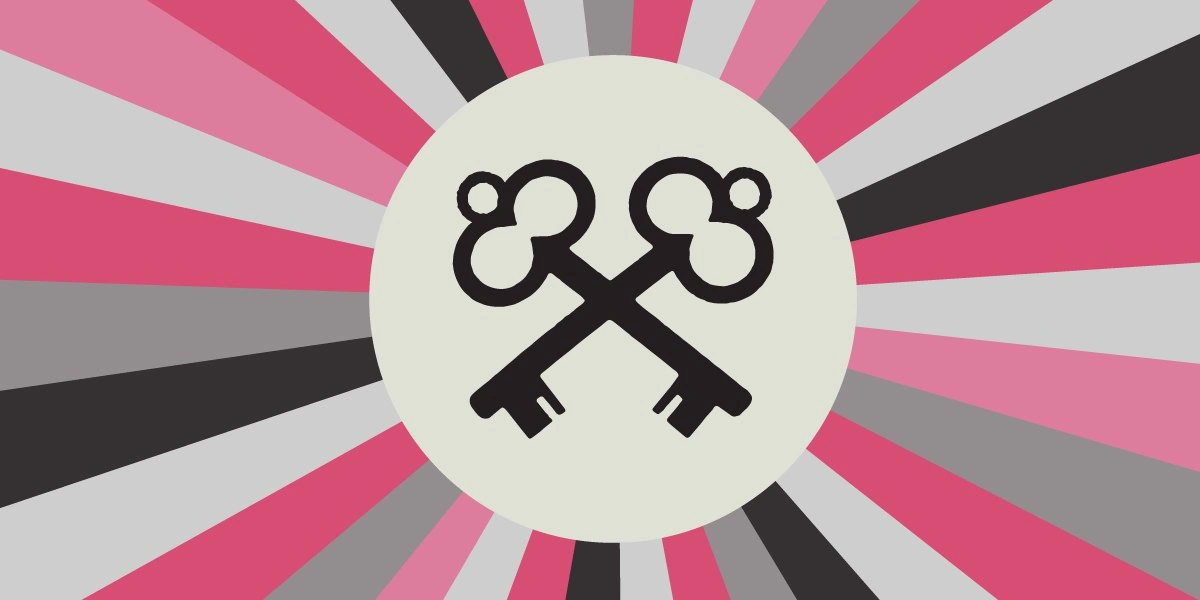
The meme's crossed keys symbolize that control point. Whoever controls trusted keys can affect whether browsers accept secure-looking connections. That is why the linked policy debate matters to developers: web security is not only code and encryption libraries. It also depends on institutions, rules, audits, and the ability to say, "This authority is no longer trustworthy."
For a junior developer, the practical lesson is that the lock icon in a browser is backed by a chain of technical and organizational decisions. It is not magic. It is a trust system, and trust systems can be weakened by bad policy just as surely as by bad code.
Level 3: The Root Problem
The humor here is bleak and specialized: the picture looks like generic security symbolism until the linked context turns it into a complaint about browser security policy. Two keys crossed like a coat of arms imply access, authority, and the ability to unlock something. In the Web PKI world, that is exactly the uncomfortable part. A certificate authority does not need to break encryption if it can issue a certificate your browser already trusts.
Security engineers react strongly to this because browser root programs are one of the few places where large platform vendors have actually raised the web's security floor over time. When CAs mishandle certificates, use obsolete algorithms, fail audits, or enable dangerous intermediates, browsers can distrust them. That power is blunt, political, and messy, but it is also what keeps "trusted CA" from meaning "permanent diplomatic immunity."
Article 45, as criticized in the linked EFF context, touched a nerve because it suggested a reversal: instead of browsers setting minimum security expectations for CAs, certain government-recognized CAs could become mandatory trust anchors under rules browsers could not freely harden. That changes the threat model from "bad CA gets removed" to "bad CA may be protected by regulation." The incident response plan becomes less revoke trust and more call counsel, which is rarely the patch you want.
The date context matters because the post was shared in mid-November 2023, right after public advocacy around eIDAS 2.0's approval window. At that moment, the concern was not abstract future sci-fi; it was tied to live regulatory text and browser makers' ability to keep applying modern requirements.
The image has no caption, which makes it feel like a warning sign rather than a joke panel. The joke is mostly the developer-security kind: a single icon of keys standing in for a huge argument about HTTPS, governments, CAs, browsers, transparency logs, and whether the lock icon should mean "encrypted to the right endpoint" or merely "approved by someone with a stamp."
Level 4: Trust Anchors Bend
The image itself has no visible text. It shows two crossed black skeleton keys centered inside a pale circle, with pink, gray, white, and black rays radiating outward. Paired with the post's EFF link about Article 45 of eIDAS 2.0, the keys become a visual metaphor for the root keys of web trust: certificate authorities, browser root stores, and the political question of who gets to define "secure."
In HTTPS, encryption is not useful by itself unless the browser also knows who it is encrypting to. TLS needs authentication. That authentication is bootstrapped through public key infrastructure, where certificate authorities issue digital certificates binding a domain name to a public key. Browsers trust a set of root CAs, and that trust flows downward through certificate chains. If a trusted CA or intermediate issues a certificate for a domain it should not, a browser can be tricked into accepting an impostor as legitimate.
That is why the crossed keys are not just "encryption is good" clip art. They represent the fact that browser trust is a master-key system. If the wrong actor gets a trusted signing path, encrypted traffic can still be intercepted because the victim's browser may believe the fake certificate is valid. The lock icon can appear while the user is securely talking to the wrong party. Congratulations, the math worked; the governance failed.
The linked Article 45 concern was that browsers could be required to trust certain government-appointed CAs and restricted from applying their usual independent security requirements to those CAs. That attacks the browser root-program model. Today, major browsers impose rules on CAs: validation practices, incident reporting, key protection, algorithm choices, and increasingly transparency requirements. Those rules are not decorative. They are how browser vendors turn "trust us" into something that can be audited, constrained, and revoked.
The deep technical issue is that PKI trust is deliberately centralized at the root and deliberately decentralized in enforcement. Root stores are centralized lists, but browser vendors compete and coordinate to raise requirements over time. Certificate Transparency, distrust decisions, algorithm deprecations, and incident handling are all pressure valves. Remove the browser's ability to enforce those requirements and you do not merely add one more CA; you weaken the feedback loop that makes the whole system improve.
The meme's stark key graphic works because it strips the problem down to ownership of authority. In cryptography, keys are concrete mathematical objects. In Web PKI, "who is allowed to hold the key" is also law, process, audit, geopolitics, and institutional trust. The image is quiet because the terrifying version of this meme is not a hacker in a hoodie. It is a standards clause with a filing deadline.
Description
The image is a flat illustration with pink, gray, white, and black radial rays converging behind a pale circular center. In the center are two crossed black skeleton keys, with no visible text in the image itself. The linked context is an Electronic Frontier Foundation article about Article 45 of eIDAS 2.0 and the risk of rolling back web security by forcing browsers to trust certain government-appointed certificate authorities. Technically, the keys symbolize the trust anchors behind HTTPS, certificate authorities, PKI, and browser root-store policy.
Comments
13Comment deleted
Forcing browser trust in law is basically `sudo update-ca-trust --add politics.pem` with a standards committee attached.
Another stupid clowns degenerates moment, nothing new at all Comment deleted
Yay 100 points to the EU again Comment deleted
lmao bottom text So this is even worse than regular government ca in russia, when it was not required from browsers to trust this shit Comment deleted
"is poised to pass" so they haven't done it yet I guarantee you, it's not gonna happen, and you all can get off your anti-eu horses Comment deleted
The fact that this piece of shite managed to get as far as "poised to pass" is very bad. Comment deleted
it's just background radiation from the right wing ig Comment deleted
Man, we really should step down at some moment from using xy-axis for political spectrum people are supporting Comment deleted
idk I think it works well enough for approximations. People often do get hung up on it though, I agree. Nuanced discussions shouldn't be held using this approximation. Comment deleted
> in November 8 they've already decided on whether it's going through, the text is old. I'm gonna look it up later, after eating breakfast Comment deleted
I'm just gonna build my firefox from sources. What are they gonna do, ban source code? Comment deleted
New gender just dropped! Comment deleted
They can issue certificates for whatever keys they want. Comment deleted