Skip to content
DevMeme
3983 of 7435
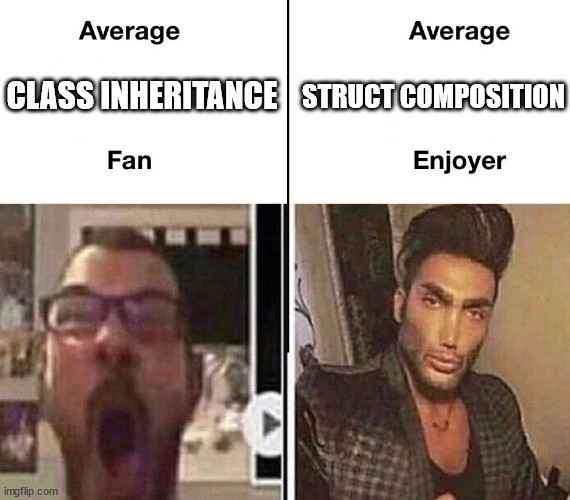
When 'Which language?' gets answered with English instead of Java
Languages Post #4341, on Apr 20, 2022 in TG

When 'Which language?' gets answered with English instead of Java

Why is this Languages meme funny?

Level 1: He Means Well

Imagine your little brother says he wants to learn how to cook. You get excited and ask, “Great, what kind of food or cuisine do you want to start with? Italian? Mexican?” But he looks at you and replies, “I just want to cook food, of course!” He misunderstood what you meant by “what kind of cuisine.” It’s a silly mix-up, but you can’t help but smile because he’s clearly enthusiastic about cooking. He’s a little confused, but his heart is in the right place. That’s exactly what’s happening in this programming joke. The younger brother heard “language” and thought of a spoken language (like English), when the older brother actually meant a programming language (like Java or Python). It’s funny and cute because even though the answer was “wrong” in context, you can tell he genuinely wants to learn. He means well, and he’s got the spirit – he just needs a bit of guidance to get on the right track!

Level 2: Language Barrier

When you’re brand new to coding, the word “language” can be a bit confusing because it means something different in programming. In everyday life, a language is what people speak, like English, Spanish, or Chinese. But a programming language is something else entirely: it’s a special set of rules and words used to tell a computer what to do. So when the older brother asked, “What language?” he wasn’t asking about a human language at all. He really meant, “Which programming language do you want to start learning?” – like Java, Python, or JavaScript. Those are examples of coding languages (each with funny names), not spoken languages. Each programming language has its own syntax (which means its own way of writing commands), and you have to learn that syntax to write programs.

The younger brother’s answer, “English, duh,” shows he misunderstood the question. He thought his brother was asking which human language he speaks. It’s a cute beginner confusion. He knows that programmers type words on the screen, and those words look like English, so he figured of course it must be English. In reality, even though we use the English alphabet and some English words in most code, saying you’ll program in “English” isn’t correct. For example, if you want a computer to say hello, you might write a line of code in a language like Java that looks like:

System.out.println("Hello, world!");

The code above is in Java. You can see it uses English words like System, out, println (short for “print line”), but they have to be in a very specific order with exact punctuation. You can’t just tell the computer in plain English, “Print hello on the screen,” because the computer won’t understand that free-form sentence. It only understands the precise syntax of whatever programming language it’s running. That’s why the older brother was asking which programming language his sibling wanted to learn – maybe to suggest a beginner-friendly one.

This meme’s joke comes from mixing up a natural language with a programming language. The older sibling used the word “language” to mean a coding language like Java or Python, while the younger sibling took it to mean a spoken language like English. It’s the kind of mix-up that often happens when non-programmers hear programmer talk. The good thing is, it’s easy to fix this misunderstanding: you just explain, “In programming, language means the coding language (for example, Python or Java), not the language you speak every day.” Once this little language barrier (pun intended!) is cleared up, the real learning can begin. And hey – knowing English does help in coding, because so many programming tutorials and documentation are written in English. But you still have to choose an actual programming language to write your code in, whether it ends up being Java, Python, or any other.

Level 3: Right Spirit, Wrong Language

To an experienced developer, this scenario is both hilariously relatable and endearingly familiar – it's one of those quirky misunderstandings that happen when everyday terminology collides with programming jargon. We often have a friend or family member eager to join the coding world who doesn’t yet know the lingo. When the brother announces, “I want to learn programming,” any seasoned coder’s next question naturally is, “Cool, what programming language are you thinking of?” We expect to hear something like, “Maybe Python,” or “I was thinking JavaScript.” Here, the brother’s confident reply – “English, duh” – completely blindsides that expectation. It’s the classic beginner’s misunderstanding of tech terminology: he interpreted “language” in the everyday sense, not realizing that in programming, language means the specific coding language (like Java or Python) you use to write instructions.

The humor for developers comes from that moment of miscommunication that is absurd yet totally plausible. Many of us have been in these shoes, trying to explain our world of code to newcomers. You say “language,” they hear “spoken language.” It’s a harmless mix-up, but it highlights the gap between insider knowledge and a newbie’s perspective. In this case, the brother actually does have the right spirit – he wants to learn and assumes knowing English is all he needs to start coding (after all, a lot of programming keywords are English words, right?). As the subtitle on the meme image says, “He a little confused, but he got the spirit.” Seasoned devs chuckle because we've seen that earnest confusion before, and maybe we remember making similar beginner mistakes with jargon ourselves.

This meme nails a very relatable dev experience: the mix of amusement and empathy when mentoring someone who's just starting their coding journey. The older sibling (the "Me" in the text) probably had a moment of stunned silence followed by a friendly laugh. It’s a perfect teaching moment — time to gently explain that programming languages (Java, Python, C#, etc.) are the tools we use to communicate with computers, whereas English is simply the human language we use to talk about the code (and to write documentation and error messages!). The sitcom screenshot from The Fresh Prince of Bel-Air with Will Smith’s bemused expression and that famous caption captures the feeling perfectly. You’re a bit flabbergasted, yet you appreciate the enthusiasm. In a real conversation, the next step would be clarifying with a smile: “Oh, no, I meant what programming language. Like Java or Python. In programming, ‘language’ means something like that, not English.”

In essence, the meme is poking fun at a misunderstanding in technology that every developer can recognize. It’s a light-hearted reminder that when diving into the world of code, even a common word like "language" can mean something completely different. As any patient mentor knows, moments like these – where someone’s answer is completely off-base – are all part of the learning process. You just laugh it off and say, “Well, at least you’re ready to read the error messages in English! Now, let’s pick a coding language to start with.”

Level 4: Semantic Overload

At the highest conceptual level, this meme highlights a clash between natural language and formal programming language semantics. In computer science terms, the word "language" here is overloaded – it has one meaning in everyday life (English, Spanish, etc.) and another meaning in the context of coding (Java, Python, C++, etc.). This innocent mix-up actually brushes against formal language theory. A programming language like Java is a strictly defined formal system: it has a precise syntax and grammar (often specified in Backus–Naur Form) that a compiler or interpreter can parse unambiguously. In contrast, English is a natural language – full of idioms, ambiguities, and context-dependent meanings that human brains interpret.

From a theoretical perspective, programming languages belong to the world of formal grammars (Noam Chomsky would place them in the context-free grammar category, typically). Each statement in Java must conform exactly to the language’s grammar rules – one misplaced semicolon or a case-sensitive keyword off, and the compiler throws an error. There's zero tolerance for ambiguity. Natural languages, however, thrive on context and can handle ambiguity. Humans use shared understanding to know that the sentence "I saw the man with the telescope" could have multiple meanings, but a computer parsing code can't handle that kind of uncertainty. A compiler for Java expects perfectly structured code or it will fail; it can’t fill in gaps or guess your intent like a person can when hearing an English sentence. Computers simply aren’t that clever with plain English instructions – they'd treat an input like "print hello on screen" as gibberish unless we design a system to interpret it.

So when the brother confidently answers “English, duh” to a question about programming, he's unknowingly stepping into a classic context mix-up. To the computer (or the programmer’s ear), "English" isn't a valid response in that context – it's like feeding data of the wrong type into a function. (In geek terms, imagine an error: TypeError: expected ProgrammingLanguage, got "English".) This highlights a fundamental principle: programming requires us to communicate in structured, artificial languages that were engineered to tell machines what to do. English (or any natural tongue) isn’t one of those strict languages for coding. There have been attempts at "natural language programming" – making code that reads like everyday English – but those attempts inevitably create a constrained subset of English or a controlled syntax. In other words, they turn English into a kind of formal code in order to work.

In sum, the humor here is underpinned by a real technical truth: terms like "language" are highly context-dependent. The brother flubbed the context, answering with a human language when the question really demanded the name of a programming language. It’s a playful reminder of how jargon in programming (like language, script, or bug) diverges from plain English, sometimes with chuckle-worthy results.

Description

Meme layout: a wide top bar of white uppercase text on a dark background reads in three stacked lines, "BROTHER: I WANT TO LEARN PROGRAMMING", "ME: COOL WHAT LANGUAGE", "BROTHER: ENGLISH DUH". Below, a sitcom screenshot shows two young men in school attire - one in a patterned blazer - entering a classroom; all faces are blurred for anonymity. The yellow subtitle at the bottom of the frame states, "He a little confused, but he got the spirit." The joke hinges on a beginner conflating spoken language with programming languages, a common miscommunication developers face when relatives ask about learning to code. For seasoned engineers, it playfully highlights the importance of clarifying terms like “language” when mentoring newcomers to software development
Comments

7
Anonymous ★ Top Pick English works - just warn him it’s a dynamically scoped, ambiguously parsed DSL whose spec ships inside every stakeholder’s head and forks at every meeting
  1. Anonymous ★ Top Pick

    English works - just warn him it’s a dynamically scoped, ambiguously parsed DSL whose spec ships inside every stakeholder’s head and forks at every meeting

  2. Anonymous

    Wait until he discovers that half our codebase is actually written in YAML configs, Dockerfiles, and GitHub Actions workflows that no one really understands but everyone's afraid to touch

  3. Anonymous

    Joke's on us - ten years later 'English' is a programming language, it's just interpreted by a model with nondeterministic output and a per-token license fee

  4. Anonymous

    This perfectly encapsulates the moment every senior engineer realizes that 'teaching someone to code' requires first explaining that Python isn't spoken at the zoo, Java isn't coffee-flavored, and Ruby isn't a gemstone. The real challenge isn't teaching syntax - it's bridging the conceptual gap between natural language and formal language theory. At least he's asking questions; that's already better than the stakeholder who insists we 'just make it work in normal language' because 'computers should understand what we mean.'

  5. Anonymous

    He’s basically right - English is our primary programming language: compiled into Jira, interpreted by devs, weakly typed with nondeterministic semantics, and the standard exception is NotWhatIMeantError

  6. Anonymous

    English: the stakeholder's favorite language - perfectly ambiguous, zero type safety, and always breaking changes mid-sprint

  7. Anonymous

    We already code in English; it's called 'requirements' - interpreted by humans, dynamic typing, and catastrophic undefined behavior

Use J and K for navigation