Skip to content
DevMeme
1261 of 7435
The Agile Playhouse: Fun for Coaches, Misery for Devs
Agile Post #1401, on Apr 27, 2020 in TG

The Agile Playhouse: Fun for Coaches, Misery for Devs

Why is this Agile meme funny?

Level 1: Trapped in the Playpen

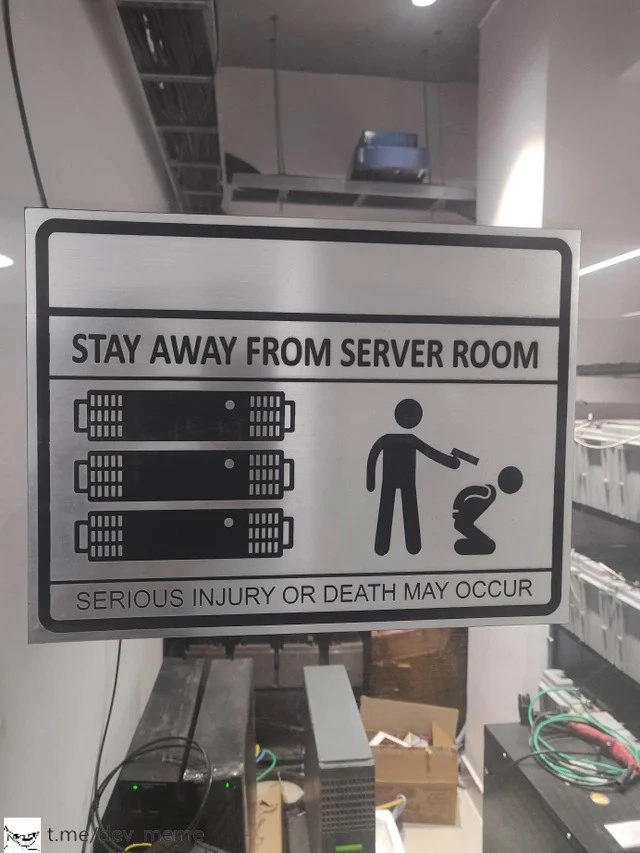
Imagine you’re a little kid who loves playing and exploring. But your babysitter puts you inside a playpen – you know, those small inflatable or plastic play houses – so you won’t get into trouble. The playpen has soft walls, some toys, and it keeps you safe in one spot. At first it’s okay, because you’re safe... but after a while, you realize you can’t get out. You see the big yard outside and you really want to crawl out there and have fun, but nope, the playpen door is closed. You start feeling frustrated. You press your face against the mesh window and maybe even cry or shout because, hey, you’re trapped and the outside looks so much more fun! Meanwhile, your babysitter is sitting just outside the playpen, smiling and watching you. They’re happy because you’re safe and contained – you’re not making a mess or hurting yourself. From their point of view, everything is perfect. But from your point of view, it’s super annoying because you feel stuck and controlled.

In this meme, the developer (the person who writes code) is like that kid in the playpen. The Agile coach is like the babysitter watching from outside. Scrum, which is a work process with a lot of rules and regular check-ins, is like the playpen itself – it’s meant to create a safe, organized space for the work to happen. The funny (and kinda sad) part is the developer in the picture looks exactly like a upset toddler who wants out. That’s how a programmer might feel if their work day is full of strict rules and endless meetings: safe, maybe, but also stuck and unable to run free with their own ideas. The agile coach is smiling because she thinks she’s helping the team by keeping things orderly (like a babysitter glad the child isn’t running around causing chaos). The developer, though, is making a crying face like, “Please let me out of here so I can do what I actually want to do!”

So the whole joke is a comparison: writing software under a very strict process can feel like being a kid in a playpen. The developer has limited freedom (just like a child behind playpen walls), and the Agile coach is like an adult who set up those limits for the kid’s “own good.” It’s funny because we don’t normally compare office work to babysitting, but here it fits so well. Anyone who’s felt bored or frustrated in a meeting can see themselves as that little kid shaking the playpen wall. In simple terms, the meme is saying: too many rules at work can make even grown-up programmers feel like little kids who just want to be let out to play. And that mix of truth and absurdity is why it makes people who work in software laugh.

Level 2: Dev Daycare Dilemma

Let’s break down the scene in more straightforward terms. We have a developer (represented by a crying baby) stuck inside a tiny inflatable toy house labeled “Scrum.” Outside, smiling and kneeling on the grass, is an Agile coach (the adult supervisor). The picture is basically saying: being a developer under Scrum can feel like being a kid in daycare, with the Agile coach acting like your babysitter. This is the Dev Daycare Dilemma – the feeling of being coddled and restrained by a process that’s supposed to help you.

First, what is Scrum? It’s a specific methodology under the Agile umbrella, used by software teams to organize work. Think of Scrum as a playbook of how to break a project into small pieces and iterate quickly. Key parts of Scrum include:

  • Sprints: short, fixed-length periods (usually 1-2 weeks) where the team focuses on a set of tasks.
  • Daily Stand-ups: every day, the team has a quick meeting (everyone literally might stand in a circle to keep it short) where each developer says what they did yesterday, what they plan today, and if there are any blockers. It’s meant to keep everyone in sync.
  • Sprint Planning: at the start of a sprint, the team plans which tasks or user stories to complete in that sprint.
  • Sprint Review & Retrospective: at the end of the sprint, the team demos what they built (review) and then discusses how to improve next time (retro).

These are often called Scrum ceremonies. The goal of all this is to keep work transparent and adaptable. The Agile coach or Scrum Master is a person whose job is to help the team follow these practices. They facilitate meetings, encourage the team to reflect and improve, and try to remove obstacles. Importantly, the Agile coach usually isn’t coding or building the product themselves; they’re focused on the process and the people. In the meme, that’s why the coach is outside the Scrum house — symbolically, they are outside the actual hands-on coding work. They guide and observe but don’t sit in the “pen” of technical implementation.

Now, why would a developer feel trapped? Well, imagine you’re a programmer eager to solve problems and ship features. But every morning you have a meeting at 9:00 AM sharp. You can’t skip it — it’s the stand-up, part of the scrum_constraints you agreed to. Then mid-week you have a sprint planning session that takes a few hours, plus a retrospective on Friday. On top of that, an Agile coach might insist on strict rules: “No changing the sprint goal mid-week!” or “All tasks must be estimated in story points.” These rules are there to add structure, but to the person doing the work, they can sometimes feel like handcuffs. If you discover something new or have an idea outside the plan, you might hear “let’s put it in the next sprint” rather than “sure, try it now.” That can be frustrating — like a child seeing something exciting outside the playpen but being unable to reach it.

The playhouse metaphor is brilliant: a playpen keeps a baby safe and prevents chaos, just as Scrum is supposed to keep the project on track and prevent last-minute panics. The floor of the inflatable house in the meme is decorated with cute flowers and even a cartoon bone on the roof, emphasizing how childish and safe it is. This corresponds to how Scrum provides a comfortable, controlled environment. But there’s a flip side: a playpen also physically restricts the baby’s freedom. Similarly, Scrum’s strict schedule and constant monitoring can make a developer feel they have no freedom to move beyond the plan. The developer in the meme has their hand on the window and an anguished face – every developer who’s felt blocked by “process for process’ sake” instantly recognizes that face. It’s the “let me do my work!” look. This reflects a common DeveloperPainPoints scenario: too many meetings or rigid rules getting in the way of actual coding.

Let’s talk about the Agile coach outside, the smiling supervisor. In real life, an agile coach or scrum master is not an adversary; they’re there to help the team succeed. But from a frustrated developer’s viewpoint, it can feel like the coach is an outsider enforcing rules they don’t have to follow. For example, a coach might say, “We need to update our burn-down chart” or “Stick to the process, trust it,” while the developer is thinking, “This process is slowing me down.” This dynamic can feel like a management_bubble – coaches and managers are in their own world (outside the playpen) setting guidelines, while developers are in the trenches (inside the playpen) dealing with the day-to-day grind. The meme exaggerates it to make a point: the coach looks perfectly happy out there, because from her perspective the team is doing Scrum correctly. The developer looks miserable inside, because from his perspective Scrum is just holding him back.

For a junior developer just entering the industry, all these Agile terms and rituals might be new. At first, daily stand-ups and sprints can actually feel helpful – you know what to do each week, you’re never totally lost because there’s a structure. The “playpen” can feel comforting initially, much like a new kid might appreciate some boundaries. But as one gains more experience or when the pressure to deliver builds, those same rules can start to chafe. A common early-career realization is that writing code isn’t your only job; you also have to communicate, sit in meetings, and adhere to processes. This meme is a comedic way of saying “sometimes the balance tips too far.” When a developer has more meeting time than coding time, they joke that they’re in “Agile hell” or stuck in a “Scrum cage.” That’s exactly what’s depicted here in a lighthearted way.

So, in simpler tech terms: Agile is great and all, but if overdone, a developer might feel like a kid who can’t leave the kiddie pool. Scrum provides a framework (the inflatable house) that’s supposed to make everyone productive and safe, and the Agile coach is there to keep the framework intact (like a daycare teacher watching the kids). But when a developer just wants to hack away at a problem or innovate beyond the plan, being told to stay put until the next sprint planning can be exasperating. The meme is funny to developers because it exaggerates that feeling: it’s literally showing the developer as a baby crying to get out, which is an extreme (and thus comedic) version of how one might feel during, say, their fourth meeting of the day. It’s poking fun at AgileHumor scenarios that many in tech have experienced.

Level 3: Scrum's Playpen Paradox

This meme nails a paradox at the heart of corporate Agile practice: a framework meant to empower developers can sometimes leave them feeling infantilized and trapped. The bright inflatable house labeled Scrum is essentially a process cage – a protective bubble of daily stand-ups, sprint boards, and sticky notes. Inside, the developer (depicted as a wailing baby) is pounding on the mesh window, which hilariously represents the programmer’s urge to break out of endless ceremonies and actually build something. Meanwhile, the Agile coach (cheerful adult outside) kneels comfortably on the grass, smiling like an overseer who's pleased that the baby is safely inside the playpen. This visual exaggeration resonates with seasoned engineers because it captures a real DeveloperExperience (DX) pain point: when Scrum is applied in an overly rigid way, it can feel less like collaborative teamwork and more like being babysat by management.

In theory, Agile methods (like Scrum) were created to eliminate heavyweight bureaucracy and let teams adapt quickly. It’s supposed to be empowering: short sprints to focus the work, frequent feedback to catch issues early, and an Agile coach to remove blockers. The intent is a safe environment where experimentation is allowed – much like a padded playhouse prevents a toddler from falling on concrete. But the meme humorously asks: what if that “safe environment” becomes a comfortable prison? The Scrum roof literally forming a ceiling over the developer’s head is a tongue-in-cheek reference to how process can impose a low ceiling on developer autonomy. The agile coach peering in from outside suggests that those enforcing the process (Scrum Masters, coaches, managers) aren’t confined by it in the same way. They get to roam free, dropping in to check attendance in stand-ups and then leaving, while developers are stuck inside dealing with the constraints.

The industry pattern being satirized here is Agile gone wrong. Instead of Agile adapting to the team, the team is contorted to fit Agile rituals. Many experienced devs have been through the “Scrum as religion” phase at some company — where every checkbox in the Scrum Guide is followed religiously even if it makes no sense for the project. This yields scenarios like:

  • Endless Meetings: Daily stand-ups, sprint planning, backlog grooming, sprint review, retrospective... The meme’s baby-with-tears face is exactly how it feels when a developer’s flow is interrupted yet again for another ceremony.
  • Micromanagement under the guise of “process”: The playpen’s mesh walls are see-through (the coach can monitor the baby easily), symbolizing how Scrum can introduce constant surveillance — e.g. “What’s your sprint velocity? Did you update Jira? Why are you working on that, it’s not in this sprint?” It’s transparency, but it can feel like being watched 24/7.
  • One-Size-Fits-All Rules: In Scrum, if the process says “tasks must be estimated in story points” or “no changes mid-sprint,” then that’s the law. The developer might have a genius idea or an urgent fix, but if it’s not in the sprint plan, tough luck — back in the playpen you go. Senior devs joke that this rigidity turns Agile (meant to be flexible) into something ironically inflexible.

The heart of the humor is that Scrum is portrayed as a literal nursery. It’s an absurd analogy that rings true just enough to make you both laugh and wince. The Agile coach outside grinning is especially pointed: it implies a disconnect between management and developers. The coach is happy because the process is being followed – stand-ups happened, burndown chart looks fine – but the developer is miserable, feeling like they’re restrained from doing real work. It’s a mild jab at those enthusiastic Agile consultants who swoop in with colored sticky notes and pep talks, but might unintentionally treat devs like kids who can’t self-manage.

Historically, this reflects how Agile was intended to fix the Waterfall model’s shortcomings (where developers had zero feedback until the very end, which was worse). And to be fair, Agile can work wonders. But as any battle-scarred programmer can tell you, when taken to extremes, Scrum can become just another bureaucracy. We end up with situations where the process becomes more important than the product — a classic means-to-an-end inversion. The meme distills that feeling into an image: the safety of Scrum has turned into a padded cell. Even the cartoonish bone emblem on the toy house’s roof adds to the dark comedy (is this a doghouse or a kiddie pen?), suggesting the developer is being treated as a domesticated pet or child in the eyes of the process.

In essence, Scrum’s playpen paradox is that the very structure meant to support and protect developers can rob them of their autonomy and joy if misused. The shared trauma here is real — many devs have sat through a sprint retrospective thinking “Please, just let me get back to coding” while an Agile coach asks cartoonishly, “On a scale of 1 to 5, how empowered do you feel?” The meme gets a knowing laugh from senior engineers because we’ve all seen that well-meaning CorporateCulture of Agile turn into a farce. It’s the too-real comedy of a developer daydreaming about escaping the Scrum confines, while a cheery coach on the outside wonders why they’re not clapping along.

Agile Coach: "Isn’t it great? You’re safe in Scrum!"
Developer: presses face to the mesh "Let me out, I just want to work!"

This image perfectly encapsulates the AgilePainPoints and DeveloperFrustration behind that exchange. It’s a satire of the modern software workplace: a reminder that process is helpful only up to a point — after that, it might as well be an inflatable prison.

Description

A two-part meme that critiques the implementation of Scrum. The top image shows a smiling woman, labeled 'Agile coach,' presenting a colorful, inflatable toy house, which is labeled 'Scrum.' Inside the windows of the toy house, two babies are visibly crying and distressed. The bottom part of the image zooms in on the faces of these crying babies, who are collectively labeled 'Developers.' The meme humorously and cynically portrays a common developer sentiment: that agile frameworks like Scrum are often presented by management or coaches as a fun, simple, and ideal environment, while in practice, developers can feel trapped, infantilized, and frustrated by its rigid processes and ceremonies

Comments

7
Anonymous ★ Top Pick The agile coach said we're empowering the team. From inside the inflatable house, it feels more like we're just testing its structural integrity with our tears
  1. Anonymous ★ Top Pick

    The agile coach said we're empowering the team. From inside the inflatable house, it feels more like we're just testing its structural integrity with our tears

  2. Anonymous

    I can orchestrate a 500-node Kubernetes cluster, yet the agile coach still wants to know why the baby in the playpen skipped today’s 15-minute stand-sit-cry

  3. Anonymous

    The Agile coach explaining how story points aren't time estimates while the team silently converts them to days anyway because that's what the stakeholders actually want to know

  4. Anonymous

    The irony here cuts deep: Scrum was meant to liberate teams from waterfall's rigidity, yet somehow we've managed to build an entire cottage industry of Agile coaches ensuring developers stay confined within the very framework that promised freedom. It's like we've replaced 'you must follow the plan' with 'you must follow the process of not following plans' - and hired someone to watch you do it. The real sprint velocity killer isn't technical debt; it's the three-hour retrospective about why the two-hour planning meeting ran over by an hour

  5. Anonymous

    Agile coach: 'Fun ceremonies boost velocity!' Developers: regressing to kindergarten while prod burns

  6. Anonymous

    Enterprise Scrum: the coach keeps inflating ceremonies while devs stare through the mesh waiting for dependencies to clear - velocity stays high only while the pump’s plugged in

  7. Anonymous

    Self-organizing, they said: we’re in a Scrum bouncy castle while the coach shakes it and calls the oscillation “velocity uplift.”

Use J and K for navigation