
Massive Pull Request Review Meme Explained
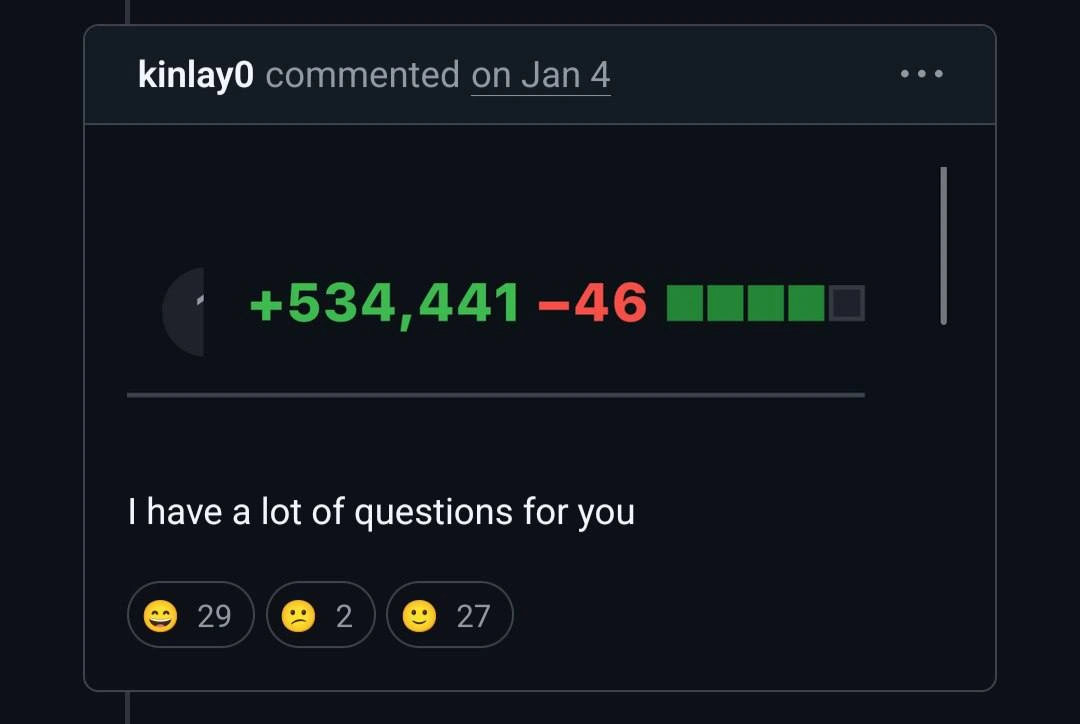
A dark-mode GitHub comment pairs half a million additions with the understatement “I have a lot of questions for you.” The dive explains diff stats, review capacity limits, and why pure-addition mega-PRs usually mean node_modules, generated code, or vendored bulk.
Level 1: The Homework Wheelbarrow
A student was asked to fix one spelling mistake in their essay. Instead, they show up pushing a wheelbarrow containing forty notebooks, three encyclopedias, and a phone book, and say "here's my correction." The teacher looks at the pile, looks at the student, and says only: "I have a lot of questions for you." Everyone watching bursts out laughing — not at the words, but at the gap between how calm the sentence is and how enormous the pile is. That polite little sentence carrying a mountain of disbelief is the whole joke.
Level 2: Reading the Green and Red
What you're actually looking at:
- Pull request (PR): a proposal to merge a set of changes into a codebase. Teammates review the diff — the line-by-line difference — before approving.
- Diff stats: GitHub's summary of a change: green
+is lines added, red−is lines removed. The colored squares give an at-a-glance ratio of additions to deletions. - Why size matters: reviewers must understand every change well enough to catch bugs and design problems. Good practice keeps PRs small — commonly a few hundred lines — so review stays meaningful. A 534,441-line PR cannot be meaningfully reviewed by a human; it can only be trusted, which defeats the point.
node_modules/ generated code: dependency folders and machine-produced files that should be excluded from version control via.gitignore. Accidentally committing them is the classic way a junior turns a 50-line change into a 500,000-line one. A useful instinct to build early: when your diff stats surprise you, rungit statusbefore pushing, not after the reviewer screams.
The reviewer's "I have a lot of questions" is the professional translation of several phrases that HR would not approve.
Level 3: The Unreviewable Artifact
The entire comedy of this screenshot is compressed into two numbers and seven words. The diff stats widget reads +534,441 −46 — over half a million lines added, forty-six removed — followed by GitHub's little ratio squares (four green, one neutral, the UI politely trying to summarize the unsummarizable). Below the divider, reviewer kinlay0 responds with surgical understatement:
"I have a lot of questions for you"
There's an old code-review koan this perfectly embodies: ask someone to review 10 lines and they'll find 10 issues; ask them to review 500,000 lines and they'll say "looks good." The reviewer here is heroically refusing the second path — but the joke works because everyone knows the review is already lost. Cognitive review capacity tops out at a few hundred lines per session before defect-detection rates collapse; at 534k lines, "review" is no longer an engineering activity, it's an archaeology grant. The PR has crossed the event horizon where approval becomes a social ritual rather than a quality gate.
Seasoned eyes also immediately profile what this diff probably is, because the +/− asymmetry is diagnostic. Organic feature work removes and refactors as it adds; a half-million-line, near-pure-addition diff almost always means someone committed node_modules/, vendored an entire third-party project, checked in generated code, lockfiles, or build artifacts — or, in the modern era, let an AI agent run unsupervised over a weekend. The 46 deletions are the tell: somewhere in that avalanche, a human made one small real change, and the rest is payload. This is precisely why .gitignore discipline, lockfile policies, and "no generated files in the repo" rules exist — each one a scar from a PR shaped exactly like this one. The emoji reactions (29 grinning, 27 smiling, 2 confused) are the gallery doing what galleries do: enjoying a disaster that, for once, is not theirs to merge. The two confused reactions are presumably the PR author and their manager.
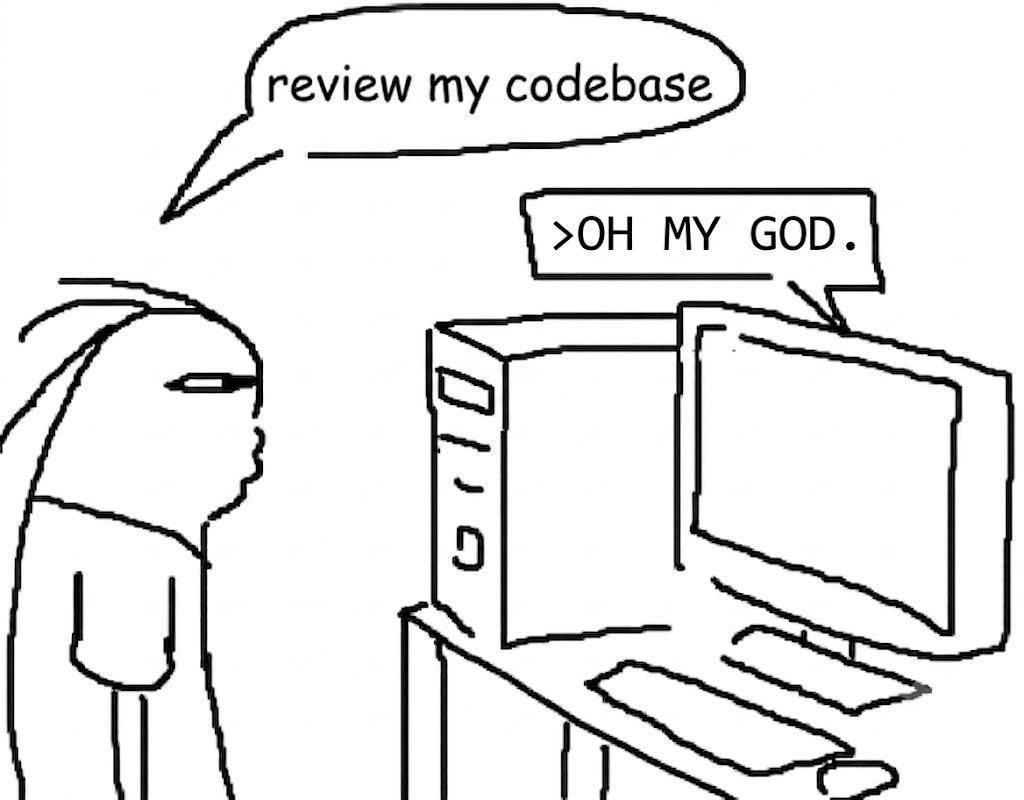
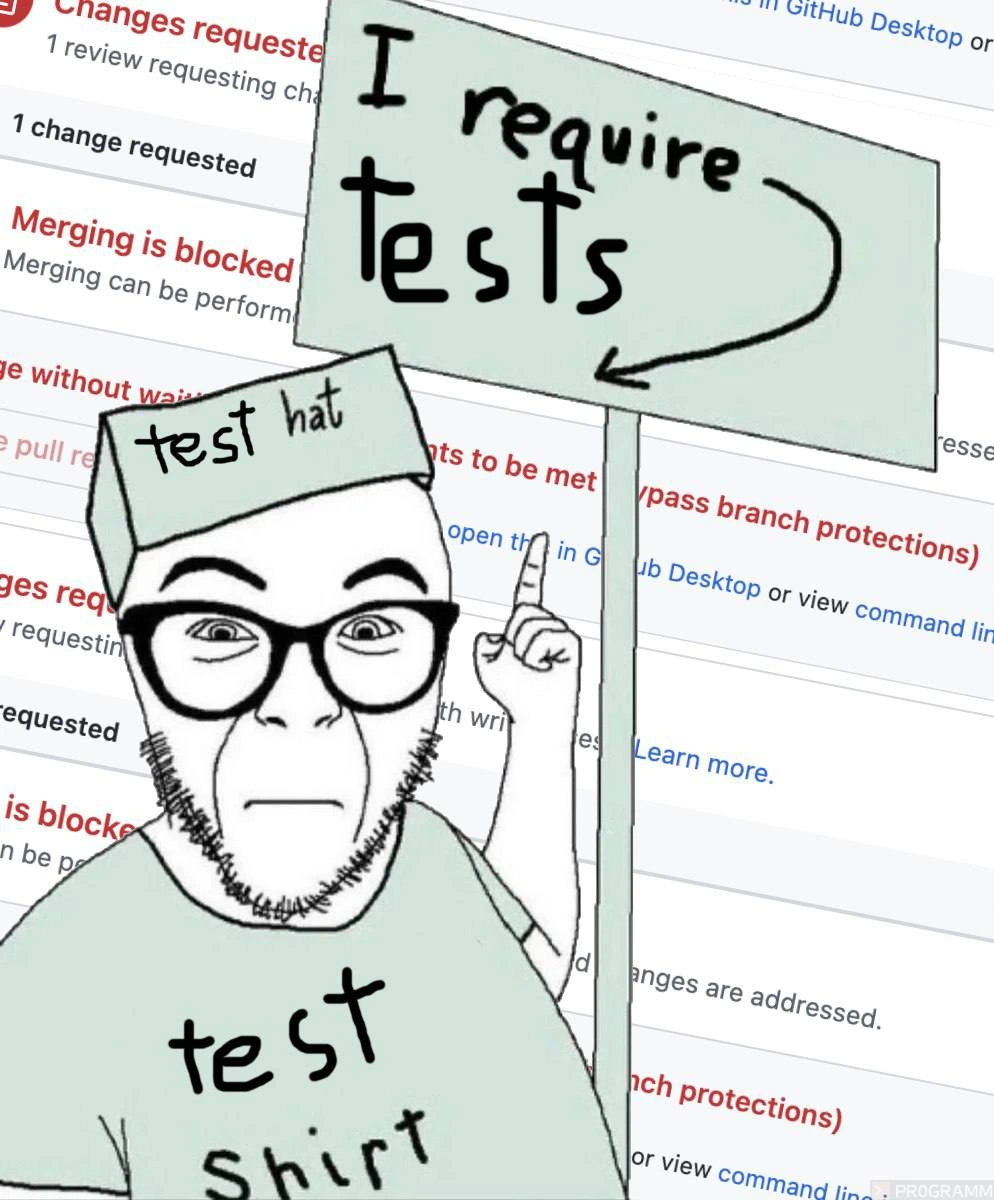
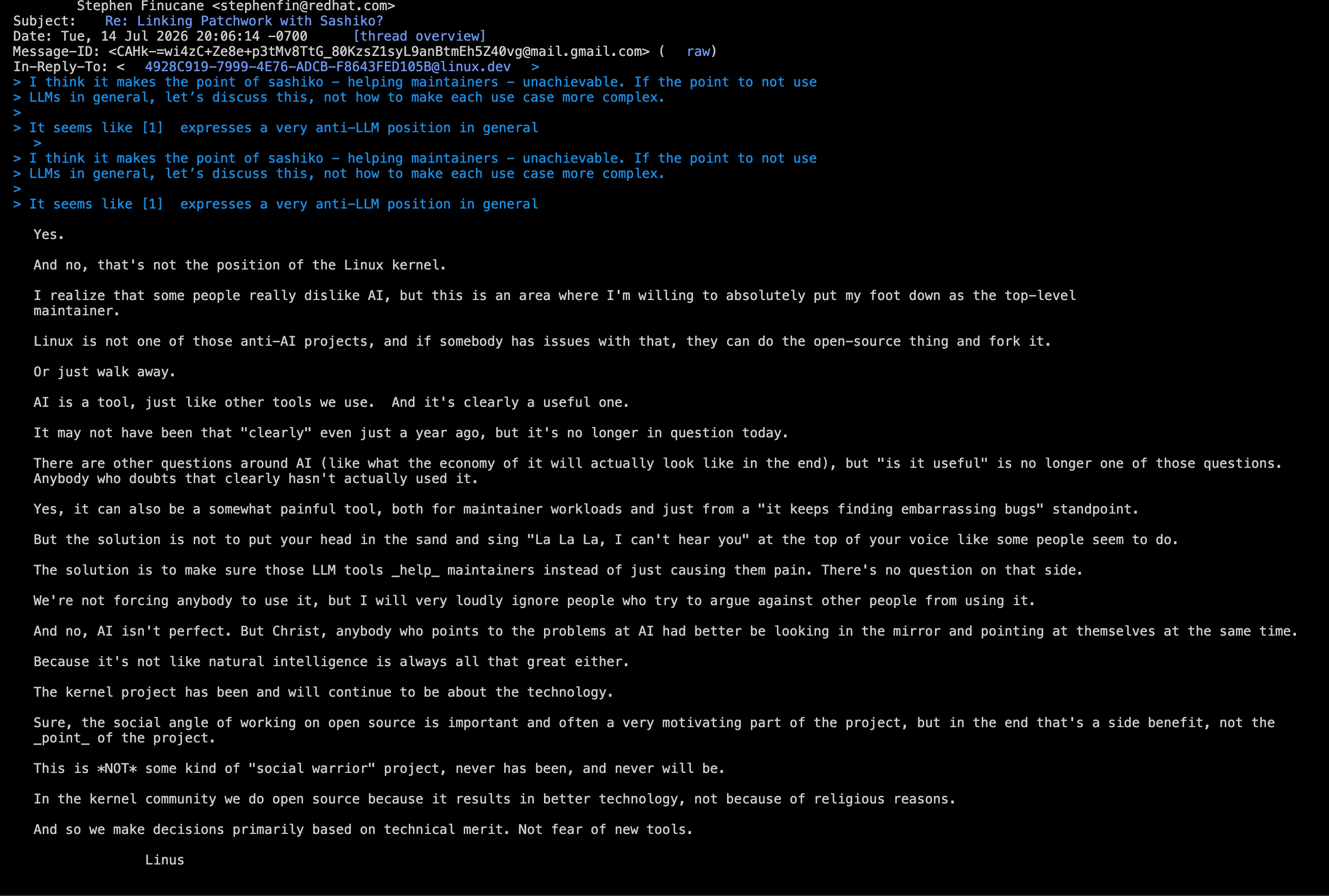
Per the well-known law of code review: a 10-line PR gets 10 comments, a 534,441-line PR gets 'LGTM' - this reviewer is bravely violating physics
At this scale, `LGTM` is no longer approval; it is a timeout.
lgtm
echo venv >>.gitignore
"Small fixes"
average chinese dev
ruff check --fix
experience doesn't matter anymore it seems. no one would ever be able to follow the code changes at this pace