
The Thin Line Between Enterprise Code and Spaghetti Code
Description
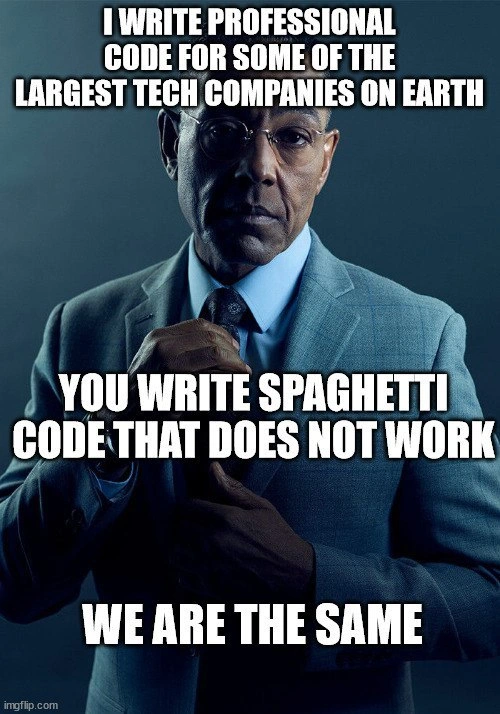
This meme uses the 'We are not the same' format featuring actor Giancarlo Esposito, who is known for his role as Gus Fring in 'Breaking Bad'. He is depicted in a sharp suit, adjusting his tie with a serious, confident expression. The meme has three lines of white text. The top text says, 'I WRITE PROFESSIONAL CODE FOR SOME OF THE LARGEST TECH COMPANIES ON EARTH'. The middle text says, 'YOU WRITE SPAGHETTI CODE THAT DOES NOT WORK'. The final, punchline text at the bottom subverts the usual format by stating, 'WE ARE THE SAME'. The humor lies in this cynical and relatable admission. It suggests that the perceived gap between elite, 'professional' code at major corporations and amateur, messy 'spaghetti' code is non-existent. For experienced engineers, this hits home by acknowledging the reality of technical debt, legacy systems, and deadline pressures that often lead to compromised code quality, even in the most prestigious of tech environments
Comments
7Comment deleted
The only difference between my spaghetti code and FAANG's spaghetti code is that theirs is served on a distributed platter, costs a million dollars a month in cloud bills, and is called a 'mission-critical legacy system'
The only real difference between your weekend spaghetti code and our Fortune-100 microservice mesh is that ours comes with a 90-slide deck explaining why the noodles are “domain-driven.”
After 20 years in the industry, I've learned that the only difference between enterprise spaghetti and startup spaghetti is that one comes with a Confluence page explaining why it's actually 'architectural linguine' and a JIRA ticket marked 'Won't Fix - Working as Designed'
Turns out the main difference between 'enterprise-grade' code at FAANG and your side project isn't the architecture patterns or test coverage - it's just the number of layers of abstraction hiding the spaghetti, and whether the tech debt is measured in millions or just your personal shame. At least your spaghetti code doesn't require three microservices and a distributed tracing system to debug
At FAANG scale, spaghetti just gets renamed “service mesh” and assigned SLOs - Conway’s Law ensures the marinara matches the org chart
Mine's just scalable spaghetti - containerized regret serving millions without total collapse
After two decades, I’ve learned the only difference between your spaghetti and our “enterprise-grade” spaghetti is that ours ships behind three feature flags, six retries, and a blameless postmortem