
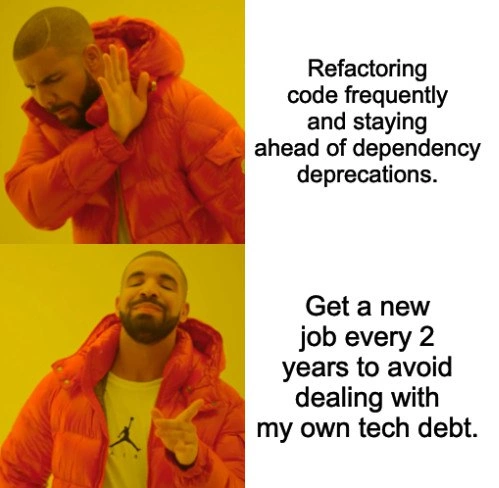
Strategic Career Planning vs. Code Maintenance
Description
This is a classic two-panel 'Drake Hotline Bling' meme, contrasting two approaches to dealing with software maintenance. In the top panel, Drake looks away with a gesture of disapproval from the text: 'Refactoring code frequently and staying ahead of dependency deprecations.' This represents the ideal but often arduous practice of maintaining a healthy codebase. In the bottom panel, Drake smiles and points approvingly at the text: 'Get a new job every 2 years to avoid dealing with my own tech debt.' This captures a cynical but widespread joke in the tech industry, where developers switch companies frequently, partly to avoid the long-term consequences of the technical debt they themselves have created. The meme resonates with experienced engineers who have both inherited messy codebases and have seen colleagues disappear just before their shortcuts became a major problem

Comments
7Comment deleted
My career strategy is just aggressive garbage collection for my own technical debt; I mark-and-sweep myself to a new company every two years
My favorite tech-debt repayment plan is simple: vest, bounce, and let the next staff engineer wonder why npm audit sounds like a Geiger counter
The real 10x engineer isn't the one who writes 10x more code, but the one who leaves exactly 6 months before the MongoDB cluster they insisted on using hits the 16MB document limit in production
The real technical debt isn't in the codebase - it's the institutional knowledge walking out the door every 24 months. Why refactor when you can simply 'migrate to a new platform' (your next employer's stack) and let the next team discover your creative interpretation of SOLID principles? It's not abandoning ship; it's 'pursuing growth opportunities in greenfield development.'
My tech-debt amortization plan is simple: switch companies before the transitive-dependency balloon payment hits and the Renovate tsunami becomes a rewrite RFC
Job hopping: the ultimate refactor where your tech debt gets forked to the previous employer
I refactor my employer every two years; it’s the only migration strategy that reliably moves all the deprecations to someone else’s backlog