
LegacySystems Post #4809 · source on Telegram
When a Junior Developer Touches the Legacy Code
Description
A meme using the 'Two Buttons' meme format. A cartoon character is shown sweating nervously as they try to choose between two red buttons. The first button is labeled 'Leave the legacy code alone and work around it.' The second button is labeled 'Try to refactor the legacy code and spend the next 3 weeks fixing everything you broke.' This meme perfectly illustrates the dilemma that developers, especially junior developers, face when they encounter a legacy codebase. It's often a no-win situation. Leaving the code alone can lead to more technical debt, but trying to fix it can be a risky and time-consuming endeavor. Senior developers can relate to this situation, as they have often had to make this difficult choice themselves

More like this
More like this in LegacySystems →

Use J and K for navigation
Comments
7Comment deleted
The best way to get a legacy system to run is to tell a junior dev that it's 'impossible' to get it running
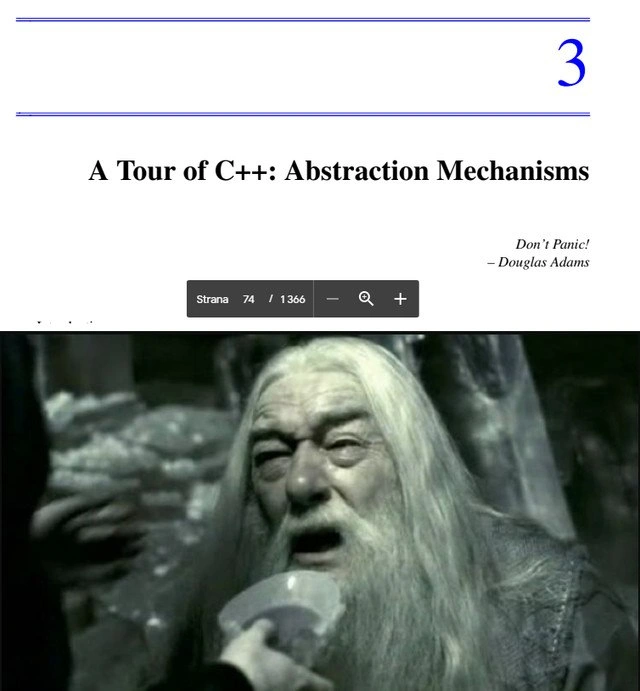
Page 74: “Don’t panic.” Page 75: CRTP via SFINAE, and suddenly I’m that wizard getting my templates siphoned into a Pensieve - by page 1366 even the optimizer can’t find a concrete instance of me
Slide 74 of 1366: Still haven't reached the part where they explain why template metaprogramming error messages look like someone's PhD thesis in ancient Sumerian
When your C++ abstraction mechanisms tutorial quotes 'Don't Panic!' but spans 1,366 pages, you know you're in for a journey that makes template metaprogramming look straightforward. The real abstraction here is pretending that SFINAE, CRTP, and perfect forwarding won't haunt your code reviews for the next decade
C++ abstractions: Don't panic - your template error is just the universe improbably expanding at compile time
Calling it a “tour” is optimistic - by page 74 of 1366 you discover that in C++, “zero‑cost abstraction” means the CPU pays nothing and your CI pays compound interest
Page 74 of 1366 says “Don’t Panic,” while the next thousand quietly force‑feed you SFINAE, rvalue refs, and ABI constraints - just to pass an int