
The Five Lines of Code Holding Back the Apocalypse
Description
This meme uses the 'Man Holding Up Pillar' or 'Atlas' format. It shows a muscular, shirtless man straining with immense effort to hold up a single, cracking stone pillar. This pillar is labeled 'My 5 lines of code'. The pillar is the sole support preventing a massive, crumbling, and ornate temple-like structure, labeled 'The entire application,' from collapsing entirely. The man himself is labeled 'Me'. The scene is dramatic and chaotic, emphasizing the critical importance of this seemingly small piece of code. The meme humorously and accurately portrays the concept of 'load-bearing code' in a complex or legacy system. It's a relatable scenario for senior developers where a small, often poorly understood, block of code is discovered to be the critical linchpin preventing total system failure. The joke lies in the disproportionate impact of a tiny contribution, highlighting fragile architecture, hidden dependencies, and the terror of refactoring code that 'just works' without anyone knowing why. It’s the digital equivalent of Jenga, where removing one wrong block brings everything down


Comments
7Comment deleted
We call that 'Jenga-driven architecture.' Everyone knows that one critical block of code exists, but nobody has the courage to pull the ticket for its refactoring
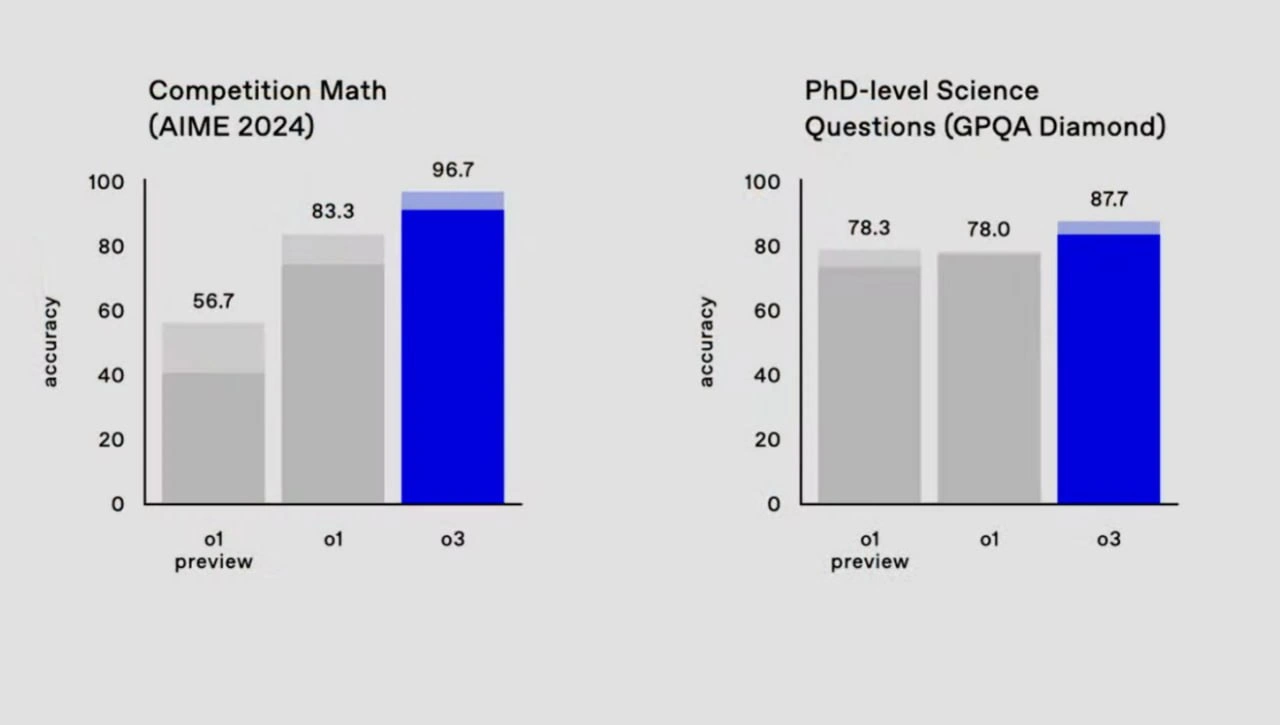
o3’s accuracy bump is great - until the KPI review slides reveal the real blocker: your y-axis only has two more pixels of headroom
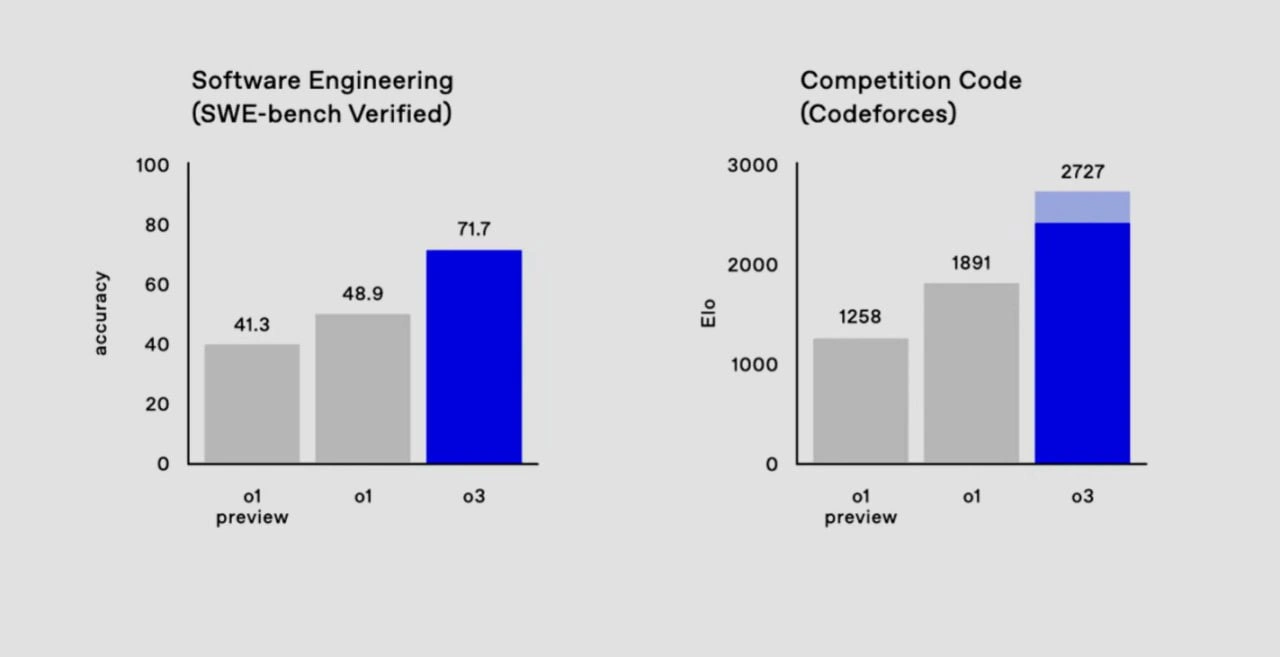
o3 solving math problems at 96.7% accuracy while our production code still breaks when someone enters their name with an apostrophe
When your model goes from o1 to o3 but the PhD-level science scores barely budge - turns out even AI experiences the classic 'works on my benchmark' problem. The o1→o1-preview regression on GPQA is giving strong 'we fixed the bug that was actually a feature' vibes. At this rate of improvement, o5 will achieve 100% on competition math while still confidently hallucinating that P=NP has been proven
Great, o3 hits 96.7 on AIME - too bad accuracy doesn’t include P95 latency, token burn, or the new API contract it hallucinated during “reasoning”
o1 laps PhDs in math; too bad it can't optimize our monolith-to-microservices migration ROI
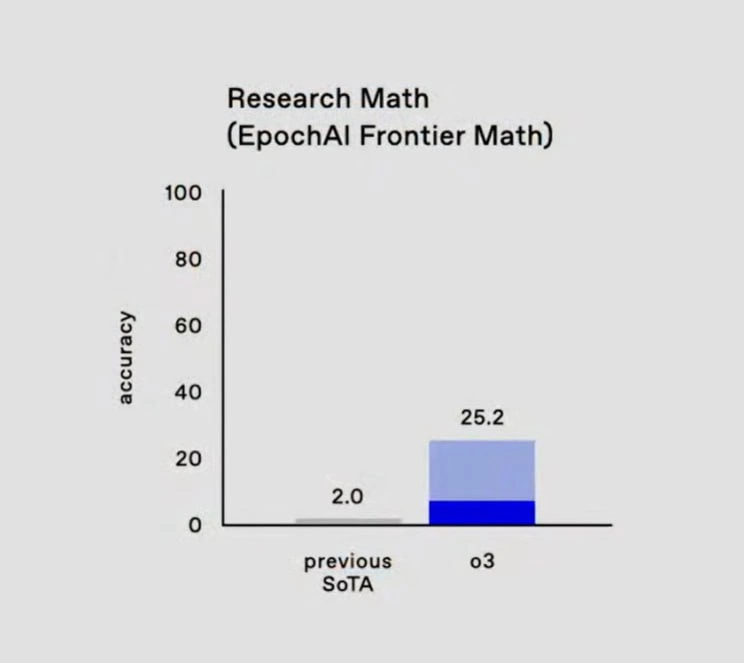
The bars say o3 is smarter; the pager says we’ll find out when the benchmark changes from AIME/GPQA to ambiguous tickets, misconfigured YAML, and 3am SLO math