Skip to content
DevMeme
707 of 7435
DEV MEME Liqueur Flight
DevCommunities Post #800, on Nov 10, 2019 in TG

DEV MEME Liqueur Flight

Why is this DevCommunities meme funny?

Level 1: All Done, Cheers!

Think about finishing a huge homework project with your friends. You’ve all worked hard for days, and finally it’s done and everything looks great. What do you do next? You celebrate! Maybe you grab some special treats or sodas, line them up, and clink glasses to say “Yay, we did it!” That’s exactly what’s happening here, just with grown-up drinks. The people who wrote a bunch of computer code finally got everything working perfectly (imagine all the traffic lights on a city street turning green at the same time – it means everything is good to go). They aren’t allowed to add any more new stuff (like no more changes – the hard work is finished), so now they can relax.

In the picture, each little glass of colorful juice (actually they’re shots, small drinks) is lined up in a row on a board, and together the labels under them spell a funny word. This lineup is just like them saying, “Here’s each step we finished, one by one, all successful.” It’s as if each drink represents a stage of their project that went well. By spelling out “DEV MEME,” they’re basically labeling their celebration as a joke for developer friends. But even if you don’t get the tech joke, you can understand the feeling: they completed something big and hard, and now they’re doing a cheers with a bunch of fancy drinks to reward themselves. It’s a happy, “we did it!” moment. Just like you might have a little party after finishing an important exam or winning a team game, these folks are having a little party after finishing their big coding project. The drinks are lined up all pretty because they’re proud and having fun – and now it’s time to enjoy and say “cheers” to a job well done!

Level 2: Feature Freeze Cheers

Imagine you’ve been working with your team on a big software update, and finally you reach the feature freeze. A “feature freeze” is when the team decides “No more new stuff! Let’s just make sure what we have is solid.” It’s like when a teacher says “Pencils down!” before collecting a test – after that point, you’re not allowed to add new answers, only maybe tidy up existing ones. In software terms, this is the point where developers stop adding new features and focus on fixing bugs and polishing the product for release. It’s a tense but exciting milestone in the developer community. Once everything is tested and ready (all the automated tests are passing with flying colors), the mood shifts from nervousness to celebration.

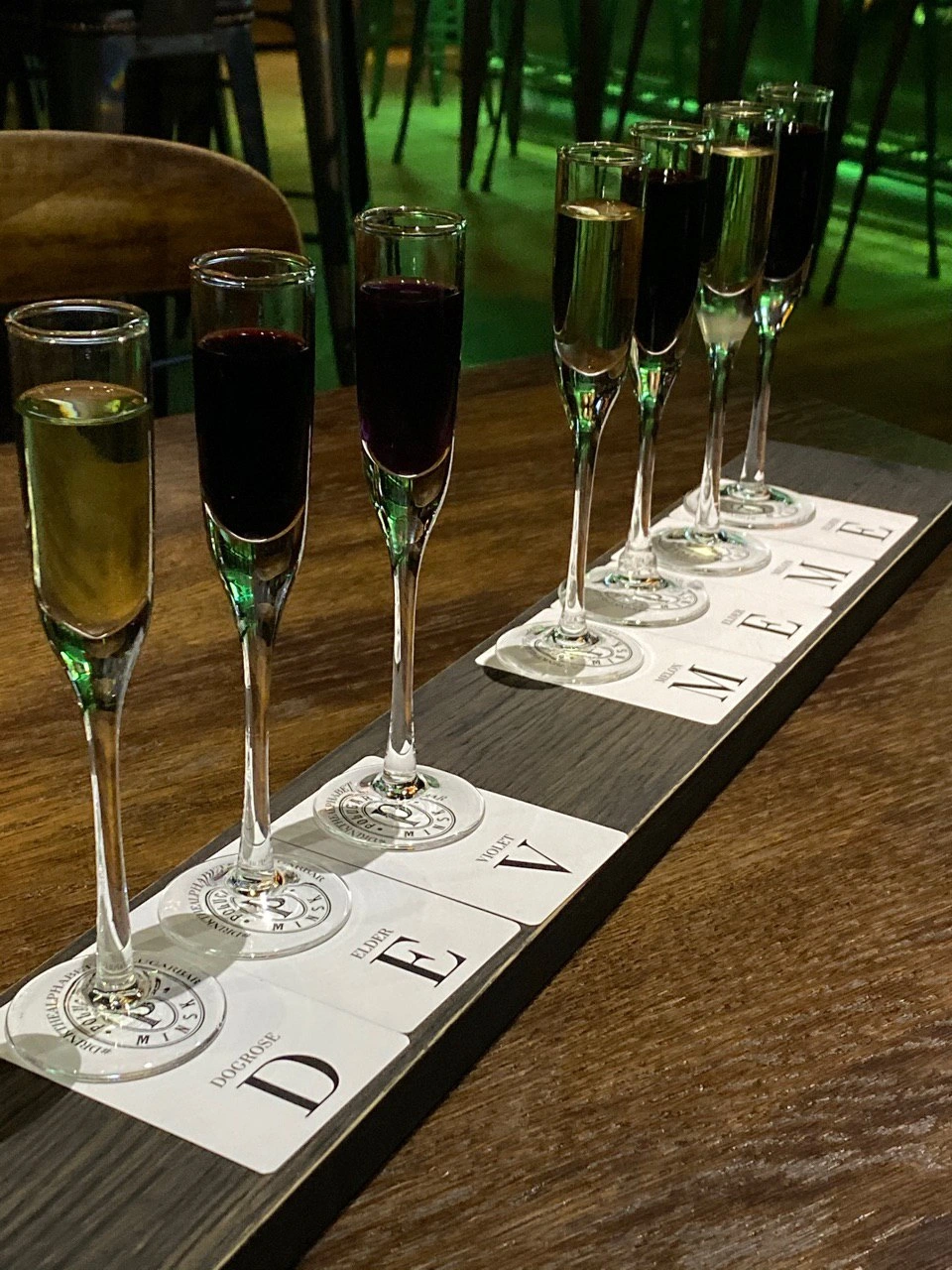
This meme photo shows a celebration in progress: a wooden board holding a flight of shots (small tasting glasses of different drinks). A shot glass flight is basically an assortment of tiny drinks, often of various flavors, served together so you can try a bit of each. In the picture, there are seven little glasses in a neat row, and each one sits on a coaster with a label. If you look closely, the coasters have names of flavors (“DOGROSE”, “ELDER”, “VIOLET”, etc.), and each coaster has a big bold letter on it. Those letters spell out “DEV MEME”. That’s not a coincidence – it’s a playful detail showing that the whole setup is meant as an inside joke for developers (the word “Dev Meme” literally describes itself).

So why is this funny to people in tech? It’s because the layout of the drinks looks just like a deployment pipeline from our work life. In software development, a deployment pipeline is the step-by-step process that code goes through from development all the way to production (the live environment). For example, code might go through stages like:

  1. Dev – where a developer writes and tests code in their own environment.
  2. QA/Test – where the code is tested in a controlled environment to catch bugs.
  3. Staging – a stage that is almost like production, used to double-check everything in a production-like setting.
  4. Production – the final stage where the app or website is live for users.

Each stage must be successful for the code to move to the next. We often use a Continuous Integration (CI) system that runs tests at each stage and gives a green light (pass) or red light (fail). Many teams have dashboards or little lights that show green when things are good and red if something broke. In the bar photo, all the drinks are lined up like those stages, and the colors we see (golden and dark red/purple) are kind of like seeing all green indicators – the team is joking that every check passed, nothing is failing. When they say “every glass green, nothing left red,” they mean all tests are passed and there are no “red” problems.

Now, about the “liquid code review” mentioned: a code review is normally when programmers carefully read through each other’s new code to make sure it’s correct and clean. It’s like proofreading someone’s essay in school. But during a feature freeze at the end of a project, there might not be much new code to review (since you stopped adding new stuff). Instead, the team might review something else – in this case, beverages! Calling it a “liquid code review” is a jokey way to say the team is sitting together reviewing (tasting) those drinks one by one, as if each drink were a piece of code to approve. It’s a lighthearted group activity to unwind.

This kind of dev bar outing – going to a bar after finishing a big project – is pretty common in tech circles. It’s part of modern corporate culture in many software companies: when you’ve pulled off a big release or survived a stressful deadline, the team often goes out together to celebrate. Everyone is happy because the deployment (the release of the new software version) is done and was successful. The picture captures that shared feeling: the wooden plank with drinks is like a mini victory parade for the code. The final arrangement spelling “DEV MEME” just adds an extra wink to fellow developers, saying “we turned our celebration into a dev meme itself!” In short, the team has converted their continuous integration pipeline into a row of drinks – all tests passed, time to cheers. It’s a fun mix of work and play, and anyone who’s been through a tough sprint or release can smile at this shared experience.

Level 3: Shots in the Pipeline

The photo captures a clever mashup of a deployment pipeline and a celebratory bar ritual. Seasoned developers will immediately recognize the setup: seven shot glasses lined up on a board, each on a coaster labeled with a letter, mimicking the stages of a multi-step CI/CD pipeline. In a real continuous integration workflow, code flows through sequential environments (DEV, QA, Staging, etc.), with each stage’s tests needing to pass (go green) before the code advances. Here, each slender glass is like one of those pipeline stages – a liquid environment, if you will – progressing from left to right. The alternating pale gold and deep burgundy drinks even resemble status indicators: all “green” across the board, nothing “red” (failing) in sight.

This scene is dripping with developer humor and inside references. It spells out “D E V M E M E” in bold letters on the coasters, winking at us that this is literally a dev meme come to life. The feature freeze mentioned in the title is that critical time in a release cycle when no new code or features can be added – a final code lockdown before shipping. For veteran engineers, a feature freeze brings both relief and high pressure: relief that the frantic coding is done, pressure to fix last-minute bugs without introducing new ones. Once everything is locked down and tests are passing, it’s tradition in many dev teams to breathe out and celebrate a bit. This image captures that exact post-deploy ritual: the team has survived the crunch, and now the pipeline’s “build status” is celebrated with a flight of drinks.

The phrase “liquid code reviews” is a tongue-in-cheek way to describe what’s happening here. Normally, a code review means peers examining code line-by-line to catch issues. But during a hard-earned relaxation moment, instead of reviewing code, the team is “reviewing” assorted beverages! It’s a playful metaphor: each shot stands in for a chunk of code or a deploy step, and the act of tasting them in sequence is like verifying each stage of the release. It’s as if the team said, “Our code is frozen, our tests are green – now let’s do a liquid review meeting at the bar.” Corporate culture in tech often includes these post-release bar outings, and this meme nails that shared experience. Every senior dev can relate to the sight of a table full of drinks lined up after a big deploy, symbolizing that all systems are go and it’s finally time to relax.

Bartender: “All tests passed and every environment is green. Ready to deploy these shots?”
Dev Team: “Ship it! Cheers!” 🍻

At a deeper level, the humor also pokes at how even in leisure, developers see the world through a tech lens. The meticulous arrangement – seven glasses on a wooden plank – looks like a build monitor’s pipeline view. The coasters have flavor names like “DOGROSE”, “ELDER”, “VIOLET” each starting with letters D, E, V… spelling out DEV MEME when combined. This kind of Easter egg is classic developer culture creativity, the sort of detail a bunch of engineers would cook up to make their night out geekily memorable. They’ve essentially turned a round of drinks into a status dashboard that reads “DEV MEME,” proudly broadcasting their community spirit. It’s a moment of collective pride and relief: the release is done, the pipeline is empty (in fact, about to be emptied in a more literal sense), and nothing crashed in production. For a veteran software engineer, the scene hits home – it’s equal parts absurd and relatable, a perfect snapshot of tech life when a crunch is over and the only thing left to do is toast to the success (or survival) of the project.

Description

A close-up shot of a liqueur tasting flight on a wooden table. Seven tall, thin shot glasses are arranged in a row on a dark wooden serving tray. Each glass is filled with a different colored liqueur, ranging from light yellow to deep red and dark black. The glasses sit on small white cards, and together the cards spell out 'D E V M E M E' in large black capital letters. The setting appears to be a bar or distillery with a warm, inviting ambiance, indicated by the wooden surfaces and soft green background lighting. This image is a meta-reference to the 'dev meme' project itself, presented in a creative and sophisticated way, aligning with the brand's 'boutique gallery' positioning

Comments

7
Anonymous ★ Top Pick Our new logging framework has seven levels, from 'DEBUG' (light and fruity) to 'FATAL' (dark, bitter, and you're definitely getting paged)
  1. Anonymous ★ Top Pick

    Our new logging framework has seven levels, from 'DEBUG' (light and fruity) to 'FATAL' (dark, bitter, and you're definitely getting paged)

  2. Anonymous

    Finally, a seven-stage pipeline where every stage turns green - but senior leadership still insists on a manual ‘taste in prod’ step

  3. Anonymous

    Finally, a deployment pipeline where going from D to E to V makes perfect sense and nobody questions why production is completely different from what we tested

  4. Anonymous

    A perfect visualization of the deployment pipeline: starts golden and promising in DEV where everything works flawlessly, progressively darkens through QA and staging as reality sets in, and by the time it reaches PROD it's either completely empty (downtime) or so dark you can't see what's inside anymore (observability gap). The real question is whether this represents the code quality, the developer's soul, or the remaining budget after all those emergency hotfixes

  5. Anonymous

    Dev Meme flight: robust body of technical debt, bright notes of scope creep, finishes with eternal CAP theorem irony

  6. Anonymous

    Identical stems, different payloads, one shared board - finally, a microservices architecture that admits it’s just a monolith with better glassware

  7. Anonymous

    Tonight’s release pipeline is clearly labeled: DEV → MEME. Like our microservices, each tiny glass has strong opinions - after the third you believe in consistency, after the seventh you embrace CAP and file the outage under “works on my bar.”

Use J and K for navigation