Skip to content
DevMeme
570 of 7435
The Futile Attempt to Enforce a Pre-Release Code Freeze
Deadlines Post #653, on Sep 8, 2019 in TG

The Futile Attempt to Enforce a Pre-Release Code Freeze

Why is this Deadlines meme funny?

Level 1: Don't Touch It!

Imagine you've built the tallest block tower ever, and it's standing perfectly. The teacher is about to come and see it in one minute, so you know you should stop now. But then you spot one more block on the floor and think, "If I just put this on top, it'll be even better!" You reach out to place that last block, but your friends suddenly grab you and shout, "Don't touch it anymore!" They know the tower is super fragile and adding that extra block could make it all fall down. This scene is funny because we understand both sides: you really want that final perfect touch, but your friends are panicking because they don't want the whole tower to crash at the last moment. In the end, it's better to leave it as it is and be happy that your tower is safely completed.

Level 2: The Last-Minute Trap

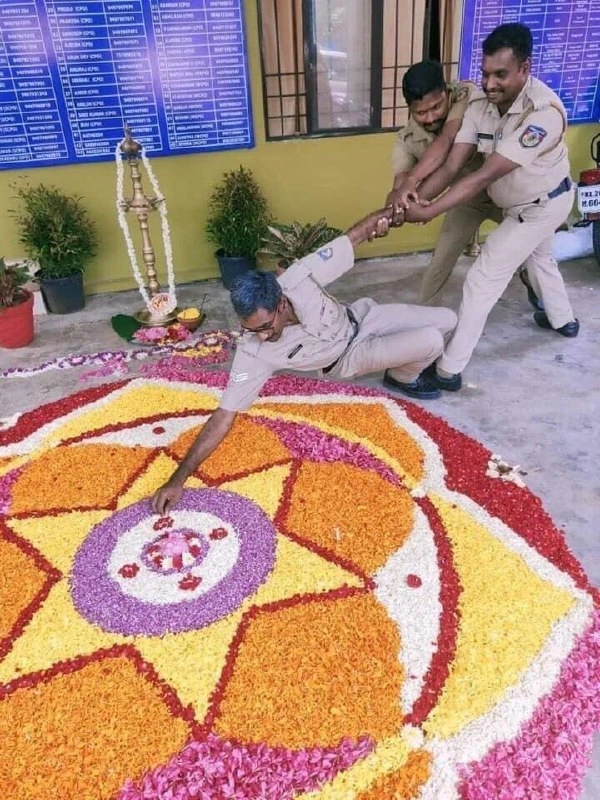
Let's break this down in simpler terms. The picture shows a police officer on the ground trying to add one last flower petal to a big, completed floor decoration (a rangoli made of colorful petals). Two other officers are pulling him away. Now, think of that floor decoration as a nearly finished software project, and the petal as a final code change. The officer reaching out is like a developer who can't resist making one more tweak or adding a new feature at the very last minute. The teammates pulling him back represent the rest of the team saying, "Nope, time's up – don't touch it anymore!"

In software teams, a release freeze (or "code freeze") is a point in time when everyone agrees to stop adding new code or features. It's like the "pencils down" moment before you turn in a test or assignment at school. Why have a freeze? Because right before a big release or deadline, the priority is to stabilize and test what’s already there, not to cram in new changes. A commit is when a developer saves their code changes to the project (using a system like Git). Every commit can trigger the build and testing process in a CI/CD pipeline – basically an automated system that compiles the code and runs tests to make sure nothing is broken. When someone makes a last-minute commit, the whole build process has to run again. If that new code has a problem (even a small bug), it could cause tests to fail or, worse, introduce a defect that nobody has time to fix before the release.

You can imagine the stress this creates. The project was all set to go, and suddenly there's new code to worry about right before launch. This is why teammates get anxious (cue the release anxiety) when they see a developer hovering over the keyboard so close to the deadline. We've learned that even a "tiny" change can have unintended consequences. For example, changing one line of code might seem harmless, but it could unexpectedly mess up another part of the system. If there’s no time to properly re-test everything, that small change might slip through with a big bug. That's obviously bad news for code quality and for the success of the release.

The term feature creep refers to the tendency to keep adding "one more feature" or improvement beyond the original plan, often at the last minute. It's like when you're packing a bag for a trip: you keep tossing in one more item ("I might need this too!") and eventually the suitcase won't close or you delay your departure. In software, feature creep – especially right before a deadline – can cause delays and instability. Teams establish a freeze to prevent this from happening. They want to avoid the trap of last-minute changes derailing the project. It's much safer to save those ideas or minor tweaks for the next update, rather than risk the current version with something untested.

So what's happening in this meme scenario? It's the day before a release (the deadline is extremely close), and one developer wants to push a new update: "Adding a new feature one day before the release date," as the caption says. His intention might be good – maybe he thought of a cool enhancement or a necessary fix. But his colleagues know this is risky timing. By dragging him away (literally, in the image), they are effectively enforcing the code freeze. They’re making sure the product is delivered as-is, without any last-second surprises. This way, they can confidently run the final tests, package the software, and meet the deadline without a disaster. In other words, they're preventing a potential deployment pain point by saying "let's not break what is working right now."

For a newer developer, the takeaway is: when the release deadline hits and a freeze is in effect, resist the urge to sneak in more changes. That flashy new feature or last-minute tweak can wait for the next version. In the final stretch, stability and reliability are far more important than squeezing in one more change. This meme humorously shows that sometimes you literally have to hold your teammate (or yourself) back to ensure you deliver a solid, tested product on time.

Level 3: Feature Freeze Follies

The scene is instantly recognizable to any seasoned developer: it's the day before a major release, the official code freeze is about to kick in, and yet here we are watching a teammate desperately try to squeeze in "just one more" code change. In the image, a police officer sprawls across the floor, stretching out to place a final flower petal onto an elaborate rangoli pattern, while two fellow officers yank him away by the arms. Replace that rangoli with a nearly finished codebase and those officers with alarmed co-workers, and you've got the archetypal last-minute commit scenario. It's humorous because it's painfully real – we've all either been that developer or had to play the role of the "release police," physically (or metaphorically) restraining a colleague from merging one more feature at T-minus zero.

Under the looming pressure of a deadline, there's a well-understood industry rule: when the software is stable and a release freeze has been declared, step away from the keyboard. Why? Because decades of combined developer experience have shown that late changes are where nightmares hide. That "tiny tweak" or surprise feature added hours before launch can unravel weeks of work. Picture the CI/CD pipeline groaning as it kicks off a last-second build: integration tests restart, deployment scripts spin up one more time, and everyone's heart skips a beat. One stray commit can turn a smooth release into a late-night firefight with the build server. It's the classic trade-off of code quality versus speed – a gamble seasoned engineers know not to take. As one veteran might warn:

"It's just a small change, it won't break anything." – Famous last words before a 2:00 AM rollback.

This meme nails the absurdity of feature creep at the 11th hour. The intricate rangoli on the floor is like a meticulously crafted software release that's been tested and prepared. It's basically done – a finished work of art. Then along comes the perfectionist engineer (or a manager with a new idea) saying "Wait, let's add this one more thing!" That single flower petal he insists on placing corresponds to a last-minute commit for an extra feature or a tiny fix. Maybe it's a new button, a tweak to the algorithm, or some UI polish. In theory it sounds harmless – in reality it risks the integrity of the whole pattern. Veteran developers chuckle (and cringe) at this because they've seen how often a last-minute change can cause a domino effect of bugs. It's the reason release anxiety exists: everyone on the team collectively holds their breath when someone says they'll push one final update right before the cut-off.

Ultimately, this image brilliantly satirizes tech culture. Those two colleagues dragging the officer away are enacting the kind of emphatic intervention we've all wanted to perform. In a healthy engineering environment, teammates look out for each other – even if that means yelling "No more changes!" as the clock runs out. It's comedic drama with a kernel of truth. Some organizations literally lock down the code repository during a freeze, requiring approvals for any commit – essentially handcuffing developers to prevent themselves from accidentally derailing the release. The deployment pain points that come from last-minute merges aren't just theoretical: one unforeseen bug can mean missed deadlines, emergency hotfixes, or a version rollback right after launch (not to mention a very late night for the on-call engineer).

Experienced devs find this meme spot-on because it captures that mix of panic and heroic folly that erupts under deadline pressure. We've all known that one developer (or have been guilty ourselves) who, in the name of perfection or a promise to add "just one more feature," nearly sabotages a deliverable. It's funny after the fact — once the release is out and no critical bugs slipped through. But in the moment, seeing someone attempt a last-second commit sends a chill down everyone's spine. The humor works because it lets us laugh at a scenario we've survived in real life: prying the keyboard (or the flower petal) from the hands of our well-meaning, overzealous teammate, and dragging them away before they inadvertently set our carefully planned release on fire.

Description

The image captures a humorous real-world scene repurposed as a meme, with the caption 'Adding a new feature one day before the release date'. It shows three men in what appear to be police or security uniforms. One man with graying hair is on the floor, intensely focused on arranging an intricate, colorful flower mosaic (a Pookalam, traditional in India). Two other officers are trying to physically drag him away by his arms, pulling him back from his task. He resists, determined to place one final petal. The scene serves as a perfect allegory for a software development team right before a launch. The determined man represents a developer unable to resist 'gold-plating' or adding one last, non-essential feature. His colleagues, representing the project manager or the rest of the team, are desperately trying to enforce the code freeze and prevent last-minute changes that could introduce bugs and jeopardize the entire release. For senior engineers, it’s a painfully relatable depiction of scope creep and the struggle to maintain stability against the urge for perfectionism under a tight deadline

Comments

7
Anonymous ★ Top Pick The man on the ground isn't adding a feature. He's just noticed a single misaligned pixel in the favicon and is trying to push a 'critical' hotfix directly to the main branch
  1. Anonymous ★ Top Pick

    The man on the ground isn't adding a feature. He's just noticed a single misaligned pixel in the favicon and is trying to push a 'critical' hotfix directly to the main branch

  2. Anonymous

    Ops yanking me off the console: “Freeze started five minutes ago!” - Me, still stretching for the keyboard: “Relax, it’s just one more petal in the microservice rangoli; how big can a one-line hotfix blast radius be?”

  3. Anonymous

    When you're trying to hotfix production but the entire team is already mentally checked out for the holiday weekend

  4. Anonymous

    Every senior engineer knows this feeling: you've carefully architected your vacation around the release calendar, set up all the monitoring dashboards, documented the rollback procedures, and trained the on-call rotation. Then at 4:47 PM on Friday - right as you're about to sign off for a long weekend - Slack lights up with 'quick production hotfix needed' and suddenly you're being physically dragged back to your terminal by the deployment pipeline. The rangoli represents all the beautiful, carefully laid plans you made to avoid this exact scenario, now being trampled by the reality of 'it's a P0, we need you.' At least in this version, they're being honest about the force required to get you back into production mode during what should be downtime

  5. Anonymous

    Finally nailed hexagonal architecture symmetry in Draw.io, but sprint cops drag you to retro

  6. Anonymous

    Prod freeze during a SOX audit: SREs enforcing least privilege while the principal dev insists it’s just one petal in the center

  7. Anonymous

    Two SREs implement a manual circuit breaker on a one‑liner hotfix five minutes before change freeze - the most reliable reliability pattern we’ve ever shipped

Use J and K for navigation