Skip to content
DevMeme
3436 of 7435
The Accidental Subject Matter Expert
Bugs Post #3769, on Oct 3, 2021 in TG

The Accidental Subject Matter Expert

Why is this Bugs meme funny?

Level 1: Troublemaker to the Rescue

Imagine a group of very smart older kids trying to figure out why a big puzzle they’re working on suddenly doesn’t fit together. They’ve tried every piece, and something is clearly wrong, but nobody knows what happened. So one of the older kids says, “We need to ask an expert who knows about this puzzle.” Now, surprise – the “expert” turns out to be the little kid who was playing with the puzzle earlier and secretly messed up one of the pieces! The older kids invite that little troublemaker over, and the little kid raises his hand happily and says, “That’s me!” It’s funny because you’d think the expert helper would be a wise older person, but it’s actually the same kid who caused the mix-up. In the end, since that kid was the one who changed the puzzle piece, he’s the best person to explain what he did and help fix it. The humor is that the one who made the mess is also the one who can clean it up – the troublemaker becomes the hero who saves the day.

Level 2: Junior in the Spotlight

Let’s break down what’s happening in simpler terms. In a software team, bugs are mistakes or errors in the code that cause things to go wrong (like a feature not working or a system crash). Debugging is the process of finding and fixing those bugs – basically detective work for code. Often, when a serious bug pops up, multiple team members get involved to solve it. Picture a bunch of developers huddled around looking at error logs and code, trying different fixes – this is the “debugging committee” the meme refers to. Here we have a Senior Developer (an experienced programmer) and an Architect (a very experienced engineer who plans the overall system design) leading the investigation. They’re scratching their heads, saying “We can’t find what is causing the bug.” This indicates they’ve tried the usual troubleshooting steps but the cause is still a mystery. That’s a pretty common Debugging_Troubleshooting scenario – sometimes bugs are sneaky and it’s not obvious what part of the code is to blame.

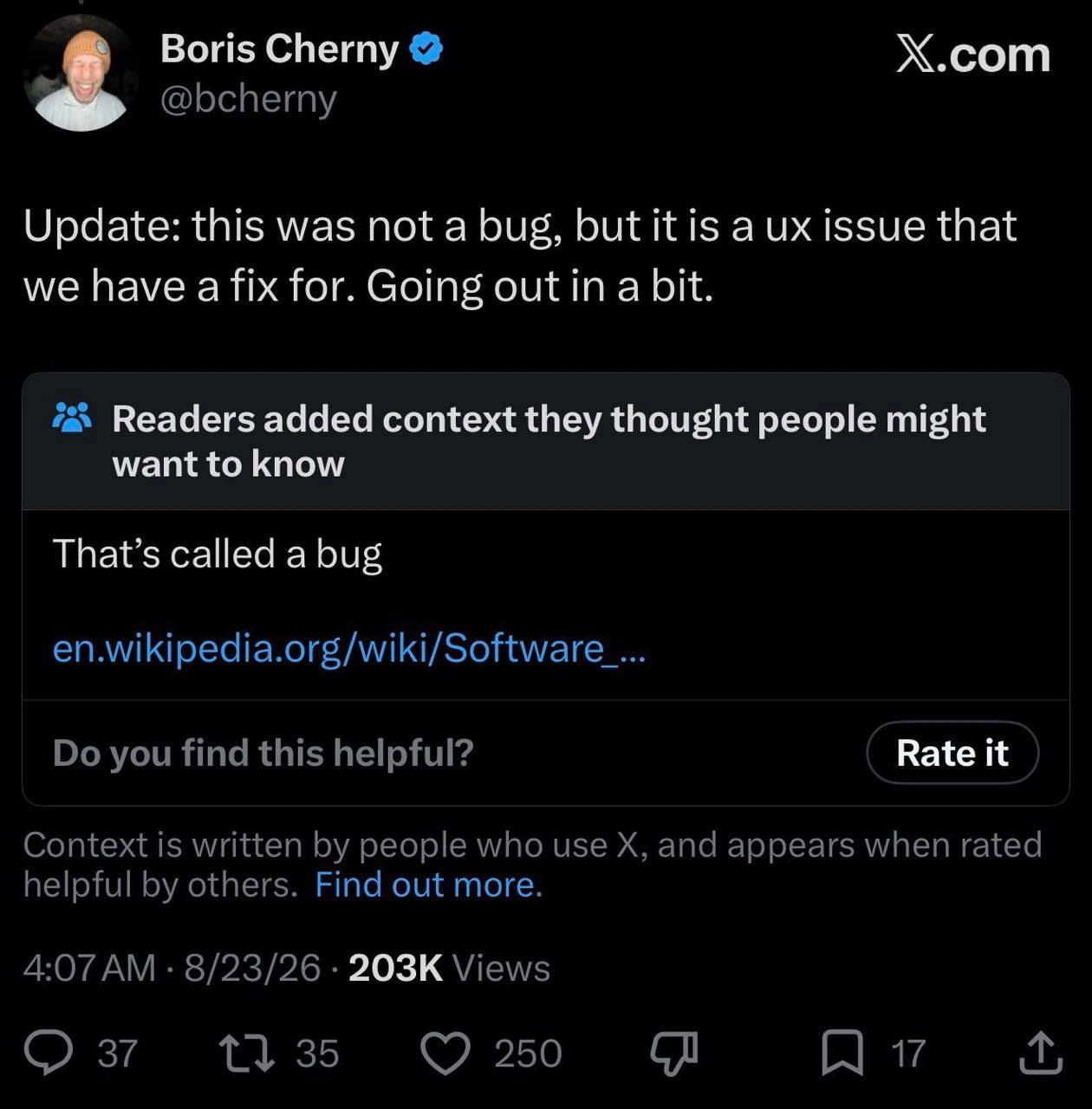
So, what do they decide? “Let’s bring an expert here.” Now normally an expert might mean someone who knows a lot about the system or the specific technology. But the punchline is that the so-called expert is actually the Junior Developer who injected the bug – basically the new guy who wrote the piece of code that contains the error. In the second panel of the meme, we see that junior dev literally stepping forward and saying “That’s me.” It’s a scene taken from a TV show (Loki, which is why the room looks sci-fi with all those round ceiling lights), but here it represents the junior developer proudly (or sheepishly) admitting they’re the one who caused the problem – and, by extension, they might be the one who knows the most about it.

Why would a junior developer be the “expert” on a bug? Well, if you write some code (especially if you’re new and maybe wrote it a bit incorrectly), you automatically have first-hand knowledge of that code’s logic. Even if you made a mistake, you know what you intended to do there. Often, teams will call in the person who last worked on that part of the code when something breaks. It’s not about blaming them (in healthy teams, people avoid finger-pointing); it’s about speed: that person can explain the code faster than anyone else. They remember “Oh, I changed how this function works last week” or “I tried a new approach there.” That context is super valuable for debugging. Senior devs know that sometimes the quickest way to fix a bug is to ask “Hey, who wrote this, and what were they trying to do?” In developer lingo, they might do a git blame on the file – a command that literally tells you who last edited each line of code – and if it shows the junior’s name on the suspect lines, they’ll call that junior over. It’s a bit like checking a classroom project to see which student worked on the broken part. If it turns out Johnny did it, you ask Johnny to help figure it out.

The humor and relatability come from the role reversal. Usually, you’d expect a Senior Developer or an outside specialist to be the expert in troubleshooting. Juniors are typically the ones learning from seniors. But in this scenario, the seniors and even the Architect (the big-picture planner) are admitting “We’re stuck; let’s ask the junior who wrote this code, maybe they know what’s up.” It’s funny because the Jr. Dev might have the least experience, yet in this specific situation they have the inside knowledge. Every developer who’s been the new person on a team can imagine how it feels: one day you write some code, and a week later all the seasoned folks are looking at you like “Please save us – what did you do here?” It’s both embarrassing and a little empowering. Embarrassing because oops, you caused a problem; empowering because you actually might be the key to fixing it. This meme is very relatable humor in tech circles because almost everyone has seen a bug investigation where eventually someone says, “Let’s get the person who wrote that part in here.” And if you are that person (especially a junior), it feels like being a kid called into the principal’s office – except the principal needs your help!

In summary, the meme highlights a real teamwork aspect in software development: Debugging isn’t always about the most experienced developer magically knowing the answer. Sometimes it’s about knowing the recent changes and details. The junior developer who made the change is inadvertently the expert on that change, so they get put in the spotlight to help fix the bug. The situation is comedic, but it’s also a small lesson: when solving Bugs in Software, knowledge of the code matters as much as title or tenure. Even a junior can contribute a critical clue to squash a bug – especially if they innocently planted that bug in the first place!

Level 3: Accidental Expert

On the surface, this meme humorously captures a classic debugging post-mortem scenario: a critical bug has everyone stumped, so the team "escalates" by calling in an expert – who turns out to be the very junior developer that accidentally created the issue. It’s the ultimate ironic twist in a root cause analysis meeting: the Sr. Dev (senior developer) and the Architect (system designer) are standing there perplexed, and their so-called “expert consultant” is literally the newbie who wrote the buggy code. This plays on the shared industry joke that sometimes the only person who truly understands a weird bug is the one who unknowingly injected it. In real development teams, when a mysterious bug (software defect) appears and traditional troubleshooting fails, someone inevitably runs git blame to see who last touched the suspect code. And lo and behold – it’s often the new hire. So what do they do? They summon that developer into the bug investigation meeting like an oracle. The meme’s second panel (using Marvel’s Loki for comedic effect) shows the junior proudly pointing to himself saying “That’s me,” perfectly embodying that moment when the Debugging_Troubleshooting committee realizes the culprit is also the fastest path to a solution.

Technically speaking, this scenario underscores a few real-world dynamics. First, it highlights a quirk of knowledge silos in software teams: even if a dev is junior, if they wrote the code in question, they hold domain-specific knowledge about it. The Architect might know the high-level design, and the Sr. Dev may have general expertise in BugsInSoftware and debugging techniques, but neither of them wrote that particular piece of code. So details of its implementation — and any hidden gotchas or shortcuts — live only in the junior’s head (or in their commit history). This is why the team treats the junior as the de facto expert for this bug. It’s a bit like the saying “set a thief to catch a thief” – in debugging terms, sometimes you set the bug’s author to catch the bug! The humor here is that the label “expert” is used tongue-in-cheek: clearly the junior dev isn’t a seasoned expert on all things, but for this one bug, they accidentally became the authority. We laugh because every seasoned programmer has seen this play out: a SeniorVsJuniorDevelopers role reversal where the newbies, through their mistakes, briefly become the teachers.

There’s also an implicit commentary on debugging frustration and team culture. Ideally, teams conduct blameless post-mortems – focusing on what broke and why, not who broke it – but here the meme leans into the darker comedic truth that everyone secretly wants to know who wrote the offending code. Rather than outright blaming, the seniors diplomatically say “Let’s bring in an expert” – a sly way to have the junior own up to the bug. In practice, this can actually be productive: that junior dev can often point out, “Oh, I didn’t realize changing X would affect Y,” or reveal a quick fix they had in mind. Still, it’s a bit of an awkward moment for a junior engineer. Imagine being a fresh developer, suddenly called into a conference room with veterans because something in your code borked production. 😅 The meme captures that mix of dread and weird pride — dread because you might have broken something important, but a tiny pride because now everyone needs your input (you’re briefly the most important person in the room for that issue!). The relatable humor comes from recognition: teams often joke that the fastest way to become the company’s subject matter expert in a component is to break it spectacularly. After all, nothing teaches you the internals of a system better than having to unravel your own bug at 2 AM with senior devs watching over your shoulder. In short, this meme nails the absurd but frequent reality of DeveloperHumor: sometimes the Juniors who unknowingly caused the chaos are the only ones who can explain it – turning the guilty into the guru, at least until the bug is fixed.

Description

A two-panel meme using a scene from the Marvel series 'Loki' to illustrate a common debugging scenario. In the top panel, characters labeled 'Sr. Dev' and 'Architect' look concerned. The caption reads, 'We can't find what is causing the bug... So let's bring an expert here'. The bottom panel reveals the character Loki, labeled 'Jr. Dev who injected the bug', stepping forward confidently and pointing to himself with the caption, 'That's me.' The humor lies in the ironic truth that the person with the most intimate, albeit flawed, knowledge of a piece of code is its original author. The 'expert' required to fix the problem is, in fact, the junior developer who unknowingly created it, making them the default subject matter expert through their mistake
Comments

7
Anonymous ★ Top Pick The fastest way to get recognized as the domain expert for a microservice is to introduce a bug that bypasses all the unit tests and only manifests during a full moon
  1. Anonymous ★ Top Pick

    The fastest way to get recognized as the domain expert for a microservice is to introduce a bug that bypasses all the unit tests and only manifests during a full moon

  2. Anonymous

    Every Sev-1 starts in Grafana, escalates to the architects, and ends with the realization that ‘git blame’ is just a high-latency RPC to the last intern who touched the file

  3. Anonymous

    The best debugging sessions are when you've spent three days architecting a distributed tracing solution only to discover the junior who wrote the race condition is now leading the war room because they're the only one who understands that particular spaghetti junction

  4. Anonymous

    The classic scenario: after three days of distributed tracing, log aggregation analysis, and architectural deep-dives, the 'expert' they bring in is the junior dev who pushed that 'quick fix' at 4:47 PM on Friday. Turns out the root cause wasn't a race condition in the microservices mesh - it was a null check that got optimized away during a 'minor refactor.' Git blame doesn't lie, but the standup notes sure did

  5. Anonymous

    Architects blame CAP theorem, Sr. Devs chase race conditions - it's always the Jr. Dev's 'harmless' var reassignment in prod

  6. Anonymous

    After exhausting logs, metrics, and tracing, we use the only APM that never lies: git blame, then dependency-inject the author into the war room

  7. Anonymous

    Two hours into distributed tracing and flame graphs, the architect pitched event sourcing, the senior started git bisect, and the real fix was O(1): ask the junior which feature flag they toggled in prod

Use J and K for navigation