Skip to content
DevMeme
3657 of 7435
Force-push that wipes the teammate like they were never in the repo history
VersionControl Post #3995, on Dec 2, 2021 in TG

Force-push that wipes the teammate like they were never in the repo history

Why is this VersionControl meme funny?

Level 1: Disappearing Act

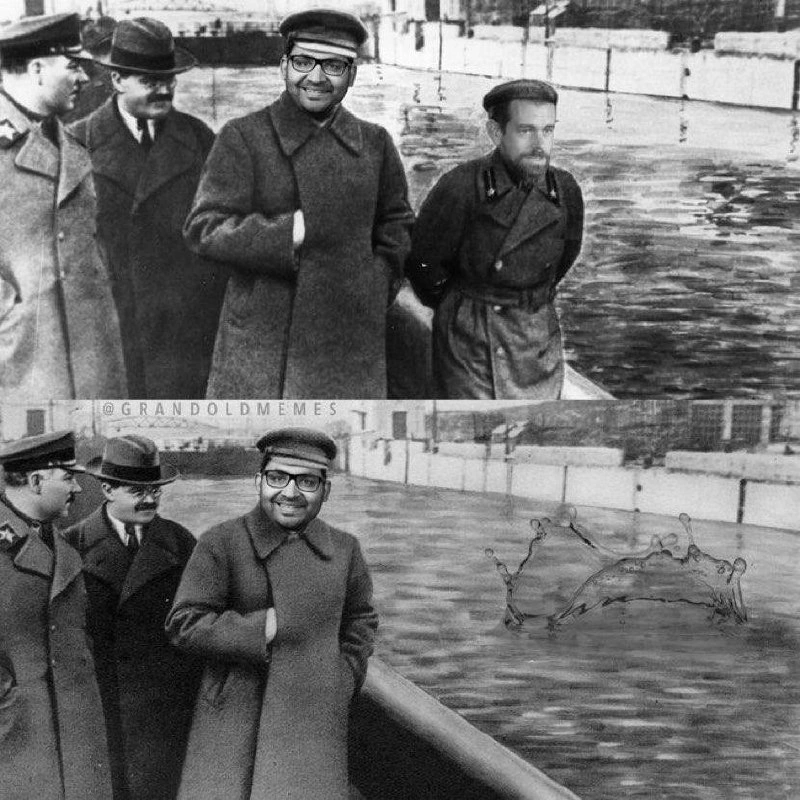
This meme is like a magic trick with code. Imagine you and three friends took a group photo. Then one day, you decide to erase one friend from that picture – so it looks like they were never there. 😲 In the coding world, developers can do something a bit like that with a project’s history. They have a tool (Git) that usually keeps track of everyone’s contributions like a big scrapbook. But there’s a special trick (a force-push) that lets them go back and remove a piece of that scrapbook. The meme shows a historical photo where one person is there at first, and then poof! he’s gone in the second image, with only a splash left – as if someone literally pushed him off the boat and erased him from the story. It’s funny in a mischievous way: we know you can’t really change the past or make someone vanish from a real photo without a trace. But in a project’s code history, an expert can rewrite the story so a mistake or a person’s contribution disappears. The joke is basically saying, developers have the power to pretend a goof-up never happened, just like pretending a person was never in a photo. It’s a playful reminder that with great power (to change history) comes great responsibility… and a good laugh among coder friends.

Level 2: Force-Push Fallout

For those newer to Git and version control, let’s break down what’s going on. Git is a tool that tracks changes in code over time, like a timeline of a project. Each saved state of the code is a commit (think of it like a snapshot with an ID and an author). Normally, these commits stack up in order, forming a history you can browse with git log. By default, history is permanent – if Alice, Bob, and Eve each make commits, all those commits (and their names) will appear in the project history.

However, Git has a superpower: you can rewrite history if needed. Commands like git rebase or git reset let you go back and change or remove commits. But when you’ve already shared your code with others (for example, pushed it to GitHub or a central repository), changing history becomes dangerous. That’s where force-push comes in. A normal git push will be rejected if your history has diverged from the remote (to prevent accidentally losing commits). git push --force says, “I know what I’m doing – replace the remote history with mine anyway.” It’s essentially overwriting the shared timeline with a new edited one.

Imagine on a team project, Bob accidentally commits a file with a password. He realizes the mistake and removes the password in a new commit. But that secret is still in the history for anyone to find if they look at Bob’s earlier commit. To truly remove it, Bob can rewrite the history to pretend that commit never happened. He might do an interactive rebase (an editing mode for history) to delete that commit, then force-push the corrected history. After that, if you pull the latest code, it’s as if Bob’s bad commit was never there – it won’t appear in git log. It has been “erased from the repo.”

The meme uses a famous historical reference to make this point: in the old Soviet Union, if someone fell out of favor, they were sometimes literally removed from photographs in official records. The top panel shows four men; the bottom panel shows only three, with one mysteriously gone (and a splash in the water as a cheeky hint). For developers, this immediately screams “someone did a force-push and dropped a commit!” The person who vanished is like a commit that got removed.

Why is this funny (and a bit scary) to devs? Because a force-push that removes commits is usually a big deal! If one of your teammates force-pushes and wipes away commits, it can feel like your work got thrown into the river. You try to git pull, and suddenly the commit you remember is missing – your copy of the history no longer matches the team’s copy. It’s as if the project’s story changed overnight. This can lead to confusion or even losing important code if people aren’t careful. That’s why juniors are often warned: “Don’t rewrite public history!” It’s like tearing pages out of a shared history book – unless everyone updates their copy, we’ll all be out of sync.

In the meme’s caption, “Force-push that wipes the teammate like they were never in the repo history,” the humor comes from exaggeration. It’s not literally wiping the person, just their commits. But it feels personal – imagine your entire contribution being removed; your name no longer in the contributors list for that part of the project. (In Git, commands like git blame show who last edited each line of a file. If your commit is gone, your name might vanish from those annotations too.) It’s as if the rest of the team said, “Bob who? We don’t recall any Bob here.” 😅

To put it simply: force-push is like editing the past in Git. It’s useful for cleaning up mistakes (like removing sensitive data or squashing messy commits), but it needs coordination and trust. The meme jokes that the team used this power in a comically over-the-top way – rewriting history to drop a fellow developer entirely, much like a dictator pretending a former ally never existed. It highlights both Git’s flexibility and the almost Orwellian idea of “history control.” For a new developer, the takeaway is: Git lets you undo or change past commits, but doing this on a shared branch will affect everyone. It’s powerful magic – use it carefully (and probably avoid doing what the meme suggests unless you really know what you’re up to!).

Level 3: Revisionist Rebase

In this meme, version control collides with actual historical revisionism. The top panel is a notorious Soviet photo: originally four officials (including Stalin) stand by the Moscow Canal. In the altered bottom panel, one man has vanished, leaving only a splash in the water – a dark joke about erasing someone from history. Developers immediately recognize this as a perfect analogy for an aggressive git rebase followed by a git push --force that rewrites repository history to remove a commit (or hapless teammate) as if they never existed. It’s a satirical take on how Git’s powerful history-altering tools can be used (or misused) to retroactively purge mistakes, much like authoritarian regimes purged people from photographs and records.

Git is a distributed version control system where history isn’t fixed in stone – every commit is like a node in a chain (a DAG, Directed Acyclic Graph) with a unique hash (e.g. a4f3e21). Normally, shared project history is append-only, preserving every contribution. But Git also offers “dangerous” commands like git commit --amend or interactive rebase (git rebase -i) that let you edit or remove commits after the fact. When you force-push those changes to a shared repo (using git push --force), you replace the official timeline with your edited version. The comparison to Soviet photo retouching is apt: Stalin’s staff literally cut out a disfavored comrade from the photo and filled in the background – similarly, a developer can excise a colleague’s commit from the project and fill in the gap as though it was never there. The commit’s hash changes, the timeline heals over the hole, and unless you kept an old clone, it’s like that code (or person’s work) vanished into thin air.

This darkly humorous scenario resonates with senior engineers because we’ve all seen or heard of crazy moments in repo history. Perhaps a teammate accidentally committed a file with passwords – policy might demand a history rewrite to scrub that secret. Or someone made a truly embarrassing blunder in a commit message or code (we’re talking “Top 10 Coding Facepalms” material). Instead of living with the shame in git log forever, the team lead might say, “Let’s pretend this never happened,” and perform a history surgery. The meme exaggerates it: imagine a dev wiping out all trace of a colleague’s existence in the project. Poof – no commits, no git blame entries; it’s like that developer was tossed overboard from the repo’s timeline. (In the meme image, the poor guy isn’t just cropped out – the splash suggests he was literally pushed into the canal. Likewise, a force-push drops the unwanted commit into oblivion).

From a technical perspective, rewriting Git history is a bit like time travel. You’re altering past commits, which means all subsequent commits get new identities (new hashes) because each commit’s hash is partly derived from its parent. After an interactive rebase that omits a commit, Git generates a new sequence of commits that exclude the bad one. When you push --force, you tell everyone else “replace your history with mine.” This is a non-fast-forward push, essentially saying the shared branch should forget everything that used to be after the point of rewrite and use this new sequence instead. Colleagues who aren’t expecting it will suddenly find their local origin/main ref rewound and diverged. It’s the coding equivalent of a reality rewrite: “Comrade, the history has changed. There was never a commit 7c6d5bf by Bob. You must be mistaken.” 😏

Let’s illustrate the before-and-after to make it concrete. Suppose our git history on main initially looks like this (newest commit at top):

$ git log --oneline --graph
* f12a3cd (HEAD -> main) Add new feature (Alice)
* 9b8e76f Fix bug (Eve)
* 7c6d5bf Introduce secret API key (Bob)   # Oops, sensitive info committed
* a4f3e21 Initial commit (Alice)

Here, Bob’s commit is problematic (he accidentally committed an API key). To purge it, we run an interactive rebase from just before Bob’s commit:

$ git rebase -i a4f3e21   # rebasing onto the commit before Bob's
# (In the editor, we mark Bob's commit 7c6d5bf as "drop")
$ git push --force origin main   # force-push the revised history

Now the repository’s official log has Bob’s contribution removed:

$ git log --oneline --graph
* d34db33f (HEAD -> main) Add new feature (Alice)
* c001c0de Fix bug (Eve)
* a4f3e21 Initial commit (Alice)

All of Alice and Eve’s work remains, but Bob’s commit is gone – the new commits d34db33f and c001c0de are tweaked duplicates of the old ones, with new parent relationships and hashes (note the cool hex IDs). It’s as if commit 7c6d5bf never happened; Bob’s name no longer appears in git log. In Git’s internal object database, the orphaned commit may linger unreferenced (a ghost in the reflog) until garbage collection cleans it up – analogous to how censored people became non-entities in historical records. The meme’s humor is that this outcome is both extreme and plausible: Git really can rewrite history, and a ruthless enough developer (or “benevolent dictator” maintainer) could use it to scrub a teammate’s existence from a project. It’s funny in a slightly morbid way because it shouldn’t be done lightly – just as rewriting actual history is Orwellian, rewriting git history can be chaotic or deceptive if misused.

To drive home the parallel between Soviet-era historical erasure and modern Git practices, consider this comparison:

Soviet Photo Retouching 🖼️ Git History Rewriting 📜
Unperson a former colleague in a photo Remove a contributor’s commit from repo
Airbrush or crop out the unwanted figure git rebase -i to drop the bad commit
Propaganda: “they were never here” Force-push: git push --force the new truth
Archives updated to match the new photo Updated git log shows no trace of them
Dissenters vanish from official history books Commit is absent from git blame results

Notice the tongue-in-cheek 🖼️ and 📜 – even our version control lingo invokes “history” and “blame,” as if it were documenting a narrative of the codebase. The meme lampoons how with Git, one can control the narrative of a project’s history, for better or worse. As Orwell famously noted, “Who controls the past controls the future.” In a repository, the one who controls main (and isn’t afraid to force-push) quite literally controls the past – determining what the official project history will say.

Seasoned devs chuckle (or cringe) at this because we’ve learned the hard way that rewriting shared history is usually a big no-no outside emergency situations. It can confuse collaborators (“Wait, where did my commits go?!”), invalidate checkouts, and generally cause chaos. That’s why most teams restrict force-pushing on important branches or use safeguards like --force-with-lease (which refuses to overwrite someone else’s new commits). The meme exaggerates it to the extreme: not only overwriting a branch, but metaphorically tossing your colleague into the canal – a playful warning of how powerful and perilous Git’s history-rewriting commands are. It’s a bit of TechHistory meets dark DevOps humor: we laugh because the parallel is so fitting. Just as you wouldn’t want a ruler retroactively erasing people, you wouldn’t want a teammate wiping away commits and pretending everything was always fine. But the fact that Git allows this at all is what makes the joke land. In version control, as in politics, history is written by those in control – and sometimes a force-push is all it takes to revise the story.

Description

Two stacked black-and-white panels spoof the infamous Soviet photo retouching. In the top panel, four uniform-clad men stand on a boat beside calm canal water; all faces are blurred for anonymity. In the bottom panel, the exact scene is repeated but the right-most man has vanished, replaced by a dramatic splash in the water, as if he was erased from reality rather than simply cropped. A faint watermark reads “@GRANDOLDMEMES”. For developers this visually parallels an aggressive git rebase / force-push that deletes an embarrassing commit (or colleague) from project history, highlighting how version-control tools can rewrite the past just as propaganda photos once did

Comments

22
Anonymous ★ Top Pick “Sure, we’re a blameless culture” - said right before the staff engineer did a git rebase --root, dropped three commits, force-with-lease, and even LDAP can’t remember the author ever existed
  1. Anonymous ★ Top Pick

    “Sure, we’re a blameless culture” - said right before the staff engineer did a git rebase --root, dropped three commits, force-with-lease, and even LDAP can’t remember the author ever existed

  2. Anonymous

    The only thing more reliable than git blame finding who wrote that singleton factory factory is the sudden onset of 'urgent family emergencies' and 'doctor appointments' that follow - though unlike Stalin's photo editors, we can't just rebase them out of history

  3. Anonymous

    When your tech lead says 'just rebase and force push to main,' they're channeling their inner Stalin - erasing contributors from history one commit at a time. At least with Git, you can still find the bodies in the reflog... for 90 days

  4. Anonymous

    CTOs posing for the roadmap photoshoot as tech debt sharks fin-circle the listing monolith

  5. Anonymous

    Leadership said “erase all traces” - git filter‑repo scrubbed the snapshot; the immutable event store and fourteen backups rendered a person‑shaped ripple on every dashboard

  6. Anonymous

    You can push --force someone out of the timeline, but the splash is the reflog, forks, and compliance audit reminding you that dangling commits don’t drown - they resurface during incident review

  7. @mekosko 4y

    A v chem mem?

    1. @sylfn 4y

      vopros xoroshi (guud qwestion), but use english please

    2. @sylfn 4y

      [Welcome to our toxic community!]

      1. @RiedleroD 4y

        nawt toxic

    3. @Rumbatutumba 4y

      Originally this was a photo of J. Stalin The guy to his left was removed from the photo after he was executed as a traitor This variant refers to the changes in Twitter management

    4. @RiedleroD 4y

      [Welcome to our toxic community!]

      1. @sylfn 4y

        where sorry for ping

        1. @RiedleroD 4y

          sent silently

          1. @mekosko 4y

            No

            1. @RiedleroD 4y

              I did… I pressed on "send without sound" didn't work as it seems :/

  8. @QutePoet 4y

    How does this refer to DevOps?

  9. @mekosko 4y

    I still wanna understand what this meme means...

    1. dev_meme 4y

      This is Jack Dorsey (on the right) and new CEO of Twitter, who didn't disappeared in the middle. As al’Im mentioned above, this image refers to internal cleanings in USSR during Stalins years

  10. @RiedleroD 4y

    maybe the square brackets?

  11. @feskow 4y

    I disabled it.. for now

  12. @RiedleroD 4y

    it's the original message

Use J and K for navigation