Skip to content
DevMeme
3656 of 7435
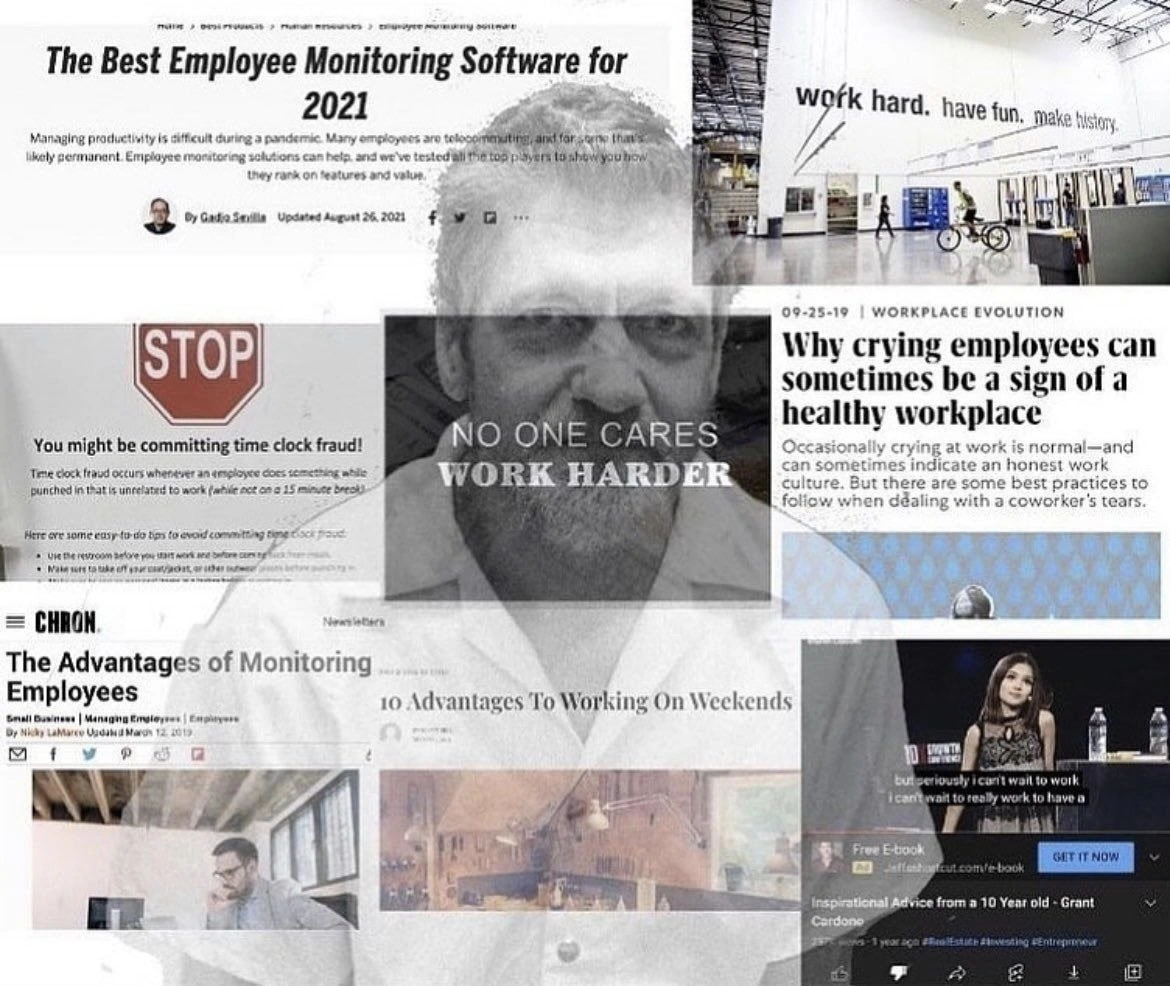
Corporate propaganda collage: celebrating surveillance, weekend work, and healthy workplace tears
CorporateCulture Post #3994, on Dec 2, 2021 in TG

Corporate propaganda collage: celebrating surveillance, weekend work, and healthy workplace tears

Why is this CorporateCulture meme funny?

Level 1: Candy-Coated Chores

Imagine your teacher or parent does something wild: they set up a camera in your room to monitor you and make sure you’re doing your homework and not playing games. Then they say, “Guess what, doing homework on Saturday has 10 great benefits! You’ll get ahead and it’ll be so good for you!” You’re not allowed to relax on the weekend, you have to study more. If you get upset and start crying because it’s too much, instead of easing up, they smile and say, “Oh, see? Crying means you really care about your schoolwork – that’s actually a good sign!” Meanwhile, there’s a big poster on the wall that reads, “Study hard. Have fun. Make history.” Feeling pretty frustrated and confused yet? You know this is all terribly unfair and silly – nobody actually thinks doing chores or homework non-stop with a camera on you is fun or healthy. That’s exactly what this meme is joking about, but in a company. It’s comparing a company to that extreme teacher/parent: the company watches employees all day, tells them working on weekends is awesome, and even tries to spin people being unhappy (crying) as something positive. We find it funny in a dark way because it’s so obviously backward – it takes the bad parts of work and tries to disguise them as good. Just like you’d roll your eyes if an adult seriously tried to convince you that crying from too much homework is “healthy,” people laugh at this meme because it calls out the same kind of nonsense in the adult workplace.

Level 2: Hustle Culture 101

Let’s break down the meme’s content in simpler terms. It’s basically a mash-up of things a company or boss might say to get employees to work more or accept being watched. Each part of the image highlights a different concept, so here’s what they mean:

  • Employee monitoring software – This is software companies install on work devices to keep track of what employees are doing. For example, it might log your keyboard activity, take screenshots of your screen, or record which apps and websites you use during the day. The headline about “Best Employee Monitoring Software for 2021” reflects how, during the pandemic, a lot of businesses went remote and some managers started using these tools. The idea was to ensure people working from home stayed productive. If you’re a junior developer working remotely, you might encounter this in the form of a program running on your laptop that your manager can check. It’s basically a way to micromanage from afar – like a boss looking over your shoulder via the internet. While it can boost output on paper, it often feels uncomfortable, like you’re constantly under observation.

  • “Time clock fraud” – This phrase refers to an employee getting paid for time they weren’t actually working. For instance, if someone clocks in at 9:00 but doesn’t actually start working until 9:30, or if they take a long break while still on the clock, a strict manager might call that time theft. The meme’s “STOP – You might be committing time clock fraud!” warning is exaggerating how companies communicate this. It’s basically telling employees, “Don’t you dare even think of taking unapproved breaks or we’ll consider it cheating.” In real life, some places have strict rules: you must punch in/out exactly, or you have to account for every minute. As a new employee, you might feel anxious about stepping away from your desk because you’ve heard of people getting in trouble for something silly like taking too long in the bathroom. The meme is using this extreme warning to poke fun at that severity. It’s like the bosses are saying, “we assume you’ll slack off, so we’re watching closely.” Not exactly a trusting vibe!

  • Advantages of monitoring employees – This sounds like the title of an article aimed at managers, listing reasons why keeping a close eye on workers is beneficial. In plain terms, monitoring means observing or tracking. So this would be talking about things like “you can ensure higher productivity, catch mistakes early, identify who’s not working hard,” etc. It’s basically pro-micromanagement advice. In many small businesses or teams, a junior dev might encounter this concept if their team lead insists on daily check-ins or constant status updates because they believe oversight equals efficiency. The meme highlights this to show how management often justifies surveillance. If you’ve just started your career, you might not realize these articles exist, but they do – they encourage bosses to use tracking tools or frequent check-ups, which can feel stifling to the people being monitored. The joke is that calling these points “advantages” ignores how annoying or stressful it can be for the employee.

  • “10 Advantages to Working On Weekends” – Normally, the weekend is your personal time to relax or handle life outside of work. So an article claiming there are advantages to working on weekends is pretty eyebrow-raising. This likely lists supposed benefits like “the office is quiet so you can focus better,” “you’ll get ahead on Monday’s tasks,” or “it shows you’re passionate and dedicated.” In other words, it’s trying to sugarcoat the idea of giving up your free time for work. Many of us, early in our careers, have felt pressure (implicit or explicit) to put in extra hours. Maybe you had an urgent bug to fix on a Sunday, or you volunteered to work a Saturday rollout because you wanted to be seen as a hard worker. Those situations happen, but they’re meant to be occasional, not routine. An article like this, however, makes it sound like regularly working weekends is a great idea. The meme is joking about how companies might promote a hustle culture where working 6 or 7 days a week is portrayed as the key to success. As a junior dev, you might think “Wow, to get ahead I should work all the time!” But over time you learn that if a job actually expects constant weekends, you end up exhausted (or as we say, on the road to burnout). So this part of the collage is calling out that unhealthy recommendation. It’s comedic because it’s a blatant attempt to make something normally seen as a downside (losing your weekend) sound like it has hidden perks.

  • “Why crying employees can sometimes be a sign of a healthy workplace” – At first, this sounds completely contradictory. We usually think of crying at work as a negative – maybe someone is overwhelmed, getting bullied, or dealing with serious stress. This headline is suggesting the opposite: that it could be healthy. The reasoning might be that if people feel safe enough to cry, the workplace is “honest about emotions” or people are really emotionally invested in their work. There is a small nugget of a point there – it’s good if people aren’t terrified to show they’re human. However, generally if employees are crying often, something’s not right with the work environment. In tech, conversations about MentalHealthInTech emphasize reducing stress and burnout, not embracing tears. So this headline strikes most of us as absurd. It’s like a company trying to put a positive spin on staff being upset. If you’re new and saw a headline like that, you might double-take: “Really? Crying is good now?” The meme uses it to illustrate how far corporate spin can go. Essentially, they’re saying: “See, even breakdowns mean we’re doing something right!” It’s dark humor. It reminds younger employees to be wary of jobs where misery is reframed as a sign of dedication. A healthy workplace should celebrate employees being happy and productive, not in tears. So this part of the meme is highlighting that disconnect.

  • “work hard. have fun. make history.” – This is the slogan painted on that office wall in the image. It’s an actual motto used by Amazon and a motto you’ll find in many tech company offices or career pages. Let’s break it down: “work hard” – they want you to give it your all; “have fun” – they claim work is supposed to be enjoyable or they have a fun culture; “make history” – the work you do will be so important that it’s historic (a bit grandiose, implying world-changing projects). For a junior developer, seeing a slogan like that can be inspiring. It suggests you’re joining a place where big things happen, and that it won’t be all grind – there’s fun too. However, in context with the rest of this collage, it comes off as ironic. If you imagine a place where they monitor your every move, expect weekend work, and consider crying a sign of engagement, then “have fun” and “make history” sound less like genuine promises and more like a quirky mandate: “Work hard (no really, HARD), have fun (we have a foosball table, that counts as fun, right?), make history (we have lofty goals).” Many of us have worked at companies that love these catchy slogans. Sometimes they are sincere about them, but other times it’s just wall art. The meme uses this well-known tagline to poke at corporate culture clichés. It’s the kind of thing you as a new hire might enthusiastically post on Instagram on your first day, but a year later, after too many all-nighters, you roll your eyes at it. In short, it represents the idealistic image versus the reality that might be less rosy.

  • “No one cares, work harder.” – This phrase isn’t usually part of official corporate messaging; it’s more like an unwritten rule in very intense work environments. It’s included in the collage faintly to reveal the harsh truth behind all the other messages. “No one cares” means nobody cares about your excuses or hardships, “work harder” is the only expected solution. In other words, if you’re tired, if you’re facing challenges, the company’s stance is basically tough luck, just keep pushing. It’s something you might hear from a drill sergeant or see on a motivational poster for people who think empathy is overrated. In a modern tech context, it’s that feeling you get if a manager dismisses concerns about burnout or work-life balance. For example, if you say “I’m struggling to keep up with these 12-hour days,” and the response is “Everyone else is doing it, so figure it out,” – that’s effectively “no one cares, work harder” in action. As a junior dev, hopefully you don’t encounter this attitude often, because good teams do care about their people. But if you do, you’ll recognize how toxic it is. The meme shows it explicitly to underline the mean spirit lurking behind all the polite articles and slogans. It’s a bit of a reality check: beware of workplaces where this could be the real motto.

  • 10-year-old’s inspirational work quote (Grant Cardone) – In the bottom-right, the meme shows a thumbnail for a video: “Inspirational Advice from a 10 Year Old – Grant Cardone.” Grant Cardone is a well-known motivational speaker/entrepreneur who is all about maximum hustle (he’s famous for something called the “10X Rule,” which is basically doing 10 times more work to be successful). The clip apparently has a 10-year-old kid saying something like “I can’t wait to work, I can’t wait to really work…”. This is quite unusual because children usually aren’t excited about working; they’re more into play and school. Including this in the meme is a way to exaggerate the hustle mentality: ManagerExpectations so high that even a child is being held up as a grind role-model. It’s like saying, “Look, even a kid can’t wait to put in 60-hour weeks, so what’s your excuse?” Of course, that’s ridiculous and that’s why it’s funny. As someone new to tech or any field, you’ll probably encounter a lot of motivational content – from TED talks to LinkedIn posts – telling you to give 110%, love the grind, etc. Usually, you can take those with a grain of salt. This meme snippet is a tongue-in-cheek reminder that some advice is so extreme you have to laugh. If you ever see a 10-year-old on stage saying they can’t wait to work, you’d probably think, “Let this poor kid be a kid!” In the workplace context, it’s poking fun at how the drive for productivity can go off the deep end.

Overall, this collage meme is highlighting aspects of WorkplaceCulture in a sarcastic way. For a junior developer trying to understand the humor: it’s basically pointing out how some companies or managers try to make toxic productivity seem normal or even admirable. They use fancy talk or motivational slogans to encourage behaviors that are actually unhealthy, like working too much or feeling constantly watched. It’s WorkplaceHumor with an edge – laughing at the kind of things that cause real stress. The message to take away is: a healthy work environment shouldn’t need any of this extreme propaganda. Good companies trust their employees (no creepy monitoring software needed), respect personal time (no push for constant weekends), and genuinely care if someone is upset (rather than spinning it as positive). If you ever find yourself somewhere that celebrates burnout or surveillance, the meme is basically saying, “Hey, this isn’t normal – it’s satire because it’s that bad.” As a newcomer, you can learn from this that not all that glitters is gold in corporate-speak: always look at how a workplace actually treats people, not just the shiny slogans or upbeat memos.

Level 3: Dystopia as a Service

This meme collages several CorporateCulture tropes into a single dystopian poster, highlighting how management can put a shiny spin on downright oppressive practices. At first glance it looks like generic office inspiration, but a closer read reveals satire about intrusive surveillance and toxic productivity. An experienced developer sees these headlines and likely chuckles darkly – it's so over-the-top, yet uncomfortably familiar.

Take employee monitoring software: the top headline “The Best Employee Monitoring Software for 2021” with a blurb about pandemic productivity is a real trend from that era. When everyone went RemoteWork, some companies panicked about productivity and turned to digital surveillance. These tools (the kind that log keystrokes, take random screenshots, or even use your webcam) basically create a digital Panopticon in the home office. (The Panopticon is a prison design that lets guards watch inmates without the inmates knowing – here it’s your boss watching your screen.) In 2021, there were countless articles ranking such software as if it were the next big productivity solution. The meme pulls that in to set the stage: corporate Big Brother is here, and they’re selling it as a “feature.” A cynical senior engineer can’t help but think: we’ve effectively open-sourced 1984. It’s surveillance-as-a-service, treating developers like untrusted assembly line workers who need constant watching.

Right below that, a bold STOP sign warns “You might be committing time clock fraud!” This part satirizes how some managers view any unsupervised moment as potential theft. Time clock fraud is basically the accusation that if an employee is on the clock but not actively working, they’re “stealing time” from the company. It’s an extreme micromanagement concept – imagine getting flagged because you took a 5-minute break while still clocked in. The meme exaggerates this with a big STOP warning, as if employees are criminals for catching their breath. Seasoned devs have seen this mindset in the wild: think of companies that make you log every task to the minute or use apps that go red if your mouse doesn’t move. The humor here is bitter: management sometimes acts like any moment of not coding is a punishable offense. It’s the kind of attitude that screams “we don’t trust our people,” turning the workplace into a digital sweatshop. In real life, this breeds resentment and stress – but the corporate spin, as shown, is to brand it as vigilance against “fraud.”

Next, we have the “Advantages of Monitoring Employees” – an actual-looking headline from a business site (Chron.com). This is classic corporate propaganda: an article likely listing reasons why spying on your staff is great for business. It’s framed as a positive thing (“advantages”!) for Management_PMs, as if invasively tracking workers has no downsides. In reality, any senior engineer knows that heavy monitoring can backfire. Sure, you get metrics and ensure people aren’t watching YouTube all day, but you also annihilate trust and morale. It’s like an Orwellian sales pitch: “Micromanagement is your friend! Here’s why employees just love having every click watched.” The meme is pointing out how absurd those cheerfully-presented management articles are. They read as if written in an alternate universe where employees are robots. The comedy (and tragedy) is that such articles genuinely exist, trying to normalize micromanagement software in the workplace. Experienced folks recognize the subtext: if a company is touting the “advantages” of keeping constant tabs on you, something is very wrong in that WorkplaceCulture.

Then there’s “10 Advantages To Working On Weekends.” This one practically makes any veteran engineer spit out their coffee. It’s emblematic of hustle culture at its peak: trying to convince you that giving up your weekends is not only necessary, but actually awesome. We’ve all seen the type of blog post or chirpy LinkedIn update that glorifies overwork – “Look at all you can achieve when you put in extra hours on Sunday!” They’ll claim the office (or Slack) is quieter, you can get ahead of your tasks, you show dedication, blah blah. It’s the same vibe as a boss who smiles and says “We’re like a family here,” but what they really mean is “I hope you don’t mind working Saturday, the deadline won’t move.” The meme slams this with a listicle title that sounds straight from a tone-deaf HR department. It’s funny because it’s written with the enthusiasm of a self-help article – except it’s encouraging burnout. Every seasoned developer knows that constant weekend work leads to exhaustion, not enlightenment. In tech, you sometimes encounter that expectation to be a “weekend warrior” – pulling all-nighters, crushing bugs on Sunday – and management might even frame it as a growth opportunity. This part of the collage is calling out that hypocrisy. It’s shining a light on ManagerExpectations that you should sacrifice personal time for the company and be grateful for it. The phrase “advantages to working on weekends” is basically a euphemism for “we didn’t plan well, so now we need your free labor.” A dark joke among tired engineers is that if you’re regularly working weekends, your project management has already failed. Here, the company line pretends it’s a virtue. Cue the eye-roll from anyone who’s been there, done that.

Perhaps the most disturbing snippet is the headline: “Why crying employees can sometimes be a sign of a healthy workplace.” Yes, they’re literally suggesting that seeing employees in tears is positive. This is a masterclass in corporate gaslighting. The meme is using that real-feeling headline to parody how far companies will go to reframe a bad situation as good. It brings to mind that dark humor saying, “the beatings will continue until morale improves.” In this case, the burnout will continue until we label it passion. The context here is likely an article saying something like “occasional crying at work is normal and can indicate an honest, open culture” – trying to spin emotional breakdown as engagement. It’s the kind of twisted logic that might emerge after reports of stressful workplaces. (Fun fact: a few years back a famous tech giant had stories of employees crying at their desks from stress – instead of universally condemning that, some management gurus actually tried to rationalize it as people caring deeply about their work!). MentalHealthInTech is a serious topic, and this meme yanks it into the spotlight with brutal irony. A “healthy workplace” is one where people feel supported and balanced, not one where tissues get more use than a keyboard. By saying tears = healthy, the corporate narrative is essentially normalizing breakdowns: “Look, she’s crying because she’s so invested in her job – what passion!” Experienced professionals recognize this absurdity instantly. It’s both funny and infuriating because we know a truly healthy culture wouldn’t routinely drive folks to tears. The meme is calling out that lip-service approach to MentalHealthInTech – where companies talk about wellness but then applaud overwork until employees crack. In short, it’s satire aimed at the kind of HR department or think-piece that tries to polish a dumpster fire and call it progressive “Workplace Evolution.”

All of this is set against the backdrop of a sleek modern office photo with the slogan “work hard. have fun. make history.” emblazoned on the wall. That particular motto is famously associated with Amazon’s corporate culture. It’s the kind of grand mission statement tech companies love to promote: Work hard (give it your all), have fun (we have office scooters and free pizza, see?), make history (your overdrive is making us tons of money and maybe a little fame). In the collage, this slogan looms over an open-plan office – bright, spacious, possibly full of sensors and cameras. The irony is thick: the feel-good slogan is contrasted with all those heavy-handed headlines. It’s like the environment is saying “we’re cool and revolutionary!” while the policies scream “we’re watching you and want you working 24/7.” Seasoned engineers have walked through offices with these exact phrases on the wall, sometimes muttering under their breath that the only “history” being made is a record number of burnt-out employees. “Work hard. Have fun.” also reminds us of that unwritten part: “...or else.” The meme cleverly uses this real-world slogan to amplify the satire – it’s a benign phrase turned ominous by context. In a truly supportive workplace, “have fun” might mean team games or creativity. In a toxic one, it reads like a commandment that you better pretend you’re having fun while you grind. The jaded techie in us laughs because we’ve seen teams try to put a smiley face on brutal crunch time with a pizza party or a quirky slogan, exactly like this.

Finally, over the whole collage is a ghostly grayscale face bearing the text “NO ONE CARES, WORK HARDER.” This is basically the hidden boss behind all these messages – the true voice of a toxic workplace. It’s a popular motto in hardcore hustle and grind circles (you’ll see it on those motivational Twitter accounts or plastered in the gym by the punching bags). Translated, it means “spare me your excuses or personal problems; just output more.” In the meme it appears almost Big Brother-like, as if an authority figure is watching sternly. For developers who’ve dealt with unsympathetic managers or unrealistic deadlines, this hits home. It’s the feeling you get when you tell your boss you’re exhausted or that a task is impossible by Friday and the response is basically “not my problem, do it anyway.” The phrase “No one cares, work harder” encapsulates the cold, impersonal vibe of cutthroat corporate environments – the exact opposite of any professed WorkplaceCulture values like empathy or teamwork. It’s both hilarious and depressing to see it literally written out, because it usually isn’t explicitly said out loud in companies – but the meme just says the quiet part loud. It ties together the collage’s theme: all the articles and slogans are dressed-up ways of saying this very line. That’s the punchline for the veteran audience: we recognize that beneath the PR and ManagementHumor, sometimes the message really is “shut up and code.”

To sum it up, the meme is a satire of CorporatePropaganda in tech and beyond – showing how companies can absurdly recast surveillance, overwork, and even emotional breakdown as positive things. It resonates with senior engineers and tech workers because it’s a greatest-hits collection of management absurdities we’ve either experienced or dread. We laugh, but we do so warily, because as outlandish as these clippings seem, each one has a kernel of truth from the real world. It’s a mirror held up to the worst WorkplaceCulture practices, prompting a “Can you believe this?” laugh. As a battle-scarred dev might say with a smirk, “Welcome to the team – hope you brought your own shoulder to cry on.”

For quick reference, here’s how each corporate line in the collage translates to reality:

Corporate Line What It Really Means
“The Best Employee Monitoring Software for 2021” New ways to spy on staff working from home (because we mistrust you).
“STOP – You might be committing time clock fraud!” If you’re not 100% active every second, you’re stealing time.
“The Advantages of Monitoring Employees” Micromanaging you is good for business (and we’ll ignore the downsides).
“10 Advantages To Working On Weekends” You should work on your days off – free overtime is expected.
“Why crying employees… healthy workplace” Burnout and breakdowns are normal here, and we’re calling that passion.
“work hard. have fun. make history.” (office slogan) Work brutally hard, pretend it’s fun, and maybe the company gets rich.
“NO ONE CARES, WORK HARDER.” Your personal well-being is irrelevant; only output matters to us.
10-year-old: “I can’t wait to work!” (Grant Cardone video) Even kids should embrace the grind! (Hustle culture has no age limit.)

Description

The image is a monochrome meme-style collage of corporate headlines and office imagery. Visible headlines include: "The Best Employee Monitoring Software for 2021" with the sub-blurb "Managing productivity is difficult during a pandemic…", "STOP - You might be committing time clock fraud!", "The Advantages of Monitoring Employees", "10 Advantages To Working On Weekends", and "Why crying employees can sometimes be a sign of a healthy workplace" (dated 09-25-19 under the section WORKPLACE EVOLUTION). A cavernous open-plan office photo displays a wall slogan that reads "work hard. have fun. make history." In the lower-right, a video thumbnail advertises "Inspirational Advice from a 10 Year old - Grant Cardone" with on-screen text "but seriously i can't wait to work i can't wait to really work to have a" beside a "GET IT NOW" button. Several small photos of workers are present, all facial features blurred. The collage is overlaid on a faint grayscale portrait, underscoring an impersonal, surveillance-heavy corporate atmosphere. Technically, the meme satirizes employee-monitoring SaaS tools, remote time-tracking, and management spin that reframes burnout, weekend labor, and emotional breakdowns as evidence of a “healthy” culture
Comments

21
Anonymous ★ Top Pick We built distributed tracing so execs could follow a request across 30 microservices; they loved it so much they deployed the same agent to my keyboard - now any gap over 15 minutes is logged as “latent productivity” and my Saturday tears trigger a paging alert
  1. Anonymous ★ Top Pick

    We built distributed tracing so execs could follow a request across 30 microservices; they loved it so much they deployed the same agent to my keyboard - now any gap over 15 minutes is logged as “latent productivity” and my Saturday tears trigger a paging alert

  2. Anonymous

    After 20 years of optimizing distributed systems, I've learned the only thing that scales worse than MongoDB is the human capacity to tolerate being treated like a poorly-configured Kubernetes pod that management keeps trying to squeeze more CPU cycles from while simultaneously reducing its resource limits

  3. Anonymous

    When your company's 'employee monitoring software' budget exceeds their CI/CD infrastructure spend, and they wonder why the best engineers keep leaving for companies that measure output by shipped features rather than mouse movements. Nothing says 'we trust our senior architects' quite like requiring them to prove they're not committing time clock fraud while debugging a distributed systems issue at 2 AM

  4. Anonymous

    Management rebranded surveillance as ‘employee observability’ - Grafana now graphs weekend commits and tears/min; Goodhart’s law ensured the org hit its KPIs by burning through the only error budget left: people

  5. Anonymous

    When Prometheus starts scraping keystroke metrics instead of pod health - true full-stack observability

  6. Anonymous

    Leadership bought bossware and basically shipped OpenTelemetry for humans - keystrokes to metrics, screenshots to object storage, and an SLO of tears per sprint under 1 that mysteriously breaches every time we roll out weekend advantages

  7. @thisisluxion 4y

    this isn't even that dev related but my god we need to do something about this

    1. dev_meme 4y

      Or just "work harder" In fact, in many workplaces that's a thing

      1. @thisisluxion 4y

        sadly, I know

    2. Deleted Account 4y

      +

  8. @Bodziek 4y

    I had a software on my work pc which logged every open window/process

    1. @denisndenis 4y

      Sound like A LOT of logs. And someone really monitor it?

      1. @Bodziek 4y

        kind of, there are software platforms for that stuff

  9. @RiedleroD 4y

    ouch

  10. @RiedleroD 4y

    am half burned out from school, so this hits extra hard :(

  11. Deleted Account 4y

    God I swear my dad's company uses this shit kind of software, convinces me that we need more arsonists in this world

  12. @galgvithr 4y

    You cant work effectively more than 6 hours a day. Usually people actually do work in 4 hours a day, the rest is bullshit they do to not look like they're slacking off. Why would employer do this shit?

  13. @galgvithr 4y

    Fucking hell

  14. @feskow 4y

    Lmfao

  15. @sylfn 4y

    you do really expect the bot to work on picture? @feskow bot returned nothing, is this intended?

    1. @feskow 4y

      Oh shit it makes None type error

Use J and K for navigation