Skip to content
DevMeme
3001 of 7435
The On-Call Engineer's Romantic Dinner
OnCall ProductionIssues Post #3314, on Jun 23, 2021 in TG

The On-Call Engineer's Romantic Dinner

Why is this OnCall ProductionIssues meme funny?

Level 1: Romance on Hold

Imagine you’re a firefighter sitting down to a nice romantic dinner. Just as you’re about to take a bite, the fire station alarm blares – there’s a fire somewhere, and you have to rush off immediately. In this meme’s story, the developer is like that firefighter. The “fire alarm” is an urgent message about something broken in the software (a bug causing trouble for everyone using the app). So, just like the firefighter’s fancy dinner gets interrupted by an emergency, the developer’s candlelit dinner gets interrupted by a work emergency. It’s funny in a relatable way: even when you’re trying to relax and have a special moment, work can suddenly jump in and say, “Nope, you’re needed right now!” The picture with the cards is joking that a romantic dinner isn’t complete without that happening — which is a playful way to tease how common it is for tech folks to get called into work at the worst times. In simple terms, it’s showing the oh-so-true feeling that if you have an important evening planned, of course that’s when the big problem will happen and make you put your romance on hold.

Level 2: On-Call Crash Course

For those newer to software development, let’s break down what’s going on in this meme. It’s depicting the life of an engineer who is on-call – meaning they have to be available to respond if something goes wrong with the software that people are using (the production system). Imagine a website or app that you build: the production environment is the live, real-world version running for users. If there’s a serious problem there (a bug that crashes the site or a feature that breaks for everyone), that’s a production bug. Companies assign engineers to be “on-call” to tackle these issues immediately, even if it’s late at night or during personal time.

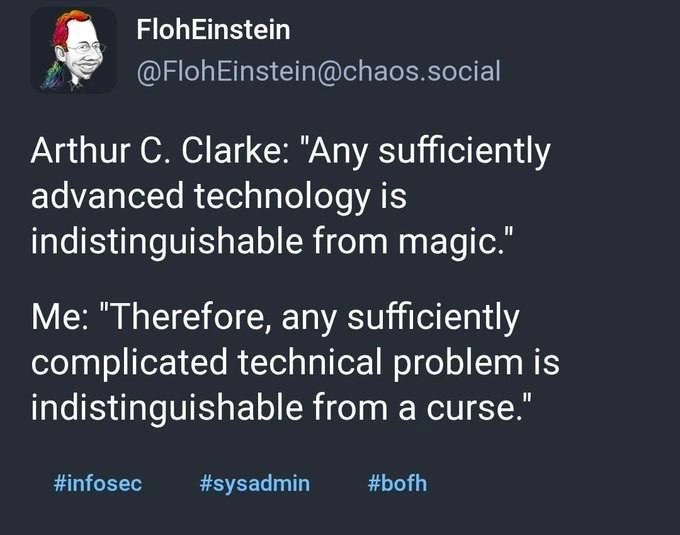
Now, the meme itself uses the style of a famous party card game called Cards Against Humanity. In that game, one card has a sentence with a blank, and the other card has a phrase to fill in the blank, often with a shockingly funny or absurd answer. Here the prompt card says, “A romantic, candlelit dinner would be incomplete without ____.” It’s a sweet, normal scenario with a blank to be filled. The answer card that’s been slid in reads, “An email about a critical production bug.” This pairing is humorous because getting an urgent work email about a broken system is the last thing you’d expect or want during a romantic dinner. The blank is basically inviting something you’d typically consider nice or fitting (like “roses” or “champagne”), but instead we get this totally un-romantic, stressful thing. That element of surprise and irony is what makes it a meme. Developers see the format and instantly recognize the joke: our personal lives often get photobombed by work emergencies.

Let’s explain a few terms and why they’re relevant:

  • On-call: Many tech teams have an on-call rotation. If you’re “on-call,” you’re the designated firefighter for any issues that pop up. Say the website goes down or users hit a nasty bug, the on-call person will get an alert (via email, text, or a phone app) and must jump in to address it. It’s like being a doctor on duty – if the pager beeps, you’re up. In the meme, the engineer clearly is on-call, otherwise they wouldn’t be getting a critical bug email at night.
  • Critical production bug: This means a very important problem in the live product. “Critical” implies something is severely broken or users are badly affected. For example, perhaps the shopping cart on an e-commerce site isn’t working (so no one can buy anything) or the server is crashing. These are the kinds of bugs that can’t wait until tomorrow; they might cause the company to lose money or users to leave. Hence, an email about a critical bug is basically an alarm bell saying “Drop everything, even your fork and knife, and fix this NOW.”
  • DevOps/SRE: These are roles or mindsets in the tech world focusing on operations and reliability. DevOps is a culture where developers also handle operational duties (like deploying code, monitoring, and yes, being on-call to fix issues). SRE stands for Site Reliability Engineer, whose job is keeping the site/app running smoothly. SREs and DevOps folks are very often the ones holding the pager or the phone that gets the alert. So if you’re having a romantic dinner and you’re an SRE on call, you know you might get that dreaded ping.
  • Work-life balance: This is the idea of keeping a healthy separation (or balance) between your job and your personal life. It’s a hot topic in the tech industry because being on-call can really blur those lines. Ideally, you’d want to enjoy your candlelit dinner without thinking about work, but on-call duty means work can barge in anytime. This meme is basically a tongue-in-cheek example of bad work-life balance: you literally can’t have a peaceful dinner without work showing up as an uninvited guest.

In simpler terms, the meme is pointing out the sometimes ridiculous demands of being an IT professional responsible for live systems. The oncallLife tag and others like OnCallHumor or DeveloperBurnout hint at the culture around this: developers share these experiences to vent and bond. It’s both advice and commiseration. For a junior developer, seeing this meme is almost like a cautionary tale (with a laugh): “Be prepared, you might have to debug in some unlikely situations!” There are even informal work-life balance tips passed around, like “don’t be the only one who knows how your system works” or “rotate on-call schedules fairly so no one’s constantly stressed.” And if you ever are on a date while on-call, it’s wise to forewarn your partner that your laptop or phone might demand your attention. Not the most romantic thing to say, but better than a surprise in the middle of dessert!

Finally, the visual style: black card with a prompt and white card with an answer — that’s a direct nod to the Cards Against Humanity game. Developers love referencing this game in memes because it allows mixing tech inside jokes into a familiar, cheeky format. So, the image of those cards immediately tells us this is meant to be a joke scenario. Nothing else in the image (no people, no actual dinner) is shown, just the cards, which makes it clean and focused on the text. The stark contrast (white text on black, then black text on white) draws your eye to the punchline. For a newcomer, just know that this format screams “humor with a dash of dark/ironic twist.” It’s popular in DeveloperMemes to use this style to highlight the absurdities we deal with in tech jobs. In this case, the absurdity is how a peaceful evening can be shattered by something as banal (to outsiders) as an email, which to an engineer is akin to a firefighter hearing the alarm bell.

So if you’re new in the field, the takeaway is: on-call duty is a real thing, it can be tough, and we cope by joking that our backup date is often our laptop. The meme is funny because it rings true — those who know, know. And if you didn’t know, now you understand why your senior co-worker jokes about carrying a “pager” (phone) even on weekends. It’s all about software systems needing a watchful eye, and sometimes that eye has to gleefully ignore the “Do Not Disturb” sign on your life.

Level 3: DinnerInterruptedException

This meme resonates strongly with experienced developers and DevOps veterans because it’s a snapshot of a shared reality: personal plans getting derailed by a sudden production fire. It’s playing on a common bit of OnCallHumor. The setup is a spot-on parody of a Cards Against Humanity prompt, which typically pairs innocent setups with outrageous conclusions. Here the black card’s refined scenario, “A romantic, candlelit dinner would be incomplete without ____,” is humorously answered by the most unwelcome companion imaginable for an engineer: “An email about a critical production bug.” The contrast is absurd and hilarious because it’s painfully accurate — as any on-call developer will tell you, nothing crashes a mood quite like a ProductionIncident alerting you to a crisis.

We laugh at this because it’s a coping mechanism. The meme is effectively saying, “What’s a romantic evening without a little pager chaos, right?” Nudge nudge, sigh. It’s a wry nod to the Murphy’s Law of DevOps: if you’re on call during an important personal event, that’s exactly when ProductionIssues will strike. Every senior engineer has that war story: the birthday dinner interrupted by a database lock-up, the movie night cut short by an outage, or the 3 A.M. wake-up because a deploy went sideways. It’s almost a running joke in tech companies — schedules clear all week, but the moment you’re sitting down to relax, ping! there goes your phone, lighting up with some urgent bug report. The collective experience is so common that memes like this feel more like documentary than comedy.

In the DevOps and SRE culture, there’s the mantra “You build it, you run it.” That means the same engineers who write the code also take turns being on-call to fix it when it breaks in production. This has improved a lot in terms of ownership and reliability, but it also means developers can’t just toss code over a wall and clock out — they carry the pager (or smartphone) and live with the consequences. The meme’s punchline card — “An email about a critical production bug” — encapsulates that ever-present possibility hanging over an on-call engineer’s head. It’s the reason many carry a laptop everywhere or have phone notifications on even during a date. The OncallLife can condition you to feel a phantom buzz in your pocket, even when you’re theoretically off duty. Engineers joke about never fully relaxing, because the moment you do, that’s when the next Sev-1 incident hits.

This card pairing also underlines the struggle for work-life balance in IT. By presenting a romantic, candlelit dinner (the epitome of personal time) as “incomplete” without a work disaster, it satirizes how work emergencies infiltrate personal space. It’s a dark joke: true romance for a dev might as well include a side of server logs and a dash of adrenaline. You’ll notice terms like ProductionBugs or ProductionIncidents floating around in the tags — these refer to exactly the kind of firefighting scenario depicted. It’s developer humor taking a jab at our own expectations: we wish for uninterrupted downtime, but deep down, veteran engineers almost expect an interruption. The more cynical among us might even set our watch by it. (Who needs a candlelit dessert when you have a hot AWS outage to attend to?)

Why is this scenario so familiar? Partly because of system complexity, and partly due to human nature and scheduling. Many critical issues don’t show up until code meets real-world traffic. Maybe a memory leak has been slowly building since the last deploy and finally hits a tipping point at 9 PM. Or a batch job kicks off late in the evening (thinking nobody’s using the system) and unexpectedly deadlocks something. Or that one line fix that wasn’t fully tested decides to throw an exception only when a certain rare user action happens — and lo and behold, a user does that at dinnertime. There’s also a bit of bias: if an incident happens while you’re binge-watching TV at home, it’s annoying but you deal with it. If it happens during a special dinner you planned for weeks, it sears into your memory (and perhaps into meme material). So the worst-timing pages stick in our minds and become legend. Ever hear the jokes about deployments on Fridays? This is why. Push out new code before the weekend, and you might be sacrificing your Saturday to the production gods.

When that dreaded email or PagerDuty notification arrives, the night flips from romance to rescue mission. Suddenly you’re apologizing to your partner, pulling out a laptop, and SSH-ing into servers by candlelight. The “candlelit dinner” turns into a very different scene: you, eyes on a screen, muttering “I can’t believe it’s down now of all times,” and your Significant Other either rolling their eyes or sympathetically refilling your coffee. It’s funny in hindsight (ha ha, remember that time the server crashed during dessert?), but in the moment it’s a tornado of panic and geek heroics. You’re digging through logs or Slack-ing coworkers with one hand while nervously checking that your phone’s hotspot has enough signal with the other. There’s definitely a twisted romance in saving your digital baby (the app) while your real-life romance waits politely.

Let’s not forget the Cards Against Humanity format itself is part of the joke. That game is notorious for mixing wholesome prompts with outrageous answers for shock value. Here, the prompt is wholesome (romantic dinner), and the answer card is outrageous to non-tech folks (“critical production bug? what a mood killer!”), but for tech folks it’s more of an understanding groan. The stark black card, blank line and white answer card are instantly recognizable to a lot of us, which adds an extra layer of humor. It’s like the meme is saying “We’ve turned our pain into a party game.” And honestly, sometimes that’s what DevOps folks do to stay sane — we share the pain through humor. That dark, battle-scarred humor is evident in tags like OnCallHumor and DeveloperBurnout. We make jokes that our significant others must feel like they’re dating not just us, but also our job (with production bugs as the persistent third wheel).

In the bigger picture, this meme also hints at the industry’s ongoing challenges. Companies preach about avoiding burnout and promoting work-life harmony, yet many haven’t structured things to avoid these 2 A.M. or dinner-time emergencies. Maybe the on-call rotates too frequently to truly get downtime, or perhaps the system isn’t as redundant as it should be, causing more pages than necessary. A senior engineer sees this and might chuckle, then immediately think about root causes: “Why are we getting emailed about a critical bug? Was our monitoring not predictive enough? Could we have caught this issue in staging?” The meme doesn’t answer those, but it causes a wry smile because we know even in the best run systems, someone still has to put out fires. And if you’ve been that firefighter, you both laugh and cringe in empathy.

To sum up the senior perspective: this card mashup is funny because it’s too real. It pokes fun at the expectation that as an on-call dev, you’re never truly off the hook. The romantic dinner “would be incomplete” without a crisis — implying that interruptions have become so routine, it’s almost like you expect them. It’s a bit of bitter sarcasm wrapped in a joke. Seasoned devs laugh, then immediately check their email to make sure nothing’s actually broken… just in case.

# Murphy's law coded: if something can break during a nice dinner, it will.
if engineer.is_on_call and engineer.current_activity == "candlelit_dinner":
    trigger_incident_alert("Critical production bug")

Level 4: Chaos Monkey's Date Night

At a deep engineering level, this meme highlights the unforgiving math of system reliability and the inevitability of failure in complex systems. Modern distributed systems and microservices architectures, while robust, adhere to Murphy’s Law: if something can go wrong, it eventually will — likely at the worst time. In Site Reliability Engineering terms, achieving four nines (99.99% uptime) means accepting that outages will happen outside 9–5 hours. An application running across many servers has countless potential points of failure (network calls, databases, caches, third-party APIs). The probability of an incident might be low at any given moment, but over enough time and scale, it’s statistically certain that a production bug will rear its head. And due to randomness (or a cruel cosmic scheduler), that head often pops up during your off-hours, say right in the middle of a candlelit dinner.

Behind that email alert lurks an entire observability stack diligently monitoring the system. Tools like Prometheus or CloudWatch are constantly checking metrics and error rates, oblivious to human schedules. They won’t think “Oh, the engineer is at a romantic dinner, let’s hold off.” If a critical microservice starts throwing exceptions or a database query spikes to 100% CPU, the monitoring system triggers an alert immediately. Many teams configure these alerts to go to an on-call system like PagerDuty, which might email, text, or directly call the on-call engineer. The humor here has a basis in this exact mechanism: the critical bug email arrives precisely because our automated guardians are ruthlessly efficient and unsympathetic. From the system’s perspective, 8 PM on a Friday is no different than 2 PM on a Tuesday — it’s just another timestamp in the logs.

There’s also an element of inevitability rooted in the complexity of software. In large systems, certain bugs (often dubbed Heisenbugs or Mandelbugs) only manifest under very specific, often chaotic conditions that are hard to reproduce. These conditions love to materialize in production when stakes are highest. Perhaps a perfect storm of high user traffic, a rare data input, and a timing glitch all coincide during your date night, tripping a failure that no one anticipated. This is akin to a mischievous Chaos Monkey (Netflix’s famous chaos-engineering tool) randomly wreaking havoc on your system — except it wasn’t scheduled; fate itself played the chaos monkey during your dinner. Seasoned engineers know that even with rigorous testing and CI/CD pipelines, production remains an unruly beast. No amount of unit tests or staging environments can capture the full complexity (the so-called “unknown unknowns”). Thus, the on-call regime exists as a safety net for when production incidents escape all preventive measures.

From a theoretical standpoint, you could argue that on-call rotations are a practical answer to the Halting Problem of software quality — you can’t perfectly predict or prevent every failure in a system of sufficient complexity, so you must be ready to respond when one occurs. High-availability architectures try to eliminate single points of failure, using redundancies and failovers, but there are always failure modes that require human intervention. For example, a partition in the network (think CAP theorem in action) might isolate a service in a weird state rather than fully killing it; automated systems may detect something’s off (latency skyrocketing, error rates climbing) but not fully resolve it. That’s when a human (you, the on-call engineer) gets pulled in to diagnose the byzantine fault at hand. The fundamental truths of distributed computing — like the Fallacies of distributed systems (e.g., “the network is reliable” — spoiler: it isn’t) — virtually guarantee that if you’re responsible for a live system, you’ll eventually receive one of those dread alerts. In other words, production doesn’t care about your plans; if a critical service crashes at 7:30 PM, someone is getting that email, romantic ambiance be damned.

Description

The image displays a classic 'Cards Against Humanity' style joke. A black card with white text presents a fill-in-the-blank prompt: 'A romantic, candlelit dinner would be incomplete without...'. Placed below it is a white card with black text, providing the punchline: 'An email about a critical production bug'. The photo is taken at a slight angle, showing the cards on a dark surface. The humor arises from the stark and painful contrast between an intimate personal moment and a sudden, high-stakes work emergency. For any experienced developer, Site Reliability Engineer (SRE), or tech lead who has been on-call, this scenario is deeply and tragically relatable. It perfectly captures the intrusive nature of production support, where critical system failures wait for the most inconvenient moments to strike, completely derailing any semblance of work-life balance
Comments

11
Anonymous ★ Top Pick Senior engineers know that 'out of office' is just a suggestion to the monitoring system
  1. Anonymous ★ Top Pick

    Senior engineers know that 'out of office' is just a suggestion to the monitoring system

  2. Anonymous

    Nothing pairs with a 2012 Bordeaux like PagerDuty’s default siren - really brings out the burnt-toast notes of whoever deployed straight to master

  3. Anonymous

    The only candlelight that matters is the one illuminating your laptop screen while you SSH into prod from the restaurant bathroom

  4. Anonymous

    Nothing says 'I love you' quite like excusing yourself from a romantic dinner to SSH into production servers at 8 PM on a Friday. The real relationship test isn't meeting the parents - it's whether your partner understands why a P0 incident trumps dessert, and why 'five nines' availability means your personal availability is more like 'three nines at best.'

  5. Anonymous

    Nothing says romance like a “critical prod bug” email - flip the feature flag, roll back the migration, and pretend the error budget is just crème brûlée

  6. Anonymous

    Nothing says romance like a Sev1 at dessert because marketing flipped a feature flag in prod, burning the SLO faster than the crème brûlée torches

  7. Anonymous

    In SRE romance, the candlelight flickers to the rhythm of your pager - because nothing pairs better with steak than a post-dinner postmortem

  8. @luminyanko 5y

    What's the name of this game?

    1. Kademlia 5y

      Cards against humanity

      1. @luminyanko 5y

        thanks

  9. Deleted Account 5y

    True

Use J and K for navigation