Skip to content
DevMeme
1437 of 7435
The Genesis of an Unplanned Feature
Bugs Post #1611, on May 20, 2020 in TG

The Genesis of an Unplanned Feature

Why is this Bugs meme funny?

Level 1: I Meant to Do That

Imagine you’re walking with a friend, and suddenly your friend trips on the sidewalk. It’s clearly an accident, but instead of admitting they tripped, they start jogging as if that was their plan all along. They flash a smile and say, “I meant to do that!” 😅 You’d probably laugh, because it’s obvious they’re just trying to play off the stumble as something intentional.

This meme is joking about the exact same kind of situation, but in the world of computer programs. Think of a bug as a little mistake or hiccup in a computer program – kind of like tripping in a walk. And a feature is something a program is supposed to do – like walking or jogging normally. Sometimes, the people who make software run into a bug they just can’t fix in time (maybe they’re in a rush, like a homework deadline or a presentation the next day). So what do they do? Instead of fixing the mistake, they say, “Oh, that’s not a mistake at all – it’s actually meant to be that way!” In other words, “I meant to do that.” They’re pretending the error is a planned part of the program.

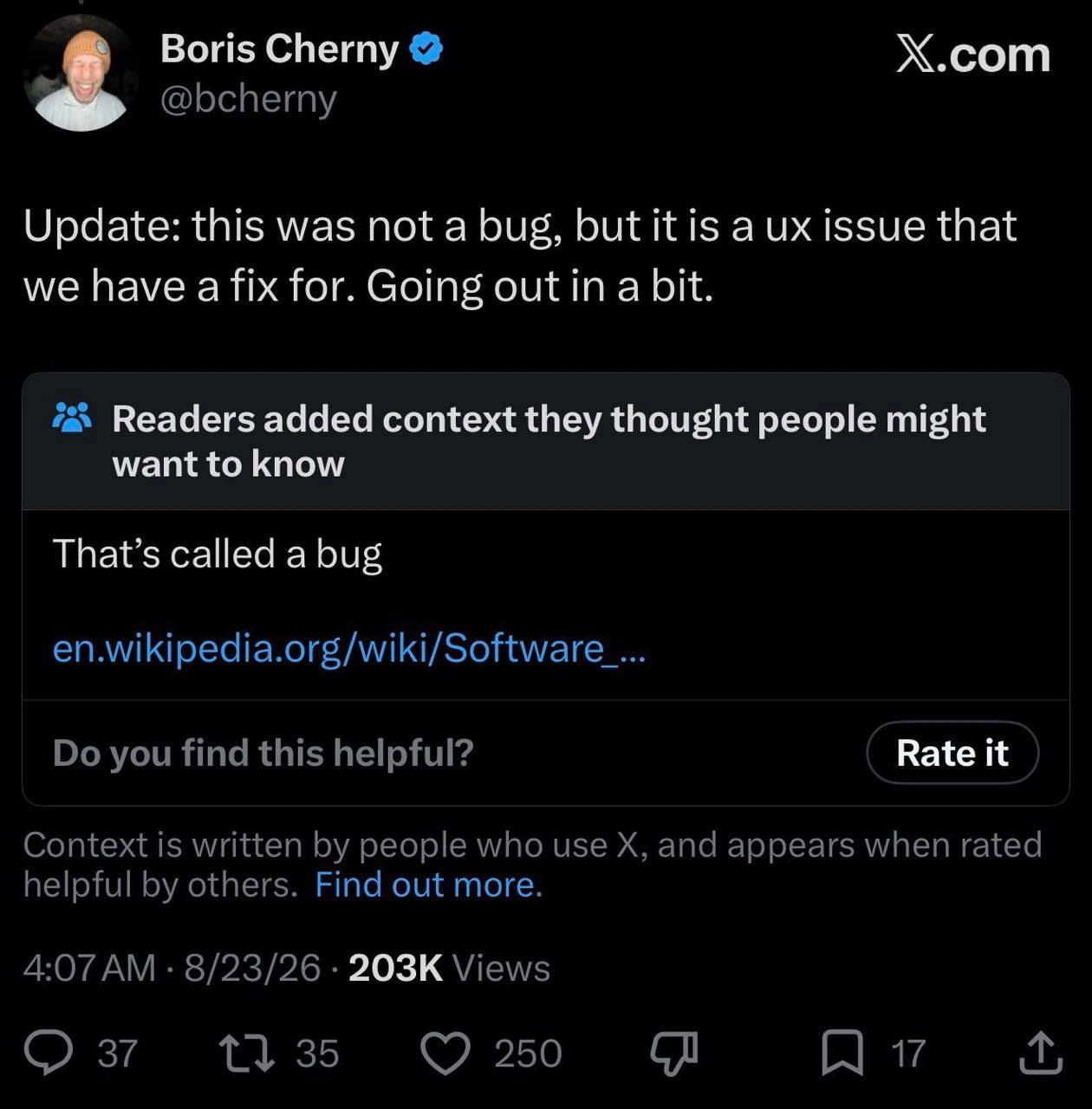
It’s funny because everyone can kind of tell they’re just saying that to avoid getting in trouble or missing the deadline. It’s like spilling juice on the kitchen floor and then telling your mom it’s a new way to mop. She’d raise an eyebrow, right? In the meme, a character from Lord of the Rings (a wise old fellow named Bilbo) is shown calmly justifying something clearly questionable by saying, “After all… why not? Why shouldn’t it be a feature?” That’s basically the developer saying, “Why not pretend this mistake is actually on purpose?” We laugh because it’s a playful take on how people sometimes cover up a problem by claiming it was intended.

So, in simplest terms: the meme is funny because it’s about turning an obvious mistake into an “official idea” with a straight face. It’s the programmer’s version of “I meant to do that!” The idea of calling a goof-up a feature is just so silly and cheeky that it makes us chuckle. It reminds us of times we’ve seen someone try to pass off an error as if it were part of the plan, and how creatively ridiculous that can be.

Level 2: Feature, Not Bug

Let’s break down what’s happening in this meme in simpler terms. In software development, a bug is a mistake in the code that causes the program to do something wrong or unexpected. A feature, on the other hand, is a piece of functionality that’s meant to be there – basically something good or intended that the software offers. Now, normally when a bug is found in a program (especially in production, which means the live system real users are using), the development team tries to fix it. Fixing a bug in production can be urgent and stressful, because it’s already affecting real users (unlike a bug found earlier during testing or development).

However, this meme jokes about a situation where the developers cannot fix a bug in production, likely because they are under intense deadline pressure. A deadline is a fixed date or time by which something must be finished. Deadline pressure means everyone’s rushing to meet that due date and there’s practically no time left. Imagine it’s the night before a big release or a critical demo for stakeholders (like your boss or a client), and suddenly a nasty problem pops up in the software. Ideally, you’d want to fix the bug properly, but doing so might require a lot of risky changes or simply more time than you have. Perhaps any change might break something else at the last minute, or the person who knows that part of the codebase is asleep (or unavailable). This is where the desperate humor of the meme comes in: instead of fixing it, the team decides to call the bug an official feature. Essentially, they say “You know what? Maybe this isn’t a mistake after all; maybe we intended it to work like this!”

It’s a bit like a student turning in a project with a big flaw but writing in the report that the flaw was an intended part of the design. 😅 In software terms, the team might update the documentation or release notes to explain the buggy behavior as if it were done on purpose. They might tell users something like, “This behavior is meant to ensure X or Y,” framing it as a positive. Internally, the developers all know it’s a bug. But under the pressure of delivering on time (and not being able to genuinely solve it fast enough), they’re choosing to relabel the bug as a feature. It’s a tongue-in-cheek solution, because of course it’s better to fix bugs properly – but reality doesn’t always allow that. There’s even an old running joke in programming circles: “It’s not a bug, it’s an undocumented feature.” That’s exactly what this meme is referencing. It’s a classic bit of DeveloperHumor where a flaw is passed off as a feature to save face or meet a deadline.

This scenario is all too relatable in the world of software engineering, which is why it’s tagged as RelatableHumor and DeveloperHumor. Many developers, even those early in their careers, eventually encounter a situation where something goes wrong at the last minute. For example, as a junior developer, you might deploy your first app and discover a weird glitch right before a client presentation. Your team scrambles to decide: do we roll back (undo the deployment), attempt a risky quick fix (often called a hotfix), or just live with it for now? Sometimes, if the glitch isn’t a showstopper, the project manager might say, “Let’s just consider this a known quirk.” That’s essentially what the meme is joking about – officially considering the bug a “known quirk” or even promoting it to a “feature.”

It’s important to understand a few terms here:

  • Production: This is the environment where the software is actually running for end-users or customers. It’s the real deal, not a test setup. A production bug is a bug that occurs in this live environment. These are taken seriously because they can impact real people using the product.
  • Technical debt: This is a concept meaning the future cost of choosing an easy or quick solution now instead of a better (but longer) solution. In this meme’s situation, calling a bug a feature is definitely a form of technical debt – the problem isn’t truly solved, and at some point, someone will have to come back and deal with the underlying issue (likely with more difficulty). It’s like putting off cleaning a mess; the mess will still be there later, possibly worse.
  • “Works as Intended” / “By Design”: These are phrases sometimes used in bug tracking systems to close a report by saying the behavior is not actually a bug but how the system is supposed to behave. In some companies, if a reported issue is decided not to be changed, they might mark it as “Closed: Works as Intended.” The meme’s second panel joke (“Why shouldn’t it be a feature.”) is basically a developer deciding to mark a clear bug as “intended behavior.” It’s a cheeky way to resolve the issue without actually doing anything.
  • LotR meme format: “LotR” stands for Lord of the Rings, a famous fantasy movie trilogy. This meme uses a screenshot of a character from Lord of the Rings (Bilbo Baggins) in a memorable scene. In the movie, Bilbo is asked to give up a powerful ring, and he reluctantly says, “After all… why not? Why shouldn’t I keep it?” In the meme, they’ve replaced “keep it” with “it be a feature.” This format is popular: people take well-known movie lines and tweak them to fit a joke. Here, the movie scene adds a dramatic (and humorous) effect to the idea of a developer slyly deciding to keep a bug around by claiming it’s a feature. You see the character Bilbo holding the ring delicately and rationalizing to himself – mirroring a developer gazing at a nasty bug and rationalizing “maybe it’s actually okay.”

Why is this funny to developers, especially juniors? Because it highlights a real-world dirty little secret: sometimes teams bend the truth to meet a goal. A newcomer to the field might be taught that bugs should always be fixed and that software should behave exactly as specified. Yet in practice, you’ll encounter situations where a bug slips through and there’s literally no time to address it properly. Early-career engineers might be shocked the first time they hear a manager or senior say, “We’re going to leave it as is and just inform the users that this is expected right now.” It sounds backward – aren’t we supposed to fix things? – which is exactly why it comes off as both funny and a bit cringe-worthy.

The meme captures that moment with humor: the top text says, “when you cannot fix a bug in production” and the images below show the thought process “After all… why not? Why shouldn't it be a feature?” It’s a joke about turning panic into spin. The calm face of the character in the picture (even though things are going wrong) adds to the comedy. It implies the developer is staying cool and justifying a bad situation very casually. ProductionIssues and ProductionBugs are stressful, and this meme pokes fun at one of the coping strategies – pretending the issue is intentional. It resonates with anyone who’s been in a tight spot with a live system.

In summary, at a junior level: this meme is saying “We had a bug we couldn’t fix, so we officially called it a feature.” It’s funny (and a bit sad) because it’s the opposite of what you’re supposed to do. It highlights the reality of working under pressure: sometimes, teams make compromises or play word games to get through a deadline. And yes, it’s a relatable joke – almost a rite-of-passage moment in software development when you witness or (gulp) participate in this kind of bug-versus-feature shuffle. The humor helps developers commiserate about the less ideal parts of the job, using a popular movie reference to drive the point home. For anyone who’s a fan of Lord of the Rings, the added layer of Bilbo’s quote makes it even funnier – it’s a perfect match to the feeling of coveting a quick solution that you probably shouldn’t.

Level 3: By Design Under Duress

In the heat of a production crisis, reality often rewrites the spec. This meme nails a scenario every battle-scarred engineer recognizes: a nasty bug is wreaking havoc in production, the deadline is hours away, and fixing it properly would be like pulling the One Ring from Sauron’s grip. So what’s the pragmatic (if cynical) solution? Simply relabel the bug as a feature and call it a day. After all… why not? Why shouldn’t it be “working as intended”? This punchline hits home because it’s a page taken straight out of real-world developer lore – a coping mechanism born from impossible timelines and mounting pressure. It’s the dark art of turning a defect into an official deliverable with a straight face.

From an experienced perspective, the humor comes from how absurd yet common this pattern is. We’ve all seen minor glitches magically documented as “intended behavior” in last-minute release notes. It’s a high-stakes bluff: instead of admitting technical debt or delaying the launch, the team plays a semantic shell game. Stakeholders hear “feature”, and suddenly that ugly bug is cast as a “value-added functionality.” This is basically post-hoc specification – updating the requirements after the code has failed to meet them. It’s hilarious in a gallows-humor way: instead of fixing the code to match the requirements, we change the requirements to match the code. Voila! The bug is now officially part of the design. Because nothing screams quality like rewriting the truth to fit your code.

This tongue-in-cheek solution is often driven by deadline pressure and fear of making things worse. In a fragile legacy system with spaghetti code, a rushed fix could introduce even more bugs (or take the whole system down at 3 AM). When time is up and risk is high, rebranding the bug can feel like the only safe move. It’s a scenario where everyone in the war room knows the truth but tacitly agrees to the charade. The meme’s use of the calm, almost benevolent LOTR character (Bilbo Baggins) saying “After all… why not?” perfectly contrasts the insanity of the decision. Bilbo is holding the One Ring he’s reluctant to give up – just like a developer clinging to a shaky system hack, soothing themselves with “Why shouldn’t it be a feature?”

On a deeper level, this reflects the unwritten rules of maintaining production systems. The instant a bug goes live, users might start depending on it. Seasoned devs often cite Hyrum’s Law: “With a sufficient number of users, any observable behavior of your system will be depended upon by somebody.” In other words, if the software has been delivering a glitch, chances are someone has found a use for that glitch. So by the time you discover it, the misbehavior is practically part of the user experience. The meme humorously embraces this perverse reality: the quickest way to resolve a production bug report is to declare the behavior intentional.

This strategy is obviously tech debt technical debt incarnate. You’re punting the real problem into the future, where it will likely grow into an even uglier monster (and some poor soul – possibly future you – will have to slay it later). But in the here and now, renaming the bug provides immediate relief. It’s the developer equivalent of sweeping dirt under the rug and then complimenting the rug. In meetings, it’s not uncommon to hear phrases like, “It’s not a bug; it’s an undocumented feature,” said half-jokingly when a fix isn’t feasible before the ship date. The humor bites because it’s a coping mechanism born of hard truth: sometimes “Won’t Fix – Works as Intended” is the official resolution. We laugh, but only to stop ourselves from crying.

To really appreciate the senior-engineer chuckles here, consider the aftermath:

  • Documentation gets updated to include the “feature”, retrofitting a justification for the odd behavior.
  • QA testers who originally raised the bug will roll their eyes seeing it closed as “By Design”.
  • Users might scratch their heads at this quirky “feature” that doesn’t quite make sense.
  • Developers feel a mix of guilty relief and dread, knowing this kludge might haunt future development.

All of this is wrapped in the familiar imagery of a Lord of the Rings meme format. It’s an inside joke layered on an inside joke. The calm acceptance on Bilbo’s face as he proposes keeping a dangerous artifact mirrors the calm of a lead engineer deciding not to fix a dangerous bug. There’s a sardonic glint in that comparison that veteran devs find both funny and painfully relatable.

In essence, the meme spotlights a truth every experienced developer learns: when push comes to shove, sometimes deliverables trump perfection. Did we intend for things to go wrong? No. But if we can’t put out the fire in time, we might just roast marshmallows on it and call it a feature. It’s Dilbert-esque corporate survival 101 – simultaneously ridiculous, clever, and a little bit tragic. And that blend of tragedy and comedy is exactly why this meme draws a knowing, world-weary laugh from seasoned engineers.

// Pseudo-code illustrating the "bug to feature" maneuver:
if (bugExists && deadline.isToday()) {
  console.warn("Too late to fix properly - repurposing bug as feature.");
  bug.report.status = "Closed – Works as Intended";  // 🤦🏻‍♂️ Officially not a bug now
  updateDocumentation(bug, "This behavior is by design in v1.0");
} else {
  fix(bug);
}

Here, instead of calling fix(bug), the code path updates the bug’s status to “Works as Intended” and even adjusts the docs to solidify the fiction. It’s a sarcastic snippet (complete with a facepalm emoji in the comment) that any battle-hardened dev can appreciate. In real life, there’s no markAsFeature() function — but there might as well be, given how often this pattern plays out. The code comment “Too late to fix properly – repurposing bug as feature.” perfectly echoes the meme’s sentiment. Under release-night duress, you can almost hear a lead developer mutter this line while changing a JIRA ticket’s status to “Not a Bug”. It’s funny because it’s true. This is DeveloperHumor at its finest, turning a shared pain point into a laugh. The next time you see a suspiciously convenient “feature” in a product update, remember this meme – somewhere a dev probably whispered, “After all… why not?” 😅

Description

A two-panel meme based on a scene from 'The Lord of the Rings' with the character Bilbo Baggins. The meme has a top caption that reads, 'when you cannot fix a bug in production'. The first panel shows an elderly Bilbo looking down at the One Ring in his hand with a corrupted, tempted expression, with the subtitle, 'After all... why not?'. The second panel shows a close-up of his face, now twisted into a possessive snarl, with the subtitle, 'Why shouldn't it be a feature'. This meme humorously captures a common, cynical joke in the software development world. When a bug in a live production environment is too difficult, risky, or time-consuming to fix, developers sometimes rationalize its existence by rebranding the unintended behavior as a new, albeit undocumented, 'feature'. Bilbo's corrupting temptation by the ring is used as a perfect metaphor for a developer's temptation to take the easy way out and avoid a difficult problem
Comments

7
Anonymous ★ Top Pick Some bugs are so complex they evolve into features. It's just emergent behavior from the legacy system's primordial ooze
  1. Anonymous ★ Top Pick

    Some bugs are so complex they evolve into features. It's just emergent behavior from the legacy system's primordial ooze

  2. Anonymous

    We didn’t fix the race condition - we just rebranded it as “non-deterministic personalization” and suddenly it’s two roadmap milestones ahead

  3. Anonymous

    The best documentation I ever wrote was explaining why our "eventual consistency" meant users might see their data from last Tuesday, and how this "promotes mindful reflection on past decisions."

  4. Anonymous

    Ah yes, the ancient art of 'strategic feature classification' - where that race condition that only manifests under load becomes 'eventual consistency by design,' and the memory leak transforms into 'aggressive resource utilization.' After 15 years, you learn that sometimes the safest production fix is a well-crafted release note explaining why the behavior is actually brilliant architecture. Bonus points if you can get it into the official documentation before anyone files a P0

  5. Anonymous

    In legacy monoliths, 90% of 'core features' were bugs we couldn't hotfix without outages

  6. Anonymous

    Can’t fix the prod bug? Rebrand it as a “compatibility constraint,” update the PRD, and let Hyrum’s Law ensure it outlives the system

  7. Anonymous

    Pro tip: when the CAB vetoes the hotfix, rebrand the bug as a “backward‑compatibility feature behind a flag” - suddenly the SLA and roadmap both pass CI

Use J and K for navigation