Skip to content
DevMeme
5118 of 7435
The Ambiguous Agony of Operator Overloading in Programming
Languages Post #5602, on Oct 23, 2023 in TG

The Ambiguous Agony of Operator Overloading in Programming

Why is this Languages meme funny?

Level 1: It Matters How You Count

Imagine you have two toy blocks, each with the number "1" written on it. You ask three friends to combine the blocks and tell you what they get:

  • The first friend is a regular kid who stacks the blocks and counts them: “One, two… I have 2 blocks!” So they answer 2.
  • The second friend is a bit of a puzzle enthusiast. Instead of counting the total, they just place one block next to the other so the numbers form a new longer number. The blocks side by side show 11 (like making the number eleven). That friend says, “I see 11.”
  • The third friend speaks a different counting language (let’s say binary, like how robots might count). In this language, they only have two digits, 0 and 1. So when they try to write down the total, “2” looks like “10” to them. They aren’t wrong; they just have a different way of writing it. They say, “In my way of counting, the answer is 10.”

You’d probably giggle that each friend gave a different answer for the same two blocks. In programming, telling a computer to add 1 and 1 can be a bit like that. If the computer is thinking normally about numbers, it will say 2. If it’s just sticking the symbols "1" and "1" together (like text), you’ll see 11 pop out. And if it’s showing you the answer in binary (the machine’s secret code), you might see 10. The meme is funny because it’s like a trick question with multiple right answers, and it reminds us of that child-like confusion and surprise: how can one plus one be anything other than two? 🤔 The answer: it all depends on how you’re counting and what you really mean by “plus.” In everyday life 1+1 is always 2, but in computer-land, it matters how you do it.

Level 2: Numbers vs. Strings

Let’s break down why those different answers appear, in simpler terms. In programming, 1 can be more than one thing. It might be a number used for math, or it might be the character "1" used as text. Computers also use different number bases (ways to represent numbers), so the symbols we see can change with base. The meme gives examples of how 1 + 1 can yield four outcomes:

  • 2 (Option B): This is the normal addition we all know. If you have one apple and add another apple, you get two apples. In most programming languages, if you use the number 1 (an integer in base-10) and add another number 1, the result will be the number 2. This is how math usually works in code when dealing with numbers (also called arithmetic).
  • 10 (Option C): This one looks strange if you’re thinking in decimal, but it makes sense in binary. Binary is base-2, which means it only uses two digits: 0 and 1. It’s how computers count internally. In binary, after 0, 1, the next number is written as 10 (which actually means 2 in decimal). So 1 + 1 = 10 in binary is just saying “one plus one equals two, but written in the binary system.” It’s like a different language for numbers. Think of it as writing two in a code that only has 1s and 0s. So if a programmer or a system is displaying the result in base-2, seeing 10 is perfectly correct for the sum of 1 and 1.
  • 11 (Option A): Here we have 1 and 1 side by side as 11. How can addition result in 11? This typically happens when the + isn’t doing mathematical addition at all, but rather joining two pieces together. Imagine writing the digit 1 next to another 1 — you’d literally get "11" as the combined result. In programming, if those 1s are treated as text (or some similar form), adding them could just stick them together. For example, some languages might implicitly convert numbers to text if you’re trying to add them to text. If you then print or output that result, you’d see 11 (with no quotes around it). It’s essentially like saying "1" followed by "1". Another way to think of it: in a very simple counting system (like tally marks or unary), you represent two as "11" (two individual 1s). So this answer represents concatenation (linking things together) rather than arithmetic addition.
  • "11" (Option D): This is very similar to the above, but makes it clear that the result is a string (text). The quotes around "11" mean it’s not the number eleven, but the characters '1' and '1' together as a piece of text. Many programming languages use quotes to denote text strings. For instance, in Python or Java if you write "1" + "1", the + operator will concatenate the two strings, resulting in "11". The quotes won’t show up in the final output on screen (they’re just syntax in code), but they tell us, the programmers, that this is text, not a numeric value. Option D explicitly includes quotes in the meme to say “hey, this answer is a text result.” It’s a nod to languages where adding two string "1"s gives you the string "11".

Why does all this matter? Because data types are a fundamental concept in programming. A number type (like an integer) will add mathematically. A string type will concatenate (join) if the language allows using + for strings. If you mix types, some languages will try to be clever and convert one type to another. That’s called implicit type coercion. For example, JavaScript will see a number and a string and usually convert the number to a string to make everything a string, resulting in concatenation. Other languages, like Python or Java, won’t guess — they’ll just throw an error if you try to directly add an integer and a string without converting one. Early in a coder’s journey, it’s common to hit this confusion: you read input as text (maybe "1") but then forget to convert it to a number, so 1 + 1 ends up joining "1" and "1" as text instead of adding to 2. The meme’s joke options cover those exact scenarios.

And what about bases? That’s another fundamental concept. When we say base-10 (decimal) vs base-2 (binary), we’re talking about how many symbols we have for counting. Humans normally use base-10 (digits 0–9), but computers use base-2 (digits 0–1). If you’re a new programmer, you might first encounter binary when learning how computers do math with just 0s and 1s. It’s a bit mind-bending to see that 10 in binary is the same as 2 in decimal. The meme pokes fun at that moment of revelation — that 1 + 1 could yield a result written as 10. It’s not that math is wrong; it’s that we switched the representation.

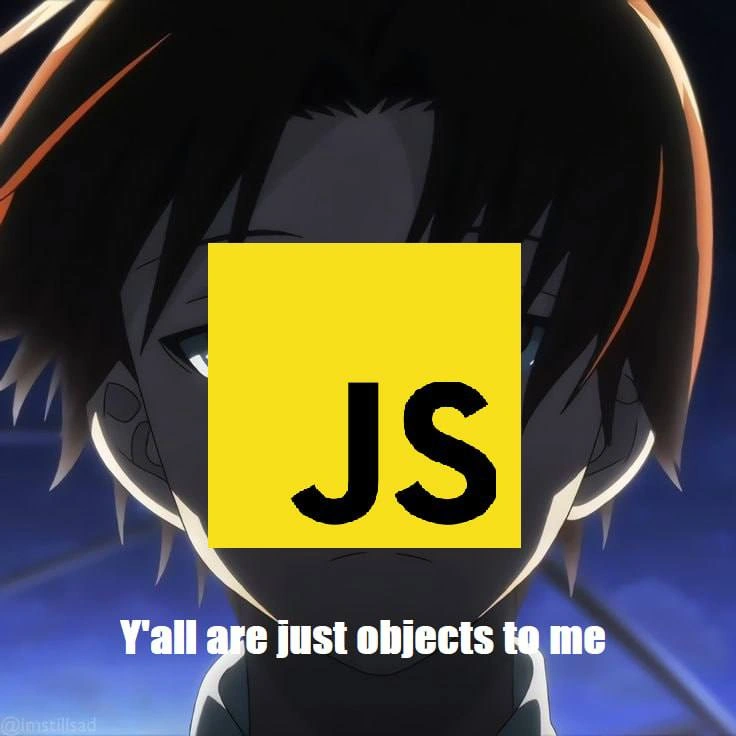
The game show style of the meme is a playful way to list out these different interpretations. The host’s shocked face is basically saying, “Hold on, which one is it?!” As a junior developer or a student, you might feel the same at first. But then you learn: in programming, you always have to consider “In what context am I doing this?”. Is it string context? Numeric context? What base am I working in? The meme might be funny, but it’s also a mini quiz of core programming concepts: how addition works with different types and representations. Once you get the joke, you also get a solid reminder of how important choosing the right data type and understanding your number bases can be. No one wants a bug because the computer decided 1 + 1 should be a string append! So, now you know why sometimes in code 1 + 1 can legitimately result in 2, 10, 11, or "11" — it all depends on whether you’re doing math or just gluing symbols together, and in what number system.

Level 3: Operator Overload

At first glance, 1 + 1 looks like the simplest expression imaginable — but in programming, this innocent plus sign can wear many hats. The meme slyly presents a multiple-choice question where all four answers are "correct" depending on context. That wide-eyed game show host is every senior developer realizing that yes, 1 + 1 can equal 11 in certain scenarios. The key to this paradox is how different programming languages, numeric bases, or even compiler settings interpret the expression. In other words, context is king for 1 + 1.

Consider how the plus operator (+) works across contexts:

  • In most languages, when 1 and 1 are integers, 1 + 1 evaluates to 2 (option B). That's plain decimal arithmetic, just like grade school math. No surprises there.
  • But computers don’t natively “think” in decimal; they use binary (base-2). In binary, the sum of 1 and 1 isn’t written as 2 — it’s written as 10 (option C). This is because binary has no symbol for "2", so it represents two in a new column (just as decimal writes ten as 10). Every programmer learns that 1 + 1 = 10 in binary once they dive into CS fundamentals about number systems.
  • Now, the real fun: many languages overload + to also handle string concatenation. If you treat those 1s as characters or strings, 1 + 1 can concatenate them into "11" (option D) instead of adding. For example, in Python "1" + "1" results in "11", and in JavaScript 1 + "1" implicitly converts the number to a string, yielding "11" as well. The quotes in option D highlight that "11" is a string literal — the characters one-one, not the number eleven.
  • What about option A (11 without quotes)? This could happen if a language or situation interprets the + in yet another way. One sneaky example is treating the 1 as a textual token or concatenating in a context where quotes aren’t shown. Think of it like two '1' characters gluing together. In a weakly-typed language, if you accidentally pass something as text when you meant a number, you might end up with an unquoted 11 output (for instance, printing the result of "1" + "1" will display 11 without quotes). And in an esoteric sense, if you use unary/base-1 counting (tally marks), adding one and one literally yields "11" (two marks)!

The humor hits home because seasoned devs have all been bitten by these language quirks. A simple + can become a type-coercion landmine in a code review. For instance, you might review a JavaScript function and spot total = price + quantity. Looks fine, but if price was read from a text field, you’ll end up with "100" + 5 = "1005" instead of the expected 105. Surprise! The code quietly coerced the number 5 into a string and appended it. These implicit type conversions are infamous gotchas — one minute you think you’re adding numbers, the next you’ve accidentally created a longer string. Many a bug has come from such implicit_type_casting_gotcha scenarios, especially in languages with mixed-type + behavior (yes, we’re looking at you, JavaScript).

Even beyond strings, base conversion confusion can strike. Ever had a bug because someone coded a number in the wrong base? Classic example: interpreting user input "10" as binary when you meant decimal, effectively treating it as 2. Or using a language that by default treats numbers with a leading 0 as octal (base-8) — then 1 + 1 might not be what you expect if one of those numbers was parsed oddly. These edge cases remind us that language details matter.

This meme brilliantly compresses all those lessons into one image. The host’s bewildered expression is basically a senior engineer’s face when a routine calculation misbehaves due to a silly type mix-up or base mishandling. It’s a mix of “Wait, how did we get 11?!” and “Oh no, it’s that darn implicit conversion again.” We laugh because we’ve been there. In a way, Who Wants to Be a Millionaire? is the perfect format: the question “In Computer Programming, 1 + 1 = ?” has four possible answers, and any could be the “final answer” in the right context. And the ultimate twist: the real correct answer is “All of the above.”

Description

The image uses a popular meme format featuring a man, resembling Steve Harvey, as a contestant on a game show, looking utterly stressed and wide-eyed. The question on the screen reads, 'In Computer Programming; 1 + 1 ='. The four multiple-choice options are A: 11, B: 2, C: 10, and D: '11'. This meme hilariously captures a core complexity in programming. The joke is that without specifying the programming language or the data types of the operands, multiple answers could be correct. In mathematical addition, the answer is 2. In many languages with type coercion (like JavaScript), adding a number to a string results in string concatenation, making '11' a possibility. The binary representation of 2 is 10. For senior developers, this is a nod to the countless hours spent debugging issues stemming from weak typing and unexpected operator behavior, where the fundamental rules of math don't always apply as expected
Comments

52
Anonymous ★ Top Pick The real answer is E: `undefined`. The question is from a legacy system, the documentation is missing, and the original developer now runs an alpaca farm
  1. Anonymous ★ Top Pick

    The real answer is E: `undefined`. The question is from a legacy system, the documentation is missing, and the original developer now runs an alpaca farm

  2. Anonymous

    Real answer: E) Depends on whether your senior architect remembered to enable 'use strict' before the daily stand-up

  3. Anonymous

    After 20 years in the industry, the real shock isn't that 1+1 can equal 11, 2, 10, or "11" - it's that we've collectively decided to ship production code where this ambiguity is considered a 'feature' and not a design flaw. Steve's face perfectly captures every senior engineer's reaction when reviewing JavaScript PRs that rely on implicit type coercion instead of explicit type checking

  4. Anonymous

    The correct answer depends entirely on whether you're in JavaScript land where '1' + 1 === '11', Python where it throws a TypeError unless both are strings, or if you're working in binary where 1 + 1 = 10. This is why TypeScript exists - so we can argue about types at compile time instead of discovering at 3 AM in production that someone concatenated user IDs instead of summing them. The real question is: which language's type coercion rules are you debugging today?

  5. Anonymous

    In our polyglot stack, 1+1 is 2 in Go, "11" in Node, 10 in the Spark job, and 11 in the PM's slide deck - hence the postmortem

  6. Anonymous

    Pick B for Ints, C when the UI prints base‑2, D if '+' is a monoid append - and A when legacy PHP concatenates then auto‑casts; the senior answer is always E: it depends

  7. Anonymous

    Senior dev buzzes: 'What is "it depends on types and language"?' - the real final Jeopardy

  8. @trainzman 2y

    B

    1. @LilTemmieh 2y

      Not always

  9. Deleted Account 2y

    depends.

  10. @Nefrace 2y

    "Yes"

  11. @AlexAparnev 2y

    parsing error: "1+1" is not correct l-value

  12. @azizhakberdiev 2y

    start of text

  13. @randomrabe 2y

    All are true. A) roman numbers B) decimal numbers C) binary numbers D) string concatenation

    1. @sevos 2y

      Why the fuck would you evaluate it with string concatenation when strings would have "1"+"1" notation?

  14. @randomrabe 2y

    Reminds me of this one : Hi please answers the following question: What if c = 1 then c++ is: A) null B) 2 C) error D) c# E) why using c++ if you have Java F) true G) a programming language H) 42 I) 'What' was not declared in this scope

    1. @RoberaRobera 2y

      E

    2. @mon_faleymon 2y

      Why null? I mean even if we consider that "c++" is an increment of some kind of pointer, we cannot predict which data would be in the next memory cell, probably it could be some junk

      1. @SamsonovAnton 2y

        Because operator overloading may yield any value of any return type. 🤗

  15. @DavidGarciaCat 2y

    given there’re no quotes, it should be “B” (as there are no references to binary or strings)

    1. @SamsonovAnton 2y

      declare A=1+1 echo $A outputs 1+1 😝

  16. @callofvoid0 2y

    binary? js ? string? integer?

  17. @dsmagikswsa 2y

    Do you see the ;?

  18. @ZgGPuo8dZef58K6hxxGVj3Z2 2y

    How can there be so many wrong answers? “But it can be this too and maybe its this and that” dudes look at the ; and the Syntax. It’s some kind of C/Java/Swift. With this information we already know that those numbers not in quotes cannot be string. Also they cannot represent binary either because in all of these languages you would need a 0b prefix or b suffix to make them binary numbers… and why would it be (int)11 in any of those situations… lmao

    1. @callofvoid0 2y

      be cause it is not actually a line of code or statement of an specific language

      1. @ZgGPuo8dZef58K6hxxGVj3Z2 2y

        Show me a language where any of those answers would be possible.

        1. @callofvoid0 2y

          I am not talking about the language I'm talkin' about the concept

          1. @ZgGPuo8dZef58K6hxxGVj3Z2 2y

            Then explain.

            1. @callofvoid0 2y

              you may answer the question "what is VI?" as: it is a cli text/code editor but the concept may refer to a roman number, 6 in this case

              1. @ZgGPuo8dZef58K6hxxGVj3Z2 2y

                What does this have to do with it?

                1. @callofvoid0 2y

                  1 + 1 = ? is a way of representing a mathematical operation to someone that assumes 1 to be only a decimal value, you are right, but one may assume that 1 is the value and depending on different representations of a value this might seem like just a psuedo code and not an actual statement to be given to a compiler or interpreter and answer the question with the returned value

                  1. @ZgGPuo8dZef58K6hxxGVj3Z2 2y

                    If it would be anything other than decimal we would mark it… in most programming languages with 0x/0b prefix or b or h suffix… in actual mathematical statement we would mark it with a subscript b/h or the base like 2/16. If you don’t mark it its your fault and it is considered as decimal…

                    1. @callofvoid0 2y

                      if we don't know the context some assumptions are not impossible but improbable

                      1. @ZgGPuo8dZef58K6hxxGVj3Z2 2y

                        That’s a Mars Climate Orbiter problem. I could also assume they overwritten the + operator but nobody talks about that because it is not mentioned…

                        1. @callofvoid0 2y

                          I don't know what that astrological thing is, but yes exactly

                          1. @ZgGPuo8dZef58K6hxxGVj3Z2 2y

                            Its a spacescraft where the software writers mixed up the metric and imperial system units. So it failed its duty

                            1. @callofvoid0 2y

                              bruh

  19. @ZgGPuo8dZef58K6hxxGVj3Z2 2y

    Except 2

  20. @ZgGPuo8dZef58K6hxxGVj3Z2 2y

    In the statement it is without quotes… so you changed it… which does not really make the original question result “11”

  21. @callofvoid0 2y

    btw @RiedleroD

    1. @RiedleroD 2y

      thanks, it's votekick btw, not kickvote

      1. dev_meme 2y

        Having kickvote alias for votekick sounds good btw 👀

        1. @RiedleroD 2y

          hmm, PRs are always welcome :P

          1. dev_meme 2y

            I would be happy to do so but your PR with initial feature of votekick isn’t merged it 👀️️️️️️

            1. @callofvoid0 2y

              Are you done with aliasing or shall I take part?

  22. @CcxCZ 2y

    @RiedleroD NFT ad with no relation to the post 🗑&🔨

  23. @purplesyringa 2y

    who was that?

    1. @sylfn 2y

      linegel.t.me

      1. dev_meme 2y

        Tf is wrong with those links

      2. @RiedleroD 2y

        lmao linegel isn't trusted

  24. @RiedleroD 2y

    sucks to suck 🤷

  25. @callofvoid0 2y

    is that base 5 or 6 ?

Use J and K for navigation