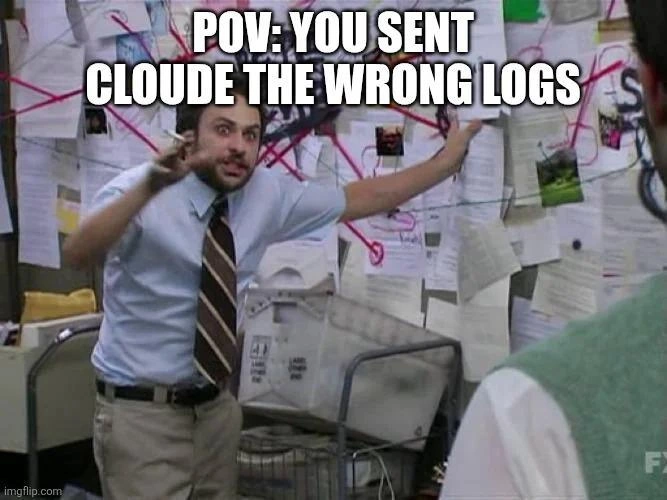
When the program follows specs but still feels completely wrong
Why is this Bugs meme funny?
Level 1: The Literal Genie
Imagine you have a magic genie (or a super-literal robot friend) who will grant your wishes exactly as you say them. You need to be really careful how you word your wish! For example, if you excitedly shout, “I wish for a million bucks,” you might mean a million dollars in money, but “bucks” can also mean male deer. So poof! – the genie grants your wish and suddenly your backyard is filled with a million deer 🦌. That’s not what you wanted at all, but the genie wasn’t trying to trick you; it was just following your exact words. In this meme, the computer program is like that genie. The programmer is angry because the outcome feels wrong (kind of like being upset about getting deer instead of dollars), but the little cute “code” character is basically saying, “Hey, I only did exactly what you told me to do!” The joke is that the computer isn’t really smart on its own – it can’t guess what you meant, it only knows what you said. So, just like making careful wishes with a genie, a programmer has to be very clear and correct with their instructions. If they mess up the instructions even a bit, the computer will still follow them to the letter, and the result might be pretty silly or frustrating. It’s funny because we’ve all had moments where we wanted to blame the computer, but deep down we know it was our own wish (or code) that caused the goofy result.
Level 2: Intention vs Implementation
Let’s break this down in simpler terms. The meme shows a programmer (the figure labeled “ME” in the first panel) who is super angry because their program isn’t doing what they want. In the second panel, the program is depicted as a cute little blob saying it’s “doing exactly what I’m telling it to do.” This is a very familiar situation in coding, especially when you’re new: you run your code and something is wrong, and it feels like the computer is “misbehaving.” In reality, the computer only does exactly what your instructions (your code) tell it to do, nothing more or less. If there’s a mistake in those instructions – even a tiny mistake – the outcome will be different from what you intended. That mistake is what we call a bug. A bug is basically an error or flaw in the program that makes it act in an unintended way. And the process of finding and fixing these errors is called debugging.
In this meme, the bug isn’t a crash or a typo that stops the program from running; instead, it’s a logic error – meaning the code runs, but it does the wrong thing. The phrase “follows specs but feels wrong” hints that the code technically follows the written steps (the specs, short for specifications or requirements), but those steps aren’t producing the desired result. The frustration comes from a mismatch between the programmer’s intention (what they wanted the code to do) and the program’s implementation (what the code actually does). The poor little “My Code” blob in panel 2 is basically saying: “Don’t blame me! I’m just doing what you told me, step by step.” And that’s how real code works too. Computers don’t have common sense or an ability to guess what you meant. They just execute the commands you give them, in the order you give them.
To make this concrete, imagine you intended to write a loop that counts from 0 up to 4, but you accidentally wrote it to count downwards. The computer isn’t going to say “Oops, you probably meant up, I’ll fix it” – it will just follow your code literally, counting down forever. For example:
for (int i = 0; i < 5; i--) {
// This loop is supposed to count up from 0 to 4, but uses i-- instead of i++.
// Instead of stopping at 4, it will count downwards forever (an infinite loop).
// The program is obediently following the wrong instruction.
}
In the snippet above, the programmer likely meant to write i++ (to increase i each time) but wrote i-- by mistake. The computer doesn’t know it’s a mistake – it happily keeps decreasing i. The result? The loop never ends, and the program “hangs” or behaves oddly. The bug here is entirely caused by the wrong instruction. The code is syntactically correct (no grammar errors in the code), so it runs, but it’s logically wrong relative to what the programmer wanted. This kind of issue is exactly what the meme is talking about. The developer is mad because the program’s behavior is wrong, but the program is essentially saying, “I did exactly what you wrote, boss!” It’s a classic case of misaligned expectations: the developer expected one outcome, but their code (faithfully following their exact commands) produced a different outcome.
If you’re new to coding, it helps to remember that computers are ultra-literal. Think of the computer as a very obedient but dumb robot: it will do precisely what you say, even if that’s not what you meant to say. This is why debugging is such an important skill. When something “feels completely wrong” in the program, a developer has to methodically check what they actually told the computer to do. This might involve printing out intermediate values, using a debugger tool to step through the code, or simply reading the code carefully (often called a code review or the classic “rubber duck debugging” where you explain the code to a rubber duck or another person). By doing this, you’ll almost always find that the computer followed the instructions exactly, and the real issue was a human misunderstanding or a slip in the logic. The moment of realization usually comes with equal parts chagrin and relief: chagrin because “doh, it was my mistake!” and relief because now you know what to fix. In short, the meme is a light-hearted take on a very real developer experience: being frustrated at a program only to realize it’s doing precisely what you told it to do — and that the fix is to change what you’re telling it.
Level 3: Works as Coded
Every experienced engineer chuckles (and cringes) at this scenario. The meme captures a piece of classic developer humor: a bug that isn’t a mysterious machine error at all, but our own instructions coming back to bite us. In panel 1, the developer (labeled “ME”) is livid, sporting that all-too-familiar angry programmer face we’ve worn during late-night debugging sessions. In panel 2, we see the program itself personified as an adorable, wide-eyed blob saying, “My code… doing exactly what I’m telling it to do.” The humor hits because the program is innocently following the specifications to the letter, yet the result is completely wrong from the developer’s perspective. It’s a perfect illustration of Developer Expectations vs Reality: we expected our code to magically intuit our intent, but reality delivers exactly what we literally wrote. The tiny cute blob (our code) looks up angelically, emphasizing that it has no malice or agenda – it’s just doing what was asked. Meanwhile, the developer’s furious glare is utterly misdirected. We’re essentially raging at a mirror of our own logic mistake. This reversal – where the code is technically correct and the developer is the one who goofed – is what makes the meme so relatable and funny. It satirizes that shared debugging frustration when you realize the software isn’t “betraying” you at all; it’s obediently executing flawed instructions that you gave it.
On a deeper level, this meme pokes at a fundamental truth in programming: computers are literal machines. They don’t understand what you intended to accomplish, only the exact steps you implemented in code. The phrase “My code is doing exactly what I’m telling it to do” is basically the motto of every hard-to-find bug. Seasoned developers know that feeling when a program behaves exactly according to the code (hitting all the right if/then paths, loops, and calculations as written), yet the outcome is wrong — meaning our thinking was wrong. There’s even an old saying in software development: “Garbage In, Garbage Out.” This means if your input or instructions are flawed (garbage), the computer will dutifully produce garbage results. Here, the “garbage in” was our own mistaken logic! The meme exaggerates this principle by making the code a cute, blameless character. It highlights how misaligned expectations cause many bugs in software: the developer’s mental picture of what the code should do didn’t match the actual code’s behavior. We’ve all been there, angrily muttering “Why on earth is this not working?!” only to discover the program was working precisely as coded – and the real bug was in our assumptions or misunderstanding. In fact, one hallmark of growing as a developer is moving from “The computer is messing up my program” to “Hmm, I must have a bug in my code.” This meme nails that epiphany. It reminds us that no amount of shouting or scowling at the screen will change the outcome — only carefully reading and fixing the code will. The program won’t magically intuit what we meant; it’s up to us to bridge the gap between intention vs implementation. And until we do, the code will continue cheerfully doing exactly (and only) what we told it, for better or worse.
(Side note: This dynamic even plays out in real-world projects. Ever deliver a feature “by the spec” only for users to say it feels completely wrong? Yep, you implemented the written requirements to a T, but the requirements themselves were off. The software was “working as intended” from a technical standpoint, yet not actually solving the problem – a spec problem rather than a code bug. The meme’s core joke scales from a one-line coding mistake to that big picture irony. It’s a gentle poke at how following the letter of the spec can still miss the spirit of what’s needed. In all cases, the code won’t bend itself to our true intent – we have to express that intent correctly.)
Description
Two-panel comic with pastel pink backgrounds and thick black borders. Panel 1 shows a crudely drawn white blob-figure labeled “ME” scowling with furrowed brows and clenched lips, leaning forward in angry frustration. Panel 2 switches perspective: the left foreground shows the large gray outline of the angry figure’s shoulder looming toward a tiny, adorable white marshmallow-shaped blob with wide sparkling eyes. Above the blob is the caption, written in mixed-case handwriting, “My Code. Doing Exactly What I’M TELLING IT TO DO.” The scene captures the classic developer experience of raging at software even though the code is faithfully executing the precise - but apparently wrong - instructions given, highlighting the disconnect between intent and implementation during debugging sessions
Comments
6Comment deleted
Prod happily runs exactly what’s in requirements_v0_final_FINAL_really.pdf - so my next hotfix is a pull request against Confluence
After 20 years in the industry, the most humbling realization isn't that the compiler was wrong or the framework has a bug - it's that your perfectly functioning code is faithfully executing your fundamentally flawed mental model, like a loyal assistant following terrible instructions to the letter
The eternal struggle: your code is deterministic and perfectly obedient, executing exactly the flawed logic you wrote at 2 AM. It's not a bug in the interpreter - it's a feature in your mental model. The computer is just the world's most literal-minded colleague, following your instructions with the precision of a state machine and the empathy of a null pointer
The fleeting triumph when literal obedience sidesteps the usual postmortem on ambiguous specs
My code isn’t wrong; it’s a perfectly deterministic implementation of my undefined requirements - the unit tests agree because I trained them to believe the same lie
The CPU is a 3 GHz lawyer - ruthlessly literal; without an executable spec, you’re just litigating feelings