The Concurrency Conversation We All Dread
Why is this Bugs meme funny?
Level 1: All or Nothing
Imagine you’re helping to stack blocks into a tall tower with a friend. You both agree that if the tower starts to wobble too much, you won’t add just half a block and walk away – you’ll either finish placing the block securely or not place it at all, so the tower stays stable. Now, your friend promises, “Don’t worry, I’ll be careful. I’ll put the block on top all at once.” But you, watching the tower shake a little, can’t help but ask nervously, “...You’ll put it on all at once, right? You’re not going to leave it half-on and half-off, are you?” In this story, the tower is like our data, and placing a block is like making a change to that data. We want it done in one complete go or not at all – because a half-done job could topple everything. The meme is funny because the child is basically double-checking this “all-or-nothing” promise. It’s that relatable feeling of really wanting to be sure: like asking a parent, “You locked the door completely, right? Not just a little bit?” The humor comes from the extra stress on “right?” – it’s a lighthearted way to show how we all feel a bit scared of things being left halfway. In simple terms, the joke is about making sure something is done fully or not done at all, and the little kid’s worried face says exactly how we feel inside when we hope nothing goes wrong halfway through.
Level 2: ACID Guarantee
Let’s break down the technical terms and scenario here. The meme is referencing database ACIDProperties, specifically the Atomicity aspect. In databases, an “atomic” update means an all-or-nothing operation: you either apply the entire change or, if something goes wrong, you apply nothing at all. For example, if you’re transferring money between two accounts (subtract from one, add to the other), atomicity ensures you won’t subtract money without adding it to the other account. Either both steps succeed or both fail. This keeps the database in a consistent state – which means the data obeys all the rules (no negative balances, no missing money, etc.) before and after the transaction. In the meme’s first panel, the adult says, “The database is in a consistent state.” That’s setting the stage: everything is okay here, all the data is valid and consistent.
Next, the adult says, “And we place an update…” which means they’re performing some change to the data. Maybe it’s a simple UPDATE SQL statement or a series of changes as a single unit. They then reassure with, “Because the update is atomic.” This implies they’re using a database transaction so that this update will be treated as one indivisible action. In real life, you’d start a transaction, make your changes, then commit the transaction. If anything goes wrong in the middle (say the server crashes or one of the SQL statements fails), the database will roll back the transaction, undoing any partial changes. This is the safety net that prevents half-done updates. It’s part of why using transactions is crucial for DataIntegrity – you don’t want half an update lingering in the system.
Now, why the worried child asking, “…the update is atomic, right?” In a perfect world, we’d trust the database completely. But imagine you’re a developer who’s seen weird bugs or you just learned about how transaction isolation works. Isolation is another letter in ACID – it’s about how one transaction is protected from the side-effects of others running at the same time. If the isolation level is weak (for performance reasons, some databases don’t fully isolate by default), two concurrent updates might interfere with each other. This is where RaceConditions come in: that’s when two processes or transactions are trying to do things at the same time and the final outcome depends on who finishes a fraction of a second earlier. It’s like two people trying to edit the same document at the same time without seeing each other’s changes – you might end up with one person’s edits accidentally wiping out the other’s. In database terms, if two transactions update the same data simultaneously and the system isn’t locking properly, one update might get lost or overwritten. Yikes!
So the child in the meme is basically voicing that junior developer doubt: We think our process is safe because we used a transaction and ACID, but we really want to be sure. In other words, “Our system will either do the whole update or nothing, right? There’s no chance it does part of it and leaves things messy… right?” It’s both a sanity check and a slightly comedic lack of confidence. And honestly, that’s good instincts – any new developer who’s seen one bug related to a transaction will start double-checking that everything really is atomic. They might ask their senior, “This update is atomic, isn’t it? We’re not going to end up with some rows changed and others not, correct?” A seasoned developer would confirm, “Yes, if we coded it correctly inside a transaction, it’ll either fully succeed or fully roll back. And we set the isolation so no other process can meddle in the middle of it.” If the senior can’t answer that confidently, well, that worried face is justified!
The meme uses a scene from a Jurassic Park movie to amplify the emotion: it’s like a tense moment of asking for reassurance in the face of danger (in the movie, dinosaurs; in our world, data corruption). DatabaseHumor often plays on these dramatic comparisons because saving data consistently can feel as intense as escaping a T-Rex when you’re on production duty. By referencing atomic_update and transaction isolation in a humorous way, the meme actually teaches a subtle lesson: Don’t just assume your database operations are safe – know the guarantees your system provides. It pokes fun at those of us (and that’s most of us at some point) who parrot “ACID will save us” without double-checking the fine print. In summary, to a junior dev: the meme is saying always ensure your database update is truly atomic and properly isolated, and it’s doing so by showing a scenario where someone asks for that extra reassurance, just to be safe.
Level 3: Isolation Anxiety
This meme hits home for any seasoned developer who’s been burned by a database transaction behaving in an unexpected way. It highlights a quietly harrowing scenario: everyone assumes the database will handle an update with perfect ACID compliance – after all, “the update is atomic” sounds so reassuring. The first panels present that familiar confidence: The database is in a consistent state. We apply an update, because the update is atomic. This mirrors the textbook promise that if you follow the rules, all will be well. But then comes the punchline: the wide-eyed child asking “…the update is atomic, right?” in the final panel. That anxious double-check is something even senior devs secretly do when deploying a critical change. It’s a reflection of transaction_isolation_anxiety – the nagging doubt that maybe, just maybe, some concurrency bug or config oversight could break the all-or-nothing spell.
Why is this so funny (and painful) to us? Because we’ve all experienced that sinking feeling when data wasn’t as consistent as we expected. Maybe it was the time two people updated the same record at once and one update got mysteriously lost. Or the time you ran a report at the exact moment a transaction was in progress, and you caught a glimpse of half-updated data (a ghost that shouldn’t exist in a perfect world). Those are race-condition fears coming true. The meme’s scene, borrowed from a dinosaur movie, casts the senior developer as the reassuring adult: “Don’t worry, everything’s fine, the system is ACID-compliant.” The child represents every cautious developer (junior or even veteran) who isn’t entirely convinced – “It’s fine… right? We did set the transaction isolation level high enough… right?” This dynamic is funny because it’s a role reversal of sorts: the experienced dev might be confidently hand-waving away concerns, while the anxious dev (often portrayed as the junior, but in reality it could be the paranoid senior who’s seen things) voices the elephant in the room.
In real projects, we often talk a big game about DataConsistency and DataIntegrity. We sprinkle terms like atomic_update and ACID compliance in design docs as if they are magic incantations against bugs. The truth is, ensuring a truly atomic, isolated update requires diligence: you have to verify your database settings and code actually use transactions correctly. There’s an unwritten horror story behind the humor: imagine a bug where an UPDATE statement didn’t wrap in a transaction properly. Part of the data changed before a crash, part didn’t – leaving the database in a bizarre limbo state. A consistent state was promised, but a combination of human error and system quirks broke that promise. This is the kind of bug that gives senior_dev_fear its name. Seasoned engineers have PTSD from production incidents where something that “couldn’t possibly go wrong”… went wrong.
Consider a scenario that keeps ops teams up at night: two processes simultaneously attempt an inventory update on the same product. Each intends to deduct some stock in an atomic operation. If the code or the database isolation isn’t set up right, you can end up with an interleaving like this:
-- Transaction A (intends to add 5)
BEGIN;
SELECT count FROM inventory WHERE item = 'Widget'; -- Returns 10
UPDATE inventory SET count = 10 + 5 WHERE item = 'Widget'; -- Plans to set count = 15
-- Transaction B (concurrently, intends to add 3)
BEGIN;
SELECT count FROM inventory WHERE item = 'Widget'; -- Also returns 10 (hasn't seen A's change)
UPDATE inventory SET count = 10 + 3 WHERE item = 'Widget'; -- Plans to set count = 13
COMMIT; -- B commits first: count is now 13 in the database
-- Back to Transaction A
COMMIT; -- A commits afterwards: count becomes 15, overwriting B's update (lost B's +3)
-- Final count in DB is 15, but if both ran one after the other, we expected 18. Oops!
In a properly isolated universe, Transaction A or B would have waited or aborted to prevent this lost update. But many systems using a default isolation level might allow this outcome unless you take extra measures (like explicit locks or higher isolation). The meme’s humor is that we often trust our tools — “because the update is atomic” — only to get that sweaty realization at the last moment that trust isn’t a strategy. We double-check, out loud or in our heads: “It is atomic…right? We didn’t miss something, did we?” It’s both a joke and a genuine teaching moment: never assume, always verify your ConcurrencyControl settings.
The repeated caption at the bottom – “The update is atomic? atomic, right?” – mimics that echo chamber of doubt in a developer’s mind. It’s like when you merge a critical pull request on Friday afternoon: you stare at the screen thinking, “It’ll be fine... it’s fine, right? ...Right?!” That repetition is the voice in our heads when dealing with DatabaseTransaction guarantees. It’s funny to us now because we imagine that anxious kid’s voice whenever someone too quickly assures “Don’t worry, it’s ACID-compliant, nothing can go wrong.” Every senior dev knows that look on the kid’s face, because at some point we were that kid – asking the uncomfortable question that exposes whether our confidence is real or just bravado.
Level 4: Serializable or Bust
At the highest levels of database theory, transactions are expected to be serializable – meaning their outcome is equivalent to some sequential (one-after-the-other) execution, even if they actually ran in parallel. This is the gold standard of transaction isolation. Achieving it requires sophisticated concurrency control algorithms like strict two-phase locking (S2PL) or modern MVCC (Multi-Version Concurrency Control). In theory, if your update is truly atomic and isolated under serializable rules, no other operation can observe any in-between state. The entire update is indivisible – it either happens completely or it’s as if it never happened, with no observer ever catching a glimpse of a partial update.
Under the hood, databases enforce Atomicity (the “A” in ACIDProperties) using techniques like write-ahead logging (WAL) and two-phase commit protocols. A WAL ensures that before any change is made to the database’s main storage, an entry describing that change is safely stored on disk. If something fails halfway through, the database can recover to the last consistent state by replaying or rolling back from this log. With a proper WAL, the update will not partially apply: either all intended changes get committed or the log will undo any half-done work to maintain DataIntegrity. In a distributed database, atomicity extends into the realm of the CAP theorem – atomic multi-node updates usually require coordination mechanisms (like a two-phase commit or consensus algorithm) to make sure that either every node applies the update or none do. This is a non-trivial problem: network partitions or crashes could violate atomicity without such protocols, leading to that nightmare scenario of partial data in different places.
However, even if Atomicity and Durability are addressed, Isolation is its own can of worms. Many real databases default to weaker isolation levels (like Read Committed or Repeatable Read) for performance, rather than full serializable isolation. The result? Your update might be atomic in itself (it commits fully or not at all), but another concurrent transaction might still sneak a peek at data mid-change or overwrite something – a classic RaceCondition scenario. In formal terms, without full isolation, the system allows non-serializable schedules: two transactions interleave in a way that a strictly sequential order couldn’t reproduce. This is how you get anomalies like lost updates and dirty reads. The meme humorously exposes that gap between theory and practice: sure, we call it an atomic update, but are we absolutely sure no concurrency gremlins are peeking through? The anxious question “...the update is atomic, right?” is practically a plea for true serializability in a world that often settles for “good enough” isolation.
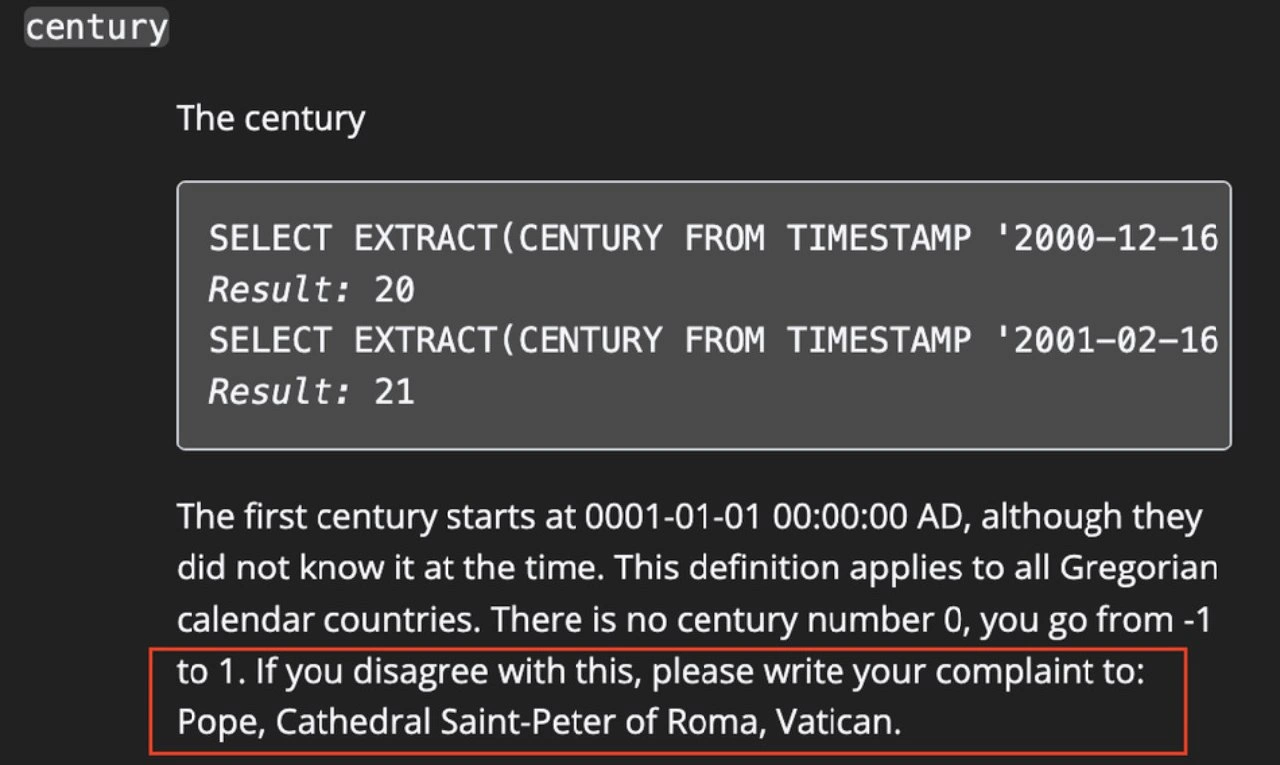
Description
A distorted, glitch-art-style meme using the four-panel 'For the better, right?' format with Anakin Skywalker and Padmé Amidala from Star Wars. In the first panel, a confident Anakin says, '[A data race] is okay here.' In the second, a hopeful Padmé asks, 'The update is atomic, right?'. The third panel shows Anakin with a blank, worried stare, offering no reassurance. The final panel is Padmé's face, now filled with dawning horror, with the text 'Because the update is...'. The visual distortion of the images, with horizontal slices and misalignments, cleverly mirrors the concept of corrupted or inconsistent state caused by a data race. The meme humorously captures a tense moment in a code review or pair programming session, where a junior engineer's optimistic assumption about thread safety is met with the terrifying silence of a senior who knows a critical bug is lurking. It's a deeply relatable scenario for anyone who has worked with concurrent systems, highlighting the subtle but catastrophic nature of race conditions
Comments
8Comment deleted
A race condition is the bug that has the decency to hide from you until the one time you're doing a live demo for the client
Atomic update? Absolutely - just don’t ask what happens between the primary committing and the two geo-replicas replaying the binlog; denial is a perfectly valid isolation level
The real horror is when you realize your 'atomic' update is perfectly atomic... it's just atomically updating the wrong value because another thread atomically read it 3 nanoseconds ago and is about to atomically write based on stale state. Welcome to the wonderful world where 'atomic' doesn't mean 'correct' and your lock-free algorithm has more edge cases than a dodecahedron
Ah yes, the classic 'atomic update' reassurance - right before discovering your carefully crafted transaction isolation level was set to READ_UNCOMMITTED all along. Nothing says 'fun Friday deployment' quite like realizing your inventory system has been selling the same item to multiple customers simultaneously because someone assumed application-level locks were sufficient. At least the post-mortem will be educational: 'Turns out ACID isn't just a suggestion, and that ORM's default settings weren't doing us any favors.'
If your ‘atomic update’ spans two microservices, a document store, and a Kafka topic, congratulations - you’ve implemented the rare isolation level: eventually-once with bonus lost updates
Atomic write? Great - now your race condition has sequentially consistent UB
The update is atomic, right? Sure - atomic != isolated, so enjoy your lost update when two services do read-modify-write through a stale cache
Eek. Comment deleted