Skip to content
DevMeme
5335 of 7435
User Discovers the Ultimate Background: The Sky
DevCommunities Post #5852, on Jan 30, 2024 in TG

User Discovers the Ultimate Background: The Sky

Why is this DevCommunities meme funny?

Level 1: It’s Just the Sky

Imagine you and your friend are looking at a real rainbow in the sky after a rainy day. Your friend turns to you and asks, “Wow! What app did you use to put that rainbow up there?” You’d probably giggle and say, “I didn’t use any app – the rainbow is actually there in real life!” In this meme, something similar happens. Someone saw a baby’s photo or video with a pretty blue sky and white clouds behind them and thought those clouds were a special effect, like a sticker or background you add on a phone. But actually, it was just the real sky while filming outside. It’s funny because the person thought a normal real-life thing was a fake digital add-on. The joke is basically about a cute mix-up: sometimes people give us (or our technology) credit for things that nature did all by itself. It makes us smile because we all know you don’t “add” the sky – it’s just there.

Level 2: No Filter Needed

At its core, this meme is about a misunderstanding of what is real versus what is an app feature. In the image, someone saw a video with a cloudy sky in the background and genuinely asked, “How did you add the clouds background?!” They assumed the clouds and blue sky were some kind of digital effect or filter added to the video. The creator replied that it was not an effect at all — it was the actual sky because they were outside when filming. This is funny to developers because it feels like when a client or boss thinks you intentionally designed something that was actually natural or automatically provided. It’s a classic case of StakeholderExpectations not matching reality. The stakeholder (or user) had an expectation that everything seen in the product was deliberately put there by the developer, even the sky. That expectation was misaligned with the truth: the developers (or in this case, the content creator) had zero control over the sky; it was just there.

To a junior developer or someone new to tech, let’s break down why this is humorous and relatable. Stakeholders/Clients are people who have a stake in the project – for example, customers, managers, or clients who request features and give feedback. Often they aren’t very technical. MisalignedExpectations means they expect something different from what’s actually possible or intended. Here, the user expected that the video had a special edited background, perhaps because many modern apps allow adding custom backgrounds (think of video call apps where you can replace your room with a beach scene). It’s like they thought the TikTok video used a green screen or an effect to put clouds behind the baby’s head. In reality, no such feature was used; the video just captured the real sky above. The humor is a gentle one: the commenter wasn’t trying to be difficult – they were probably impressed, thinking “Wow, cool effect!” But to us, it’s obviously just the normal sky.

This relates to common developer-client communication issues. For example, a client might see something happening by default (maybe their phone switches to dark mode at night) and they’ll praise the dev team for implementing that feature – when in fact it was just an automatic OS setting. Or a stakeholder might request “please_add_clouds” or some impossible tweak because they don’t know what’s under our control. Photoshop is an image editing tool where you can add a background layer (like putting a fake sky behind a subject), but outside of editing, in the real world, you can’t literally Photoshop the sky. The comment “how did you add the clouds background” shows the user thought a Photoshop-like technique was applied. This misunderstanding is exactly what cracks developers up, because it’s a mix of flattering and frustrating: flattering that someone thinks we have godlike editing powers, frustrating that we have to explain basic reality.

For a junior dev, the takeaway is that CommunicationBreakdown can happen even on seemingly obvious things. Part of a developer’s job is managing ClientExpectations and educating stakeholders about what’s feasible. When someone doesn’t understand the boundary between the app and the environment (like thinking a weather element is an app feature), it can lead to funny moments like this. Good communication (perhaps with a dash of humor) can clear things up. In the meme, the creator handled it gracefully, basically saying “No special background was added – those clouds are literally in the sky above us 😊.” As a new developer, you might one day need to clarify things just as plainly (“Actually, that’s not a program setting, it’s just how the device works” or “Those numbers are coming from real data, not invented by our software”). And that’s okay! We all learn to bridge the gap between what non-technical people imagine and what’s really happening under the hood. This meme is a light-hearted example of that gap.

Level 3: Reality as a Feature

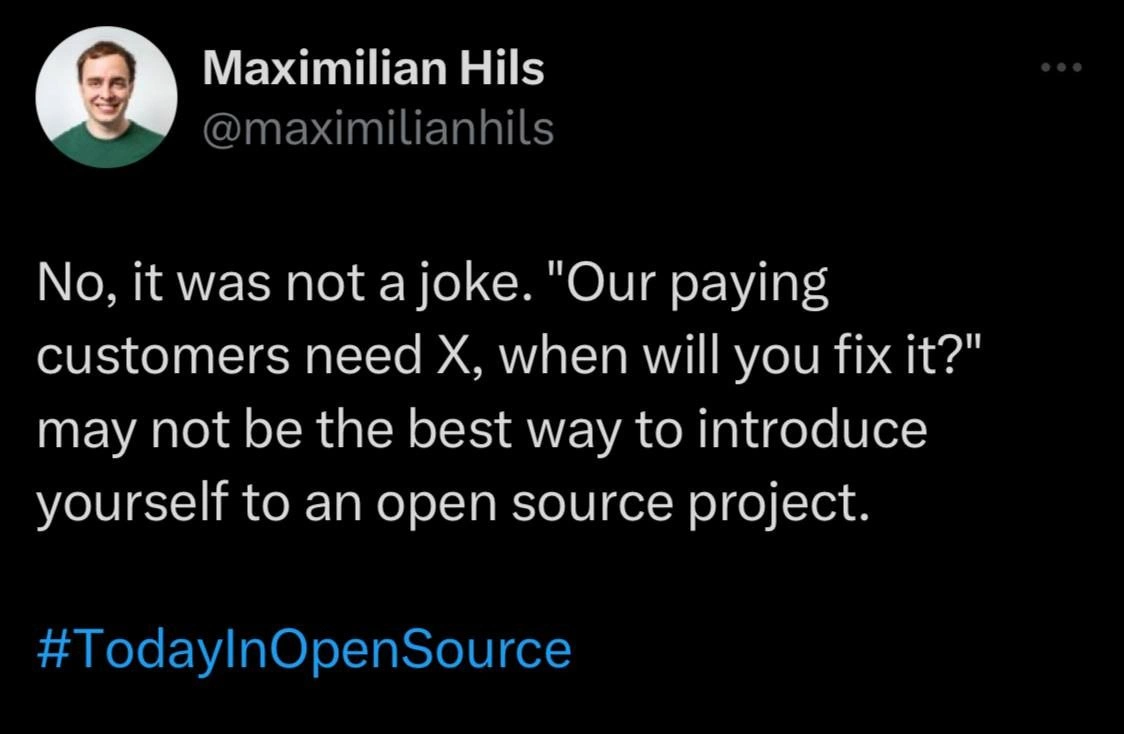
The meme captures a hilarious disconnect between a non-technical observer and the actual situation. In the screenshot (from a TikTok-style interface), user Marlene comments: “how did you add the clouds background!?” on a video that simply shows a baby held up under a real sky. The creator responds matter-of-factly: “That's the sky, we were outside 🥰.” This exchange perfectly satirizes those moments when stakeholders or clients attribute natural or default phenomena to a developer’s intentional work. It’s as if the commenter thinks the brilliant blue sky with fluffy clouds was just another Photoshop layer or a fancy app feature toggled on for effect. To experienced developers, the humor is both cringy and endearing: we’ve all had someone assume a real-world condition or a basic system behavior was something we programmed.

On a deeper level, this highlights a common Communication gap in software projects: non-technical stakeholders sometimes have MisalignedExpectations about what’s under developer control. The question “How did you add the clouds background?” is essentially treating reality as part of the app’s design. It reminds seasoned devs of those surreal feature requests where a client asks, “Can we just program the website to have nicer weather?” or expects engineers to “add more clouds” via code. It’s a blend of innocence and ignorance that’s funny because it’s true – many of us have been in meetings where a manager or client says something like, “Can’t you just Photoshop the live site?” or “make the internet faster” as if we wield magic. This meme exaggerates it to the point of absurdity: someone literally thinks the sky is a configurable UI background.

From an experienced perspective, the scenario also underscores how far technology has blurred the line between real and artificial. In an era of advanced photo filters, CGI, and augmented reality, it's almost flattering that a viewer could believe an ordinary cloudy sky was a special effect. (The dev in me chuckles: “Our product’s graphics are so good, people can’t tell real life from our app!”) There’s an industry saying about “blue-sky thinking,” meaning unconstrained ideas – here we have a StakeholderExpectation so boundless it assumes even nature is engineered. The developer’s gentle reply with a heart emoji is perfect: it educates without mocking, maintaining good client communication. It’s a reminder that what’s obvious to a developer (“we were literally outside, that’s just how sky looks”) might not be obvious to a client or end user immersed in digital experiences. And frankly, it’s a shared pain point and a source of RelatableHumor: we laugh, but we also nod, recalling times we had to explain basic reality to someone in the project chain.

In essence, the humor works on multiple levels:

  • Absurdity of the request: The commenter basically requested an explanation for a "feature" that isn’t a feature at all. It’s like filing a bug report that the sun rises without developer permission.
  • Shared developer experience: The meme channels that facepalm moment every dev knows – when a client or manager thanks you for a functionality you had no part in, or asks for something that defies how systems (or the universe) actually work. This inside joke strengthens the community bond through SharedPain.
  • Polite reality check: The creator’s response is a model of developer-to-client communication. Instead of laughing at the question, they calmly clarify the user_request_vs_reality mismatch. It’s a soft skill win, turning a potentially awkward CommunicationBreakdown into a lighthearted learning moment.

So, the next time a stakeholder excitedly asks if you can “add a bit of that cool cloud effect” to their app, you’ll remember this meme and smile. It’s a funny reminder that not everything on the screen comes from code – sometimes the sky is just the sky. And as developers, part of our job (besides actually building things) is guiding stakeholders out of the clouds of confusion, back down to earth.

Description

The image is a screenshot of a social media post, likely from a platform like TikTok or Instagram. The top portion features a low-angle video frame showing a baby's face looking up into a blue sky with faint clouds. The bottom portion displays the comment section. A user named Marlene has commented, 'how did you add the clouds background!?'. The creator of the post, Delaney Hochstetler, has replied, 'That's the sky, we were outside 🥰'. The humor stems from the commenter's genuine confusion, mistaking the real world for a digital effect or a virtual background. For a tech-savvy audience, this is a poignant and funny example of how pervasive digital filters and augmented reality have become, to the point where the natural world is mistaken for a simulation. It's a classic 'touch grass' moment, highlighting a disconnect from reality fueled by living an increasingly online life
Comments

15
Anonymous ★ Top Pick This is what happens when your users spend so much time in virtual environments that they start looking for the CSS properties of the actual sky. They're one step away from filing a bug report that the sun doesn't have a dark mode toggle
  1. Anonymous ★ Top Pick

    This is what happens when your users spend so much time in virtual environments that they start looking for the CSS properties of the actual sky. They're one step away from filing a bug report that the sun doesn't have a dark mode toggle

  2. Anonymous

    Next time the client asks for ‘cloud integration,’ I’ll remind them we can literally deploy outside - zero vendor lock-in, but the uptime depends on the weather

  3. Anonymous

    When you've been debugging CSS backgrounds for so long that you forget the original implementation of 'sky' runs on bare metal with zero latency and infinite resolution - though the uptime varies by weather conditions

  4. Anonymous

    This perfectly encapsulates every architecture review where stakeholders ask 'How did you implement the distributed caching layer?' and you have to explain that you just added an index to the database. Sometimes the 'cloud infrastructure' is just... the actual cloud, and the most elegant solution is the one that was already there. Classic case of Occam's Razor meeting the Dunning-Kruger effect - when users assume complexity where simplicity reigns, much like asking how you implemented OAuth when you're just using session cookies

  5. Anonymous

    Stakeholder: “Add those clouds back to the background.” Dev: “Only if your browser supports the Outside API - otherwise we need a multi‑cloud strategy behind a weather feature flag.”

  6. Anonymous

    Stakeholder wanted “clouds in the background”; we shipped Outside‑as‑a‑Service - unlimited regions, weather‑based autoscaling, and absolutely no chance of passing SOC2

  7. Anonymous

    Client: 'Love the volumetric cloud shader and parallax horizon!' Dev: 'Mother Nature - zero GPU cycles required.'

  8. @beton_kruglosu_totchno 2y

    which one is for dying inside?

    1. @Bitals 2y

      They already said that it's outside, so you should die outside too.

    2. @callofvoid0 2y

      a white heart I guess??

    3. @AmindaEU 2y

      💀

    4. @NiKryukov 2y

      clown emoji

    5. @CcxCZ 2y

      You have to pay extra for that, obviously.

    6. @endisn16h 2y

      definitely 💅

  9. Deleted Account 2y

    Plato's Cave at its finest

Use J and K for navigation