Skip to content
DevMeme
4601 of 7435
The Tech Hype Cycle: Twitter Abandons the iPhone X
MobileDev Post #5049, on Nov 29, 2022 in TG

The Tech Hype Cycle: Twitter Abandons the iPhone X

Why is this MobileDev meme funny?

Level 1: Old Toy, New Toy

Imagine you have a favorite toy that you always play with. Now one day, you get a brand new toy that’s super exciting. Suddenly you look at your old toy and say, “I don’t want to play with you anymore,” and you drop it on the floor. Kinda mean to the old toy, right? But also a little funny because just yesterday it was your favorite!

This picture is showing that idea with Twitter and the iPhone. Twitter is like the kid who doesn’t want his old toy, and the iPhone is the toy getting dropped. In real life, an iPhone isn’t just a toy – it’s a fancy phone – so seeing someone treat it like an unwanted toy is silly. It’s like a kid throwing away a video game console because he got a new one for Christmas. Everyone watching would be like, “Wow, that was quick. Poor old console!”

Why is this funny? Because it reminds us of how quickly people in technology can change their minds about what they like. One day, a phone or an app is super popular, and the next day, they act bored with it and want to move on. It’s also a bit of a petty move – kind of like when a kid on the playground gets mad at their ball and says, “I’m not playing with this anymore!” For a huge company like Twitter to “not play” with the iPhone would be a huge deal (because so many people use iPhones), which makes the idea over-the-top and humorous.

So, in simple terms: the meme makes us laugh because it’s showing a big dramatic “I’m done with you!” moment between Twitter and the iPhone, using a scene from Toy Story. It’s funny and relatable to anyone who’s seen a child (or even a friend) abruptly dump something they loved just because something new or shiny came along. It’s exaggerating a real feeling in the tech world – getting tired of old things too fast – in a way that anyone who’s ever had toys (or a phone!) can understand.

Level 2: Pivoting Platforms for Dummies

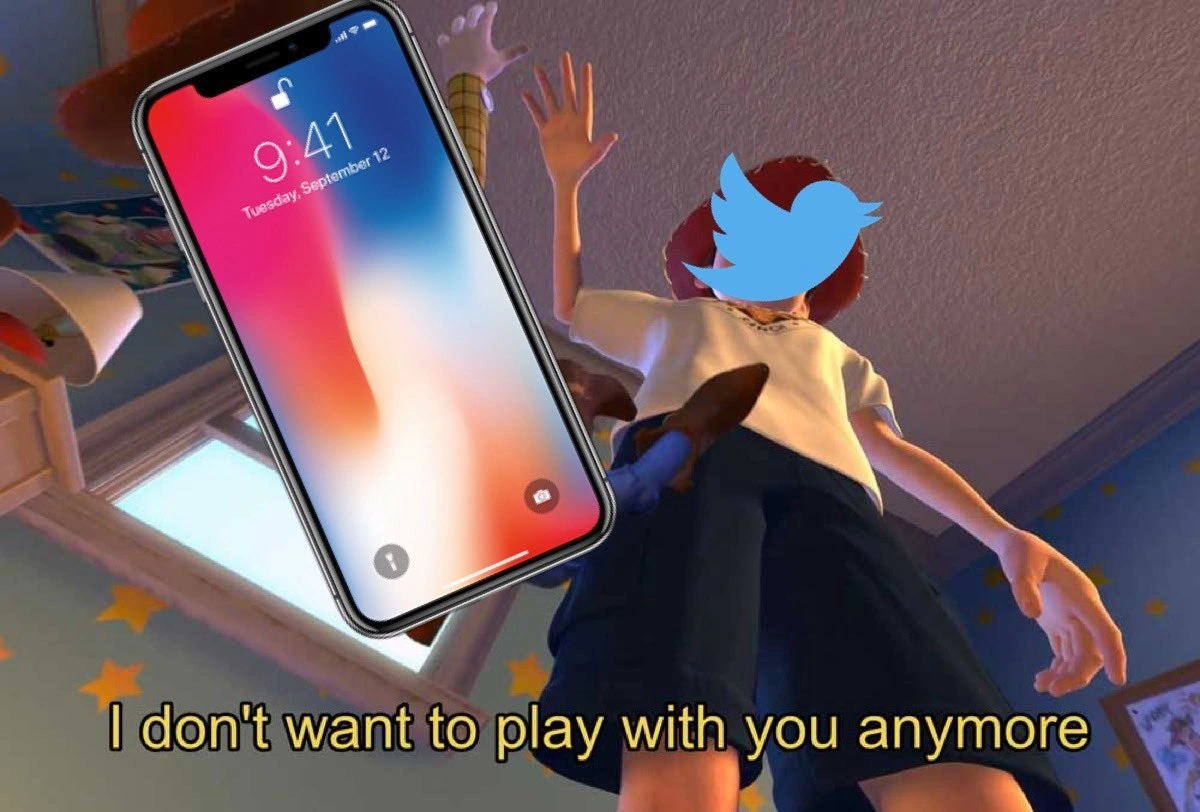
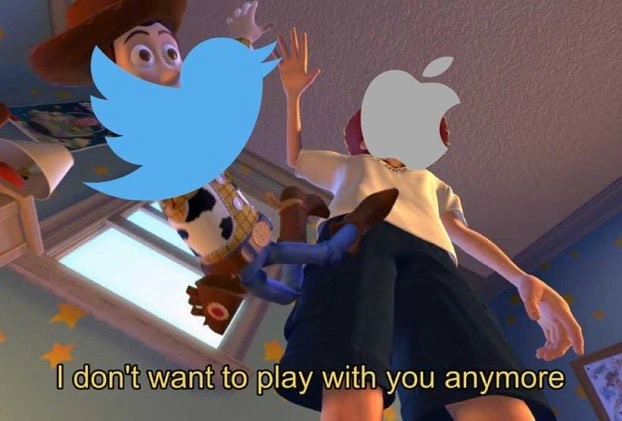
In this meme, we see a famous Toy Story scene: a boy named Andy is dropping his once-favorite toy, Woody, and saying, “I don’t want to play with you anymore.” Only here, Andy’s face has the Twitter logo on it, and Woody has been replaced by an iPhone. The message? Twitter (as a company or user base) is acting like Andy and deciding it doesn’t want the iPhone (or what the iPhone represents) anymore. The humor is that Twitter is treating a very expensive, popular gadget (the iPhone) like it’s an old toy or an outdated tool.

For context, Apple’s iPhone is a huge part of modern tech. It runs iOS, Apple’s operating system, and it’s central to the Apple ecosystem (which also includes iPads, Macs, Apple Watch, etc.). Most tech companies, Twitter included, have dedicated iOS apps because a large chunk of their users use iPhones. So the idea of “tossing the iPhone aside” implies dropping or de-prioritizing the iOS app or platform. It’s like a big statement: “We don’t care about iPhone users or Apple’s platform anymore.” That’s why it feels dramatic and is played for laughs – it’s a bit like saying a popular game will no longer work on PlayStation; you’d expect an uproar.

Now, the phrase in the title “like yesterday’s framework” ties into developer culture. A framework in software development is a collection of pre-made components or tools that help developers build applications faster. Think of it as a template or a set of Lego blocks you use to build your app. Examples of frameworks include things like React or Angular for web, and Flutter or React Native for mobile apps. In the tech world, frameworks go through fads. On tech Twitter and forums, you’ll see a cycle: one week everyone’s excited about a new framework (“It’s the best thing ever!”), and a few months later, many act like that same framework is old news. “Yesterday’s framework” is a sarcastic way to refer to a tool that was recently popular but now is considered passé – as if it aged overnight. Developers joke about this because it happens a lot. We have fun terms like “Javascript fatigue” to describe how there’s always a new JS framework to learn every time you blink.

So when the meme shows Twitter tossing aside an iPhone “like yesterday’s framework,” it’s saying Twitter is treating the entire iPhone platform as if it’s just some outdated tech trend. That’s a pretty exaggerated scenario, which is why it comes off as humorous. It’s mocking both the idea of abandoning iPhone users and the fickleness of tech trends.

Let’s break down the tech scenario in simpler terms. Dropping iOS support means a company would stop updating or offering its app on iPhones. In practice, a few things could happen if Twitter did this:

  • The Twitter app might no longer be available on Apple’s App Store (that’s the only official way iPhone users download apps).
  • They might not roll out new features or fixes for the iPhone version, effectively leaving it to die.
  • They could encourage iPhone users to use Twitter through the web browser (Twitter has a mobile website and something called a Progressive Web App (PWA) that can act somewhat like an app through the browser).

Why would anyone do that? One reason could be conflicts with Apple’s policies. Apple requires apps in its App Store to follow certain rules and gives Apple a 30% cut of any in-app purchases. In late 2022, Twitter’s owner was complaining about those rules, even tweeting that Apple had “threatened to withhold Twitter from the App Store.” It was a whole Twitter vs. Apple moment. Some people joked, “What if Twitter just skips the App Store and tells everyone to use the website, or even makes their own phone?” That’s the real-world chatter this meme is poking fun at.

Now, imagine being a developer at a company during such a pivot. Say you’re on the MobileDevelopment team for iOS. You’ve been working with Apple’s iOS SDK (the Software Development Kit, which is basically Apple’s toolkit and libraries for building iPhone apps) using Swift or Objective-C to build a great iPhone app. Then one day, the company decides, “We’re not focusing on iOS anymore.” That can happen for various reasons:

  • Maybe the company wants to save resources and maintain only one app. Often they’ll choose a cross-platform framework like React Native or Flutter so they can write code once and deploy to both iOS and Android. But that might mean rewriting the existing native iOS app in the new framework.
  • Or the company might shift strategy to something like a PWA, basically saying “Just use our website on your phone instead of a native app.”
  • Sometimes, companies drop support for older versions of iOS (like, “we don’t support iOS 11 anymore, users must update to iOS 12 or higher”). That’s normal due to SDK deprecation – Apple itself eventually stops supporting very old devices in new SDKs. But dropping the entire iOS app is far more radical.

For a junior developer, all this might sound wild. Think of it this way: it’s like if a game company said “we won’t release our game on PlayStation anymore, only on Xbox.” They’re cutting off a big group of players unless those players switch platforms. In tech, dropping iOS would cut off all iPhone-using customers unless those customers switch to, say, using the web or even buying a different phone. Companies almost never do this unless the platform owner (Apple in this case) is making life extremely difficult for them.

That’s why the image of Andy (Twitter) dropping Woody (the iPhone) is exaggerated and funny. It visualizes Twitter’s potential tantrum: “Fine, Apple, if you make things hard, we’ll just throw away the whole iPhone app!” Many developers and users see that as shooting yourself in the foot, so it’s joked about rather than taken seriously. It also resonates with developers who’ve experienced the “new tech fad” cycle. We’re laughing and shaking our heads because we know both how ridiculous and how real these sudden shifts can be.

And speaking of Toy Story: that scene is a go-to meme template to show someone ditching something old for something new. In the movie, Andy gets a brand new Buzz Lightyear toy and poor Woody (his old favorite) gets cast aside. Apply that to tech and you get a scenario like: Company adopts shiny new tech stack (Buzz Lightyear) and drops the reliable old stack (Woody) without much sentiment. It’s a mix of funny and painful that many devs relate to. The bright blue walls with star decals in Andy’s room even match Twitter’s vibe (Twitter’s color scheme is blue with stars could hint at “faves” or just playful imagery). The whole composition screams, “We’re done with the old, onto the next!” in a very theatrical way.

In summary, this meme uses the Toy Story dropping-toy image to comment on a real tech topic: platform abandonment and the rapid churn of tech preferences. It’s funny to developers because it dramatizes something we experience often (tools and platforms being suddenly dropped) using a scene from a beloved movie. It’s a bit of TechHumor that also slips in commentary about the Twitter vs Apple spat that was happening. Even if you didn’t know that context, the image of tossing an iPhone aside with “I don’t want to play with you anymore” is a clear joke about how fickle tech decisions can be.

Level 3: Shiny Toy Frameworks

This meme perfectly captures the shiny new toy syndrome in tech. The scene is straight out of Toy Story: Andy (with the Twitter bird logo on his face) is dropping Woody—except Woody has been replaced by an iPhone. The caption reads, “I don’t want to play with you anymore.” For seasoned devs, this hits on multiple levels of tech humor. It’s basically saying Twitter (or its leadership) is tossing aside the Apple platform (i.e., the iPhone/iOS app) the same way dev teams drop yesterday’s trendy framework.

First, notice the iPhone’s screen: 9:41, Tuesday September 12. That’s an Easter egg referencing Apple’s keynote demo time (Apple habitually uses 9:41 AM in promo images, a nod to when they unveil new products). It’s a deliberate call-out to the AppleEcosystem and the iconic status of the iPhone. Seeing it dropped like an old library version is both absurd and darkly funny. It’s like saying, “Dear iPhone, you were cool in 2017 (the iPhone X era), but now we’re over you.” This visual is a tongue-in-cheek jab at IndustryTrends in tech where something can go from hero to zero overnight.

Now, why would Twitter (the company) treat an iPhone like a discarded toy? Here’s the backstory: around late 2022, Twitter’s new management was openly feuding with Apple over App Store policies and fees. There were even wild talks of Twitter potentially building its own phone or relying solely on a web app to bypass Apple’s 30% cut. In other words, Twitter was actually considering not playing ball with Apple – a bold (some might say reckless) move. This meme exaggerates that scenario for comedic effect: picturing Twitter literally saying “bye-bye” to the iPhone platform. For those of us in MobileDevelopment, the idea of dropping iOS support is almost unthinkable – iPhones are a huge share of mobile users. The humor is in the exaggeration that Twitter would abandon such a lucrative user base, as casually as a kid tossing away a toy. It’s a classic example of platform_abandonment satire.

Beyond the Twitter-vs-Apple drama, this image nails a broader developer experience: the fickle nature of tech hype. The phrase “like yesterday’s framework” in the title says it all. One minute everyone’s building apps with Framework X, the next minute Framework X is “old news” because Framework Y just dropped and has better hype on Twitter. We’ve all seen it: AngularJS was hot, then it was tossed aside for React, which in turn faces competition from Vue or Svelte or whatever the new Buzz Lightyear of frameworks is. Today’s beloved tool can become tomorrow’s forgotten toy. The meme hilariously escalates that idea from frameworks to entire platforms: treating iPhone/iOS as if it’s just another library to deprecate.

Let’s not forget the developer pain implied here. Imagine you’re an iOS engineer at a company, and suddenly the higher-ups announce: “We’re dropping the iOS app; web will do fine.” That’s basically your project—and perhaps your expertise—dumped overnight. The caption “I don’t want to play with you anymore” stings because it’s exactly what it feels like when a technology you’ve poured time into gets axed. It’s reminiscent of those notorious all-hands meetings where a CTO says, “We’re rewriting everything in Node.js Rust because it’s the future,” leaving a trail of perfectly functional code (and the devs who wrote it) feeling like Woody on the floor. Developers share these stories on Twitter and Reddit: one day you’re maintaining a stable Swift/Objective-C codebase, the next day someone read an article about Flutter or React Native and now your native iOS code is considered legacy “toy” code. The meme strikes a chord by blending that common experience with a pop-culture reference we all recognize.

From a systems perspective, completely abandoning a platform like iOS is technically a massive decision. There are trade-offs that the cynical veterans among us can’t help but smirk at. Why do companies even consider such pivots? Sometimes it’s TechTrends and hype – the boss hears that one codebase for all platforms (using, say, Flutter or a Progressive Web App) will cut costs, and gets stars (or dollar signs) in their eyes. Other times it’s about control and ecosystem conflicts – like Twitter bristling at Apple’s strict rules (the App Store review process, the commission on in-app purchases, etc.). So the company claims “We’ll just build our own platform” or “We’ll live on mobile web, who needs the App Store?” It’s a bit like saying, “Fine, I’ll take my ball and go home!” after a playground argument. We chuckle because we know it’s rarely that simple.

To illustrate the skepticism, here’s how a grizzled engineer might break down such a plan:

Bold Move Hype Reasoning Reality Check (Cynic’s Take)
Drop the native iOS app (go web/PWA only) “We’ll avoid Apple’s 30% fee and move faster with one codebase!” Hope your users enjoy a subpar mobile web experience. Many will find it clunky and leave for apps that still feel native. Also, good luck replacing the visibility of the App Store – discoverability just fell through the floor.
Rewrite the app in a new framework (e.g., move from Swift to Flutter) “One modern codebase to rule both iOS and Android, and hire cheaper web devs to do it!” You’ll spend a year rewriting features you already had, hit weird bugs on each platform, and likely end up with a slower app. Meanwhile, competitors who stuck with the stable tech are busy shipping new features to users. Congrats on reinventing the wheel (now with more squeaks).

It’s funny because it’s true: these “drop and replace” stunts almost always cost more than expected. The meme’s dark humor lies in knowing how tech hype cycles play out. Today’s Buzz Lightyear framework promises the moon and stars (or at least to solve all your bugs and scalability issues); tomorrow you find out Buzz has his own flaws and you’ve alienated poor Woody who was actually reliable all along.

So, in this Toy Story analogy: Woody-iPhone represents established, trusty technology (the iOS app that’s been around forever), and Buzz represents whatever new strategy or tech stack Twitter is infatuated with (be it a web app, a new phone, or some unified framework du jour). Andy with the Twitter logo is the decision-maker or trend-driven developer saying, “Nah, I’m over this old thing.” The absurdity and sarcasm make experienced devs smirk because we’ve been there. We’ve seen perfectly good tech thrown out not always for sound engineering reasons, but often for ego, hype, or corporate drama. And just like in Toy Story, we know Andy might regret tossing Woody later – just as companies often come back around to, say, rebuild a native iOS app after realizing the new approach wasn’t so shiny after all.

In short, this meme blends a pop-culture reference with TechHumor and industry inside-jokes. It roasts the way our industry sometimes handles platforms and frameworks like disposable toys. For those deep in the trenches of code, it’s a cynical laugh at how management and trends can pivot on a dime, leaving us developers holding the discarded pieces and thinking, “Here we go again…”

Description

This meme uses the 'I Don't Want to Play With You Anymore' format from the movie Toy Story. In the image, the character Andy, whose face is obscured by the blue Twitter bird logo, is seen dropping an object. The object being discarded is an iPhone X, with its screen lit up to show the lock screen date: 'Tuesday, September 12'. Below the main scene, the subtitle from the movie reads, 'I don't want to play with you anymore'. The humor stems from the technical and historical context. The iPhone X was a highly anticipated and revolutionary device unveiled on September 12, 2017. The meme, posted in late 2022, humorously portrays the tech world (symbolized by Twitter) as having moved on from this once-iconic phone. It's a sharp commentary on the rapid pace of technological advancement, the short-lived nature of tech hype, and the feeling of planned obsolescence that developers and consumers alike experience as new hardware is relentlessly released

Comments

7
Anonymous ★ Top Pick That iPhone X introduced the notch we all spent two years carefully designing around. Now it's treated like a legacy IE6 bug we have to grudgingly support
  1. Anonymous ★ Top Pick

    That iPhone X introduced the notch we all spent two years carefully designing around. Now it's treated like a legacy IE6 bug we have to grudgingly support

  2. Anonymous

    Exec logic: “Why maintain 700k lines of Swift when we can just iframe the web app?” - right up until App Store review asks where the back-swipe went

  3. Anonymous

    Migrating from Twitter to Mastodon is just like refactoring a monolith to microservices, except this time the distributed system actually has better uptime

  4. Anonymous

    When your carefully architected Twitter integration becomes legacy code overnight because someone decided API access should cost more than your AWS bill - and the deprecation notice arrives via tweet instead of proper developer communications. Nothing says 'we value our developer ecosystem' quite like forcing a complete platform migration with the grace of a `git push --force` to production on a Friday afternoon

  5. Anonymous

    Twitter's API pivot: the dependency update that finally got devs to 'rm -rf' the whole app

  6. Anonymous

    Shipping an iOS Twitter client is platform‑risk 101: months of OAuth and 429 backoff, then one ‘policy update’ and you’re Woody - 403’d on the floor

  7. Anonymous

    Twitter at 9:41 on Apple keynote day: I don’t want to play with you anymore - translation: mark last year’s iPhone as deprecated, rewrite everything for Safe Areas, and spend Q4 discovering where Xcode hid code signing this time

Use J and K for navigation