Skip to content
DevMeme
2687 of 7435
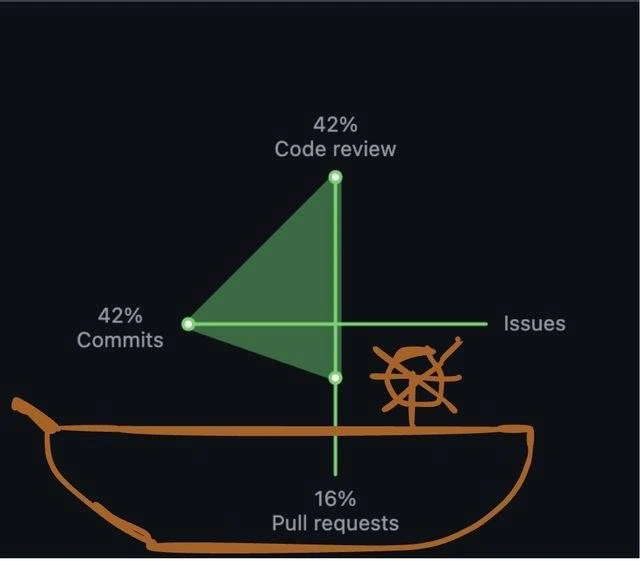
The pristine pull request vs. the chaotic reality of commits
VersionControl Post #2968, on Apr 15, 2021 in TG

The pristine pull request vs. the chaotic reality of commits

Why is this VersionControl meme funny?

Level 1: Behind the Scenes

Imagine a chef cooking a meal in a restaurant. The customer just hears, “Your dish is ready!” and sees a perfect, delicious plate of food come out. To the customer, it looks like everything went smoothly. But in the kitchen, the chef might have burned the first try, spilled sauce on the second, and yelled “Why won’t this recipe work?!” a few times before finally getting it right. There might be a pile of dirty pots and a frazzled chef who tried the recipe over and over. The customer only sees the final perfect dish, not the messy cooking process.

This meme is the coding equivalent. The product manager is like the customer seeing the nice final result (“Fixed the bug! 🎉 🙌”). The developers are like the chef in the kitchen, who went through a chaotic, frustrating process to get there (“trying again”, “WTF 🤬”, “please work 🙏”). It’s funny because it’s true: in many jobs (and in coding especially), the outside world sees a clean outcome, while behind the scenes it was a total mess. The meme makes us laugh because anyone who’s fixed a tough problem knows it often takes a bunch of failed tries and some heartfelt swearing before you can happily announce, “All done!”

Level 2: Fix, Push, Repeat

Let’s break down what’s going on in simpler terms. A Pull Request (PR) is when a developer asks to merge their code changes into the main codebase, usually after their work is ready and reviewed. When product or managers hear “I opened a PR,” they think, “Great, the feature/bug fix is done!” They imagine one neat package of code with a message saying something like “Fixed the bug! 🎉 🙌.” In other words, they see the result without knowing the process.

Now, the right side of the image shows what the dev team actually experiences while getting that code ready. Each line like “making progress”, “fixed the tests”, “linting 😏”, etc., is a commit message. A commit in Git is basically a save point or snapshot of the code with a short message describing the change. Ideally, each commit message should be clear about what was done. But reality is messier. Often, when fixing a tricky bug or working on a feature, things don’t work on the first try. You run the code, something fails, you make a change, and you commit again. Then something else breaks, you fix that and commit again. This leads to many commits in a row – that’s the “Fix, Push, Repeat” cycle: fix a bit of code, push it to the repository, see if it passes tests, and repeat if it doesn’t.

In modern development, we have Continuous Integration (CI): automated systems that run tests and checks every time you push new code. If any test fails or the code doesn’t meet certain standards (for example, a style checker called a linter finds an issue), the CI marks the commit with a ❌ (failure). The developer then has to make another commit to fix that issue. That’s why we see a commit like “fixed the tests” – meaning some tests were failing, so the dev wrote a fix and committed again. The commit “linting 😏” implies the code didn’t follow the formatting rules, so they corrected the code style to make the linter happy. Each of these commits is trying to get that coveted green check mark, which means “all checks passed”. The green check mark on the left panel signifies that the final commit passed all tests and is ready to be merged.

The funny (and familiar) part is how the commit messages start normal and then become more emotional. “wtf” and “WTF!!!!! 🤬” are the developer essentially screaming “Why is this not working?!” in the commit history. (In polite terms, “WTF” stands for “What in the world is going on?!” with extra frustration.) Then “omg why ??? 😢” – now the developer is basically whining or crying in text form, utterly baffled that the bug is still not fixed or the tests are still failing. The string of “🙏🙏🙏🙏…” (prayer hands emojis) as a commit message is literally the developer saying “I hope this is the one that finally works, please please please…”. This is a bit of DeveloperHumor – we’ve all felt that desperation, and some of us have actually typed prayers into our commit messages as a joke (or half seriously!). Finally, “DAMMIT” as the last commit message is the moment of frustration and relief – it’s like shouting “Argh, finally!” when you solve the problem after many tries.

So why does product only see “Fixed the bug! 🎉 🙌” while developers see all those other messages? Because developers often clean up the history. Before merging the PR, they might use a Git feature called squashing to combine all those small commits into one big commit. Think of it like doing multiple rough drafts (the messy commits) and then producing a final draft (the clean commit). The VersionControl system (like GitHub or GitLab) allows us to either squash automatically on merge or manually rebase interactively (git rebase -i) and edit out the noise. The end result is a tidy commit message – the one product sees or that goes into the official record – with all the messy experimentation hidden. This makes the project history easier to read later and saves others from scrolling through ten "oops fix this" commits.

This meme is highlighting a communication gap. The term “P.R.” might confuse non-developers (some might even think you mean Public Relations!), but in our context it means Pull Request. When we tell the product team “There’s a PR for that bug fix,” they assume everything was straightforward. They hear “problem solved.” They don’t realize that for the dev team, “there’s a PR” often means “we finally got it working after many attempts.” It’s a bit like telling someone the project is done, without mentioning the all-nighters and headaches it took to finish it. In other words, product sees the success story, while devs remember the blooper reel of how we got there. That contrast is exactly what makes this meme funny to anyone who’s been on the dev side of a tough bug fix. It’s a little insider nod to the dev_team_struggles behind every seemingly simple change.

Level 3: The Green Check Mirage

On the surface, a Pull Request (PR) can look like a clean, one-step fix — a single commit with a green check mark and a triumphant message “Fixed the bug! 🎉 🙌”. This is the polished story that the product team or managers hear. But seasoned developers know that behind that tidy commit lies a chaotic battlefield of trial-and-error. The right panel of this meme reveals the hidden reality: a wall of chaotic commits with messages like “making progress”, “fixed the tests”, “linting 😏”, all the way down to all-caps rage “WTF!!!!! 🤬” and despair “omg why ??? 😢”. This contrast is painfully funny because it’s too real — it captures the gap between product vs engineering perception.

In actual development, a PR often involves many incremental commits as devs iterate under pressure. Each commit on the right is a snapshot of a developer’s struggle:

  • “fixed the tests” – Probably the code didn’t pass the test suite on the first try, so the developer had to debug and correct something.
  • “linting 😏” – The linter (code style checker) failed, maybe due to a missing semicolon or an extra comma, prompting another commit just to satisfy style rules.
  • “trying again” -> “trying again again” – These suggest multiple failed attempts to get the code working or the build passing. It’s a pr_iteration_loop: the dev writes a fix, pushes it, CI fails, repeat...

The further down the list, the more DeveloperFrustration seeps into the commit messages. By the time we see “WTF!!!!! 🤬” and a string of 🙏 prayer emojis, the developer is practically begging the build to succeed. (Who hasn’t prayed to the CI gods at 2 AM for that last test to finally pass?) The final “DAMMIT” commit is the exasperated victory cry when something finally works – or occasionally, the moment of giving up. This cascade of raw, emotional commit messages is a form of commit_message_spam that every dev understands: when you’re deep in the debugging trenches, commit discipline goes out the window.

Now, why does the left side look so neat? Because experienced teams know how to rewrite Git history to hide this mess. Tools like git rebase -i (interactive rebase) let developers squash those dozens of “fix it” commits into a single, clean narrative before merging. The end result? One commit that says “Fixed the bug! 🎉” as if the fix was a one-shot deal. It’s like the VersionControl equivalent of editing a chaotic live recording into a flawless highlight reel. In a code review on GitHub or GitLab, you might only see that polished commit (especially if they use “Squash and merge”), so to the Product team skimming the changelog, it appears as a swift, simple fix. This is essentially software development’s PR spin – in the public repository history (or in communication with non-engineers), we present a clean story, while all the messy attempts get quietly swept under the rug.

The humor here comes from that dramatic irony: the product folks are celebrating a win, completely oblivious to the DeveloperPainPoints hidden just out of sight. It’s a gentle jab at how non-engineers often think coding is magic (“You fixed the bug in one go, you genius!”) while the dev team is in the back, wiping sweat off their brow, thinking “If only you saw the git log…”. The meme encapsulates a common CodeReviewPainPoints scenario: the difference between what we tell (or show) stakeholders and what actually happened during development. It resonates with senior engineers because we’ve all lived through this cycle of commit, fail, commit, rage, commit, pray… until that blessed green check appears. In short, a pull request (PR) often involves some public relations (PR) work on our part: we make the final product look good, even if the process was a hot mess.

Description

A two-panel meme contrasting perceptions of a pull request (P.R.). The left panel, titled 'What product hears when you say "P.R."', shows a single, clean commit message in a Git-like interface: 'Fixed the bug! 🎉🍻'. The right panel, 'What the dev team sees when you say "P.R."' reveals the messy reality: a long, chronological list of commit messages from the same branch. The commits depict a developer's chaotic journey, starting with 'making progress', 'fixed the tests', and 'linting', then descending into frustration with messages like 'trying again', 'wtf', 'WTF!!!!! 🤬', 'omg why ??? 😂', and finally desperation with 'last one 🙏' and 'DAMMIT'. The joke highlights the vast difference between the sanitized, squashed commit history presented to non-technical teams and the actual, often frustrating, iterative process of coding, testing, and debugging that developers go through to achieve that clean final result
Comments

13
Anonymous ★ Top Pick A pull request is a developer's highlight reel. The director's cut, with all the 'wtf' and 'please work' commits, is only available to the engineering team
  1. Anonymous ★ Top Pick

    A pull request is a developer's highlight reel. The director's cut, with all the 'wtf' and 'please work' commits, is only available to the engineering team

  2. Anonymous

    Stakeholder deck: “Single-line patch, ship it.” Actual Git log: 42 commits, 3 force-pushes, a merge-conflict séance, and one developer Googling “can you rebase life choices?”

  3. Anonymous

    The real P.R. crisis isn't in marketing - it's when your commit history looks like a descent into madness and you realize the product manager is about to ask why a 'simple bug fix' has 47 commits, 3 force pushes, and a commit message that's just Unicode prayer hands

  4. Anonymous

    The real engineering challenge isn't fixing the bug - it's crafting that one pristine commit message for the squash merge that convincingly summarizes the 47 'WTF' commits, three existential crises, and the Stack Overflow answer you definitely didn't copy-paste at 2 AM

  5. Anonymous

    PM's 'quick PR' is dev-speak for 'pipeline purgatory: lint, test, retry, despair, repeat'

  6. Anonymous

    To product, PR means “problem resolved”; to engineering it’s pipeline roulette - appeasing lint, exorcising flaky tests, and force‑pushing twelve ‘fix:’ commits before the merge queue grants passage

  7. Anonymous

    To product, a PR is a green check; to devs, it’s a multi-commit negotiation with CI - lint sacrifices, test reparations, rebase purgatory, five WTFs, and one prayer emoji before merge

  8. @dosboxd 5y

    squash commits

  9. @cheburgenashka 5y

    Fixup

  10. @dmytro_kp 5y

    Stage "linting again" was missed

  11. @ivan_kostrubin 5y

    How about 40 times "testing ci trigger"? And then merge without squash))

  12. @neopulsar 5y

    Ff merge?

  13. @neopulsar 5y

    Why squash?

Use J and K for navigation