A Six-Figure Salary, A Million-Dollar Idea, and a Hundred-Dollar Apartment
Why is this Startup meme funny?
Level 1: Camping Indoors
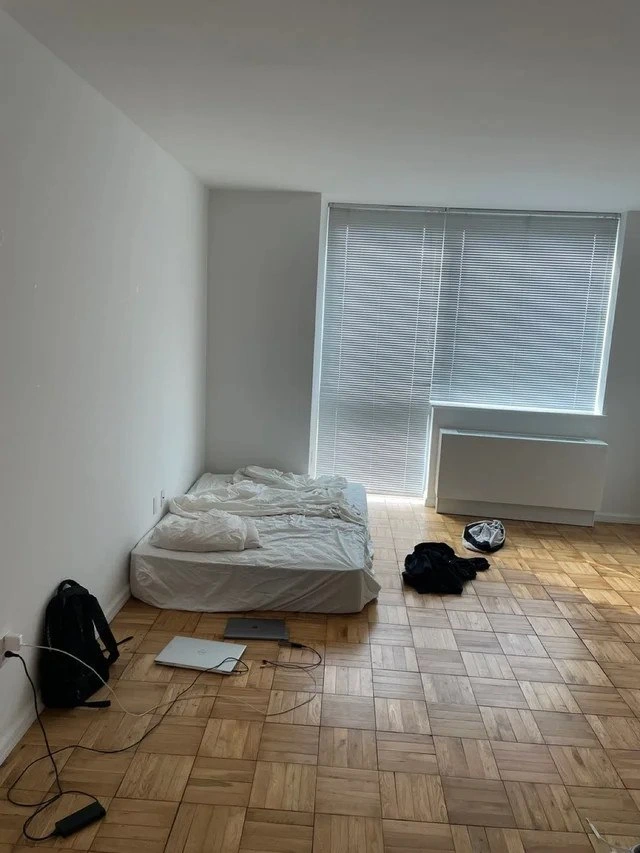
Imagine you just moved into a new room, but you haven’t unpacked anything except your most important toy. You throw a blanket on the floor to sleep on, and you plug in your game console or iPad because you really, really want to play right now instead of setting up your bed or dresser. You’re basically camping indoors. That’s what’s happening here, but with a grown-up who’s a programmer. He has a big project due (like a super important homework or game level he has to finish), so all he cares about is having his computer ready. The room is empty with just a mattress on the floor to sleep and his laptop on the ground, plugged in to stay on. It’s funny because usually when people move, they arrange their stuff – but this guy is so focused on his work that he’s living almost like you would on a camping trip: just the basics. He even left one sock lying around and his jacket on the floor – just like you might leave toys everywhere when you’re busy. The picture makes us smile because it shows how excited and determined he is to do his job or hobby, that he doesn’t even care that his room has nothing in it. It’s the grown-up, computer-coding version of pitching a tent in an empty house so you can keep doing what you love without waiting.
Level 2: Code Over Comfort
At this level, let's break down the scene and the tech lifestyle terms in play. This nearly empty room is essentially a work-from-home setup distilled to its most basic form. Each element in the photo tells a story about priorities and the realities of RemoteWork and a Startup mindset:
Laptop on the floor: The laptop is the developer’s primary tool – basically their entire office in one device. In a remote job (working outside a traditional office), your computer is how you do everything: write code, attend meetings on Zoom, chat with teammates on Slack, and deploy software. Seeing it on the floor (instead of on a desk) shows that the developer was too eager or rushed to even find a table. It’s literally coding on the ground. For a junior developer, imagine starting your first job and all you truly need on day one is your laptop. You might relate if you’ve ever done homework on your bed or floor when a desk wasn’t available. Here, work happens wherever the laptop can open – even if that’s the hardwood floor. The long white charging cable plugged into the wall is vital: no power, no work. In a new apartment, often the first thing you locate is an outlet for your electronics, sometimes even before figuring out where furniture will go.
Mattress on the floor: This is the makeshift bed – just a mattress with some sheets directly on the floor, no bed frame. It suggests the person either hasn’t had time to assemble their bed or hasn’t bought one yet. In real-world terms, this often happens when you move to a new place: you might just throw a mattress down to have somewhere to sleep for the first few nights. In a crunch period or with startup frugality, maybe a bed frame is considered an unnecessary luxury for now. The mattress is low and rumpled, indicating the developer likely collapsed there after a long coding session. It’s a sign of an "I’ll deal with it later" attitude. Many of us in early career (especially right after college or during intense projects) have slept on couches, air mattresses, or just a mattress on the floor because we were too busy or broke to get a proper bed. It’s not ideal but it works – just like a quick-and-dirty solution in code that you promise to refactor later.
Black backpack: Leaning against the wall by the outlet, the backpack hints that the person has just arrived or is always ready to go. For a remote worker or someone in a startup, a backpack often carries your tech gear (laptop, charger, maybe a debugger device or notebook) and personal items. It’s basically the mobile office or a sign that all their worldly possessions might still be in that bag. A junior dev moving for a new job might live out of a suitcase or backpack for a while. The presence of the backpack in an otherwise empty room screams “just moved in.” It’s relatable: remember showing up for college or a new job with one big bag? Same vibe here – the essentials are in that bag, and unpacking it fully is second to getting the work machine running.
Crumpled black hoodie: The hoodie on the floor is basically the unofficial uniform of developers. It’s comfortable and practical for long coding sessions, like how athletes have training gear. In many tech companies (especially startups), wearing a hoodie is almost a stereotype – thanks to famous figures like Mark Zuckerberg who popularized the look. Here it might have been used as a pillow or just shed off during a late-night work stint. Hoodies also come in handy in a home with minimal heating setup (notice the radiator is off) or when you inevitably get the late-night chills writing code at 3 AM. For newcomers to developer culture: don’t be surprised if your wardrobe slowly fills with company-logo hoodies from hackathons and conferences. And yes, sometimes you’ll find one crumpled on your floor after an exhausting day – it means you were in the zone enough to not care where your jacket landed.
Lone sock on the floor: This little detail is both funny and telling. One single sock lying far from the bed implies a bit of chaos. Maybe the developer kicked it off in frustration or fatigue, or they haven’t finished unpacking clothes so things are a bit haphazard. It adds to the relatable humor – who hasn’t lost a sock amid a move or had clothes strewn about when life gets hectic? For a junior dev who’s ever pulled an all-nighter, you might recall your room looking like a laundry bomb went off. The sock here is that touch of messy reality. In coding terms, think of it as an “artifact” of crunch time: like leftover temp files in a project, you’ll clean it up later when the deadline is over.
Closed blinds and bare window: The large window with blinds shut tight suggests it’s daytime (muted daylight is peeking through), but the room’s occupant isn’t interested in the outside world right now. When you’re deep in work (or trying to sleep odd hours after working late), blocking out light is common. It could also be about privacy – with no furniture, they might feel a bit exposed and just closed everything. For remote workers, controlling your environment is part of being productive: sometimes you darken the room to reduce glare on the screen or to not be distracted by that beautiful day outside when you really need to finish a project. The closed blinds communicate focus and possibly an irregular schedule (coding through the night and sleeping by day, vampire-style, which is not unheard of in gaming or startup crunches). They also highlight how minimal the place is: no curtains, no decor, just the plain default blinds – this person has not had time to personalize anything yet.
All these details paint a picture of RemoteWorkCulture in its most extreme, spartan form. When working from home, especially in a new place, your home office might start as literally a corner of your home with a laptop on the floor. A junior developer might initially lack a proper ergonomic setup – maybe you place the laptop on a coffee table or, as seen here, directly on the ground. Over time, one learns the importance of a good chair and desk (back pain is a strict teacher!), but at the beginning, many of us “make it work” with whatever is at hand.
This image is DeveloperHumor because it connects to that “just get it running” mindset. In software, we often talk about a quick setup or Minimum Viable Product to start testing an idea. Here, the Minimum Viable Setup for coding was achieved: a computer with power and internet, and a place to crash for sleep. Everything else (proper furniture, organizing belongings, making the space livable) is a backlog item to tackle later – akin to features postponed until after the product launch. It’s a bit like when you write a quick script that’s not pretty but does the job, leaving the polish for later.
For someone early in their career, this scenario might be a rite of passage: your first apartment after landing a tech job might indeed look like this for a week or two. You’re so focused on ramping up at work or that important project that you don’t mind eating pizza on the floor and sleeping on just a mattress. It’s a temporary imbalance, and we laugh at it because we know it’s usually not permanent – eventually the furniture (and second sock!) do come. But in the meantime, this RelatableDevExperience shows the world that as long as code is compiling and the Wi-Fi is humming, a developer can thrive in even the emptiest of rooms.
Level 3: Minimum Viable Apartment
The scene encapsulates a RemoteWork reality and classic StartupLife ethos: it's essentially a Minimum Viable Apartment for a developer. In startup terms, think of this living space as the MVP of housing – just the bare essentials to function, nothing more. Instead of shipping a feature-light product to test the market, our developer has shipped themselves into a new place with only a mattress and a laptop to test if they can get work done. It’s the “ship code first, decorate later” mentality visualized. The humor here hits experienced devs squarely because it exaggerates a real trade-off we've all seen or lived: when deadlines loom, things like furniture and comfort are deemed nice-to-have features that can be postponed to v2.0 of life.
From a senior engineer’s perspective, this image is almost painfully relatable. DeveloperLifestyle often skews toward function over form, especially under crunch time. The combination of elements – an unmade mattress on the floor, a laptop plugged in with cables snaking across parquet, a lone sock and a crumpled hoodie – paints the picture of a coder who literally just landed and started working. Why is this funny? Because it’s too real: many of us have stories of moving to a new city for a job or project and living out of boxes (or on an air mattress) while coding late into the night. The meme exaggerates that common experience, highlighting the ridiculousness of prioritizing a working dev environment over a fully furnished home. It’s a gentle roast of the grind mindset: the developer hasn’t even unpacked, but you can bet the dev environment on that laptop is fully set up and the project build is running.
This minimalist move-in setup satirizes Startup culture and hustle norms. Early-stage startups preach lean operations – well, it doesn’t get leaner than no chair, no desk, just code. There's a certain dark humor a cynical veteran will appreciate: startups often compensate with equity and future promises, so employees end up living frugally despite heavy workloads. Here we literally see a frugal, spartan living space. Yet the DeveloperProductivity implied is off the charts – no distractions, no TV, not even a proper table to put the laptop on. It’s as if the environment itself enforces focus. The only decoration is the soft glow of the screen. A senior dev might chuckle, remembering times they wrote code from similar setups: perhaps squatting on the floor during an all-nighter, or converting a moving box into a standing desk. This meme is funny because it rings true about the RemoteWorkCulture: as long as you have power, Wi-Fi, and a decent laptop, you can be coding mission-critical features – who cares if you’re sitting on the floor in an empty apartment?
Dig a bit deeper and you see commentary on work-life balance (or lack thereof). This room screams temporarily permanent. The developer clearly just moved in, but the fact they’re already plugged in and coding suggests either a crunch deadline or an unstoppable coding obsession. The priorities are humorously inverted: finishing that sprint or deploying that build comes before buying a chair or finding the second sock. It’s a snapshot of StartupLife where employees might relocate across the country, and on Day 1 they’re merging PRs from a makeshift bedroom office. Companies in high-paced environments can implicitly encourage this by expecting immediate productivity – there’s no time (or reimbursement) to settle in. The humor has a tinge of commiseration: we’ve been there, sacrificing comfort and sanity to push a product. That lone mattress and chaotic floor relatableHumor hides the very real developer war story of crunch mode.
There’s also an element of irony that seasoned devs appreciate. Tech workers are often well-paid, yet here this person lives like a college student camping out. Why? Possibly because moving is exhausting and expensive, or maybe because the job demands have left no time to IKEA. It reminds us of tales like the early days of Silicon Valley – from Bill Gates sleeping under his office desk to startup founders literally living in their garage among circuits. This meme shows that even in modern times with cushy remote jobs, the hardcore hacker ethos (or necessity) persists: comfort is optional, deliverables are mandatory. Another layer of the joke is the unspoken pain of it – any dev over 30 looking at that floor setup probably feels a twinge of sympathy in their back. We know that a day of coding hunched over a laptop on a floor or bed is going to hurt later. The veteran in us smirks and winces at the same time.
In essence, the meme’s TechHumor lands because it exaggerates a common developer experience to an absurd minimalist extreme. It’s both inspirational and cautionary. Inspirational in that it shows dedication – this coder is so focused on their work that they can tune out an uncomfortable environment. Cautionary in that it whispers: hey, maybe get a desk and a proper chair before your next marathon coding session. But of course, in true developer fashion, those ergonomics are a problem for another sprint. For now, this relatableDevExperience is about the purity of the coding life: just you, your code, and the crack of light through the blinds indicating another all-nighter. As a seasoned dev might joke, “Who needs worldly possessions when you have looming deadlines, right?” It’s funny because it’s a little true – and we laugh, perhaps nervously, at how far we’re willing to go when the pressure is on.
Description
This is a photograph of a sparsely furnished room, capturing a minimalist and somewhat stark living situation often associated with tech culture. The room features light-colored parquet wood flooring and plain white walls. In one corner, a simple mattress with white, unmade bedding lies directly on the floor. Next to the mattress, a laptop is on the floor, plugged into a wall outlet with its charging cables snaking across the wood. A black backpack leans against the wall nearby, and another pile of dark clothing is on the floor. The only other visible items are a large window with closed horizontal blinds and a radiator unit beneath it. For experienced developers, this image is a powerful and familiar symbol. It represents the 'hustle' phase of a tech career - the early startup grind, the first apartment in an expensive tech hub, or the lifestyle of a highly-paid engineer who prioritizes saving and investing over material comforts. It speaks to a period of intense focus where all that matters is a place to sleep and a machine to code on
Comments
28Comment deleted
The rent in this San Francisco 'studio' is $4,500 a month, but the commute from bed to 'office' has a latency of less than 200 milliseconds
Moved in with the same philosophy we used for the Kubernetes cluster: one pod (me), one persistent volume (mattress), and a single exposed nodePort (laptop charger). Furniture can autoscale later - after the next funding round
This is what happens when you spend all your equity compensation on AWS bills and forget that furniture exists - but hey, at least the CI/CD pipeline has a comfortable t3.xlarge instance while you're debugging production issues from the floor at 3 AM
Classic senior-engineer architecture: two redundant laptops for high availability, but the bed frame is still on the backlog as a P3
When your entire net worth is in equity that hasn't vested yet, but at least you automated floor cleaning with that Roomba - because even in a studio with negative furniture, you're still optimizing for efficiency. The mattress-on-floor-to-Series-B pipeline is real, and this is clearly the 'building in stealth mode' phase where furniture is just technical debt you'll refactor later
On-call architecture: bed colocated with the outlet, laptop on the floor for sub-30s MTTA; furniture intentionally unprovisioned to reduce blast radius - the charging cable is the SPOF
Single-node Kubernetes cluster: laptop pod running hot, bed as the control plane, clothes unmanaged resources spilling everywhere
Minimum Viable Place: tuned for p99 wake-to-keyboard latency; ‘desk’ is a nonfunctional requirement scheduled after we refill the error budget
lolwut Comment deleted
Sick pad Comment deleted
"just moved in" Comment deleted
- Tweeted 12 months ago Comment deleted
I bet when I move into my own apartment I will have a setup just like that foto for years Comment deleted
it takes some time to get used to a new place :^) Comment deleted
I know Comment deleted
What's wrong? My room looks a pretty same. I just like a free space. Comment deleted
Learn coding they said. It will be fun they said Comment deleted
High tech, low life Comment deleted
Osteochondrosis and carpal tunnel syndrome approve this picture Comment deleted
How's this a meme Comment deleted
coz our life is a meme Comment deleted
Uh, what? Comment deleted
Too much furniture Comment deleted
where i find a palace like that ? XD Comment deleted
Proudly stolen from reddit without the title 😂 Comment deleted
Which one? Comment deleted
Tech bros be earning $200k+ a year in cash and stock options and then have an apartment like this https://www.reddit.com/r/ProgrammerHumor/comments/uis4bb/tech_bros_be_earning_200k_a_year_in_cash_and/?utm_medium=android_app&utm_source=share Comment deleted
From this, I only have the bed sheets Comment deleted