The 'Just 10 More Minutes' Debugging Lie
Why is this Debugging Troubleshooting meme funny?
Level 1: Up Past Bedtime
Imagine you tell yourself you'll play just one more level of your favorite video game before bed, thinking it will only take 10 minutes. But that level turns out to be really hard. You keep trying and trying, saying "okay, one last attempt," and suddenly you look at the clock and it's 4 AM! You still haven't beaten the level, and now you're super tired and frustrated. You've stayed up all night and have nothing to show for it. That's exactly what happened to the developer in this meme. They thought they'd fix the problem quickly, but hours later nothing was solved and it was way past bedtime. In the end, they're left exhausted and disappointed — basically thinking, "wow, that was wack" (which means it was a total waste and not good).
Level 2: Nocturnal Bug Hunt
When a programmer says "just 10 more minutes" on a problem, it often doesn't turn out that way. In this meme, the developer planned to do a quick debugging session before stopping. (Debugging means finding and fixing a bug – an error or flaw in the code that's causing things to go wrong.) But instead of 10 minutes, they got carried away and kept troubleshooting all night. Suddenly it's 4:00 AM, and they've made no progress. The top text describes that painful scenario, and it's something many coders experience at least once: you keep thinking "I'll figure it out any minute now," and time just flies by.
Why would someone spend hours and still have zero commits to show for it? A commit is a saved change in your code repository. (For example, using Git, when you "commit" you are recording a snapshot of your changes.) "Zero commits later" means they didn't end up saving any code changes at all. This usually happens because none of the attempted fixes worked, so the developer either didn't make any significant changes or they kept undoing their changes when each attempt failed. For instance, after hours of tweaking, if you run git status you might see something like:
$ git status
On branch main
nothing to commit, working tree clean
This message basically says "there’s nothing new to save" – a pretty demoralizing result after an all-nighter. It’s as if the system is telling you, "All that work and you changed nothing."
During a late-night bug hunt, a developer will try all kinds of debugging tactics. They might use a debugger (a tool that lets you run the program step by step and inspect variables as the code runs) to watch what the code is doing. They might also resort to the old-fashioned method of inserting printf or console.log statements in the code to print out values and trace the program’s path (often called printf debugging). If the bug is tricky, you often end up adding a lot of these print statements all over, hoping to catch where things go wrong. It's a bit messy, but when you're desperate to understand a problem, any clue in the output logs is better than nothing!
So why can’t they find the bug? Some problems in software are hard to find and fix. For example, a race condition can happen when two parts of the program try to do something at almost the same time, causing unexpected, inconsistent behavior. Bugs like that can be really tough to reproduce and diagnose because they might not happen every time. Or the bug might only appear under very specific conditions (what we call an edge case). It's also possible the issue isn't in the code you're looking at: it could be caused by something else like a misconfigured setting, a database that’s returning wrong data, or an outside service that your code relies on. In a worst-case scenario, nothing you change in your code will fix the bug because the real problem lives elsewhere. That means you could spend all night changing code and it wouldn't matter – hence no commit and no progress.
On top of that, there's the human factor: by 3 or 4 AM, you're extremely tired (sleep-deprived). When you're that exhausted, it's hard to think clearly or notice a mistake. You might overlook obvious clues or even introduce new errors while trying to fix the original one. This becomes a vicious cycle – the later it gets, the harder debugging becomes. That's why a common piece of advice is: if you've been stuck for hours, take a break or get some sleep. Often when you come back fresh, you'll spot the problem almost immediately. In this story, if the developer had stepped away around midnight and revisited the bug in the morning, they might have solved it much faster. But in the heat of the moment, it's easy to get tunnel vision and refuse to quit.
Finally, let's talk about the image reaction: the bottom panel shows a man leaning back with a blank, tired look on his face, and the caption "wack" underneath. "Wack" is slang that means something is lousy, messed-up, or just plain bad. This image of comedian Hannibal Buress saying "wack" is a well-known meme used to express disappointment or disbelief. In the context of this all-night debugging failure, it perfectly represents the developer's mood at 4 AM. He's essentially thinking, "This is awful. What a waste." The expressionless, defeated look on his face says it all: after working for so long with nothing to show, you feel completely done. The single word "wack" humorously sums up that feeling of frustration and disbelief at how poorly things went.
In summary, this meme highlights a very relatable programming experience: late-night coding sessions that spiral out of control. The developer thought they'd quickly squash a bug, but instead they pulled an all-nighter, drained their energy, and ended up empty-handed (with no fix and no code committed). It's a lighthearted reminder that debugging can sometimes consume far more time than you expect, and that sometimes the best thing to do is step away and sleep — otherwise you might end up just like the guy in the meme, staring at the screen at 4 AM and whispering "wack".
Level 3: The 10-Minute Marathon
We've all been there: "I'll just need 10 more minutes to debug this," the famous last words of a developer at midnight. In reality, that promised ten-minute debug sprint warps into an all-night marathon lasting until 4 AM with nothing to show for it. This meme hits a nerve because the scenario is so relatable: you confidently vow a quick fix, only to find yourself bleary-eyed and still stuck, long past a sane bedtime.
Under the hood, it's a classic case of a stubborn bug defying every attempt to nail it down. In these debugging nightmares, each hypothesis about the cause leads to a dead end. You add extra logging (the desperate "printf or bust" approach), step through code with a debugger, scour Stack Overflow at 2 AM, but the defect remains elusive. This is how a simple bug hunt spirals out of control: you start with optimism, but each failed fix just strengthens your resolve to try “one more thing.” Seasoned engineers know that debugging time isn’t linear — the last 1% of a bug can take 99% of the effort. Here you might be dealing with an obscure edge case, a hidden state issue, or a dreaded race condition that only appears under very specific conditions. By 1 AM, you’ve run out of straightforward explanations and start entertaining outlandish ones. (Cue dark humor: maybe a cosmic ray flipped a bit, or the server gremlins woke up?) All the while, the clock is ticking, but in the tunnel-vision of a late-night bug hunt, you barely notice the hours evaporating.
To illustrate the journey through a typical 4 AM debugging loop:
- 11:00 PM: Confidently tells yourself, "One quick fix and I'm done by 11:10."
- 12:30 AM: The fix didn't work. Tried another theory. Still broken. How has over an hour passed?
- 2:00 AM: Now troubleshooting deeper modules. Added a ton of
console.log/printfstatements everywhere out of sheer frustration. The code is now flooding the console with debug output... yet the root cause remains hidden. - 3:30 AM: Brain running on fumes. Second pot of coffee brewing. You've re-read the same function 20 times. Maybe the bug isn't even in this code? Could it be the database? A misconfiguration? Despair is creeping in.
- 4:00 AM: Leaning back in the chair, expression blank. The bug is still unfixed, you're out of ideas, and the only thought left is simply "Wack." (In other words: "this is completely messed up".)
By dawn, you have zero commits to show for all that effort. That empty feeling isn't just emotional — it's literally visible in your version control history. You check Git and it dryly reports “nothing to commit, working tree clean.” It's as if your tools themselves are mocking you: an all-nighter spent, and nothing to ship. In terms of developer productivity, it's a net zero (or even negative if you count the brain cells and sanity lost). And yet, ironically, you probably wrote and then reverted plenty of code during those hours—none of it solved the issue, so none of it made it into a commit by morning.
This scenario is painfully familiar in developer culture, especially during last-minute crunch or when you're on call firefighting a production issue. Seasoned devs can only smirk and shake their heads because we've learned this lesson the hard way — along with the inevitable sleep deprivation hangover at the next morning's stand-up. Often, after finally collapsing for a couple of hours and returning with fresh eyes, the bug practically leaps out in daylight. The root cause might turn out to be embarrassingly simple (a misnamed variable, an uninitialized flag, or some trivial oversight). It's a relief to finally fix it with a one-liner, but also a facepalm moment: why couldn’t I see that at 3 AM? The meme’s final caption “Wack” perfectly sums up that mix of frustration, disappointment, and exhausted resignation. You promise yourself you'll never do that again... until the next bug that lures you in with the old "just 10 more minutes" lie.
Description
This meme captures a universally painful developer experience using the 'Wack' format featuring comedian Hannibal Buress. The top text reads, 'When you decide 10 more minutes debugging but it's now 4am and you have made no progress'. The image below is a close-up of Hannibal Buress looking tired and disappointed, with his head tilted slightly. At the bottom of the image, the single word 'Wack' serves as the punchline, perfectly summarizing the feeling of frustration and wasted effort. The joke resonates deeply with developers who have experienced the time warp of a difficult debugging session, where a promise to spend just a few more minutes spirals into a late-night rabbit hole with no solution in sight
Comments
7Comment deleted
At 4 AM, you're not debugging the code anymore. The code is debugging you
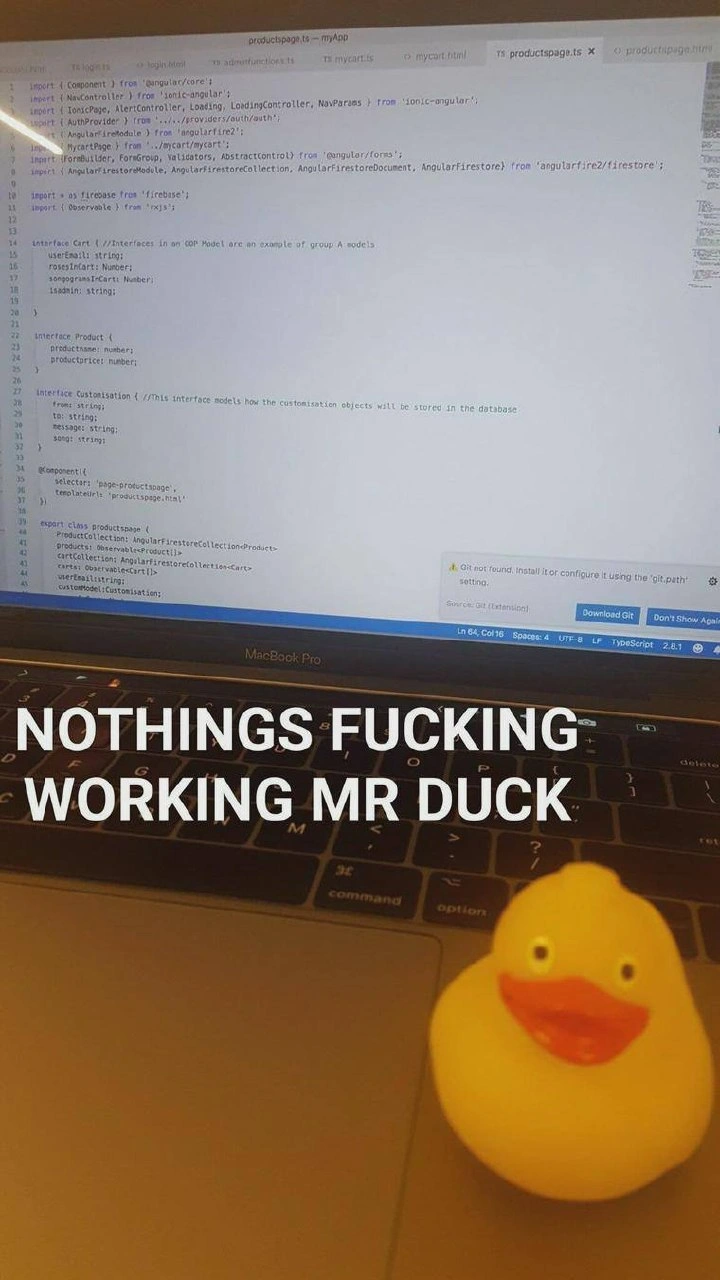
At 3:59 AM you still believed in rubber-duck exorcism; at 4:00 AM the duck just quacked back "wack."
The real bug was the race condition between your circadian rhythm and your git commit history
The classic 'sunk cost fallacy' meets the 'just one more compile' paradox - where every senior engineer knows that 4am debugging is just your brain's way of saying 'I've already invested 6 hours, what's 6 more?' Meanwhile, the bug was probably a missing semicolon you added at 10pm and removed at 11pm
At 4am the bug isn’t Heisen - it’s you: partitioned brain, degraded SLO, and a busy‑wait loop called “just ten more minutes.”
Senior rule: once it's 4am, you've breached the sleep error budget - reduce MTTR by rolling back to bed
while (!bug.fixed) { bedtime.defer(); } // Compiles fine, runtime: eternal developer fatigue