The Self-Propagating Bug Fix
Why is this Bugs meme funny?
Level 1: Grandpa’s Old Toy
Imagine your grandpa shows you a really cool old toy that he used to play with when he was young. It might look a bit odd or old-fashioned at first, but it still works perfectly and does some clever things your modern toys can’t do. In fact, every once in a while, a kid in the family finds this toy in the attic and becomes totally fascinated by it, even though it’s decades old. Grandpa smiles and says, “Yep, that was my favorite toy back in the day – they don’t make them like that anymore!” That’s basically what’s happening in this meme. Lisp is like that amazing old toy of the programming world: every new generation, a few curious people pick it up and go, “Wow, this is actually really neat!” The comic makes it extra funny by comparing those old bits of code (the parentheses in Lisp) to something like a Jedi’s lightsaber being passed down from father to child – an elegant old tool being rediscovered and treasured all over again.
Level 2: Rediscovering Lisp
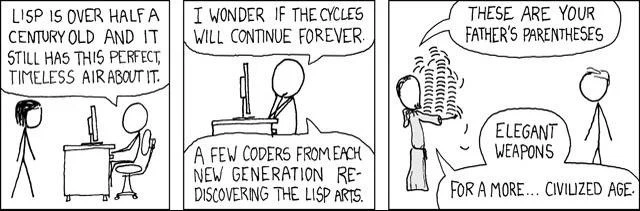
This meme celebrates Lisp, one of the oldest programming languages, and jokes about how new programmers keep falling in love with it again and again. Lisp was created over 60 years ago (in the late 1950s!), yet many developers today still admire it. Why? Lisp introduced many key ideas in programming and has a certain simple, clean design often called “elegant.” When the first stick-figure says, “Lisp is over half a century old and it still has this perfect, timeless air about it,” they mean that despite Lisp’s age, using it doesn’t feel outdated — it feels almost classical or always relevant. This relates to TechHistory because Lisp has been around for so much of computing’s history, influencing lots of other languages.
A big part of Lisp’s identity is its parentheses. Lisp code is notorious (and endearing) for containing tons of parentheses characters ( ). In Lisp syntax, you wrap every operation and its arguments in parentheses. For example, instead of writing a math expression as 1 + 2 like in many languages, in Lisp you’d write it as (+ 1 2). Every function call and even program structure uses this format, leading to deeply nested parentheses. The comic artist visualized this by drawing a “stack of parentheses” literally floating in the air. That stack is meant to represent Lisp code or the Lisp arts being passed down. The second panel’s text – “A few coders from each new generation rediscovering the Lisp arts.” – is saying that in every new generation of programmers, some will learn Lisp and treat it like a newfound treasure or art form. LanguageEvangelism is hinted here: those who learn Lisp often get very excited about it and encourage others to try it, almost like they’ve joined a special club.
The third panel is where the meme goes full geek humor. It copies a famous moment from Star Wars. In the original movie, an old Jedi (Obi-Wan) gives Luke Skywalker his father’s lightsaber, calling it “an elegant weapon for a more civilized age.” The meme humorously replaces the lightsaber with Lisp’s parentheses! The standing stick-figure holds out a swirling cloud of parentheses and says, “These are your father’s parentheses.” Inside that cloud, the quote “Elegant weapons for a more… civilized age.” appears, just like Obi-Wan’s description of the lightsaber. This is a star_wars_homage that adds a cinematic flair to a programming joke. It implies that Lisp’s parentheses are tools from an older, nobler time of programming. It’s funny because parentheses are simple punctuation marks, not actual weapons, yet the comic treats them with the same reverence as a Jedi’s lightsaber. The phrase “your father’s parentheses” also implies that Lisp might have been something your dad (or the older generation) used, and now it’s being handed down to you, the new generation. In reality, many programmers do learn about languages their mentors or even parents used and find them surprisingly cool. This is the timeless_programming_language aspect: Lisp keeps coming back into fashion in little waves, despite newer languages dominating day-to-day coding.
For a junior developer or someone new to programming, what’s important to know is: Lisp is a family of languages (like Common Lisp, Scheme, Clojure) that has a very simple, uniform syntax (lots of parentheses and prefix notation). It pioneered concepts in functional programming (a style of coding where functions are the primary tool and you avoid changing state directly). Many modern languages have borrowed Lisp’s ideas, so when people finally try Lisp, they’re impressed that it had solved problems decades ago that we still deal with today. The meme jokes that this discovery is almost like learning a secret Jedi art – hence “rediscovering the Lisp arts.” The tone is lighthearted: it’s poking fun at how programmers can be dramatic about their favorite old language. The parentheses_joke is central: outsiders often mock Lisp for its parentheses overload, but insiders proudly embrace it. By calling them “elegant weapons,” the meme turns what could be seen as a downside (weird syntax) into a badge of honor.
In simple terms, the comic is saying: Programming in Lisp feels like handling a beautiful old tool. Every generation, some curious programmers pick it up and go, “Wow, this still works amazingly well!” They might even prefer it to some modern tools. The DeveloperHumor here comes from mixing a bit of truth (Lisp really is old and gets rediscovered) with exaggeration (treating brackets like mystical weapons). If you’ve ever had a senior programmer tell you to try coding in Scheme or Common Lisp “to really understand programming,” that’s exactly the scenario being caricatured. It’s the cycle of recurring_language_cycles in action: trends fade, then come back around. Today’s new Lisp enthusiasts are just the latest in a long line, inheriting the knowledge (and those darn parentheses) from the coders who came before.
; Example: A simple Lisp function defining the sum of two numbers
(defun add (x y)
(+ x y))
; In Lisp, everything is inside parentheses: here (defun ...) defines a function.
; "add" is the name, (x y) are parameters, and (+ x y) is the body that returns x+y.
Even if you’re not a Lisp coder, the meme’s combo of tech nostalgia and a pop-culture reference is classic DeveloperHumor. It reminds us that in programming, old techniques often come back around – and that geeks will always compare coding to epic legends given the chance!
Level 3: Eternal Recursion
To an experienced developer, this comic hits on a recurring TechHistory pattern: every so often, a fresh wave of coders “discovers” Lisp and falls in love with its power, almost like clockwork. The first panel’s character marvels that “Lisp is over half a century old and it still has this perfect, timeless air about it.” Indeed, many senior engineers have at some point looked past Lisp’s quirky surface (those endless parentheses) and thought, “Wow, this old language is strangely advanced!” The humor is partly in the DeveloperNostalgia – Lisp has been the wise old sage of programming languages for generations. Seasoned devs nod knowingly because they’ve seen this movie before: a young programmer hears whispers of Lisp’s legendary capabilities (often from a LanguageEvangelism blog or an older mentor), decides to try it “for fun,” and gets hooked by its elegance. It’s almost a rite of passage in certain circles, akin to a Jedi apprentice discovering an ancient lightsaber. And that’s exactly the parody in panel 3: “These are your father’s parentheses,” says the standing figure, conjuring a swirly stack of parentheses like Obi-Wan Kenobi presenting Luke with his father’s lightsaber. The caption within that parenthesis-saber calls them “Elegant weapons for a more… civilized age.” It’s a Star Wars homage that casts Lisp’s plentiful () as noble relics of a grander era of computing. In Star Wars, the lightsaber is an elegant, civilized weapon from earlier times – here Lisp’s parentheses are portrayed as elegant coding tools from the early days of programming. It’s a nerdy double-reference that senior devs love: mixing timeless programming language lore with classic sci-fi geek culture.
Why parentheses? Lisp’s biggest visual quirk is that everything is enclosed in parentheses; its syntax looks like a dense forest of ( and ). This has long been fodder for LanguageQuirks jokes. Outsiders quip that Lisp is just “lots of irritating superfluous parentheses,” but aficionados consider those parentheses a source of clarity and power. They explicitly mark the code’s structure, making it easy for the language to parse and for macros to manipulate. In the comic, the “shimmering swirl of layered parentheses” literally depicts that trademark syntax as a magical object. The senior coder reverently calling them “elegant weapons” is hilarious because most newcomers find Lisp code intimidating, not elegant. It’s the kind of tongue-in-cheek humor experienced devs appreciate: the thing everyone teases (parentheses everywhere) is pivoted into a mark of sophistication.
The middle panel’s caption about “a few coders from each new generation rediscovering the Lisp arts” nails a real phenomenon. Despite being invented in 1958, Lisp and its dialects (like Common Lisp, Scheme, and newer ones like Clojure) periodically enjoy revival spurts. In the 1980s Lisp was hot in AI research; then the industry moved toward other languages. But later, young developers read essays by Lisp gurus or encounter Lisp in college (MIT’s famed SICP course taught in Scheme) and they get enlightened by Lisp’s different approach. It feels like uncovering a lost art or joining a secret society of parentheses-wielding wizards. Each cycle, a few enthusiastic programmers go around preaching Lisp’s merits (often with almost religious zeal, hence “Lisp arts” sounds like mystical training). Meanwhile, older hands smile because they’ve seen this enthusiasm before – heck, they had that phase themselves 20 years ago! There’s both pride and gentle irony in watching the tradition continue. In software development, trends are often cyclical: ideas from the past resurface as “new” ideas (functional programming paradigms, REPL-driven development, etc.), and Lisp is the poster child of this cycle. Experienced devs find it funny and heartwarming that no matter how much the field progresses, a subset of youngsters always winds up saying, “Hey, have you heard of Lisp? It can do incredible things!” – as if discovering an ancient civilization’s wisdom anew.
Notice also the phrase “your father’s parentheses” implies an inheritance. This is a playful jab at how DeveloperHumor sometimes frames older technology as family heirlooms. The comic pretends that the previous generation literally hands down parentheses as a gift. It resonates with senior devs because many have indeed mentored juniors by sharing “old but gold” tools and concepts. Perhaps an older colleague introduced them to Lisp back in the day, and now they find themselves introducing someone younger to it – the cycle continues, ad infinitum. The xkcd_reference style of the comic (simple stick figures, philosophical-yet-silly dialogue) adds to the senior-level chuckle: it’s exactly the sort of witty homage Randall Munroe (author of xkcd) would make to celebrate a classic technology. The whole scenario has a self-aware geekiness. Only in programming culture do you get conversations comparing parentheses to Jedi weapons spoken with a straight face! In summary, the humor lands so well for experienced developers because it blends deep respect for a recurring language legend (Lisp) with the absurdity of its most infamous feature (extra parentheses) being revered. It’s a knowing laugh at our industry’s habit of rediscovering the past – and an appreciation of the fact that sometimes the old ways really were elegantly ahead of their time.
Level 4: The Lambda Legacy
Lisp’s timeless elegance isn’t mere nostalgia – it’s rooted in deep computer science history. Born in the late 1950s, Lisp (short for “LISt Processor”) was heavily influenced by Alonzo Church’s lambda calculus, a mathematical framework for defining computation with anonymous functions (lambdas). John McCarthy’s 1960 paper introduced Lisp’s core evaluation model, essentially defining a whole programming language in a few elegant equations. This theoretical purity gave Lisp a certain mathematical immortality. Its code is written in S-expressions (Symbolic Expressions), which use nested parentheses to represent both code and data. Every Lisp program is structured as a tree of parentheses, reflecting the parse tree of the code itself. This property – homoiconicity – means Lisp treats code as data, enabling macros that can transform the program from within. It’s as if the language carries a blueprint of its own construction, allowing it to evolve and adapt over time. Many modern language features, from garbage collection to the functional paradigm, trace back to Lisp’s early innovations.
Because of this foundation, Lisp has a reputation for being elegant in a way that transcends decades. Its syntax is minimal: just parentheses, atoms (like symbols or numbers), and a few special forms. Everything else – conditionals, loops, even object systems – can be built out of these primitives. There’s a famous in-joke rule (Greenspun’s Tenth Rule) stating that any sufficiently complex program in another language inevitably reimplements half of Lisp. In other words, developers often reinvent Lisp’s features from scratch without realizing it. This speaks to Lisp’s inevitable design: it’s a local optimum in language design space that we keep gravitating back to. Each new generation of programmers eventually stumbles upon the same powerful ideas – first-class functions, recursion, meta-programming – and discovers that Lisp had them all along in a beautifully unified form. The meme’s talk of “cycles continuing forever” nods to these recurring realizations. Even as hardware and languages evolve, Lisp’s core ideas (and yes, its iconic stack of parentheses) remain stubbornly relevant. This is the legacy of lambda calculus living on in our editors: a 60-year-old language family that still feels like a glimpse of the future. The humor here is that despite all our industry’s changes, we keep coming back to Lisp’s civilized age of computing – as if Obi-Wan himself were passing down a sacred coding relic that no amount of time or trendiness can diminish.
Description
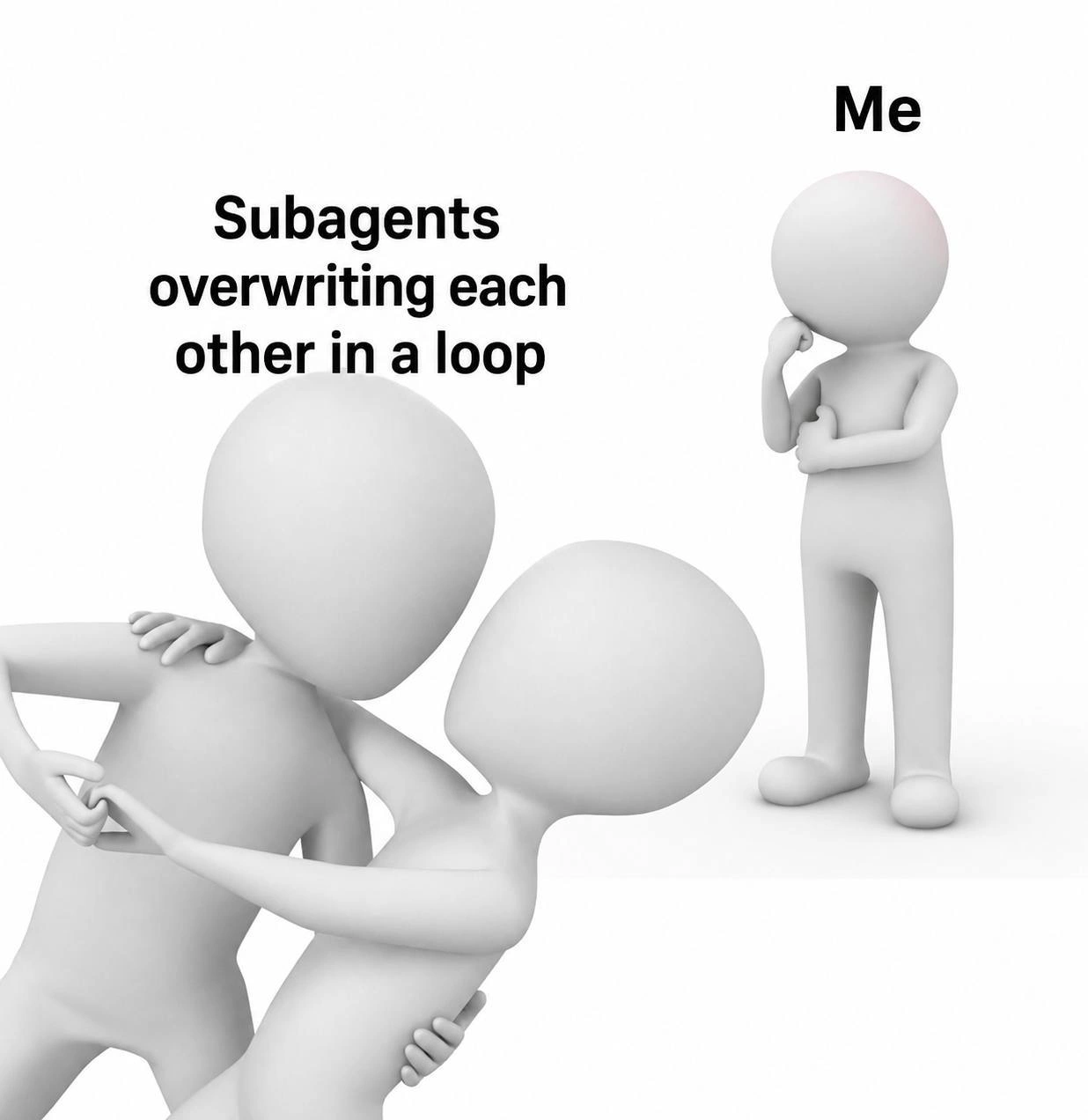
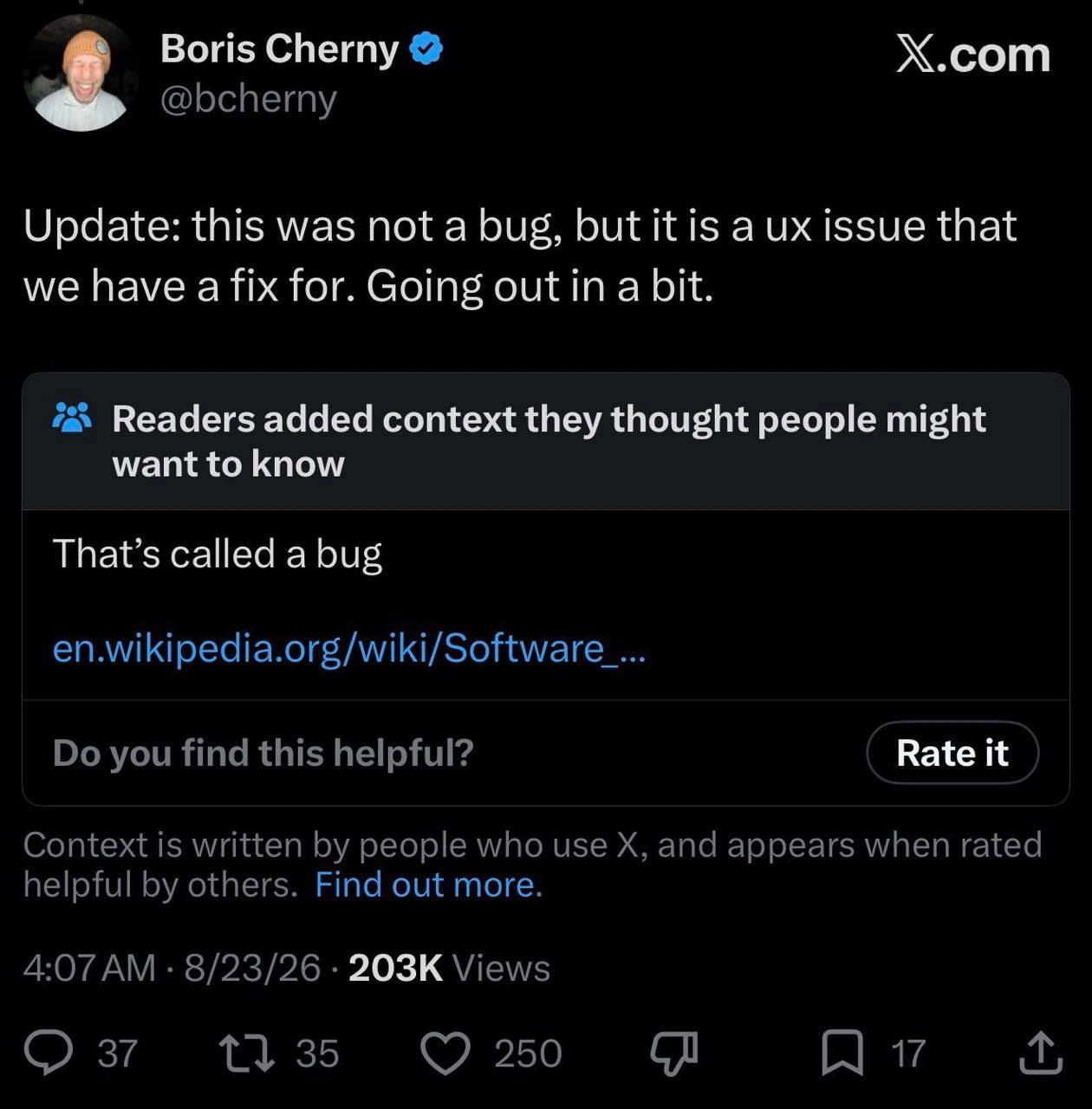
This meme uses the classic 'Spider-Man Pointing at Spider-Man' format. Two identical Spider-Man characters are pointing at each other accusingly. One is labeled 'The bug', and the other is labeled 'The bug fix that creates 2 new bugs'. This perfectly illustrates a common and frustrating phenomenon in software development where an attempt to fix one issue inadvertently introduces new, sometimes more severe, problems. The humor lies in the visual representation of the bug and its 'fix' being indistinguishable in their problematic nature, a relatable experience for any developer who has battled a fragile or complex codebase

Comments
7Comment deleted
That's not a bug, it's a feature that generates job security for the maintenance team
Nothing ages like Lisp: every decade we swap its parentheses for curly braces, rename it “declarative orchestration,” raise a Series B, and still wonder why the macros don’t feel as civilized
Every five years, a new JavaScript framework reinvents half of Common Lisp, badly, then adds a build step that takes longer than compiling SBCL from source
Every few years, a new cohort of developers discovers Lisp and experiences the same revelation: 'Wait, code IS data?' They evangelize it passionately for six months, write a few macros that feel like wielding divine power, then quietly return to their TypeScript jobs - but they never forget those parentheses. Like Obi-Wan's lightsaber, Lisp remains an elegant weapon from a more civilized age, waiting in the desert for the next generation to rediscover that sometimes, the old ways were onto something profound
Every decade someone rediscovers Lisp, writes a DSL with macros in a weekend, and remembers the hard part isn’t the parentheses - it’s explaining to the org why YAML isn’t an architecture
Lisp's lightsaber: elegant prefix notation for a civilized age, until one unmatched paren darkens your macro empire
Every generation declares “we need a DSL,” and six months later ships a homoiconic macro system with a REPL and too many parentheses - then swears it’s not Lisp, it’s “platform configuration.”