Skip to content
DevMeme
3978 of 7435
Bell-curve meme on dev IQ and reliance on Stack Overflow vs docs
DevCommunities Post #4326, on Apr 19, 2022 in TG

Bell-curve meme on dev IQ and reliance on Stack Overflow vs docs

Why is this DevCommunities meme funny?

Level 1: Skipping the Manual

Imagine you’re putting together a big puzzle and you get stuck. One kid immediately asks a friend for help to find the next piece – that’s like a newbie programmer quickly looking up the answer on Stack Overflow. Another kid insists, “No, you have to read the entire instruction booklet first and figure it out properly!” – that’s like a mid-level developer saying you should read the official documentation before doing anything. But then you have a wise old grandparent quietly picking up a piece and placing it correctly because they remember a similar puzzle – they still might glance at the friend’s hint or the picture on the box to save time. That’s the expert developer: they also use quick tips (just like Stack Overflow answers) even though they’ve built many puzzles before.

The funny part is that you’d expect the really smart, experienced person to do everything by the book, but in reality they know when it’s okay to skip the manual for the sake of speed. In our everyday life, it’s like sometimes not reading the entire instruction guide and just using a quick trick someone showed you. The meme makes us laugh because both the beginner and the master end up saying, “I just asked for a handy answer,” while the person in the middle is upset insisting on doing it the “proper” way. It’s showing that sometimes, no matter how smart you are, it’s perfectly fine to ask for help or use handy answers – and that following all the rules isn’t the only way to solve a problem. It feels satisfying and relatable because we all know a time when a shortcut or a friend’s tip saved the day, even if someone else was busy reading the instructions word-for-word.

Level 2: Docs vs Quick Fix

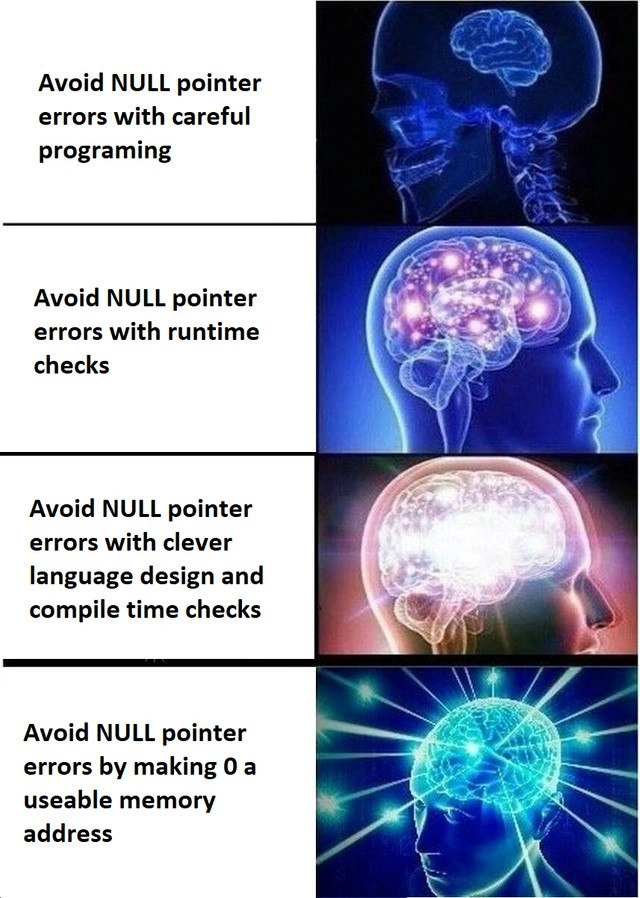
Let’s break down the meme in simpler terms. It’s showing an IQ bell curve (those blue curves with percentages that indicate how many people fall into low, average, and high IQ ranges) and mapping it to developer behavior. On the left side of the curve (low IQ end), there’s a simple cartoon guy happily saying, “I use StackOverflow.” On the middle top of the curve (average IQ), there’s a frustrated nerdy character (a Wojak drawing with glasses and tears) shouting, “NOOO, you must read the docs!” Then on the right side (high IQ end), there’s a calm hooded figure (looking like a wise monk or coder Jedi) also saying, “I use StackOverflow.” The joke is that both the least experienced and the most experienced developers in this comic rely on Stack Overflow, while the ones in the middle insist on using the official documentation for everything.

First, Stack Overflow is a hugely popular Q&A website where developers ask questions and get answers. If you’ve ever googled a programming problem, you’ve likely seen Stack Overflow results – it’s basically a giant forum of coding questions with millions of answers. Many developers copy-paste code from Stack Overflow when they’re stuck or need a quick example. It’s so common that “Stack Overflow-driven development” is a tongue-in-cheek way to describe learning to code by just searching and borrowing snippets. It’s a cornerstone of modern developer communities – people share knowledge and help each other out.

On the other hand, “the docs” means the official documentation for whatever technology you’re using – like the official manual or guide written by the maintainers of a language, library or framework. For example, Python, JavaScript frameworks, cloud APIs – they all have official docs that explain how things work, often with tutorials and reference pages. Reading the docs is generally a good thing because those are authoritative and thorough. However, docs can be lengthy, sometimes hard to digest, and might not always have a clear example for the exact problem you’re facing. That’s why developers often google for specific solutions – and land on community answers on sites like Stack Overflow or tutorial blogs.

Now, why is the middle character screaming “NOOO you must read the docs”? This represents a certain attitude some developers (often those with a bit of experience under their belt) have: the belief that one should always read the official documentation and truly understand things, rather than copying code blindly. It can come from a good place – maybe they had a bad experience copying a piece of code that they didn’t understand and it caused bugs or security issues. So now they’re almost allergic to Stack Overflow answers; they might call relying on copy-paste solutions “bad practice.” In some online forums or workplace discussions, you’ll encounter folks who respond to beginner questions with something like, “Have you even read the documentation? Go read that first!” This can feel a bit like gatekeeping, where the person is basically saying you’re not doing it the “right way” unless you slog through the official docs. That’s why we call it “read the docs” gatekeeping – making newcomers feel guilty for not using the manual as their first approach. The Wojak with glasses in the meme is exactly that person, exaggerated to a comical degree (crying “NOOO!” dramatically). It highlights a kind of Documentation Humor – joking about the sometimes preachy “RTFM” culture (“Read The Freaking Manual”) that exists among developers.

Meanwhile, the characters on both ends saying “I use StackOverflow” are illustrating a funny observation: a lot of entry-level devs and a lot of very advanced devs both end up using quick, community-sourced solutions. For a junior developer (low experience), Stack Overflow is a lifeline. If you’re just starting out and you hit an error or need to do something (like parse a date or center a div in CSS), you might not even know where in the docs to look, so you just Google it and copy the first answer that looks correct. It’s fast and gets you moving forward (even if you don’t fully grasp why that code works). This is what we call StackOverflow dependence in a humorous way – newbies can become dependent on copy-paste solutions because they haven’t learned all the fundamentals yet. They might have a bit of documentation aversion – preferring quick answers to wading through official manuals that feel overwhelming. If you’ve ever started learning a new framework and thought, “I’ll just search for a snippet to do this,” you’ve been that person on the left side.

Now, for a senior developer (high experience), why would they also say “I use StackOverflow”? Shouldn’t they know everything already or prefer the docs? Well, even very experienced developers use Stack Overflow, but they do it in a more strategic way. An expert likely has read the docs in the past or at least knows the concepts. They might use Stack Overflow to quickly recall a detail or see how others solve a niche problem. It’s efficient. For example, an expert might remember the function they need, but not the exact syntax or an edge-case solution. Instead of flipping through reference pages, they’ll search that on Google, often adding “Stack Overflow” to the query because they know someone probably asked this question before. They trust themselves to understand and verify the snippet they find. Ironically, the expert might also be a contributor who wrote some of those answers or even helped write the docs! So when they say “I use StackOverflow,” it implies “I use every tool available to solve problems, and I’m not ashamed of using community knowledge.” They know that reading the docs and searching online aren’t mutually exclusive – you can do both as needed. The hooded figure in the meme looks like a calm guru, which implies that the advanced dev has the wisdom to know when to utilize a quick fix from StackOverflow versus when to deep-dive into official documentation.

So the overall joke is a play on the stereotype of a learning journey:

  • Beginner (low IQ in meme terms): happily goes straight to Stack Overflow for answers because it’s easy and they might not know another way.
  • Intermediate (average IQ in meme): has learned the importance of fundamentals and is almost over-correcting by insisting “No shortcuts! Only official documentation!” This person might scold others for using Stack Overflow, seeing it as cutting corners.
  • Expert (high IQ in meme): confident in their knowledge and efficient in their methods, they’ll use the fastest way to get an answer — which often means Stack Overflow — but crucially, they understand what they copied. They’ve come full circle to see it’s not shameful if you know what you’re doing.

This resonates as relatable humor for many developers. We’ve all had moments of being each of those characters. The meme uses the IQ bell curve image to exaggerate it: suggesting that using StackOverflow is either a low-effort naive approach or a galaxy-brain move, whereas insisting on docs is the middling approach. In reality, of course, good developers balance both. But the exaggeration is the point of the joke. It’s making fun of the attitude, not saying one method is truly smarter than the other for all cases. That’s why it’s funny and a bit sharp in its commentary. If you’ve ever seen someone in a forum angrily tell a newbie to go read the manual (instead of just helping them), this meme is a chuckle-worthy response: even the “geniuses” use Stack Overflow, so lighten up!

To illustrate, consider these two approaches in pseudo-code:

# Intermediate dev's approach (following docs step by step)
open_official_documentation(topic)
study_examples_and_explanations()
implement_solution_from_scratch()
# Newbie or expert dev's approach (using community Q&A)
search_online("how to solve X in library Y")
find_stackoverflow_answer()
apply_solution_from_answer()
# Expert will tweak and understand this code; newbie might just hope it works

In the first snippet, the programmer is diligently reading the official guide and then trying to write the code on their own. In the second, the programmer goes straight to searching the error or task and uses a solution someone else has already posted. The meme humorously suggests that both a beginner and a master might take the second approach, while the person in the middle strictly follows the first.

All the elements in the image underscore this joke. The percentages (0.1%, 2%, 14%, 34%, etc.) are the standard distribution for IQ scores, showing tiny fractions at the extremes and a big chunk (68% total in the middle two segments) around average. The labels “IQ score 55, 70, 85… 130, 145” correspond to those distribution points. This isn’t really about real IQ at all – it’s just a meme template. The low-end character is drawn as a simple, goofy-looking guy – implying a not-so-smart person – yet he’s doing something (using StackOverflow) that the high-end “genius” is also doing. The middle crying Wojak with glasses represents that stereotypical know-it-all or gatekeeper who is technically not “dumb” but is portrayed as freaking out about the other’s methods. Wojak memes are commonly used in internet culture to depict various emotions; here the Wojak is upset and condescending, which perfectly fits the “NOOO, you’re doing it wrong!” vibe. The hooded figure on the right is often referred to as the “enlightened” meme guy (sometimes associated with an ascended intellect or even the “gray Jedi” of meme culture) – he’s meant to look wise and beyond petty arguments. By having him also say “I use StackOverflow,” the meme suggests that truly wise developers understand the value of those quick solutions and don’t make a fuss about it.

In summary, this image is contrasting two sources of learning: official documentation vs. community answers. It humorously frames the documentation purist attitude as a phase one goes through, while acknowledging that both rookies and veterans alike happily rely on shared knowledge from sites like StackOverflow. It’s a nod to how learning in programming isn’t linear – sometimes the simplest resource is the most effective. The meme nails a piece of insider developer humor by capturing that moment when you realize: even the pros copy code from the internet sometimes! And that’s okay. It’s a playful jab at the idea that using Stack Overflow is only for noobs – clearly, the “genius” in the meme is doing it too, with a knowing smile.

Level 3: Stack Overflow Enlightenment

At the far ends of this IQ bell curve meme, we see a hilarious convergence: both the supposed low IQ newbie and the high IQ guru proudly say “I use Stack Overflow.” Meanwhile, smack in the middle (the average IQ peak), a distraught Wojak in glasses is crying out “NOOO you must read the docs!”. This format cleverly satirizes a real developer phenomenon. It’s poking fun at how developer learning often comes full circle. The novice programmer unabashedly copy-pastes from Stack Overflow, the mid-level dev insists on proper documentation and best practices, and the seasoned expert — with the calm wisdom of experience — also isn’t shy about grabbing solutions from Stack Overflow when it makes sense. The humor arises from portraying the intermediate “read the docs” stance as an overly rigid middle ground, flanked by two extremes that oddly agree on a simple, pragmatic approach.

Why is this so funny to those in software development? Because it rings true: Dev communities have long-running jokes about Stack Overflow-driven development. Many of us have seen a junior developer copy-paste code from a Stack Overflow answer to fix a bug in seconds. Cue the mid-level engineer entering the chat, decrying this as “bad practice” with an almost zealous fervor – “Did you even read the official docs?!” They’re not entirely wrong: relying blindly on a community snippet can be risky. This middle-tier developer likely remembers breaking something by pasting code they didn’t understand, so now they’ve swung hard in the other direction: RTFM (Read The Friendly Manual) or bust. There’s even a whiff of read_the_docs gatekeeping here – the idea that “real” programmers study the official documentation religiously, and using Q&A sites is somehow cheating. That’s the Documentation Aversion satire: the meme exaggerates how some folks act like using Stack Overflow is a low-IQ move, when in reality even the brainiest devs do it.

Now, enter the hooded high IQ sage on the right. This character is drawn serene and confident, saying quietly “I use Stack Overflow.” This represents the battle-scarred senior developer or true 10x engineer. After years in the industry, they’ve likely read tons of docs and written a few themselves. They know the documentation inside-out – and precisely because they do, they have no ego about quickly searching for a solution on Stack Overflow. The enlightened coder has the wisdom to recognize that not reinventing the wheel is often the smart move. Why spend two hours combing through specs or re-debugging an issue when a well-crafted Stack Overflow answer can save the day in 2 minutes? The guru figure isn’t saying “I rely on others because I can’t code” – they’re saying “I know how to leverage the community’s collective knowledge efficiently.” In fact, that guru on the right might be the same person who authored some of those Stack Overflow answers or even contributed to the docs. This is the StackOverflow dependence irony: the truly wise coders have mastered the balance between digging into docs and using existing solutions. They understand the frameworks well enough to vet and adapt an answer from Stack Overflow safely. It’s almost an enlightenment in productivity — hence our hooded figure gives a Zen-like vibe.

The bell curve format exaggerates the contrast: The left tail (0.1% IQ) happy-go-lucky newbie is too ignorant to worry about “best practices” and just googles everything – and sometimes, it magically works. The middle (normal IQ 100) is stressing out, following every rule and chastising others with “You must read the documentation!” That’s a caricature of an intermediate dev who maybe just discovered the importance of fundamentals and is over-applying that lesson. Then the right tail (genius IQ) loops back to a calm simplicity: after mastering the fundamentals, they’re secure enough to grab a snippet from StackOverflow without the melodrama. Experienced developers seeing this meme chuckle because we’ve witnessed (or lived) that progression. It’s relatable humor: early in our careers we often depend on Stack Overflow without shame, then we hit a phase of almost snobbish self-reliance (“I shall only trust the official docs!”), and finally we mature into a pragmatic mix – using every resource wisely, whether it’s official docs or a quick StackOverflow fix.

This meme also hints at the unspoken truth in programming: just about everyone, from interns to principal engineers, has copy-pasted code from the internet. It’s practically a rite of passage. Entire production systems quietly run with little code snippets that originated on some Stack Overflow answer. The humor is that the ultra-smart developers aren’t above doing exactly what the newbies do. In fact, they do it with confidence and maybe a sly grin. That crying mid-level Wojak yelling “Nooo!” reminds us of those heated online debates about the “right” way to learn or solve problems. Sure, reading official docs is important for deep understanding – and the meme isn’t denying that. It’s mocking the overzealous documentation purist who thinks consulting Stack Overflow is a sign of low intelligence or lazy dev habits. The reality is, documentation can be dense, time is short, and community knowledge is invaluable. The enlightened engineer understands both the value of good docs and the practicality of quick answers. They’ve possibly memorized half the docs already, but they’re also humble enough to know someone out there might have a ready-made solution or insight.

In real-world teams, you’ll see this dynamic play out. Imagine a debugging session: the junior dev suggests, “Let’s just Google the error message,” the mid-level dev groans, “No, you need to learn how this works – read the library’s documentation,” while the senior dev is already calmly typing the error into Google and saying, “Found a Stack Overflow post with a fix, let’s try it.” The outcome? The bug gets fixed in moments, the junior learns something new from that snippet, and the senior might later explain the underlying issue (or even double-check the official docs after the immediate fire is out). The intermediate dev in the middle might feel a bit torn – they wanted to do it “the proper way”, but they can’t deny the quick solution worked. This perfectly encapsulates Documentation vs. StackOverflow as a spectrum of developer behavior. We all oscillate on this spectrum, but the meme jokingly assigns “IQ levels” to each approach for comic effect.

Ultimately, the bell-curve meme format itself is a wink to internet culture. It implies a kind of secret wisdom at the extremes that the middle doesn’t get. Here, the “secret” is that even top-tier developers happily use community-driven knowledge bases. The comedic insight is that what the gatekeepers call “bad practice” might actually be a mark of efficient problem-solving when you know what you’re doing. It’s a lighthearted jab at the read_the_docs gatekeeping mentality, suggesting that true intelligence is knowing when to read the manual and when to copy-paste an answer. After all, if the solution works and you understand why it works, who cares if you found it in the official docs or on Stack Overflow? The DevCommunity collectively maintains an enormous trove of Q&A knowledge – ignoring that resource wouldn’t be smart! The high IQ hooded guru gets this. And perhaps the biggest laugh for seasoned coders is recognizing a bit of themselves in both the crying docs-stickler and the hooded StackOverflow wizard. We’ve all been the pedantic “Use the docs!” person at some point, only to later become the pragmatic problem-solver who’s not ashamed to say “Yep, I googled it.” This meme distills that journey into one tight, witty image that speaks volumes about how developers learn and solve problems every day.

Description

Image shows the classic blue IQ bell-curve annotated with percentage bands (0.1 %, 2 %, 14 %, 34 %, mirrored) and an x-axis labelled “IQ score” with tick marks at 55, 70, 85, 100, 115, 130, 145. At the left tail (low IQ) a simple line-drawing character smiles and the caption says “I use stackoverflow”. At the peak (average IQ) a crying, glasses-wearing Wojak figure shouts “NOOO you must read the docs”. At the right tail (high IQ) a hooded, calm character also says “I use stackoverflow”. The meme humorously implies that both very junior and very advanced engineers grab code from Stack Overflow, while mid-level engineers insist on reading official documentation. It satirizes developer learning sources, documentation aversion, and community dependence on Stack Overflow for quick solutions

Comments

7
Anonymous ★ Top Pick Interns copy from Stack Overflow, mids quote the docs, and principals copy from Stack Overflow too - because we wrote the top-voted answer back in ’09 and the official docs still link to it
  1. Anonymous ★ Top Pick

    Interns copy from Stack Overflow, mids quote the docs, and principals copy from Stack Overflow too - because we wrote the top-voted answer back in ’09 and the official docs still link to it

  2. Anonymous

    The junior copies from Stack Overflow because they don't know better. The senior copies from Stack Overflow because they know the accepted answer from 2012 is still more reliable than the docs that were last updated "3 days ago" but somehow still reference a deprecated API from v2

  3. Anonymous

    The senior and the intern paste the same Stack Overflow answer; the difference is the senior knows which half of it to delete

  4. Anonymous

    After 20 years in the industry, you realize the senior architect and the bootcamp grad are both Ctrl+C/Ctrl+V from Stack Overflow - the only difference is the senior knows which answers to skip and can spot the subtle bugs in accepted solutions from 2012 that still have 847 upvotes

  5. Anonymous

    Low IQ: copy-pastes SO blindly. High IQ: greps SO for the edge case. Mid IQ: 'Docs say it's impossible' - until SO proves otherwise

  6. Anonymous

    Senior workflow: StackOverflow to find the incantation, docs to read the marketing, git blame and tests to learn the truth, and a feature flag for when prod disagrees

  7. Anonymous

    Staff-level heuristic: read docs for invariants, skim source for truth, then paste the Stack Overflow one-liner you know will keep PagerDuty silent

Use J and K for navigation