After countless incidents, software bugs now make you feel absolutely nothing
Why is this Bugs meme funny?
Level 1: Used to It
Imagine your little brother hides a fake spider in your shoe every single morning. The first time you find it, you probably scream and throw the shoe across the room because it really surprises you. The second time, you might still jump and shout, "Oh no, not again!" But after this happens over and over every day, it stops being scary or even surprising. By the hundredth time, you just sigh, take the fake spider out of your shoe, and move on with your day without a fuss. You're not scared or angry anymore because you know it's just that same trick again. You've gotten so used to it that you feel nothing when it happens. This is just like what's going on in the meme: the programmer has had so many problems (or "bugs") with their software that they're not worried or upset about them at all now. Just as you eventually ignore the fake spider prank, the developer has become completely used to those pesky bugs and doesn’t even flinch when another one pops up.
Level 2: Bug Apathy
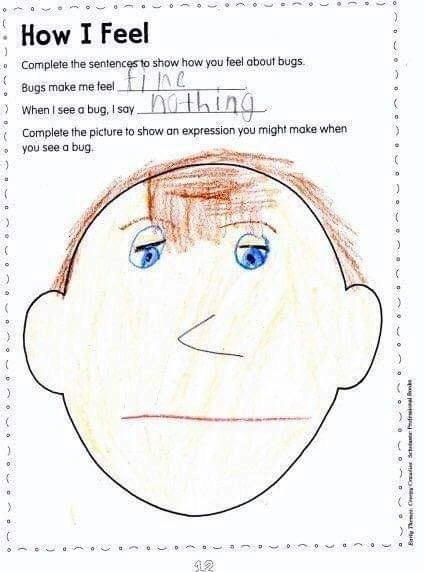
Let's break down the joke in simpler terms. In software development, a "bug" is a mistake or flaw in the code that causes a program to behave in unexpected or wrong ways. Debugging or troubleshooting is the process of finding and fixing these bugs. When you're new to programming, finding a bug in your code can be an emotional roller coaster. For example, if a feature crashes because of an error, a junior developer might feel anxious, frustrated, or even panic thinking "What did I do wrong?" You might say things like "Oh no!" or "I can't believe this happened!" when you first encounter a serious bug. This meme, however, shows a developer who's so used to bugs that they don't react at all anymore. They write "Bugs make me feel nothing" and "When I see a bug, I say nothing." In other words, they've become completely desensitized (numb) to bugs after seeing them so often.
The image is funny because it uses a children’s worksheet format to highlight an experienced developer's attitude. Normally, a worksheet like this asks kids about things like "How do you feel about spiders or homework?" and kids might write "scared" or "angry" with a big expressive drawing. But here it's about software bugs, and the answers are totally blank emotionally. The drawing at the bottom shows a face with a flat, straight mouth and little detail. That neutral expression is basically the face of a programmer who's seen one error too many. There's no smile, no frown – just a deadpan "nothing to see here" look. This contrasts with what you might expect: usually, bugs cause frustration or excitement (as in, "Yes! I found the problem!"). But this developer meme jokes that after countless incidents (meaning many times when bugs caused trouble, especially in a live system), the developer has no strong feelings left about it.
Think of it this way: the first time your program crashes, it's a huge deal and your heart might race. The fiftieth time, you just sigh, roll up your sleeves, and fix it without any drama. The term "bug fatigue" can describe this – you're so tired of bugs that they don't faze you anymore. It's a bit like hearing the same alarm go off every hour; eventually you stop jumping every time it sounds. The humor is relatable for many developers because they've lived through that progression. Early on, every new bug might feel like a crisis, but as you gain experience, you realize bugs are just a normal part of coding. You expect them, and you handle them calmly. So when the meme says "When I see a bug, I say nothing," it implies the person isn't even shocked or upset. They just silently start the debugging process, maybe with a slight eye-roll, but no loud exclamation anymore.
This kind of joke is common in developer humor circles. It's a developer meme that exaggerates a real feeling to get a laugh. The core idea is showing an extreme level of calm (or apathy) toward something that's usually annoying. By using a childlike worksheet format, it also pokes fun at how far from wide-eyed beginners seasoned devs have become. The meme is essentially saying: "I've seen so many software bugs that now I have no reaction left." It's a lighthearted way to acknowledge the debugging frustration and burnout that can come with being a programmer who has dealt with a lot of problems over time. Even if you're not that experienced yet, you probably understand the feeling of being overexposed to something until it no longer gets an emotional rise out of you. That's bug apathy in a nutshell – being so familiar with errors and troubleshooting that it's just routine, no feelings attached.
Level 3: 404 Emotions Not Found
At a certain point in a developer's career, software bugs stop triggering panic or anger and instead evoke a Zen-like calm. This meme nails that vibe by showing a cheerful grade-school worksheet twisted into a jaded dev's confession. The prompt asks how bugs make you feel, and our battle-weary coder fills in the blank with "nothing" – twice. It's darkly funny because after dealing with countless on-call incidents at 3 AM (the kind where your phone's pager goes off and your heart used to skip a beat), you eventually develop a thousand-yard stare worthy of a war veteran. The crayon-drawn face with its perfectly straight-line mouth is basically the neutral expression of a senior engineer deploying on Friday afternoon. No excitement, no fear – just resigned acceptance.
In the trenches of debugging and troubleshooting, there's an unofficial threshold where each new bug report feels like déjà vu. The first time your production site crashes due to a memory leak or a NullPointerException, adrenaline surges and you scramble to fix it while muttering "never again." The tenth time, you still grumble but diligently trace the stack overflow. The hundredth time? You quietly open the log files with the emotional investment of checking the weather. Nothing surprises you anymore. This is software bug fatigue distilled into a meme: the cumulative effect of chasing down so many weird errors and elusive race conditions that your emotional responses get dulled. The humor comes from the absurdity that a children's worksheet – something meant to encourage expressive feelings – is instead used to declare total emotional shutdown. It's a cathartic truth many veteran devs relate to: when you’ve been firefighting nasty bugs in software for years, you end up with a 404 Emotions Not Found error in your soul.
The industry pattern behind this meme is the perpetual cycle of bugs and fixes. Code gets shipped with flaws, production issues flare up, and tired developers jump in to troubleshoot. Over time, this grinds down even the most passionate coder. Rather than throwing keyboards or screaming "why?!", an experienced dev sees yet another bug and often just sighs or silently opens up the debugger. Why no dramatic reaction? Because they've seen that freaking out doesn't fix broken code – methodical troubleshooting does. They've learned to detach their feelings to think clearly under pressure. It's a coping mechanism and a badge of honor: emotional desensitization that says "Been there, debugged that." The meme is relatable to many because so many of us have quietly said "Of course it's broken again" with a stoic face. It's developer humor rooted in truth: when every deployment feels like defusing a bomb, eventually you become the bomb squad tech who can cut the red wire without your pulse rising.
This meme also slyly hints at the culture of constant issues in some codebases or organizations. If "Bugs make me feel nothing" resonates, it might be because the team is stuck maintaining a legacy system held together by duct tape hotfixes, where each day brings a new crisis. Over time, that environment trains you to expect failure as the norm. It's not that you don't care about quality; it's that you've accepted bugs as inevitable as the sun rising. You might even preemptively assume any new feature will break something (the classic "it's always DNS" cynicism). The fact that the dev in the meme says "When I see a bug, I say nothing" is telling. No curse words, no "oh no, not again" – just silence. Perhaps internally they're already triaging the log files or recalling a similar issue from 2014. The absence of outward emotion is a kind of gallows humor among seasoned engineers: outwardly calm while inwardly resigned to another long debugging session.
At its core, the meme underscores a comedic truth: after you've wrestled with enough production outages, debugging frustration eventually gives way to stoic calm. The meme’s brilliance is in using a childlike worksheet format to highlight a very adult reality: too many bugs can wear you down until even the wildest glitch elicits nothing more than a weary shrug. It's a shared joke and a warning sign about burnout all in one. Seasoned devs are laughing (and maybe crying a little on the inside) because they see themselves in that crayon drawing with the neutral expression.
Description
The image is a scanned children’s worksheet titled “How I Feel.” Printed instructions read: “Complete the sentences to show how you feel about bugs. Bugs make me feel _____. When I see a bug, I say _____. Complete the picture to show an expression you might make when you see a bug.” In a child-like hand, the blanks are filled with the word “nothing” twice (“Bugs make me feel nothing,” “When I see a bug, I say nothing”). Below the text, a crayon drawing shows a round face with light-orange hair, blue eyes, and a perfectly straight mouth conveying zero emotion. The neutral expression and handwritten answers humorously mirror a senior developer’s desensitized reaction after wading through endless software bugs and production incidents, capturing the cynical calm that accompanies long-term exposure to debugging chaos
Comments
7Comment deleted
PagerDuty pings at 3 AM; I deploy the hotfix, verify exit-code 0, and remember I scheduled emotions behind a feature flag we never rolled out
After 20 years in this industry, bugs don't make me feel angry or frustrated anymore - they make me feel HAT, which is somehow more accurate than any emotion I could name
Year one you file a detailed repro; year fifteen you just update the worksheet: feel fine, say nothing, close as won't-fix
This worksheet perfectly captures the five stages of bug grief that senior engineers experience: denial ('it works on my machine'), anger (at 3am), bargaining ('maybe it's a feature?'), depression (this drawing), and acceptance ('bugs make me feel HAPPY'). The real genius is the 'I say nothing' response - because after 15 years, you've learned that speaking up about bugs in sprint planning just gets you assigned to fix them. The subtle smile isn't happiness; it's the muscle memory from years of nodding during retrospectives while internally calculating your severance package
After enough Sev‑1s, your nervous system adds a circuit breaker and routes emotions to /dev/null - bugs now produce ‘the nothing.’
After 20 years, bugs only trigger two emotions: null if the SLO’s green, PagerDuty if it isn’t
After 20 YoE, bugs don't trigger rage - they trigger muscle memory for bisecting git history in silence