Cosmic Gatekeeping: The Syntax Error
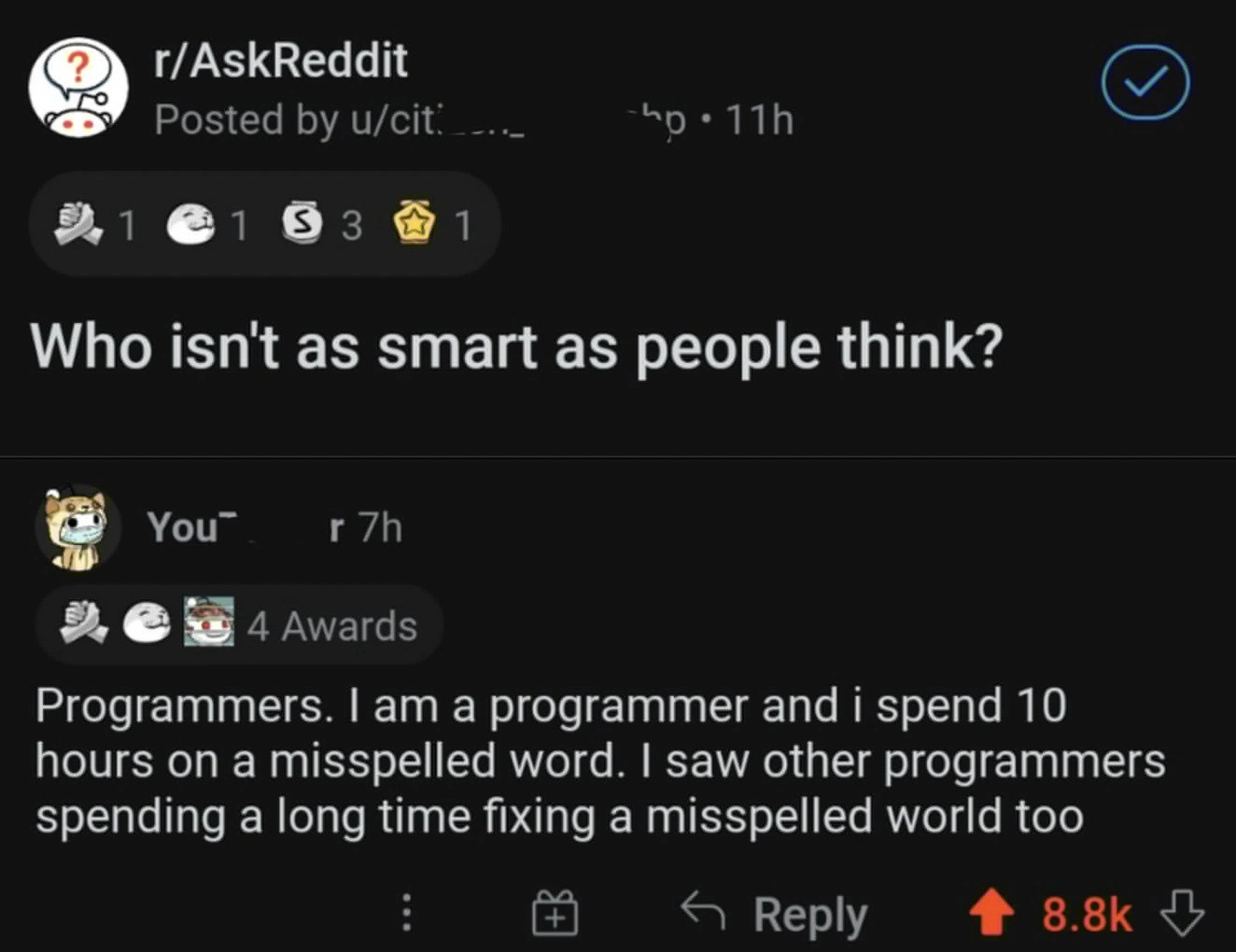
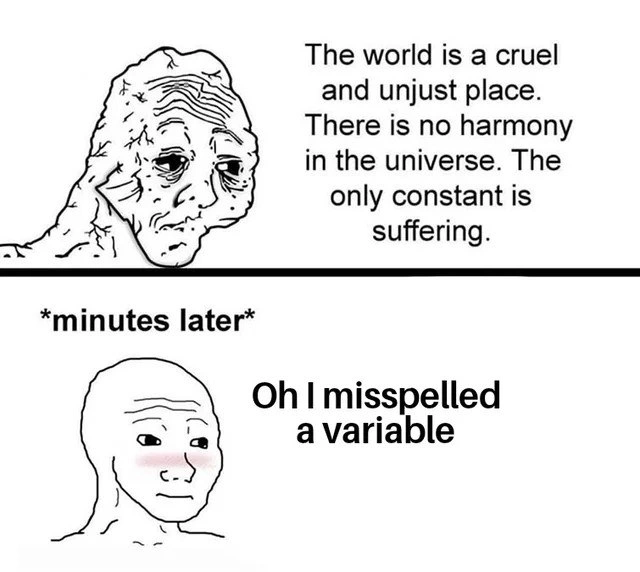
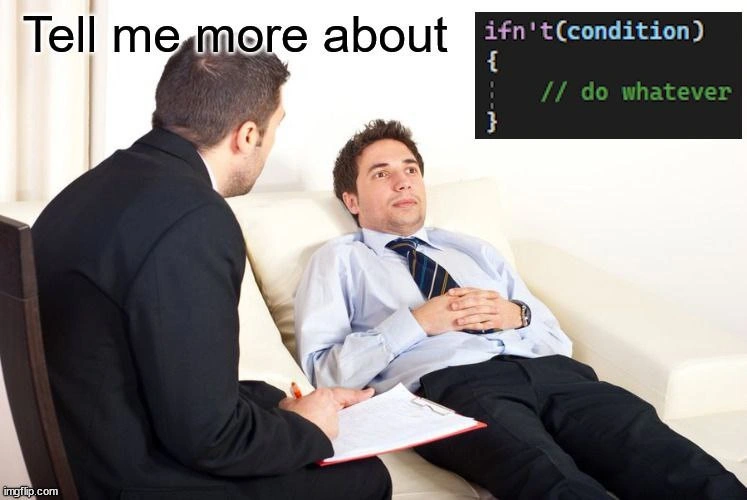
Why is this Bugs meme funny?
Level 1: Stopped by a Typo
Imagine you’re trying to get into the coolest event ever – let’s say a big candy party in the sky – and all you needed was a perfect invitation letter to get in. You were so excited to go to this “heaven” party, but uh-oh, you made a tiny spelling mistake on the invitation. When you arrive, the gatekeeper (kind of like a teacher or a boss of the party) looks at your invite and just says, “Nope, there’s an error here.” Not only that, they repeat your mistake in a silly voice, almost teasing you for messing up. You can’t go in because of one little typo! It sounds ridiculous, right? This meme is joking about that exact feeling. In real life, programmers often feel this way: they might work really hard on a big project (something super important to them), but if they slip up on a small detail (like a missing comma or a wrong word in their code), the computer just refuses to continue. It’s as if the computer is saying, “Haha, you did it wrong, so I won’t let you pass.” We find it funny in the meme because it takes an everyday coding mistake – the kind that prevents a program from working – and imagines it happening at the gates of Heaven. In simple terms, no matter how big your goal is, a tiny mistake can stop everything, and that can be both frustrating and oddly comical when you think about it.
Level 2: Big Dream, Tiny Typo
Let’s break down the joke in simpler tech terms. In programming, syntax is like grammar for code. Every language (Java, Python, C++, etc.) has a set of rules about how you must write commands so the computer can understand you. A syntax error happens when you break those rules. It’s comparable to writing a sentence with jumbled words or bad grammar – the result doesn’t make sense, so the reader (or in this case, the computer) says, “I don’t know what to do with this.” When you have a syntax error in your code, the program won’t even start. It’s not a bug you find later while running; it stops the show immediately. For example, in Python you must put a colon : after a for or if statement. If you forget it, that’s a syntax error and Python will complain as soon as you try to run the script.
# Example of a syntax error in Python:
for i in range(5) # <-- Oops, missing a colon at the end of this line
print(i)
# Python will stop and show a SyntaxError, refusing to run the code above.
A compiler is a program that translates your source code (what you write) into an executable form (machine code or an application) and checks for errors in the process. Languages like C++ or Java use compilers. If the compiler hits a syntax error, it will output an error message (oftentimes in red text in your terminal or IDE) and halt the build. In interpreted languages like Python or JavaScript, there isn’t a separate compile step you trigger, but the interpreter is still internally checking syntax and will throw a SyntaxError if something’s off. In all cases, you can’t move on until you fix the error. It’s like the compiler is a strict teacher grading your code and will refuse to pass you until everything is written just right.
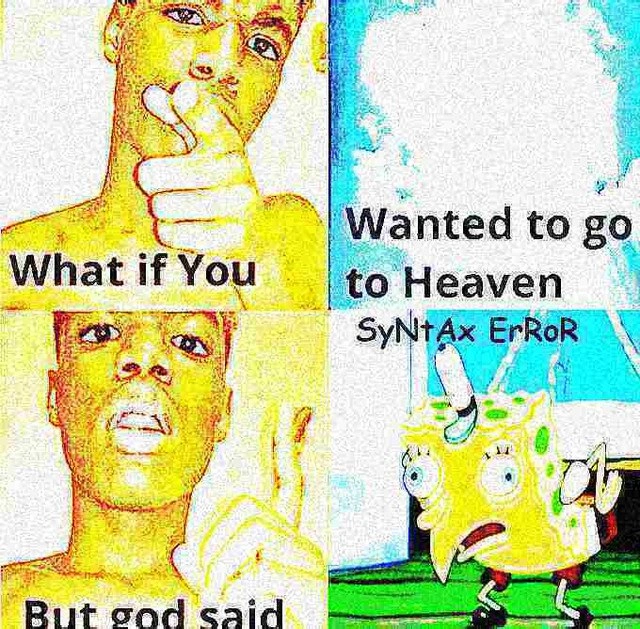
Now, the meme jokes that someone is “Trying to deploy to heaven”. In developer speak, deploy means putting your software or code onto a server or environment where it can run and be used (for example, deploying a web app means uploading it to the cloud so others can access it). “Heaven” here is a funny stand-in for the best environment or ultimate destination – obviously, you don’t literally deploy code to heaven. It sets up a scenario: what if achieving salvation was like deploying code? Then the meme delivers the punchline: “but God said SyNtAx ErRoR.” In other words, the deployment failed because of a syntax error.
The text “SyNtAx ErRoR” is written in a weird mix of upper and lower case because of the mocking SpongeBob meme format. When people on the internet alternate caps like that, they’re imitating a mocking, sarcastic tone (imagine someone repeating your words in a silly voice). The attached image of SpongeBob with a goofy posture comes from a popular meme used to ridicule or mimic something said. So here it’s as if the concept of God (or the system) is mockingly throwing the error back at the person: “Syntax error! Nope, you can’t get in.” It adds a layer of silliness, implying the reason is so dumb that even the all-powerful being is basically trolling you about it.
The original meme format “What if you wanted to go to Heaven, but God said ___” is just a setup for any humorous denial. It’s been around the internet, showing God saying things like “no” or giving absurd reasons. In this programmer version, God said “Syntax Error.” That ties it back to coding. It suggests that even something as lofty as entering heaven could be stopped by a minor coding mistake. The humor comes from contrast: going to heaven is a huge, profound thing, while a syntax error is a tiny mundane error. It’s like saying even your path to eternal bliss has a bug!
For a junior dev (or someone learning), it’s also a nod to how frustrating small mistakes can be. You might be aiming to finish your project or deploy your first app (which feels as exciting as reaching heaven to you), and suddenly the compiler or interpreter blocks you with an error message. It can feel earth-shattering in the moment. This meme takes that feeling and exaggerates it: “God” (the highest authority) stops you because you wrote something like fro i in range(5) instead of for. It’s a playful way to commiserate – every coder has been there, and we can all laugh about how one little typo can create such drama. The tags like SyntaxErrors and CompilerErrors are basically what this joke is built on, and anyone who’s struggled with code will get a chuckle that even in a fanciful scenario, a bug literally ruins everything.
Level 3: One Semicolon Short of Salvation
Every seasoned developer has experienced the heartbreak of a deployment derailed by a trivial mistake. This meme nails that feeling by blowing it up to biblical proportions. “Trying to deploy to heaven” tongue-in-cheek refers to attempting something grand (think of deploying your code to the most important environment imaginable). But “God returns a syntax error” – ouch. That’s the ultimate authority saying “Nope, your code won’t compile.” It humorously equates a programmer’s goal (shipping code, achieving success) with ascending to Heaven, only to be blocked by the most mundane of bugs: a SyntaxError. The joke lands because it takes a universal developer experience – a compile error – and dramatises it as a divine smackdown.
In the meme’s imagery, the left side is the familiar “What if you…” setup, and the right side subverts it. Originally, the format goes “What if you wanted to go to Heaven, but God said…” followed by something humorous or unexpected. Here, “Wanted to go to Heaven” is written plainly, and beneath it, in that alternating upper/lowercase Mocking SpongeBob text, is “SyNtAx ErRoR”. The accompanying distorted SpongeBob image (bent over, wide-eyed) visually represents mockery and panic at the same time. To a seasoned dev, this evokes the compiler’s often unyielding, almost sassy refusal to run your code when a tiny mistake is present. It’s as if the compiler is parroting you in a patronizing tone: “YoU wAnTeD tO bUiLd? SYNTAX ERROR.” We’ve all imagined our tools laughing at us when we miss something obvious at 3 AM. The SpongeBob mocking format amplifies that feeling of being schooled by something that should be far beneath the grandeur of our ambitions.
Why is this so relatable in an engineering context? Because compile-time errors truly do have that gatekeeping power. You might spend days crafting a complex feature (your ticket to the proverbial promised land of a successful release), and then one missing semicolon ; or an extra curly brace { brings the whole thing to a halt. It’s a humbling experience; no amount of seniority spares you from typos. In team settings, this scenario plays out in CI pipelines: you push code, and the automated build or tests fail due to a syntax error, effectively the system saying “fix this before you’re allowed to proceed.” It’s analogous to being at the Pearly Gates of production deployment and getting turned back for something as silly as an unclosed string literal. Senior devs chuckle (or cringe) at this because they’ve been there – maybe in a high-stakes demo or a Friday evening deploy – where a single-character mistake caused disproportionate drama.
The meme also carries a subtext about strict rules and how we anthropomorphize our tools. We often joke that “the computer is being mean” or “the compiler hates me” when in truth it’s just following exact rules. By casting the compiler as “God”, it highlights that feeling of powerlessness: you don’t argue with a compiler error, just like you wouldn’t argue with a deity’s judgment. You fix the error or you go nowhere. This resonates as dark humor among developers who know that no matter how clever or “godlike” you consider your programming skills, forgetting a simple syntax rule will remind you who’s boss.
In essence, the meme is bonding material for devs. It says: “We’ve all had lofty dreams (whether deploying a perfect app or imagining divine ascent) and got smacked down by a small oversight. Isn’t that hilariously frustrating?” By using a grandiose scenario and a popular meme format, it encapsulates the everyday coding struggle in a shareable, laugh-to-keep-from-crying way. The tags CodingHumor and DeveloperMemes are well-earned – it’s humor from the trenches of programming life, where even the gods (or compiler error logs) have a sense of irony.
Level 4: Parsers at the Pearly Gates
Deep beneath this meme’s humor is a nod to how compilers function as unforgiving gatekeepers of code, not unlike celestial sentinels. In compiler design, source code must conform exactly to a language’s formal grammar (often defined in Backus–Naur Form or similar). A compiler’s parser tries to build an Abstract Syntax Tree (AST) from your code, and if it encounters anything that doesn’t fit the expected patterns, it halts with a syntax error. There’s no divine mercy here – one stray character can invalidate the entire program. The meme hyperbolically casts God as the ultimate compiler: even if you attempt a deployment to the highest realm (heaven), a malformed “prayer” or code will be rejected at compile time. This is a playful allusion to the rigidity of formal languages. Just as physical laws are inviolable in the universe, the rules of a programming language’s syntax are absolute within a compiler. The alternating case “SyNtAx ErRoR” highlights the absurdity by combining a cosmic scenario with the banal reality of a compiler message. It’s essentially saying that even an omnipotent system cannot execute ill-formed instructions. In theoretical CS terms, it evokes the concept that any string not in the language’s grammar is simply not a valid program – or in this joke, not a valid entry pass to the afterlife. There’s also an implicit wink to how compilers (and linters) enforce rules without exception: much like a type checker or static analyzer might refuse to compile code that violates constraints, the “God compiler” refuses admission for code (or a soul?) that isn’t properly formatted. This comically exaggerates a fundamental truth of computing: before any higher-level logic or miracles can happen, syntax – the basic structure – must be correct. Even the gods of computing (compilers, interpreters) won’t bend the grammar for you, so our hapless developer’s ascension is thwarted by a primordial law of coding, as strict as any law of nature.
Description
A heavily saturated and pixelated 'deep-fried' four-panel meme. The first panel shows a man pointing forward with the text 'What if You'. The second panel contains the text 'Wanted to go to Heaven'. The third panel shows the same man with a more serious expression, accompanied by the text 'But god said'. The final panel displays a distorted and panicked-looking Spongebob Squarepants with the text 'SyNtAx ErRoR' in a mixed-case, erratic font. The humor stems from the absurd juxtaposition of a profound, ultimate goal (entering heaven) with the most basic and frustrating of programming errors. A syntax error is a failure to follow the grammatical rules of a programming language, preventing the program from even being compiled or run. For a senior developer, the joke is a hilarious and cynical take on how even the grandest systems can be brought down by a trivial, overlooked mistake, akin to a typo blocking entry to the afterlife
Comments
8Comment deleted
Imagine the universe's deployment pipeline failing because God forgot a semicolon in the laws of physics. Talk about a single point of failure
Spent four decades refactoring my karma, hit deploy, and Heaven’s CI fails: life.yaml line 42 - mixed tabs and spaces. Guess I’m stuck in staging
After 20 years of arguing tabs vs spaces, turns out St. Peter's gates run on Python 2.7 with significant whitespace requirements - and he's very particular about PEP 8 compliance at the pearly linter
After 20 years in this industry, I've come to accept that syntax errors are the universe's way of reminding us that even our most profound aspirations - like clean code, timely deployments, or eternal salvation - can be thwarted by a single misplaced semicolon. The real theological question isn't whether there's a heaven, but whether the pearly gates run on a strongly-typed language or if St. Peter is still maintaining that legacy COBOL system where case sensitivity wasn't a thing
Denied at the pearly gates for a SyntaxError - Heaven uses a parser; Hell uses root
Syntax errors: the original sin of coding - even after 20 years, one missing brace sends you straight to runtime hell
Six design reviews, two SLO sign‑offs, and prod still gates on a missing brace - the only infallible architect is the parser
I would fix the bug Comment deleted