Engineering Marvels: SpaceX Rocket Landing vs. EU Bottle Caps
Why is this UX UI meme funny?
Level 1: Stuck Together
Imagine you have two toys that you like to play with – let’s say a toy rocket and a toy tower. Normally, you can play with them separately: you can fly the rocket around in your room, or you can use the tower as a building on its own. But one day, a grown-up comes and glues the rocket onto the tower, saying, “From now on, the rocket must always stay attached to the tower so it never gets lost.” Now you can’t really fly the rocket freely anymore because it’s stuck to the tower. Sure, you’ll never misplace it, but playing with it is a lot more awkward and less fun. That’s exactly the kind of silly situation this meme is joking about. In one picture, a real rocket is trying to land but it has to basically stick onto a tower (instead of just landing on the ground by itself). In the other picture, a bottle has its cap always stuck on by a little plastic leash, so you won’t lose the cap. It’s like a rule made to solve a problem (not losing pieces), but it ends up making things a bit clumsy. We find it funny because we can feel how ridiculous it is: it’s as if someone said, “You keep losing your pencil eraser, so I taped your eraser to your pencil forever.” You won’t lose the eraser now, but good luck trying to use the pencil comfortably! The meme is basically pointing out in a playful way that sometimes the solutions people come up with (like forcing things to stay connected) can create new hassles that make us laugh and shake our heads.
Level 2: Tethered by Design
Let’s break this down in simpler terms. In software, coupling refers to how tightly two components or systems are connected to each other. If two pieces of code are tightly coupled, they depend on each other so much that you can’t change or even run one without the other being present. If they’re loosely coupled, each can operate and be modified with minimal impact on the other. Generally, developers strive for loose coupling because it makes systems more flexible and easier to maintain. You can update one part (say, the login service of an app) without fear of instantly breaking everything else (like the user profile service), as long as they communicate through well-defined interfaces.
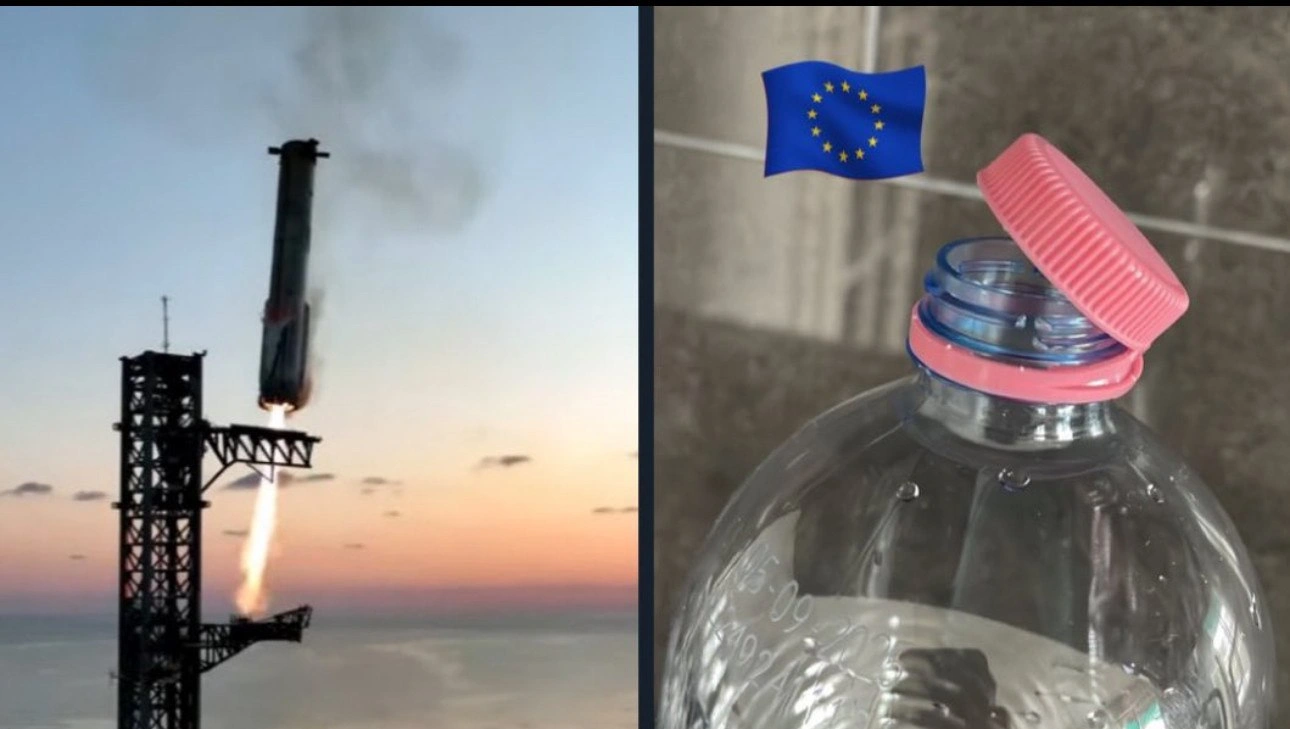
Now look at the meme’s two panels as analogies. The left panel shows a rocket booster and a tower. In a typical rocket flight, a booster is a separate component: it might detach (decouple) and land on its own, maybe on a landing pad or a drone ship, independent of the launch tower. That’s like a modular design – the booster can function separately when it’s time to land. But here we see a very different scenario: the booster is coming down into the launch tower itself, where mechanical arms are waiting to catch it. In other words, the landing process is forcibly coupled to that specific tower. The booster isn’t allowed to just independently plop down wherever; it must interface with the tower’s “chopstick” arms to be recovered. In software terms, imagine a piece of code (the booster) that cannot run or complete its task without calling a very specific service or component (the tower). It’s tightly bound by design. If that one expected service isn’t available, our poor code is out of luck – just like if the tower’s arms fail, the rocket has no Plan B.
The right panel has the plastic bottle and its cap on a tether. Normally, you can unscrew a bottle cap completely and separate it from the bottle. That’s like decoupling – the cap and bottle are independent objects once the cap is off. But due to a new EU regulation, bottle caps are now designed to stay attached even after you open the bottle. There’s a little plastic strip or hinge that keeps them from falling away. The bottle and cap become essentially one combined unit. In software, that’s akin to two modules being packaged together whether you want it or not. For example, think of a library that automatically pulls in a dozen other packages that it always needs to work; you can’t just use the one thing – you get the entire bundle attached. Or consider if someone wrote your code such that the front-end interface is permanently tied to a specific database engine. If you try to use a different database, everything breaks, because the original design assumed they’d always come as a pair. Dependencies like that act just like the plastic tether on the cap: they enforce attachment.
In real development, we often use principles and patterns to avoid this scenario. You might have heard of SOLID principles in object-oriented design – the "D" in SOLID stands for Dependency Inversion Principle, which is a fancy way of saying "depend on abstractions, not concrete things." This helps reduce coupling by making components interact through interfaces, so they’re not tightly bound to each other’s inner workings. Another common practice is using Dependency Injection frameworks that allow swapping out implementations easily (like plugging in a different database or a mock service for testing). All these techniques aim to keep parts of a system flexible and detachable. When we ignore those practices, we might end up with something like a giant monolithic application where everything is intertwined. That’s when developers groan about DependencyHell – a state where updating one component triggers a cascade of issues in others, because they’re all stuck together by design.
Let’s connect it back to deployment (the process of releasing new code into production). In a loosely coupled architecture (say, microservices done right), you could deploy the user service independently from the payment service. They communicate via an API, so as long as the API contract doesn’t break, you can update one without redeploying the other. This is like being able to replace the cap on a bottle with a new cap if needed, or open bottles separately. But if your architecture has forced coupling, you might have to deploy everything at once in a big bang. Think of a scenario where a company’s login system is hardcoded to always work with a specific version of the account system. If one changes, both must be released together. Deployments in such a setup are nerve-wracking – one glitch and you might have to roll back the whole monolith. That’s our DeploymentPainPoints. It’s as if every time you wanted a drink, you had to also open all the bottles in your fridge at once because their caps are chained together. It sounds silly, but in software we sometimes end up with similarly clunky processes because of design decisions that bind components too tightly.
So, the meme’s two pictures are RealWorldAnalogies for this concept. The rocket and tower show a high-stakes example of hardware coupling: an entire rocket booster’s fate is tied to a specific piece of ground equipment. And the bottle demonstrates a mundane but widespread example of a design mandate enforcing coupling: a law literally making sure the cap can’t go off on its own. Both are trying to solve particular problems (improving rocket turnaround and preventing litter, respectively) by mandating attachment. As a young engineer or developer, it’s a reminder: when you design systems, be mindful of how much you tether components together. Sometimes there’s a good reason, but you should always ask, “Do these pieces really need to be permanently attached, or can we allow some independence?” Your life (or your users’ convenience) might be easier if things can decouple cleanly when needed.
Level 3: Chopstick Catch-22
This meme highlights a painful truth in software architecture: when design mandates enforce tight coupling, engineers end up with absurd, over-engineered solutions and deployment nightmares. On the left, we have a rocket booster descending into the clutches of a launch tower’s mechanical arms (SpaceX’s so-called "chopsticks" catcher). On the right, an ordinary plastic water bottle has its cap tethered by a little plastic strip, flying the EU flag proudly. At first glance, these two images seem unrelated, but together they poke fun at the same concept – being forced to keep things attached whether it’s practical or not. It’s a satirical take on architectural coupling: the rocket that can’t detach from its tower, and the cap that can’t part from its bottle, just because some rule or design said so.
For seasoned developers, this lands as achingly familiar humor. We all know the anti-pattern: some external requirement or overzealous architect dictates that components must remain glued together, even when every instinct screams for loose coupling. The result? An OverEngineering extravaganza. In the rocket’s case, SpaceX eliminated the booster’s landing legs to save weight (a smart trade-off on paper), but now they must precisely catch a falling rocket with giant steel chopsticks. It’s an insane feat of engineering – and an insanely coupled landing mechanism. One failure in the tower, and the whole booster goes boom. In software terms, that’s like removing a simple plugin system and instead wiring two services so tightly that if one isn’t perfectly in place, the other crashes spectacularly. We’re basically looking at a spaceflight version of a distributed monolith – two separate pieces (booster and tower) that are supposed to be independent, yet the design mandates they operate as one unit. Senior devs nod knowingly here: this is the microservices equivalent of sharing a single database and deployment schedule, turning your “independent” services into Siamese twins. 🤦♂️ (Yes, we’re face-palming, but also laughing.)
The right panel, with that tethered pink bottle cap, is a real-world regulation turned running joke in engineering circles. The European Union decreed that plastic bottle caps must stay attached to bottles after opening (to curb littering). The intention is noble – just like management’s intentions when they insist “All modules must use the same library X” or “Every component has to start up together for security compliance.” But the EngineeringAbsurdity is evident: now you have caps awkwardly flopping around when you drink, a minor annoyance introduced to solve a larger environmental issue. In software, we’ve all dealt with analogous edicts: e.g., “Thou shalt not deploy service A without service B, ever.” It might solve one problem (maybe data consistency or version sync), but it creates a rigid system where deploying or updating anything induces DeploymentAnxiety. It’s a classic trade-off: you gain one kind of safety while sacrificing flexibility and simplicity. Seasoned devs have endless war stories of these trade-offs gone wrong. Maybe a compliance rule forced all microservices to share a common runtime that constantly broke, or an architectural principle dictated every feature be in a single repository (hello, monolith) when separate repos would have avoided DependencyHell. We laugh at the meme because it’s easier than crying – it’s RelatableHumor born from real pain. Every flame shooting from that landing rocket and each dangling bottle cap feels like a reminder of the times our deployments were on fire due to one-size-fits-all design rules.
Ultimately, the meme’s juxtaposition is a tongue-in-cheek critique. It says: “Look what happens when you force things to stay coupled!” A rocket ends up doing a daredevil circus trick just to land, and a bottle gets a fiddly new cap design – all because someone high up (cough an architect or regulator) decided nothing should detach. It’s the DependencyHell of real life, and we’ve all been there in code. Seasoned engineers appreciate this dark irony. We know that good architecture is about balancing trade-offs. Permanent coupling might solve one problem (no lost caps, no heavy rocket legs) but it introduces many others. The humor comes with a side of wisdom: maybe not every grand mandate is a good idea, and sometimes the freedom to decouple is worth a little mess. The meme exaggerates that lesson brilliantly, using a literal rocket and a literal bottlecap to represent our software woes. Senior folks can practically hear the subtext: “This spec sounded good on paper, but in practice… well, enjoy the show.”
Description
A two-panel meme contrasting two different engineering solutions. The left panel shows a SpaceX Falcon 9 rocket booster executing a successful propulsive vertical landing on a platform at sea, with flames and smoke billowing from its engines against a sunset sky. This image represents a monumental achievement in aerospace engineering and reusability. The right panel shows a close-up of a clear plastic water bottle with a pink cap. An emoji of the European Union flag floats above it. The cap is permanently tethered to the bottle's neck by a small plastic hinge, a design mandated by a recent EU directive to reduce plastic litter. The meme humorously juxtaposes a highly complex, celebrated feat of private-sector innovation with a simple, regulation-driven design that is often criticized by consumers for being awkward and having a poor user experience. It satirizes the perceived disconnect between ambitious, problem-solving engineering and bureaucratic, sometimes user-hostile, mandates
Comments
69Comment deleted
SpaceX proved you can land a rocket on a drone ship. The EU proved you can design a bottle cap that pokes you in the eye. Both are technically 'attached,' but one feels slightly more impressive
Enterprise spec: “Use microservices, but mandate every component stays ‘permanently attached for traceability.’” Congrats, you’ve just EU-bottle-capped a rocket - now go land the monolith with chopsticks
While we're solving the N-body problem in real-time to land a 50-meter tall rocket on a chopstick, the EU's greatest engineering mandate is ensuring developers can't lose their bottle caps during late-night debugging sessions. At least now our technical debt comes with permanently attached hydration solutions
Apparently it's easier to achieve orbital velocity and land a 120-meter rocket booster on a floating platform than it is to implement a GDPR-compliant cookie banner that doesn't make users want to throw their laptop out the window. At least SpaceX's engineering complexity serves a purpose - meanwhile, we're out here building Rube Goldberg machines just to track whether someone clicked on a cat video. The real moonshot? Finding that 'Reject All' button buried three layers deep in a modal that loads slower than the actual page content
Loose coupling looks great on diagrams; in prod it’s EU tethered caps and SpaceX chopsticks - if a component can drift, compliance or gravity will refactor it
SpaceX booster recovery: pixel-perfect sims and thrust vectoring. Post-Brexit data flows: just peel the label and pray for no adequacy decision debris
Catching a booster is just PID tuning; shipping an EU‑approved, always‑attached consent banner that keeps Core Web Vitals green, works across 27 locales, and survives rollback is the real distributed‑systems boss fight
well, I guess both is a win Comment deleted
oh, my dad hates these caps with a PASSION Comment deleted
Once i bought milk from France. These caps are bullshit Comment deleted
Joke about smaller caps in EU? Comment deleted
backwards ass countries keep the cap attached to the ring to "reduce littering" Comment deleted
They just care about people who are sitting their asses 25 hours a day on gaming chairs by adding a forceful little exercise of having to rip the cap off to drink (otherwise the cap will annoy you every time) Comment deleted
bold of you to assume they excercise, only thing they can open is a monster energy can Comment deleted
I mean that's what remote work does to people, sooner or later you'd wanna drink sparkling water (and you'd fight the cap for it) Comment deleted
Cmon, almost regular size Comment deleted
I actually love this caps Comment deleted
Same, it's much more convenient to have the cap stay attached instead of having to think about where to put it before I can actually use the bottle Comment deleted
Yep, exactly Comment deleted
This is amazing! Apparently there are people for whom "where to put the cap while pouring from the bottle" was a problem. Comment deleted
I don't get it Comment deleted
Are we political now? Good. Stop EU bullshit Comment deleted
Who cares that the design was left up to bottle designer industry? Comment deleted
no shit, the one invent the lid may be genius, but the management approve this shit is something else. Comment deleted
I don't get it. Ok, EU uses "convenient" bottle caps. But where is the linkage to starship? Is it about pollution? If it is, i still don't get it Comment deleted
Everybody hates those caps. Because they are shit the ripped plastic spikes poke your lips and when you try to close the bottles it never winds in in the correct way. They ruined a hard wired reflex in my brain by making it useless and now I actually have to be reminded that they did this every time Comment deleted
US: Innovation! EU: Bureaucracy Comment deleted
Innovation at the cost of safety and consumer rights while exploiting the working class Comment deleted
sounds like communist propaganda but ok Comment deleted
flash news, communism hasn't been a thing for decades now. Maybe you should start worrying about the right issues instead of tilting at windmills Comment deleted
I'm sure "making sure caps are attached to bottles" is among "right issues". Comment deleted
I mean, at least it's something more concrete than fucking COMMUNIST PROPAGANDA Comment deleted
You see, everything a certain political affiliation doesn't like is inherently socialist communism marxism wokeness Comment deleted
Only when it’s forced by the government though I mean, if it’s really convenient for many, why to force companies to do it and why it’s not a thing (almost?) anywhere outside EU Comment deleted
I wonder... Do you realize that "sounds like communist propaganda but ok" is a meme? Comment deleted
And making money from "advertisement and spying" labeled as "targeted advertisement" Comment deleted
Yeah, lots of western recycling just goes into shipping containers to get shipped out to those countries rather than actually deal with it. It all used to go to China, then China had national sword and said they don't want to be the world's trash heap. So Philippines does it instead Comment deleted
Yes Comment deleted
Is europe in rest of the world? Comment deleted
I collect plastic for recycling and hate to peel of those caps, because there are separate containers for them, they don't belong to the plastic bottles bins Comment deleted
everything goes to one bin except caps - they going out the window or into the sea if possible Comment deleted
huh? Comment deleted
They did it, on the first attemp! (and 5th test flight overall) Comment deleted
Cock size fight. Can you just stop? I would win anyway. Comment deleted
Are you "every time you fap your cock grows by 1mm" believer? Comment deleted
oh really? then why ISS is not shot down by my rod yet ? Comment deleted
Cuz the statement is obviously false Comment deleted
It doesn’t I can show you proof. I already made a website just for this. The domain is big foot proof dot com Comment deleted
Oh boi I'm not into judging cocks, but I'm sure there is someone in the chat who'd want to rate it.. probably Comment deleted
Lmfao Comment deleted
Oh really? it's all Asia Comment deleted
oh yeah americans don't waste at all just what I expected from these statistics Comment deleted
It's the amount of trash that ends up in oceans. Some countries, while generating tremendous amount of trash, are able to keep the trash contained to designated areas called landfills, recycle or use some other waste treatment technologies in order to not pollute the oceans. Comment deleted
maybe they export the trashes Comment deleted
It shouldn't be pressed against my lips in the first place lol Comment deleted
Maybe they wanted to joke about eu by undervaluing ecology as assholes against some of the fascist Musk "goals" instead of valuing things like a public eu based AI produced mainly in the Barcelona Supercomputing Center. Or maybe I'm wrong 🤪 Comment deleted
Meanwhile Nintendo in the EU Comment deleted
I have one or two Games Like that Comment deleted
Yeah its about the plastic waste Comment deleted
Piracy is Environment friendly 🔥 Comment deleted
Facts Comment deleted
HELL YEAH! Comment deleted
Piracy is great ^^ Comment deleted
wtf Comment deleted
bro, nintendo are faggots EVERYWHERE Comment deleted
So, they did it on purpose? That is not a manufacturing defect and I can stop tearing these caps off. Comment deleted
It's for eNvIroMenT. I hate those caps when i buy imported stuff Comment deleted
I like them because that means I don't lose or fumble the caps anymore. but nobody ever talks about the people who like them. Comment deleted
I proceed to tear them off either way Comment deleted