Skip to content
DevMeme
3107 of 7435
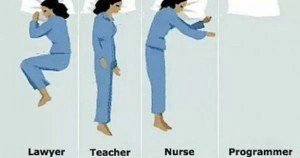
Programmer Sleep Position: 404 Not Found
MentalHealth Post #3424, on Jul 16, 2021 in TG

Programmer Sleep Position: 404 Not Found

Why is this MentalHealth meme funny?

Level 1: Dreaming in Code

Imagine you spent your entire day doing one thing – say, building a giant LEGO castle from morning until night. When you finally go to sleep, you might even dream about LEGO bricks! This meme is funny in a similar way: it shows a programmer who has been coding so much that even while sleeping she looks like she’s still typing on a computer. It’s like when you play your favorite video game for hours and then at night you see the game in your dreams, or your fingers twitch as if pressing the controller. Here, the programmer lady’s arms are stretched out as though her brain forgot to hit the “off switch” at bedtime.

The joke is basically saying: programmers work or think about their work so constantly that they can’t stop, even in sleep. It’s a silly picture – nobody really types while they’re asleep (at least, we hope not!) – but it feels true emotionally. It makes us laugh because we know what it’s like when you just can’t get your mind off something. Maybe you’ve had a big school project or a puzzle that you kept thinking about even when you were supposed to be resting. You might wake up and realize you were dreaming about doing homework or playing that puzzle. That’s what’s happening here. The programmer is shown in “work mode” at a time when she should be resting. It’s a fun way to tease how hard-working (or overly focused) she is. Everyone else – the lawyer, teacher, nurse in the other panels – is also shown doing something related to their job in their sleep, which is goofy. The programmer’s pose is just the most extreme (flat on her stomach reaching out, as if her pillow is a laptop).

So, in very simple terms: the meme is funny because it’s absurd. Nobody actually keeps typing in their sleep, but it feels like that when you’ve been doing too much of something. It’s a reminder that people sometimes need to relax and take a break. Even if you love coding (or anything) a lot, you shouldn’t be doing it 24/7. Otherwise, you’ll end up like this cartoon – so wired into your work that even your dreams are just more work! It makes us chuckle and maybe think, “Okay, time to close the laptop and get a real rest, before I start sleep-typing too.”

Level 2: Infinite Loop at Night

Let’s break down the meme in simpler terms. We have a four-panel image showing how different professionals sleep, and the programmer is the funny one because she looks like she’s still working while asleep. In her panel, labeled “Programmer,” the woman in pajamas is lying on her stomach, face on the pillow, with her arms stretched out front as if a keyboard were under her fingers. Basically, she fell asleep typing (or dreaming about typing). This visual gag connects immediately with anyone who’s pulled an all-nighter on the computer. It exaggerates the idea that developers spend so much time coding that even when they go to bed, they can’t shut it off.

Now, why is this relatable to developers, even those just starting out? One reason is the common experience of sleep deprivation in tech. Sleep deprivation means not getting enough sleep, often because you’re staying up late. New programmers might first encounter this in college or coding bootcamps, working on projects until dawn. Maybe you’ve experienced a night where you were so deep into fixing a bug or learning a new framework that you lost track of time. The next day, you feel like a zombie. This meme takes that feeling and plays with it: the programmer is literally acting out coding in her sleep. It’s a wink to the idea that after a certain point of tiredness, coding becomes life — you eat, dream, and literally sleep code.

Another term this joke brushes against is burnout. Burnout is a state of extreme exhaustion (mental, physical, emotional) from overworking and stress. Early in a developer’s career, it’s easy to think “I just need to push a bit harder, finish this feature, then I’ll rest.” But often, one late night leads to another, and soon you’re running on empty. The programmer in the cartoon clearly didn’t know when to stop; it’s a cautionary image of burnout – she’s so drained that even in sleep she’s stuck in work mode. In real life, if you catch yourself dreaming about work every night or waking up thinking about code, it might be a sign you need a break. People even joke about "coding dreams" or nightmares about missing a semicolon (;). This is partly humor and partly a genuine mental health concern. We, as developers, sometimes wear lack of sleep as a badge of honor (“I was up until 4 AM solving this!”), but it’s actually something to be careful about.

The meme also brings up the idea of work-life balance. Work-life balance means having a healthy boundary between your job (work) and your personal time (life). For a programmer, good work-life balance would mean that after a day of coding, you log off, relax, maybe play a game or read, and then sleep peacefully. But here we see the opposite: the work has invaded the personal space (quite literally into the bed and dreams). The other professions shown – lawyer, teacher, nurse – are also humorously taking their work to bed, which suggests this is a broader joke about being dedicated (or over-dedicated) to your job. However, it’s especially tongue-in-cheek for programmers because of the stereotype that we code at all hours. There’s even a light suggestion of a “nocturnal coding” habit – meaning coding at night. Many developers do find they work late at night either out of necessity (deadlines, on-call duties) or preference (night is quiet and free of meetings). But if it goes too far, you get what’s illustrated: a situation where you physically mimic coding in your sleep.

For someone new to the developer community, it’s useful to know this meme is exaggerating a real trend in tech culture. There are tales of developers falling asleep at their desks or keeping a laptop by the bed “just in case” inspiration (or an urgent issue) strikes. We tease about it, but it highlights the need for better habits. Some work-life balance tips that get tossed around include things like: set a strict shutdown time for your computer, avoid checking code or emails in bed, and make sure to get those 7-8 hours of sleep. Why? Because studies – and plenty of personal anecdotes – show that coding while exhausted leads to more errors. You might think you’re being extra productive by not resting, but in truth, a well-rested developer writes better code in less time than a totally burnt-out one. The meme uses humor to communicate this: the image literally illustrates a lack of rest causing the person to act out work unconsciously.

In simpler technical terms, think of your brain like a computer. It needs downtime to process and reset, kind of like how a computer uses sleep mode or shuts down to cool off. If you never give it a break, it’s like running a program in an infinite loop—eventually something will crash or slow to a crawl. In code, an infinite loop might look like:

while True:
    pass  # loop that never ends, doing nothing forever

If your mind runs like that, looping over the day’s problems with no end, you never truly rest. The programmer sleeping posture in the meme is a humorous visualization of a brain that never left coding mode. For a junior dev, it’s a funny reminder: passion is great, hard work is expected, but don’t forget to step away from the keyboard (both literally and figuratively!). The meme resonates because most developers, at least once, find themselves lying in bed thinking about code. It’s a shared relatable experience – funny on the surface, with a gentle lesson underneath about not overdoing it.

Level 3: Not So RESTful Sleep

Even experienced developers smirk (and maybe cringe) at this meme because it hits on an all-too-familiar reality: coding has no off switch. The cartoon compares how different professionals sleep, and the programmer is depicted face-down, arms outstretched toward an invisible keyboard. Essentially, the poor dev is still typing in her dreams. This absurd sleep posture exaggerates a truth in tech culture: many of us have spent so many late nights in front of glowing screens that when we finally collapse into bed, our bodies literally stay in "coding position". Other jobs in the meme (lawyer, teacher, nurse) are shown humorously acting out work too, but the developer lifestyle takes it to another level. The lawyer curls up (maybe stress in fetal position), the teacher stands as if mid-lecture, the nurse reaches out like checking a patient. But the programmer? She’s fully prone, reaching to type on an imaginary keyboard. It’s the most extreme case of nocturnal coding. The implication is clear: devs eat, sleep, and breathe code – emphasis on "sleep code".

Why is this funny to a senior engineer? Because it’s painfully relatable. We’ve all had those marathon coding sessions where you finally stumble to bed at 3 A.M., only to find your brain still debugging some elusive bug while you drift off. The humor is a bit dark: it highlights how work-life balance can completely evaporate in software development. In theory, we preach separating work from personal life, but in practice it's common to have production issues or an addictive side project keep our minds running in an infinite loop. The meme exaggerates it to a literal physical posture—hands twitching like they’re on a keyboard—even during supposed rest. A cynical veteran dev chuckles at this and thinks, "Yep, been there. After 14 hours of coding, I wake up still optimizing that algorithm in my dreams." It's the Developer Tetris Effect: spend all day immersed in code and you'll see code when you close your eyes. We joke that we can "code in our sleep," and this meme turns that idiom into a visual gag.

This joke also lands because of the well-known developer crunch culture. Seasoned engineers remember (all too well) the death marches before a big release or the 2 A.M. on-call pages for a production outage. After enough back-to-back late-night deployments and emergency fixes, your brain gets stuck in overdrive. You might literally dream in syntax or imagine your IDE every time you blink. The meme’s programmer pose — face planted on the pillow with hands out — looks just like someone who keeled over on their keyboard. How many of us have nearly done that after chasing a persistently failing unit test or a memory leak at ungodly hours? :sweat_smile: There’s also an implicit poke at how developer productivity is often measured by commitment (no pun intended) and hours logged. Some tech workplaces heroize the dev who pulls an all-nighter to commit a hotfix. But the flip side is developer burnout: when you’re so exhausted that even in sleep your mind is still on call, grinding away on problems. This cartoon is funny because it’s true, but it’s also a bit of a mental health red flag wrapped in humor. It whispers what many in the industry know: if you never unplug, eventually your brain will blur the line between work and rest—just like this unconscious coder who hasn’t mentally logged off.

From an insider perspective, the meme also jabs at our pride and the absurdity of it. Think about it: coders often brag in jest, "I’m so good I can code in my sleep." Here that boast is turned on its head — it’s not skill, it’s obsession (or obligation). The relatable developer experience behind this is coming home after a long day, but your head is still refactoring that spaghetti code from the office. Or maybe you’re a passionate programmer with a personal project, and you code until you literally drop. Dreaming about code isn’t always voluntary; sometimes it’s your stressed brain trying to solve a problem off the clock. There’s a famous anecdote that physicist Dmitri Mendeleev saw the periodic table in a dream — well, plenty of programmers have solved a tricky coding bug in a dream too, only to wake up and realize the solution was either brilliant or complete nonsense. 😅 The point is, our subconscious often keeps running like a background thread. In OS terms, you might call it a daemon process that never truly stops. Thread.sleep() is a programming command to pause a thread, but in real life, the developer’s "thread" refuses to sleep soundly. In fact, insomnia-driven development could be a tongue-in-cheek name for this phenomenon. It’s funny because we recognize the trade-off: we push ourselves beyond healthy limits, and then pretend to be amused that we "work even while asleep".

It’s worth noting how each profession in the meme embodies a stereotype: the teacher can’t stop giving lessons, the nurse can’t stop caring for others, the lawyer... maybe can't escape the stress (hence curled up). But the programmer panel is the punchline because tech folks have a special reputation for late-night grind. It hints at the stereotype of the hoodie-wearing coder hacking away till dawn, or the gamer-developer who never leaves their chair. The image of a developer literally sleeping in a coding posture is ridiculously spot-on. It's the ultimate portrayal of having zero work-life separation. And underneath the laughter, it resonates as a subtle critique: perhaps our industry glorifies this too much. We chuckle, then think, "Hmm, maybe I should actually get some proper sleep tonight." The meme circulates in developer humor circles precisely because it’s a comical mirror—showing us our own bad habits in a lighthearted way. A senior dev laughs, but also sighs knowingly, recalling those overcaffeinated nights where the IDE dark theme burns into your retinas and follows you into your dreams. In short, the meme is hilarious because it takes the idea of sleep deprivation among coders to cartoonish literalism. It’s absurd, relatable, and a tiny bit tragic all at once.

Description

This is a four-panel image comparing the sleeping habits of different professions. The first three panels depict a woman in blue pajamas sleeping in various positions, labeled 'Lawyer' (curled up), 'Teacher' (straight as a board), and 'Nurse' (partially sitting up, reaching out). The fourth panel, labeled 'Programmer', shows an empty bed with only the pillow remaining. The humor lies in the stereotype that programmers have a non-existent or erratic sleep schedule due to demanding deadlines, late-night coding sessions, or being on-call for production issues. It's a relatable commentary on the 'always-on' culture often found in the tech industry and the mental toll it takes, leading to burnout and poor work-life balance

Comments

11
Anonymous ★ Top Pick The programmer's bed is empty because a cron job that has run flawlessly for 5 years suddenly failed at 3 a.m. for no discernible reason
  1. Anonymous ★ Top Pick

    The programmer's bed is empty because a cron job that has run flawlessly for 5 years suddenly failed at 3 a.m. for no discernible reason

  2. Anonymous

    When you’ve been on-call long enough, REM sleep just spawns an interactive shell: elbows mapped to vim, forehead on Esc, and you only wake when prod finally exits 1

  3. Anonymous

    The real reason we moved to serverless: it's the only architecture that matches our sleep pattern - sporadic, event-driven, and billed by the millisecond of actual consciousness

  4. Anonymous

    The programmer panel is empty because they're either debugging a production incident at 3 AM, waiting for CI/CD pipelines to finish, or stuck in an infinite loop of 'just one more commit.' Sleep is just a TODO comment that never gets prioritized in the backlog - perpetually marked as 'nice to have' but consistently deprioritized for 'critical' features that somehow always ship on Friday afternoons

  5. Anonymous

    My sleep implements eventual consistency - it converges only after the 3am PagerDuty flaps stop and the midnight batch finally becomes idempotent

  6. Anonymous

    Nurses stand up; programmers get context-switched straight from REM into root-cause analysis

  7. Anonymous

    Our circadian rhythm runs with eventual consistency; PagerDuty enforces exactly-once delivery at 03:00 UTC

  8. @t02x2 4y

    Many nurses are having night shifts and are not in bed

  9. @symptom9 4y

    Programmer are on chair

    1. @ZgGPuo8dZef58K6hxxGVj3Z2 4y

      Yeah or couch

  10. @zniczaczka 4y

    Sorry, guys

Use J and K for navigation