That lonely Raspberry Pi still waiting for its first real project
Why is this EmbeddedSystems meme funny?
Level 1: Lonely Gadget on a Shelf
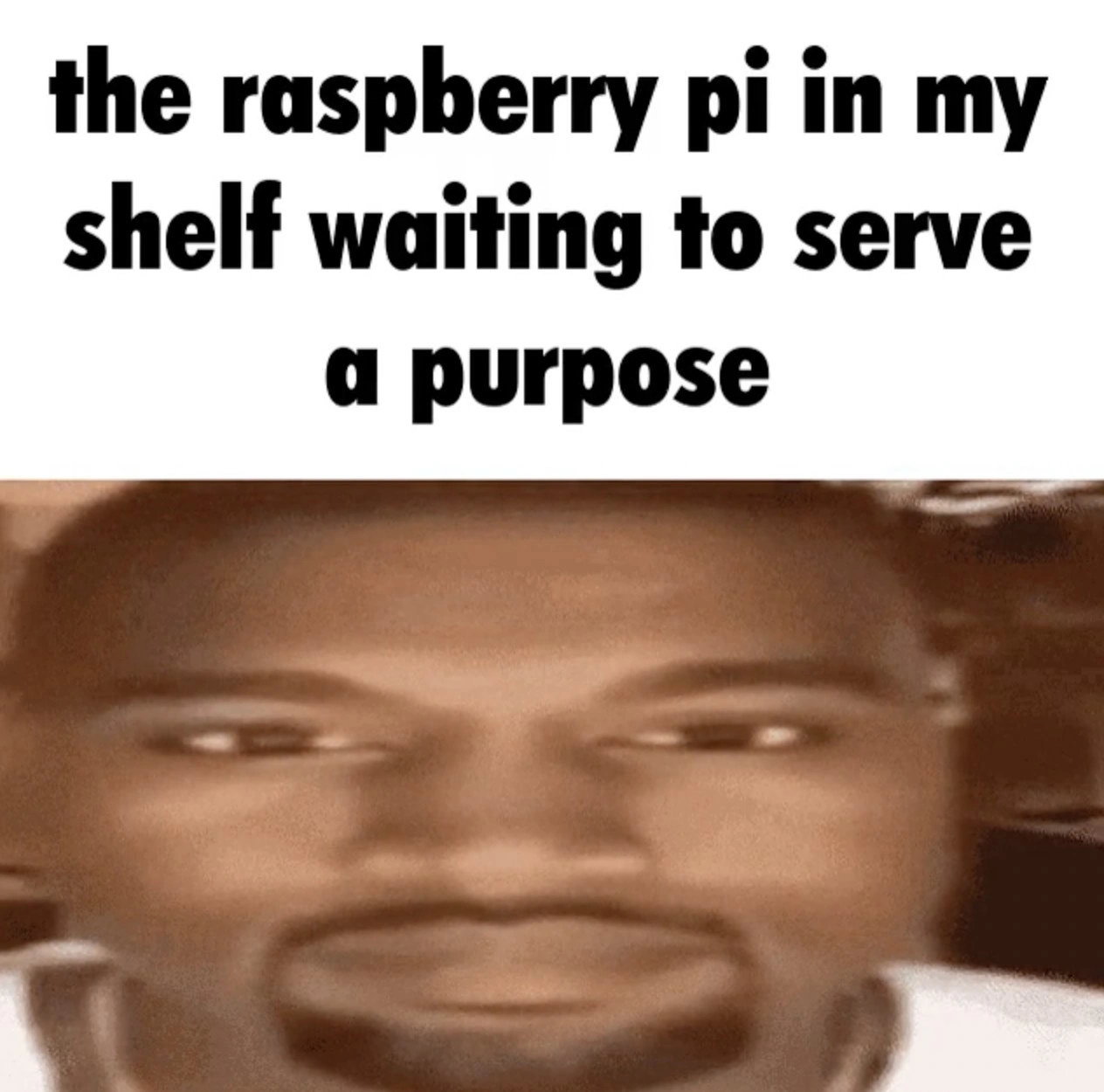
Imagine you begged for a cool new toy – say a remote-control robot kit – and you were so excited to play with it. You get the toy, open the box, and then… you leave it in your room and never actually turn it on. It just sits on your shelf, day after day, waiting for you to play. It even gets a bit dusty because you haven’t touched it. This meme is joking that the Raspberry Pi (a small gadget developers buy to make fun projects) is just like that lonely, unused toy. The text is basically the Raspberry Pi saying, “I’m still here, ready to do something great whenever you are!” The picture of the person with a blank, patient stare is like the Pi’s face, waiting without moving. It’s funny and a little cute because we’re giving the gadget a personality – a super patient friend who’s bored but still loyally waiting for playtime. The big joke is that many tech lovers have gadgets they were excited about but never used, so the Raspberry Pi becomes the little buddy on the shelf, dreaming of the day it finally gets to join the fun.
Level 2: Single-Board Blues
Let’s break down the joke in simpler terms. The Raspberry Pi is a tiny computer on a single circuit board – about the size of a deck of cards. It’s a big deal in hobby electronics and IoT (Internet of Things) because it lets people create smart gadgets. Think of IoT projects like a weather station that tweets temperature, or a homemade security camera that sends alerts to your phone. The Raspberry Pi can do all that! It runs a full operating system (usually Linux), and you can connect wires to its GPIO pins to control lights, motors, sensors, etc. In other words, it’s a flexible little tech toolkit for EmbeddedSystemsAndIoT tinkering.
Now, the meme text says: “the raspberry pi in my shelf waiting to serve a purpose.” It’s joking that this powerful little computer is just sitting on a shelf, not being used at all. Developers and makers often buy a Pi with big plans – we call these Raspberry Pi projects or DIY builds. Maybe you intended to build a smart mirror or a retro arcade emulator. You were excited, you got the hardware… and then, well, nothing happened. The Pi ended up not being used – like a screwdriver never taken out of its package. The phrase “waiting to serve a purpose” treats the gadget like a person patiently waiting for a job or mission. It’s funny because we don’t usually think of gadgets having feelings, but here we imagine the Pi is bored and lonely on that shelf.
This is very common in the tech hobby world. Beginners especially get super excited seeing YouTube demos of robots or home automation and say “I want to do that too!” They buy the single-board computer and maybe some sensors. At first, everything is fun: you plug it in, see the little green LED light up, maybe install some software. But then you hit a learning curve. Perhaps the project requires some soldering, or the code is harder than expected, or you just get busy with school or work. The Raspberry Pi ends up on standby, sometimes indefinitely. Among developers, it’s a lighthearted joke: we have these unused gadgets from our impulse_hardware_purchase moments. There’s even a term “shelfware” to describe things (usually software, but here hardware) that you bought but only sit on the shelf. This meme uses a popular reaction image of someone staring blankly to represent the Pi’s endless patience. The HardwareHumor here is basically: “Look at this poor little powerful computer, just sitting there doing absolutely nothing, waiting for me to actually do that cool project I promised.” If you’ve ever had a device or tool you meant to use but never did, you’ll smile in recognition.
Level 3: Silicon Shelfware
This meme hits home for anyone in Embedded Systems or the MakerCulture who’s ever made an impulse hardware purchase. It spotlights that all-too-familiar scenario: buying a Raspberry Pi (a popular credit-card-sized single-board computer) with grand IoT ambitions, only to let it gather dust. The text “the raspberry pi in my shelf waiting to serve a purpose” says it all. We have a tiny super-capable Linux machine idling away on a shelf, effectively becoming shelfware (hardware or software bought with good intentions but never actually used). The humor comes from the absurd contrast between the Pi’s potential and its reality.
In the world of EmbeddedSystems and DIY InternetOfThings projects, a Raspberry Pi can be a mini web server, a home automation hub, a robot brain – you name it. Enthusiasts flood online forums with ambitious RaspberryPiProjects: garden sensors, retro gaming consoles, even Kubernetes clusters made of Pi boards. But as seasoned developers know, side projects often stall. The meme’s image – a motionless, blank-staring face – perfectly represents the Pi’s “mood” as it sits there indefinitely. It’s as if the device itself had feelings, staring out from the shelf with infinite patience and mild disappointment. We chuckle because we’ve been there: the Pi’s quad-core ARM CPU and GPIO pins are ready to run code and control gadgets, yet the only thing it’s controlling is the accumulation of dust.
Why is this so relatable? HardwareHumor like this exaggerates real developer habits. Many of us have a drawer of unused_dev_kit boards or a Raspberry Pi we swore we’d use. Perhaps you installed Raspbian (the Pi’s OS), ran sudo apt-get update once, and even blinked an LED as a smoke test. But then reality hit – free time vanished or the project turned out more complex than expected (soldering circuits and writing Python scripts is fun until it’s 2 AM on a work night). The Pi ends up in a perpetual holding pattern, waiting for you to return and give it a real job. It’s RaspberryPiWaiting, indefinitely. Consider this tongue-in-cheek “pseudo-code” for the situation:
# Raspberry Pi patiently waiting for a project
while True:
raspberry_pi.idle() # no project started yet
shelf.collect_dust() # dust accumulates as time passes
From a senior developer’s perspective, the meme also pokes at TechHumor in planning versus execution. Starting an IoT project seems straightforward – you imagine hooking up sensors, writing neat Python scripts, and automating your home. But integrating hardware and software can be daunting. GPIO pins throw voltage quirks, Python libraries require specific OS packages, and that “weekend project” snowballs into a month-long endeavor. The Raspberry Pi’s unused state is a bit of a running joke in the community. Even companies experience this on a larger scale: countless IoT proofs-of-concept never make it to production, becoming corporate shelfware. In the meme, the Pi’s blank stare (borrowing from a well-known reaction image) mirrors our own guilt and bemusement: “Hey, remember me? I’m still here, ready whenever you are.” This blend of enthusiasm and procrastination is exactly why the image resonates – it’s a snapshot of the optimistic MakerCulture colliding with everyday reality.
Description
Meme with a plain white background and large, bold, black text at the top that reads: “the raspberry pi in my shelf waiting to serve a purpose”. Beneath the caption (the central area is partially blurred in the provided image) is a reaction image of a motion-less character sitting still and staring forward, visually conveying extreme patience and boredom. The joke targets developers and hardware tinkerers who impulsively buy single-board computers like the Raspberry Pi for ‘future projects’ that never actually get built, poking fun at typical maker/IoT enthusiasm that turns into shelf-ware. Technically, it references embedded systems prototyping, DIY home-automation ambitions, and the common hardware-hobbyist issue of idle components collecting dust
Comments
6Comment deleted
My Raspberry Pi has survived four reorgs, two cloud migrations, and the entire Log4Shell saga, yet its only production workload is still keeping the dust distributed evenly - shelfware-as-a-service
My Raspberry Pi has outlasted three Kubernetes migrations, two cloud providers, and one company acquisition. At this point it's basically enterprise-grade infrastructure by survival alone
Every senior engineer has at least three Raspberry Pis in various states of 'I'll definitely use this for that home automation/k8s cluster/retro gaming setup' - right next to the Arduino collecting dust and that FPGA board from 2019. The Pi isn't crying because it's unused; it's crying because it knows it'll be replaced by a Pi 6 before it ever gets flashed with an OS
Bought for the ultimate edge cluster; now it's the MVP of shelf real estate optimization
My Raspberry Pi on the shelf is my most reliable service - five nines, zero incidents, and a permanent Kubernetes NoSchedule taint since 2021
Bought to run Pi‑hole, Home Assistant, and a k3s control plane; it’s now the only node in my homelab with five‑nines SLO - exporting dust metrics to Prometheus