Skip to content
DevMeme
4371 of 7435
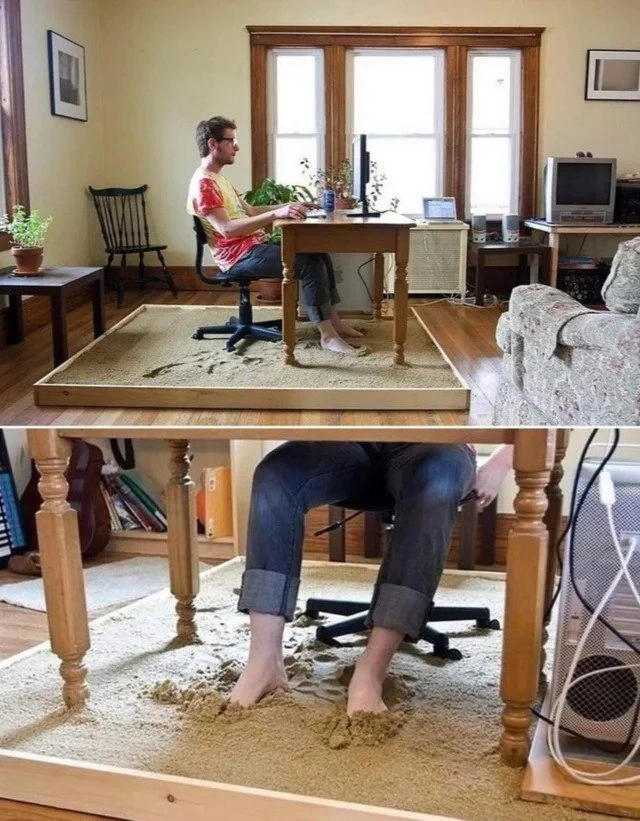
Taking 'work from the beach' literally with an indoor sandbox workstation
RemoteWork Post #4783, on Aug 13, 2022 in TG

Taking 'work from the beach' literally with an indoor sandbox workstation

Why is this RemoteWork meme funny?

Level 1: Make-Believe Beach

Imagine you have some homework to do, but you really wish you were at the beach playing instead. What if you could sort of pretend you’re at the beach while doing your homework? That’s exactly what this funny picture shows, but with a grown-up doing his programming job. He put sand in a big wooden box on his living room floor, right under his work desk. When he sits at his computer, his bare feet are in the soft sand, just like they would be at the beach. He’s basically pretending his home is a beach so that working feels more fun and relaxing. It’s a silly and creative idea: he can wiggle his toes in the sand whenever work gets boring or stressful. It’s funny because normally, people don’t bring the actual beach into their house! It’s like he’s playing make-believe – turning his office into a sandbox to feel happy, the way a kid might. The joke is that he took the phrase “working from the beach” and did it literally. It makes us laugh because we all understand wanting a vacation, and this guy found a playful way to have a tiny bit of a vacation vibe while still getting his work done.

Level 2: Beach in a Box

For those newer to developer life or just starting out, let’s break down what’s happening in this meme. The phrase “working from the beach” is usually meant figuratively – it implies you have the freedom to work remotely from anywhere, maybe even while on vacation. RemoteWork and WorkFromHome (WFH) became very common in recent years, meaning a lot of developers now work outside a traditional office (often from their living rooms or bedrooms). Companies and remote-work advocates sometimes paint a dreamy picture of this lifestyle: imagine writing code on a laptop under palm trees, toes in the sand, sipping a coconut water. It sounds amazing, right? Well, this meme shows a developer taking that idea extremely literally and humorously. Instead of actually moving his work to a real beach (which has many practical issues like glare and no power outlets), he created a beach_vibes_indoor setup – basically a mini beach inside his home.

How did he do that? The picture’s top half reveals a typical HomeOfficeSetup in a living room: there’s a wooden desk with a monitor and keyboard, a comfy rolling office chair, some houseplants, and a couch and TV off to the side. Everything looks normal for a home office… except the floor under the desk. The desk and chair are sitting inside a low wooden frame that’s filled with sand, just like a sandbox you’d find in a playground. It’s literally a box of sand on top of the hardwood floor. In the bottom image, we get a close-up: the developer has bare feet, ankles deep in this sand pit while he’s working at the computer. He even rolled up his jeans, just like you might at a real beach. Essentially, he built a “beach in a box” so that he can feel like he’s at the beach without leaving his house. This is a do-it-yourself makeshift_beach or sandbox_office_setup. It’s part practical joke, part personal comfort project. The DeveloperLifestyle angle here is that many coders love customizing their work area for comfort and inspiration – whether it’s multi-monitor battlestations, funky LED lights, ergonomic chairs, or in this case, actual sand for a touch of seaside relaxation.

Let’s explain a few terms and why this is funny to the tech crowd. First, sandbox: in everyday life, a sandbox is a wooden box filled with sand where kids play. In the tech world, a “sandbox” can also mean a safe testing environment for software – a place where you can run code without affecting the real system. This meme plays on both meanings. The developer made a literal sandbox for his feet, which is a goofy physical interpretation. It’s ironic because developers often talk about deploying code to a sandbox environment (meaning a dummy server or space to test things safely). Here our developer deployed himself to a sandbox environment! That wordplay is a big part of the humor for those in on the joke.

Next, DeveloperExperience (DX): this term refers to the overall experience a programmer has while coding – including tools, workflow, and even the environment. A good DX means the developer is comfortable, productive, and happy. In a real office, companies try to improve developer experience by providing things like quiet work areas, comfy chairs, or chill-out zones (some swanky tech offices even have game rooms or nap pods). With RemoteWork, developers take that into their own hands at home. This meme shows an extreme example of a personal DX improvement attempt. The thought process might be: working with your feet in warm sand could reduce stress, spark creativity, or just make the long hours of coding more enjoyable. It’s like bringing a little vacation into your workday to boost morale. There’s even some ergonomic reasoning here: some people use footrests under their desk to improve posture or comfort. Well, this guy basically turned his whole floor into a giant footrest made of sand. Sand can contour to your feet, which might actually feel nice and supportive (like a day at the beach for your toes).

Now, why is this funny and not something everyone is actually doing? Partly because it’s over-the-top and impractical in real life. Think about the consequences: Sand is messy! It can easily get tracked around the house, and electronics definitely don’t like sand or dust. In the photo, you can see the computer’s tower (the big PC case on the right) sitting on the floor next to the sand. Any tech newbie knows that fans inside that PC are constantly pulling in air to cool the components – you really wouldn’t want them pulling in fine sand grains. One careless movement and oops, the computer might literally eat sand. Also, a wheeled chair is meant to roll on a flat surface; here the wheels would just dig into the sand, so moving the chair is going to be a struggle. It’s all done for comedy and the comical mental image of “my home office is a beach now.” It exaggerates the lengths people wish they could go to feel relaxed while working. During long coding sessions or stressful crunch times, who wouldn’t want to imagine they’re actually relaxing on a beach? Some people play ambient ocean sounds or set a beach wallpaper on their desktop – this developer went a step further and made a remote_work_illusion you can touch with your toes! It’s an ultimate commitment to the bit.

In summary, to a junior developer (or anyone new to work-from-home culture), this meme highlights a fun part of DeveloperCulture: we love clever, literal twists on ideas and phrases. It’s poking fun at the WorkFromHome dream. Yes, you can technically “work from the beach,” but since that’s difficult to pull off, here’s a tongue-in-cheek alternative: bring the beach to your work. It’s both a joke and a kind of quirky wish fulfillment. Just remember, as cool as it looks, you might spend more time cleaning sand out of your house (and computer) than actually coding if you try this for real!

Level 3: Vacation Virtualization

At first glance, this meme is a playful study in RemoteWork wish fulfillment and creative DeveloperExperience (DX) hacking. An experienced developer can’t help but chuckle at the literal sandbox setup – it’s “work from the beach” taken to an absurd extreme. In the top panel, we see a fully equipped HomeOfficeSetup (desk, monitor, PC tower, rolling chair) plunked down into a giant wooden box of sand. The bottom panel zooms in to show the programmer’s bare feet happily feet_in_sand under the desk. This is hilariously impractical and yet weirdly relatable. Why? Seasoned devs know the tech industry’s glossy myth: “You can work from anywhere – even a tropical beach!” Companies love to tout WorkFromHome perks with stock photos of laptops by the ocean. In reality, coding on a real beach is a gritty nightmare (glare on the screen, sand in your keyboard, overheated laptop, spotty Wi-Fi). So what’s a resourceful engineer to do? Build a makeshift_beach at home, of course! It’s like the developer said, “Fine, I’ll virtualize my vacation.” Just as we use virtual machines or containers to simulate entire server environments, this dev spun up a sandbox_office_setup to simulate beach vibes indoors. The result is part ergonomic experiment, part physical_environment_hack.

From a veteran perspective, the humor also comes from the double meaning of sandbox. In software, a sandbox is a safe isolated environment for testing code. Here, our developer literally created an isolated sand environment around his desk – a real-world “sandbox mode” for work. It’s a pun that senior developers can appreciate: he’s running his work OS in a sandbox, literally. And speaking of DX (Developer Experience), it’s not just about fancy IDEs or fast build times – it extends to the workspace too. This individual has optimized his DeveloperLifestyle for maximum mental comfort, trying to trick his brain into feeling like it’s on vacation while debugging. It’s a bold productivity hack: sensory context switching. The cool sand between your toes might reduce stress during a hectic on-call day or while wrestling with that production bug. After all, who wouldn’t type more calmly with a mini beach at their feet and a houseplant or two as “palm trees” on the desk?

However, any battle-scarred engineer will also spot the practical caveats lurking in this funny scene. The PC tower and cable spaghetti are perilously close to all that sand – a recipe for hardware hazard. One stray toe flick or an excited swivel of the chair, and you’ve got sand in the PSU fan or lodged in the keyboard. (Experienced devs know that dust and sand are the natural enemies of electronics; imagine explaining to IT why your GPU heatsink sounds like a gravel grinder!) And speaking of chairs, a wheeled rolling chair on sand is comically non-ergonomic – those casters are going nowhere fast. This setup might require the agility of a developer-turned-surf instructor just to scoot closer to the desk. We also notice the developer’s rolled-up jeans, a subtle sign he’s aware things might get messy. It’s that classic engineer’s mentality: commit fully to the bit, but mitigate the risks (or at least your pant legs).

The meme resonates because it exaggerates a truth RemoteWork veterans know well: working from home can blur the line between work and personal life, so developers often get creative to make their environment enjoyable. We’ve seen elaborate gaming chair rigs, standing desks made from Ikea hacks, even indoor treadmills to stay active. But this ergonomic_experiment stands out for its pure whimsy. It lampoons the DeveloperHumor in striving for that perfect coding zen. It’s the ultimate remote_work_illusion – he’s physically still in his living room (note the hardwood floors and familiar furniture around), but mentally he’s trying to transport himself to a seaside paradise during stand-up meetings. Senior engineers might joke that this is what happens when you take “sandbox environment deployment” too literally, or quip that the code is more likely to compile if you’ve got beach mode enabled. It’s a reminder that even the most serious tech professionals have a playful side, especially when combating burnout or monotony. In the end, the absurdity itself is the point – it’s a humorous acknowledgement that working from home lets us break free of some conventions (shoes optional!) and sometimes that freedom manifests in delightfully unexpected ways, like turning a home office into a makeshift_beach. The TechHumor here comes from that mix of ingenious and ridiculous that every seasoned developer can appreciate. After all, if one can spin up a Kubernetes cluster with a single command, why not spin up a tropical vacation with a trip to the hardware store for sand?

Description

The image is split into two panels. In the top panel, a living-room-turned-office shows a developer sitting at a desk with a monitor, keyboard, mouse, and PC tower; the entire desk and rolling chair are placed inside a shallow wooden frame filled with beach sand, letting the worker sit barefoot while coding. Tall sash windows, houseplants, a sofa, side tables, and hardwood floors give the scene a typical home-office vibe - except for the unexpected sandbox occupying the center of the room. The lower panel zooms under the desk, revealing rolled-up jeans and bare feet digging into the sand while the person types, with the computer tower and cable clutter in view. No on-screen text is visible; the humor comes from the literal interpretation of “working from the beach,” poking fun at remote-work culture and the lengths developers will go to improve ergonomics and mental escape while working from home

Comments

6
Anonymous ★ Top Pick Infra asked for a sandbox “identical to prod,” so I provisioned one with actual sand - instant entropy, guaranteed state drift, and when the fans ingest enough grains we get free incident drills
  1. Anonymous ★ Top Pick

    Infra asked for a sandbox “identical to prod,” so I provisioned one with actual sand - instant entropy, guaranteed state drift, and when the fans ingest enough grains we get free incident drills

  2. Anonymous

    Finally achieved the same level of environment isolation as our microservices - my toes are in production while my brain is still stuck in staging

  3. Anonymous

    When the product owner said 'just spin up a sandbox environment for testing,' they probably didn't mean you should literally work in one. Though I'll admit, this setup does provide excellent isolation from production - no network connectivity issues when your feet are in actual sand. Just don't let anyone see below the desk during your next standup, or they'll realize your 'stable development environment' is anything but

  4. Anonymous

    The ultimate sandbox: perfect isolation, zero networking, and config drift buried six inches deep

  5. Anonymous

    Security asked for stronger sandboxing, so Ops containerized the developer - great blast‑radius control, but those toes keep mounting a persistent volume

  6. Anonymous

    Finally achieved environment parity: local is a sandbox, staging's the beach, and prod is quicksand

Use J and K for navigation