Skip to content
DevMeme
5621 of 7435
ProtonVPN Flags iOS App Store Issues in Brazil
Security Post #6168, on Aug 19, 2024 in TG

ProtonVPN Flags iOS App Store Issues in Brazil

Why is this Security meme funny?

Level 1: Missing from the Store

Imagine you go to your favorite toy store to buy a special toy – let’s call it the “privacy gadget” – that helps you play without anyone watching. This gadget was on the shelves yesterday, but today, in your town, it’s just gone. You ask the store manager what happened. They say, “We didn’t remove it! Maybe there’s a mistake in our system, or maybe the town officials quietly told us we’re not allowed to sell that toy anymore.” You’d probably feel confused and a bit suspicious, right? Is the shelf empty because someone made a mix-up, or did someone in charge secretly ban the toy?

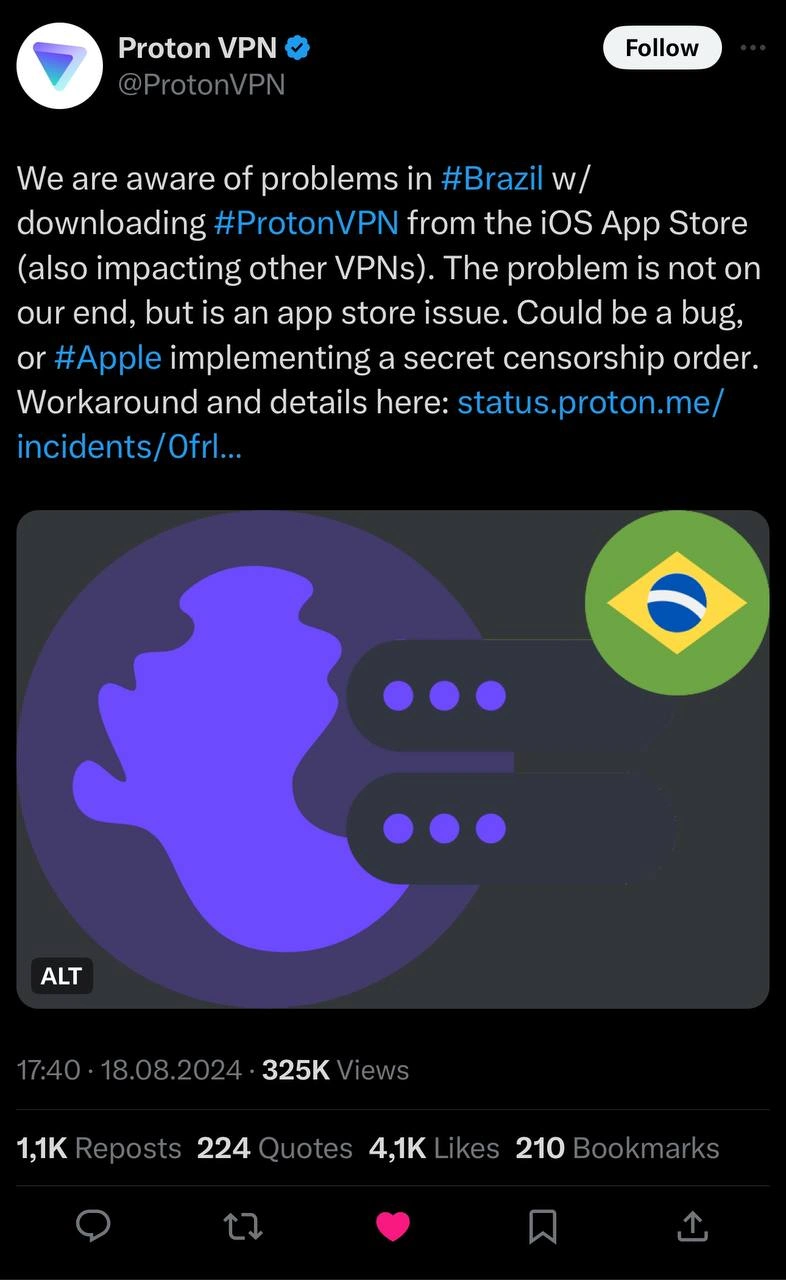
That’s exactly what happened with ProtonVPN’s app in Brazil. The “toy store” here is Apple’s App Store – the only place iPhone users normally get apps. One day, people in Brazil couldn’t find ProtonVPN (and similar VPN apps) there. It’s like the toy disappeared from the shelf in just that country. ProtonVPN basically told everyone, “Hey, we didn’t break or hide our app! It might be a mistake by Apple, or maybe the authorities told Apple to remove VPN apps quietly.” It’s a bit like not knowing if your toy is missing because of an inventory error or because a rule was made against it. Either way, people in Brazil just wanted their “privacy gadget” back on the shelf. The tweet is both informing and hinting: something strange is up, and until it’s fixed, users might have to try a different way to get their favorite app (like going to a store in the next town, so to speak). The humor of it all comes from ProtonVPN openly guessing the two extreme reasons – a simple oops or a secret ban – kind of like a kid whispering, “Maybe the teacher lost our game… or maybe she took it away on purpose!”

Level 2: Ban or Bug

What’s actually happening here? ProtonVPN, a popular Virtual Private Network (VPN) provider, found that people in Brazil couldn’t download their iOS app (and other VPN apps) from Apple’s App Store. Normally, if you own an iPhone in Brazil, you open the App Store, search ProtonVPN, and hit “Get”. But suddenly, that “Get” button was gone or grayed out specifically in Brazil. This wasn’t a planned removal by ProtonVPN – it was an app_store_issue outside their control. In simple terms, Apple’s app distribution system for iPhones glitched out in one region, making an entire class of apps (VPNs) unavailable.

ProtonVPN’s team quickly clarified, “the problem is not on our end.” That means they checked their app’s status – it wasn’t voluntarily pulled, no internal bug was stopping installs, and their own servers were fine. Instead, something with Apple was off. At this level, we consider two possibilities: it’s either a bug or a ban. The “bug” scenario means some technical error in Apple’s infrastructure accidentally prevented VPN apps from showing up in the Brazilian App Store. Think of it like a catalog error where a whole section of the store went missing due to a software mistake or a misconfiguration. For example, perhaps an Apple update to App Store filters mis-labeled VPN apps, causing a regional_app_store_bug that hid them in Brazil.

The other scenario – the “ban” – is more serious: ProtonVPN hinted it could be secret censorship. This implies that maybe the Brazilian government or a court quietly told Apple to remove or block VPN apps in Brazil. Censorship is when authorities restrict access to information or tools, often to control what people can see or do. A secret censorship order would be such a demand made behind closed doors, which Apple might feel compelled to follow without announcing it. Apple has, in other countries, geo-restricted certain apps to comply with local laws (for instance, removing some VPNs from the China App Store because they didn’t meet government approval). ProtonVPN openly raises this possibility, which is unusual – companies don’t often speculate about government bans unless they suspect it strongly. It’s basically saying, “If this isn’t a technical oops, maybe someone high up doesn’t want VPNs in Brazil right now.”

From a MobileDevelopment standpoint, this is a nightmare scenario. Developers rely on the App Store for distribution; there’s no easy alternative on iOS (no official app sideloading, unless you jailbreak your phone, which most users won’t do). If an app is removed or hidden in a region, users there simply can’t install it. It’s as if the product disappeared from the only supermarket that sells it. ProtonVPN’s tweet mentions a workaround and links to their incident status page (a site where they post updates about problems). A likely workaround for Brazilian users might be creating or using an Apple ID set to a different country, or using an existing installation to access updates. Essentially, they’re telling users how to get the app despite the block – a common practice when official channels fail.

Let’s break down a few key terms and elements in the meme:

  • ProtonVPN – A VPN service that encrypts your internet connection and can make you appear as if you’re browsing from a different country. Often used to enhance privacy or bypass local internet restrictions.
  • App Store (iOS) – Apple’s official store for iPhone and iPad apps. If your app isn’t on the App Store (or gets taken off it in a region), people using iPhones in that region have no standard way to install it. Apple strictly controls this gate.
  • OnCall_ProductionIssues – This tag suggests the scenario was treated like a production outage by Proton’s team. “On-call” means engineers are available 24/7 to tackle emergencies. A production issue is a problem affecting real users right now. ProtonVPN’s service might be up, but if new users in Brazil can’t get the app, that’s a serious incident for them.
  • BugsInSoftware – The tweet raises the possibility of a software bug. If it’s a bug on Apple’s side, it might be something wrong in the App Store’s backend or content rules that accidentally targets VPN apps. Software bugs are unintended errors – here it could be as simple as a wrong setting that excluded apps under the “Utilities” category (just an example, VPNs are often in that category) for Brazilian users.
  • Censorship_speculation – ProtonVPN is speculating about censorship. This means they have no confirmation, but given the nature of VPNs (which can be politically sensitive since they let users bypass government internet blocks), they suspect it could be a deliberate block. “Secret” implies no public statement by Apple or Brazil; it would be done quietly.
  • Brazil_geo_restriction – Geo-restriction means content (apps, in this case) being limited based on geography. Apple’s App Store allows limiting apps to certain countries. Here, it seems in Brazil the VPN apps were restricted, whether by bug or command.
  • Incident_status_page – The tweet ends with a link to Proton’s status page. Companies like Proton keep a status dashboard to inform users of ongoing problems. Listing this issue there means they consider it significant and want users to know they’re aware and tracking it. They likely posted details and any temporary fixes on that page (for example, “We are investigating why our app can’t be downloaded in Brazil. As a workaround, users can …”).

For a junior developer or someone new to iOS development, this situation is a lesson in dependency on platform providers. It shows why Security and Networking tools like VPNs sometimes face hurdles beyond pure tech – sometimes politics and platform policies come into play. ProtonVPN’s phrasing in the tweet is a bit provocative; saying Apple might be “implementing a secret censorship order” is strong language. They’re basically nudging their community to be aware that this might not just be a technical oops – it could be intentional. That’s a big deal because if it’s intentional, there’s not much Proton or users can do, except shine light on it and hope for change. If it’s a bug, public pressure (and awareness from Apple’s side) will hopefully get it fixed soon.

In summary, ProtonVPN’s app (and others like it) became unavailable in Brazil via the iOS App Store. Proton’s telling folks: “It’s not our fault. It’s either Apple messed up a setting (a bug) or Apple quietly pulled the plug on VPN apps in Brazil due to outside orders.” Both scenarios have happened in tech before, which is why even a junior dev can appreciate how precarious relying on a single distributor (Apple) can be. It’s a mix of technical problem and possibly a policy problem – the kind of situation where your debugging might involve reading news articles as much as server logs.

Level 3: Malice or Incompetence?

The scene: a VPN app suddenly vanishes from the iOS App Store in one country. Cue the senior engineer eye-roll 😑. In ProtonVPN’s case, users in Brazil woke up to find they couldn’t download any VPN apps from Apple’s walled garden. Proton’s on-call team probably went through the usual war-room checklist: Is our code signing certificate expired? Nope. Did we anger the Apple review gods? Unlikely (nothing new pushed). Then they check social media and see other VPN apps are ghosting in Brazil too. Ah – the plot thickens.

Now the official ProtonVPN tweet drops, dripping with cynical veteran energy: “Not on our end,” they insist, effectively saying “for once, we didn’t break anything!” They’ve narrowed it down to two classic root causes: a colossal App Store bug or a clandestine censorship order. In other words, either Apple’s system went haywire (again) or someone high up whispered “Psst, block those VPNs”. This is the kind of on-call nightmare that’s half technical crisis, half geopolitical thriller. Senior devs have a saying for such mysteries: Hanlon’s RazorNever attribute to malice that which is adequately explained by incompetence. But when you’re jaded from enough 3 AM incidents, you learn to consider both. Is it a glitch in Apple’s regional content servers, or did a government request flip a hidden kill-switch for VPN apps? Censorship_speculation is right – and neither answer is comforting.

The humor (tinged with horror) comes from that tweet wording: “Could be a bug, or Apple implementing a secret censorship order.” Imagine a corporate PR meeting where someone suggests maybe accusing Apple of secret censorship… and everyone shrugs “sure, tweet it.” It’s bold, almost conspiracy-theory level – not your typical bug report. But ProtonVPN knows their audience of tech-savvy, privacy-conscious folks will nod along. After all, VPNs exist to bypass censorship, so the irony of VPN apps potentially being censored by an App Store is rich. The tweet also hashtags #Apple and #Brazil, a not-so-subtle way of calling out the culprit (or at least grabbing Apple’s attention on social media). It’s like tagging the boss in a GitHub issue: part escalation, part public shaming.

From an industry perspective, this situation hits on a sore point of MobileDev: absolute dependence on platform gatekeepers. You can build the most secure, privacy-focused app, but if Apple’s App Store has a hiccup (or a hidden agenda), your users are locked out. It’s a classic OnCall_ProductionIssues tale – except the “production issue” isn’t in your production. You can’t exactly SSH into Apple’s servers and fix it. Instead, you issue a status page update, tell users about a workaround (perhaps “switch your App Store region” or use an existing install), and pray to the apple_review_team for mercy. It’s equal parts frustrating and comical: the fate of a security app being at the mercy of an opaque app marketplace.

To a seasoned dev, the real question is which is scarier:

  • A bug in Apple’s backend that accidentally flags all VPNs in Brazil? (We’ve seen weird cache invalidation and region code bugs bite before – one bad config push and entire app categories disappear like Thanos snapped.)
  • Or a secret government order forcing Apple to de-list VPNs, meaning this wasn’t a mistake at all? (Apple has complied with regional laws before – cough China VPN bans cough – usually announcing it. Secret_censorship_suspected here implies a hush-hush demand, maybe Brazil’s authorities quietly trying to curb VPN use.)

Either scenario, the ProtonVPN team is stuck playing detective and diplomat. They’ve effectively told users, “Hey, it’s not just us – the whole VPN bunch is affected. We’re as puzzled as you are.” That camaraderie softens the blame and taps into a shared indignation: if it’s a bug, Apple screwed up big time; if it’s censorship, someone’s messing with internet freedom. The tweet racked up 325K views and thousands of likes – clearly striking a nerve. It’s the DevOps nightmare where your phone blows up with alerts, but all you can do is file a high-priority ticket to an external vendor (Apple, in this case) and add a snarky update to the incident report. The meme-worthy part is how ProtonVPN just says the quiet part out loud – “maybe Big Brother’s involved” – something every grizzled engineer has joked about during inexplicable outages. In the end, whether it was Apple’s oopsie or a quiet crackdown, the senior devs are left shaking their heads: ProductionIssues that come from outside your production are the hardest to fix, and the easiest to rant about on Twitter.

Description

A screenshot of a tweet from the official Proton VPN account (@ProtonVPN) posted on August 18, 2024. The tweet addresses an issue preventing users in Brazil from downloading their VPN app, and other VPNs, from the iOS App Store. The text of the tweet reads: "We are aware of problems in #Brazil w/ downloading #ProtonVPN from the iOS App Store (also impacting other VPNs). The problem is not on our end, but is an app store issue. Could be a bug, or #Apple implementing a secret censorship order. Workaround and details here: status.proton.me/incidents/0frl...". The post includes a graphic with a purple stylized globe and connection icons, along with a circular emblem of the Brazilian flag. This content is a news item relevant to developers and users in the security, privacy, and mobile development space. It highlights the power of platform holders like Apple to control app distribution and raises questions about potential bugs versus intentional censorship, a sensitive topic in many countries

Comments

14
Anonymous ★ Top Pick When the App Store acts up, it's always a fun game of 'Is it a massive global deployment bug, or is a government just beta testing its new firewall?'
  1. Anonymous ★ Top Pick

    When the App Store acts up, it's always a fun game of 'Is it a massive global deployment bug, or is a government just beta testing its new firewall?'

  2. Anonymous

    Sev-1: ProtonVPN vanished from Brazil’s App Store. RCA checklist: ☐ Off-by-one in Apple’s region bitmask ☐ Secret censorship directive PM still wants an ETA - anyone know the velocity of geopolitical QA?

  3. Anonymous

    The classic 'it's not a bug, it's a feature' takes on a whole new meaning when your VPN mysteriously disappears from the App Store - turns out Apple's walled garden sometimes includes a moat with very selective drawbridges, especially when governments whisper sweet nothings about 'national security'

  4. Anonymous

    When your production incident involves geopolitical censorship but you're not sure if it's a feature or a bug in someone else's platform - the ultimate 'works on my machine' scenario, except it's 'works in every country except yours.' Nothing says 'distributed systems complexity' quite like debugging whether Apple's App Store is implementing secret government orders or just having a really bad day in a specific geographic region. At least they have a status page - most platform vendors would just gaslight you with 'no issues detected on our end.'

  5. Anonymous

    Zero-trust VPN, multi-region, five-nines - yet Brazil goes dark because the real control plane is the App Store’s country dropdown

  6. Anonymous

    We built multi-region, multi-cloud redundancy; forgot the real SPOF: the iOS App Store's Brazil storefront toggle

  7. Anonymous

    Apple's App Store: where even ProtonVPN hits a geo-fence thicker than its own encryption

  8. @Sp1cyP3pp3r 1y

    I love authoritarianism ❤️

    1. @Le_o_R 1y

      Dear Sp1cy P3pp3r, As I write this, I am very sad. Our president has been overthrown... AND REPLACED BY THE BENEVOLENT GENERAL KRULL. ALL HAIL KRULL AND HIS GLORIOUS NEW REGIME! SINCERELY, LITTLE FROG

      1. @Sp1cyP3pp3r 1y

        Hell yeah

      2. @callofvoid0 1y

        after overthrown... his agent broke in and took control

      3. @SamsonovAnton 1y

        Our democratically elected president has been overthrown by your nose-poking government, Lisa! 👌

    2. @hiareuok 1y

      I too love my apple overlord No other billion dollar company can preach so confidentiality that sideoading cannot be done for privacy and security concerns while using their power of basically owning peoples phones despite them paying for it to assist dictatorships stay in power by restricting ascess to information For example, this problem is entirely manufactured by apple and does not exist on any other major platforms (the apps get deleted from official stores, but can be installed anyway), but most will not blame apple

  9. @SamsonovAnton 1y

    Order 66, finally!

Use J and K for navigation