Programming Paradigms: From Mainstream Design to Advanced Security Exploits
Why is this Security meme funny?
Level 1: Small Bunny, Big Fear
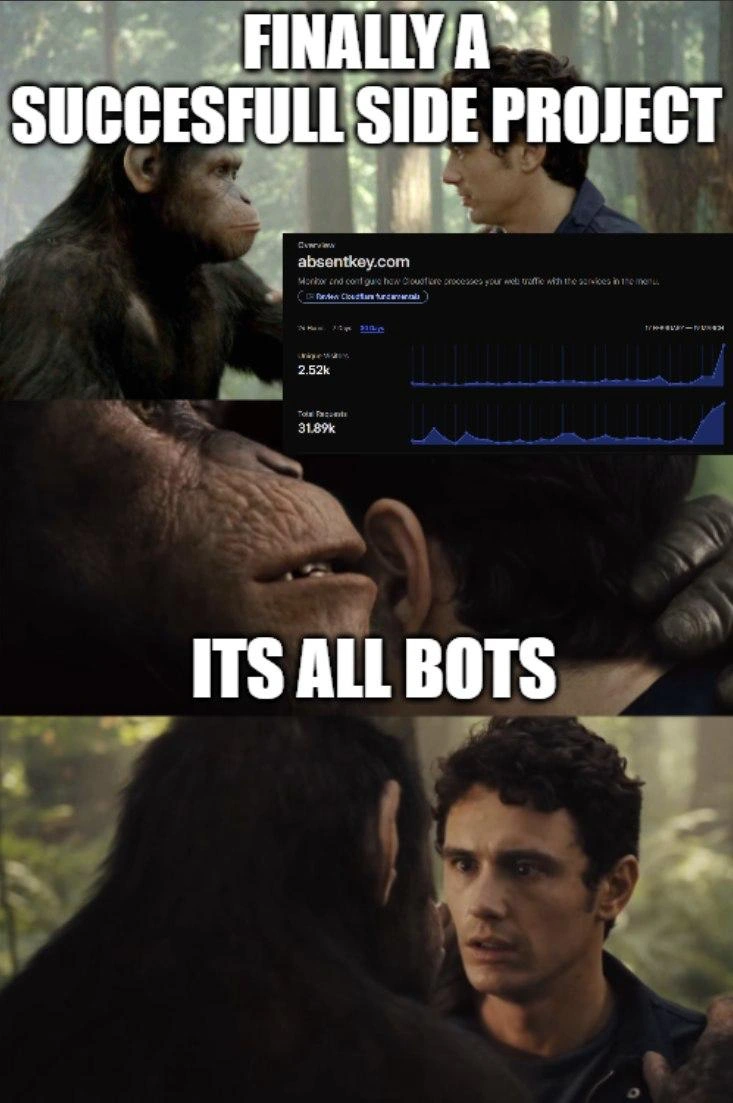
Imagine two kids who each love to play in their own special way. One girl loves to play house with her dolls, arranging them and giving each a role (she’s very organized!). A boy loves to play with his action figures, lining them all up in cool battle formations and sorting them by size and color (he’s all about the details!). Each kid is used to their way of playing and feels pretty confident they know all the tricks in their playroom. Now picture a tiny bunny rabbit hopping into the room. It looks so cute and harmless that you’d think the kids would want to cuddle it. But this isn’t an ordinary bunny – it suddenly does a crazy, unexpected trick. 🐇 For instance, the bunny sneaks over to the TV remote and turns the volume all the way up or flickers the lights on and off. The kids did not see that coming! They jump back, eyes wide, and huddle together in the corner, totally shocked and a little scared.
Why are they so frightened? Well, the bunny did something outside the kids’ rules of play. The girl with her dolls and the boy with his action figures each had their own comfortable way of doing things, and this little bunny just broke all those expectations in an instant. It’s as if the bunny found a secret cheat code to cause mischief that the kids didn’t even know existed. Seeing a tiny creature pull off something so sneaky and powerful is both funny and startling. Usually, you’d think a big monster might scare kids, but here it’s a tiny bunny causing a big scare.
This makes us laugh because it’s a silly role reversal – the small, cute thing has the upper hand, and the bigger kids are the ones looking helpless and alarmed. It’s like when you learn that a very simple trick can defeat a complicated game strategy: it’s surprising and a bit scary for the one with the strategy! In the end, the picture is joking that sometimes, in the world of make-believe (or in real life), something that looks little and harmless can actually be very powerful if it knows a trick that others don’t. The kids’ reaction – pressed into the corner, nervous – captures that feeling perfectly. So the humor is really about the surprise: tiny bunny, big fear. It’s a fun way to show that unexpected clever tricks can spook even the ones who thought they were in control.
Level 2: What "Oriented" Means
Let’s break down the terms in this meme, as if we’re newer developers hearing them for the first time, and connect them to what’s happening in the image:
Object-Oriented Programming (OOP) – This is a popular programming paradigm where code is organized around “objects,” which bundle data and behavior together. If you’ve coded in Java, C++, C#, or Python, you’ve definitely encountered OOP. You create classes (blueprints) and objects (instances of classes), and you design your program as a collection of these objects sending messages or calling each other’s methods. For example, in a game you might have a
Bunnyclass with attributes likefluffinessand methods likescareKids(). OOP is all about modeling things as objects to make complex software more manageable. In the meme, the girl pressed in the corner labeled “Object Oriented Programmers” represents developers who primarily think in terms of classes, inheritance, and objects. She’s the archetype of someone comfortable with high-level, abstract structures. Normally, such a programmer isn’t too worried about the nitty-gritty of memory addresses or CPU registers on a daily basis – she trusts the language runtime (like the Java Virtual Machine or the C++ compiler) to handle those low-level details.Data-Oriented Programming (DOP) – This term is a bit less mainstream than OOP, but it refers to a style (often called data-oriented design) where the focus is on the data layout and sequence of processing, rather than on objects. A data-oriented programmer thinks about how to arrange and access data in memory for efficiency. For instance, instead of having a hundred
Bunnyobjects scattered in memory (as you might in OOP), a data-oriented approach might use one big structure or two parallel arrays: one array for all bunny fluffiness values, another for all bunny energy levels, etc., so that iterating over them is cache-friendly and fast. This approach is common in performance-critical systems like game engines or high-frequency trading software, often using languages like C or C++ in a struct-of-arrays style. The boy in the corner labeled “Data Oriented Programmers” stands for developers who favor this approach – they might skip heavy class hierarchies and focus on processing large batches of data in tight loops. He’s likely comfortable with pointers and memory layout, more so than the typical OOP dev, but still within the realm of intended, structured programming. Data-oriented devs and object-oriented devs sometimes debate which approach yields better performance or clearer code. They’re different mindsets, but both are about writing programs in a relatively high-level sense (even if data-oriented folks go a bit closer to the metal for speed).Return-Oriented Programming (ROP) – Now, this one is not a paradigm for designing your software’s architecture at all. It’s a term from the field of computer security exploits. A “return-oriented programmer” isn’t writing an application, they’re manipulating someone else’s application (typically exploiting a bug in low-level languages like C or C++). Here’s the basic idea in simpler terms: imagine a bad actor finds a vulnerability in a program – say, they can overflow a buffer (write more data than they should, which starts overwriting nearby memory). One critical thing stored in memory is the return address for functions (the location to jump back to when a function is done). If an attacker can overwrite that return address, they control what code gets executed next. Traditional exploits might try to point that return address to some malicious code the attacker injected, but many modern systems prevent injecting and running new code (that’s the NX protection we discussed above). Return-oriented programming is the clever alternative: the attacker overwrites the return address with an address of a piece of existing code in the program – specifically a piece that ends in a
ret. That’s a gadget. When the function “returns,” it will jump to that gadget and execute whatever it does, then encounter theretat its end, which will then pop the next address off the stack… which the attacker also carefully set. So the program will “return” into another gadget. In effect, the attacker chains a bunch of these returns hence the name return-oriented. They are programming the flow of the program by using returns to hop between many small instruction sequences already present in memory. The bunny labeled “Return Oriented Programmers” in the image stands for those security folks or hackers who can pull off this stunt. It’s depicted as a tiny bunny because, to the untrained eye, return-oriented programming might look harmless or might not even be on the radar of a normal dev; it’s a small, niche concept. But the fact that it’s scaring the other two tells you that, once you do know about it, you realize how powerful it is – enough to terrify seasoned programmers who mainly work with objects or data structures in the usual ways.
In simpler terms: the meme is comparing programming paradigms (object-oriented vs data-oriented) with a hacking technique (return-oriented). The first two (OOP and DOP) are how you intentionally design and write code. The last one (ROP) is how someone else might exploit your code’s unintended weaknesses. Early in your career, you probably hear a ton about OOP (it’s taught in school, used in many projects) and maybe a bit about alternatives like data-oriented design if you delve into performance tuning. But return_oriented_programming is not something you’d encounter unless you wander into a cybersecurity class, do a CTF (capture-the-flag hacking contest), or read about how hackers craft exploits. It’s an advanced LowLevelProgramming concept buried down in assembly, far from the daily concerns of making a website or an app. That’s why the meme’s scenario is funny and relevant: it’s like two normal developers suddenly coming face-to-face with a hardcore hacker technique. The frightened looks on the OOP and DOP programmers in the picture? That’s exaggerating how a lot of developers feel when they first learn about exploits like ROP. They’re thinking, “Yikes, someone can do that to my program?!” The meme uses that reaction for comedic effect – a tiny bunny (so presumably “harmless”) labeled with a very techy exploit name, scaring the heck out of the big kids (the established programming paradigms). It’s a playful exaggeration of the knowledge gap: once you peek under the hood into computer security tricks, it can indeed be a bit scary and mesmerizing. But fear not – just as in the picture the bunny isn’t actually harming the kids (they’re just scared of the idea of it), learning about these exploits is ultimately empowering. It reminds junior devs that there’s always another layer of the stack to understand, and that seemingly esoteric topics like exploit development can have a big impact on the software we write.
Level 3: Paradigms in Panic
From a seasoned developer’s perspective, the humor here comes from paradigm comparison and a bit of shared terror. The image shows two children (pressed fearfully into a corner) labeled “OBJECT ORIENTED PROGRAMMERS” and “DATA ORIENTED PROGRAMMERS.” They’re cowering from a tiny black bunny on the floor labeled “RETURN ORIENTED PROGRAMMERS.” It’s absurd and delightful: object-oriented and data-oriented devs are usually busy debating design philosophies or which paradigm is superior for clean code or performance. Yet here they are, united in panic, confronted with something that isn’t even a standard paradigm for writing software at all – it’s a security exploit technique! The harmless_bunny_vs_scared_kids trope exaggerates how something that appears innocuous (a small bunny) can freak out even confident folks when they know its true power. Seasoned engineers recognize in this meme a tongue-in-cheek nod to how low-level hacking tricks can spook high-level developers.
Why would an ObjectOrientedProgramming guru or a data-layout performance expert be scared of a “return-oriented” bunny? It’s about comfort zones. Object-oriented programmers live in a world of classes, inheritance, and encapsulation. They think in terms of objects sending messages or calling methods – a fairly high-level abstraction provided by languages like Java, C++, or Python. Data-oriented programmers (often seen in game development or systems programming circles) focus on organizing data in memory for efficiency, worrying about cache lines, contiguous arrays, and minimizing pointer chasing. They might eschew some OOP abstractions in favor of structures-of-arrays and predictable data flow for speed. These two groups often have spirited discussions about which approach yields better software – a classic paradigm debate in our industry. But here’s the punchline: both paradigms sit on top of binary machine code ultimately, and a crafty exploit developer operating at that machine level can subvert any paradigm’s code if there’s a vulnerability. The return_oriented_programming bunny represents that crafty hacker mindset which leverages raw memory manipulation and CPU behavior (things usually abstracted away in high-level paradigms).
To an experienced developer, the meme evokes that “oh no, it’s that scary low-level stuff” feeling in a funny way. We’ve all seen those conference talks or blog posts about some hacker chaining returns and doing crazy stuff with registers, and it gives us chills. The OOP folks might jokingly clutch their UML diagrams tighter when they hear terms like buffer overflow or ROP chain. Data-oriented devs, who pride themselves on understanding memory, might still go pale imagining an attacker twisting their careful data structures via a memory exploit. It’s reminiscent of the Monty Python “killer rabbit” sketch – a fluffy bunny that turns out to be lethally dangerous. Here, the bunny is small (niche skill) but packs a punch far above its apparent cuteness. The children (the devs) are cornered, wide-eyed, as if thinking “What kind of monster is this?!”.
In real engineering life, security exploits like ROP have a way of uniting all developers in concern. An object-oriented Java developer and a data-oriented C++ game developer might not share much in terms of code style, but both will be equally speechless if a penetration tester demonstrates a ROP exploit against their application. It’s a great equalizer: no matter how elegant your design patterns or how optimal your data packing, a stack smash and a ROP chain can throw all that out the window by literally hijacking the control flow of your program. That contrast is comedic gold for those in the know. DeveloperHumor often plays on shared vulnerabilities (pun intended) and the idea that there’s always a bigger fish (or in this case, a smaller, sneakier bunny). The meme’s caption effectively says: “You think your programming paradigm is all-powerful? Well, this tiny exploit technique can make even the mightiest coder scream.” It’s hyperbole, of course – most devs aren’t actually screaming in corners – but it tickles the part of us that remembers the first time we saw a demo of a crafty exploit.
Security folks, the real “return-oriented programmers,” might chuckle too because they often feel underappreciated or misunderstood by application devs… until something goes wrong. Then suddenly the app devs look exactly like those kids: nervous, huddled, and very interested in what the security person has to say. It’s a gentle jab at how abstracted high-level programming can be – we feel safe in our higher languages and paradigms, forgetting that underneath lies bare metal logic that can be twisted in unintended ways. In summary, the senior perspective sees this meme as highlighting an industry inside joke: lowLevelProgramming tricks (like ROP chains) are both impressive and a little scary, enough to send even battle-hardened paradigm warriors into a comical panic. The paradigms that usually give developers confidence and pride quickly turn into paradigm panic when confronted with a exploit technique operating at a level they don’t usually reason about. That’s why the combination of those labels on that image is hilarious and so relatable to veteran programmers.
Level 4: Turing-Complete Bunny
At the deepest technical level, this meme alludes to the arcane magic of return-oriented programming (ROP). ROP is a notorious software_security_exploits technique where an attacker doesn’t write new malicious code in memory (since modern systems mark data memory as non-executable). Instead, they reuse existing code snippets already present in the program’s binary or libraries. These snippets are called gadgets – typically small sequences of machine instructions ending in a ret (return) instruction. By overflowing a buffer or otherwise hijacking the control flow, the attacker can overwrite the call stack with addresses of these gadgets. Each ret pops the next gadget’s address off the stack, so the CPU “returns” into the next gadget in sequence. In this way, the attacker composes a custom program out of the application's own pieces, a so-called rop_chain of operations. It’s like disassembling a toy and reassembling the parts into a new contraption – except the toy is a compiled program, and the new contraption can perform arbitrary malicious actions. This clever chaining can achieve Turing-complete computation (yes, in theory you can do anything, from arithmetic to system calls), all without injecting a single new byte of code! It’s low-level wizardry: an exploit development feat that treats the victim program’s memory like a buffet of pre-made instructions.
To appreciate the sorcery here, consider why ROP exists. Around the mid-2000s, security researchers formalized ROP to defeat NX (No-eXecute) and W^X memory protections. Traditional buffer overflow attacks used to inject shellcode (new assembly instructions) onto the stack and then execute it. But once systems started marking the stack as non-executable, that simple approach was largely foiled. ROP emerged as the ingenious workaround: if you can’t inject code, stitch together what’s already present. Every program and library has many little instruction sequences that end in ret; an attacker just needs to find the right gadgets that collectively perform the desired task. For example, one gadget might pop a value into a register, the next gadget might add two registers, another might call a system function, etc., with each gadget ending in a ret to advance to the next:
// Hypothetical ROP gadgets found in the program's binary:
0x401050: pop rax; ret; // Gadget 1: load value from stack into RAX, then return
0x401052: mov qword ptr [rbx], rax; ret; // Gadget 2: write RAX into memory at address in RBX, then return
0x401060: jmp qword ptr [rsp]; // Gadget 3: an indirect jump (could be part of a complex chain)
An exploit payload will overflow a buffer and overwrite a return address so it “returns” to 0x401050 first. That gadget executes (pop into RAX, ret), which makes the CPU jump to 0x401052 next, and so on. The attacker arranges the stack such that each ret finds the address of the next gadget (this chain of return addresses is literally on the stack, sometimes called a "ROP stack frame"). By the end, they’ve executed a series of operations that the original program never intended – possibly even invoking a system call to spawn a shell or disable security. It’s mind-bending: the attacker becomes a return oriented programmer, crafting a “program” out of someone else’s binary using only return instructions to hop between LowLevelProgramming fragments. No wonder this tiny bunny is labeled Return Oriented Programmer – it represents an entity that’s harmless-looking but harnesses deep control of the system’s execution flow.
This concept is academically fascinating and terrifying in practice. It proved that the fundamental abstraction of a call/return stack can be subverted. ROP chains can be Turing-complete (Shacham’s classic result) because a sufficiently rich set of gadgets (like move, logic, load, store, and control flow operations) exists in typical binaries. Essentially, any program that’s already loaded in memory becomes a scripting language for the attacker. Defending against it isn’t trivial: We introduced mitigations like ASLR (Address Space Layout Randomization) to randomize addresses and make finding gadgets harder, and Control-Flow Integrity checks to try to prevent illicit jumps, but ROP demonstrated a fundamental truth of systems programming – if an attacker can overwrite return addresses, the CPU will faithfully execute whatever sequence of returns you chain together. The meme’s harmless bunny is, in a sense, a CPU-level exploit development monster wearing a cute disguise, leveraging the very mechanism of function returns against the program. It’s a brilliant low-level hack that tends to leave high-level programmers in awe or dread, which leads us to the comedic juxtaposition in the meme.
Description
This meme uses a photo of two children, a young girl and a younger, crying boy, huddled together in fear in the corner of a room. A small, black rabbit is on the floor nearby. Text overlays categorize the characters: the girl is labeled 'OBJECT ORIENTED PROGRAMMERS', the crying boy is 'DATA ORIENTED PROGRAMMERS', and the seemingly harmless rabbit is 'RETURN ORIENTED PROGRAMMERS'. The setting appears to be a house interior, with light-colored siding on one wall and a pale blue wall on the other. A watermark for 'imgflip.com' is in the bottom left corner. The humor is multi-layered and targets an experienced technical audience. It contrasts two legitimate but different software design paradigms (Object-Oriented and Data-Oriented) with a term that sounds similar but is actually a dangerous security exploit. Object-Oriented Programming is mainstream. Data-Oriented design is a more specialized, performance-centric approach, hence the more stressed-out character. The punchline is that 'Return-Oriented Programming' is not a way to design software, but a sophisticated hacking technique used to hijack a program's control flow. The meme hilariously portrays the two design paradigms as being terrified of the security exploit, which is cleverly represented by the deceptively innocent rabbit
Comments
13Comment deleted
I told the junior dev our new service was based on return-oriented programming. He spent a week trying to implement it before I explained it's a security team thing, not a design pattern
We spent weeks bikeshedding over SOLID vs cache-friendly SoA; the pen-tester hopped in with a three-gadget ROP chain and bypassed the whole architecture like ASLR was a baby gate
The real power move is when your data-oriented code is so cache-friendly that the OOP architects start questioning their 17-layer abstraction hierarchies, while the security team quietly hopes nobody notices they've been using ROP gadgets to bypass ASLR since 2012
The real joke here is that while OOP developers are standing tall and data-oriented programmers are getting down to the metal for cache coherency, return-oriented programmers aren't actually writing code - they're chaining together existing instruction sequences to bypass DEP. It's the ultimate form of code reuse: exploiting the gadgets already in your binary. Though to be fair, after debugging a deeply nested OOP hierarchy with virtual inheritance, sometimes ROP gadgets feel more maintainable than the class diagram
OOP's embrace shows why DOP chokes on cache misses - while ROP devs know the real chains are gadgets, not hugs
While we argue inheritance vs composition, the return-oriented programmer is composing gadgets with your saved RIP
After two quarters debating OOP vs data-oriented for cache locality, the attacker shipped a ROP chain that turned our error handlers into gadgets
salary oriented programmers: Comment deleted
That's meeeee :3 Comment deleted
🥺 Comment deleted
What the duck is return oriented programming? Comment deleted
Exploit Comment deleted
Maybe they mean something else but I think they mean when you have a stack that you try to manipulate in ways it does what you program. So like “exploit programmer” Comment deleted