Skip to content
DevMeme
1863 of 7435
The Interview Promise vs. Production Reality
Career HR Post #2071, on Sep 21, 2020 in TG

The Interview Promise vs. Production Reality

Why is this Career HR meme funny?

Level 1: Too Much to Handle

Imagine you tell your teacher that you'll finish a big project or all your homework by tomorrow, and you say it very confidently. At that moment, you feel sure of yourself — kind of like a cool cat wearing sunglasses, saying "No problem, I can do it!"

Now fast forward to later that night. The project isn’t done, the clock is ticking, and you’re in your room surrounded by papers and books. You're trying to get everything done, but it's a lot. Your hair is a mess from running your hands through it, your eyes are wide because you're a bit scared you won't finish in time, and you’re really tired. You might even be thinking, "Why did I say it would be so easy? This is hard!"

In the meme, they show this with a cat. The first picture has a relaxed cat with a cap and sunglasses, looking super cool and calm. That’s you at the start, feeling confident. The second picture shows the same cat looking panicked — its fur is sticking out, and its eyes are big and nervous. That’s you the night before the deadline, feeling totally stressed out and overwhelmed.

It’s funny because the cat looks completely different in the "before" and "after" pictures, and we don’t usually see a cat looking anxious like a person might. It's a silly way to show a serious feeling. The joke is basically: "I said I could handle the pressure, but actually living through all that pressure was a lot harder than I thought!"

Even if you’re not a programmer, you can understand this. It’s like when you promise something will be easy but then you experience it and go, "Uh oh, this is actually really tough!" Everyone has moments like that, whether it's schoolwork, chores, or any challenge. The meme just uses a cute cat to make it entertaining.

So the lesson from the joke is: sometimes we think we can take on a ton of work or stress and be fine — like that cool cat acting all brave. But if we take on too much, we might end up frazzled and exhausted — like the same cat, but with wide eyes and no chill at all. It's a funny reminder to not underestimate hard work and to be honest about our limits. In the end, we’re all human (even the "cool cat" in the interview was human, metaphorically), and everyone can get overwhelmed if there’s too much pressure. The meme makes us smile about it, because we’ve all been that person who went from "I’m totally fine 😎" to "I’m so worn out 😩" faster than we expected.

Level 2: Crunch Mode 101

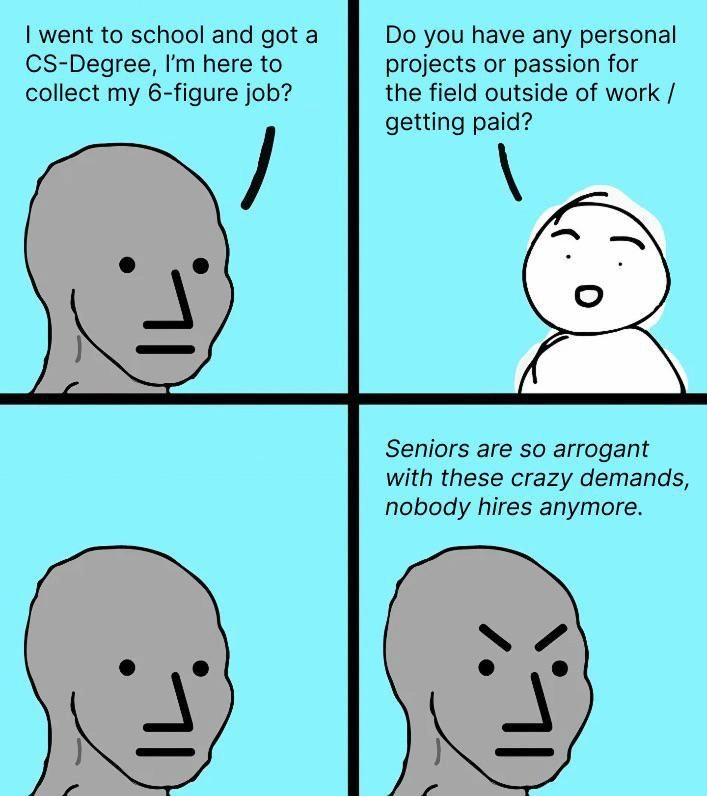
Let’s break down what’s happening in this meme. The setup is a programmer interview scenario. The top part shows the question: "Can you work under pressure?" If you’ve ever had a job interview (in tech or elsewhere), you know this is a common question. They want to find out if you can stay calm and productive when things get tough – for example, when you have a tight deadline or an urgent problem to fix.

In the left image, the cat answers, "Yes, of course." The cat looks super relaxed and confident: it’s wearing a backwards baseball cap and even has a pair of sunglasses hanging around its neck. It’s basically a cool cat. This represents the job candidate who’s trying to look confident and capable. In an interview, most people will say they handle pressure well (even if they're secretly a bit unsure) because they want to impress the interviewer. It’s kind of expected to answer that way – you don’t want to admit “No, I panic under pressure” when you’re trying to get hired! So the cat saying "Yes, of course" in a chill manner is the perfect visual metaphor for a programmer proudly claiming, "I’m fine with high-pressure situations; no big deal."

Now, the right image is labeled "3 months later." This implies that after three months on the job, things have changed. The same cat now looks completely different: its fur is messy, and its eyes are wide, almost cartoonishly so, giving an expression of shock or anxiety. This represents the developer after experiencing real work pressure for a while. The joke is that it only took a few months of real deadlines and workload to turn that cool, confident cat into an overstressed, frazzled cat.

Why would the cat/developer be so frazzled after 3 months? To understand that, let’s go over some of the concepts mentioned:

  • Pressure (at work): This means the stress you feel when you have a lot to do or high expectations to meet, often in a short amount of time. For example, if your boss says, "We need this whole app feature finished by end of week," you might feel pressure to hustle and get it done. Your heart might race a bit, you might worry about whether you can finish — that's working under pressure.
  • Sprint: In Agile software development (common in tech companies), a sprint is a short, fixed period of time (usually 1 to 2 weeks) during which a team plans and completes a set of tasks or user stories. Think of it like a mini-project with a deadline at the end of the sprint. Sprints are supposed to help teams deliver work consistently and frequently.
  • Deadline: A deadline is the due date or the latest time by which something must be completed. For instance, if the sprint is two weeks long, the end of that two weeks is the deadline for the tasks in that sprint. Deadlines can also be set for big projects (like "We must deliver this feature by October 1st").
  • Crunch time (or crunch mode): This is a period of intense work, typically right before a deadline, where everyone is working extra hard and often extra hours. Imagine you have a school project due tomorrow that you only started tonight – that late-night rush to get it done is you in crunch mode. In companies, crunch time might mean people stay late at the office, work weekends, and basically push themselves to finish a project on time.
  • Burnout: Burnout is what happens when someone has been under stress or working too hard for too long. It's a state of exhaustion (it can be physical, mental, and emotional). A burned-out developer might feel extremely tired, cynical or negative about the work, and lose the ability to concentrate or be effective. It's like running a machine nonstop without maintenance – eventually it overheats. People "overheat" too, in a way, when they never get a break from pressure.

So, in the meme, during those "3 months later," it’s likely that the developer (the person the cat represents) went through multiple sprints with tough deadlines. Perhaps each sprint ended up having more work than anticipated, or there were a lot of last-minute emergencies. In many tech teams, what can happen is something called scope creep – new tasks or features keep getting added (creeping in) even when you thought you were done, which means you suddenly have more to do than you planned. If the team is always in a rush, they might be in crunch mode every sprint, trying to pack too much work into too little time.

At first, a new developer might handle it by working extra hours, thinking "Okay, I’ll just push a bit harder to meet this deadline." They might drink a lot of coffee, stay up late debugging code, or work through weekends. But if this happens sprint after sprint, there's no chance to recover or rest. After 3 months of that, even a young, energetic programmer is going to feel the effects. That constant stress leads to burnout – which shows up as sheer exhaustion, lack of motivation, maybe even health issues like headaches or insomnia.

The meme uses the cat’s dramatic change in appearance to illustrate burnout humorously. In the first panel the cat looks cool, calm, and collected. In the second, the cat looks like it just saw something terrifying or had a meltdown – its eyes are wild and it looks disheveled. That’s a pretty good cartoon version of what burnout can feel like. In real life, a burned-out developer might not literally have messy hair and huge, buggy eyes like the cat, but they might have dark circles from lack of sleep, a slouched posture from fatigue, or just a kind of drained expression. The inside feeling is what the cat’s face shows: anxiety, overwhelm, and tiredness.

The text "3 months later" suggests this transformation happened quickly. Three months is not a long time in a new job – roughly a probation period or the end of a first big project. The joke here is that the developer thought they could handle it (and proudly said so), but the job turned out to be so continuously high-pressure that in a short time they went from confident to burnt out. It's an exaggeration, but not by much in some cases! Some workplaces really do run hot, and newcomers are often shocked at how stressed they feel after just a few months.

The watermark in the corner ("t.me/dev_meme") indicates this image came from a developer meme channel or group on Telegram. It's just the source and not part of the joke, so you can ignore it in terms of meaning. The main content is the interview question and the two cat images with captions.

So why do developers find this meme funny enough to share? It’s a mix of relatability and irony. Relatability, because many people in tech have had a moment where they realize, "Wow, I'm actually really stressed out by all these deadlines... but I told everyone I could handle it." And irony, because saying "I work well under pressure" sounds like a strength, but if a job keeps you under pressure constantly, it's actually a recipe for disaster. It's the classic case of expectations vs. reality:

  • Expectation (Interview): "I'm a rock star who can handle anything, bring on the pressure!"
  • Reality (Job): "I haven't slept properly in a week, this is rough."

For someone early in their career, this meme is almost a light-hearted cautionary tale. It's telling you: be careful what you promise, and take care of yourself. Everyone wants to be a team player and handle tough deadlines, and indeed sometimes you will have to. But if a workplace is always like that, it's not you failing – it's the situation that’s unhealthy. The meme uses humor to highlight that difference.

The tags like InterviewHumor and WorkplaceHumor are there because the meme is clearly about a funny (ironic) situation in a job interview and then in the workplace. DeveloperHumor and CodingLife tags indicate this is an inside joke for those who write code for a living – though honestly, anyone who’s had a stressful job can get it. And tags such as UnrealisticDeadlines and MentalHealthInTech show that underlying the joke is a real issue: tech industry folks often deal with very tight timelines, and it can affect their mental well-being.

In summary, the first panel is the set-up: a confident promise during the interview. The second panel is the punchline: reality coming back to bite, with the person overwhelmed by the nonstop pressure of the job. The image is funny because a cool-looking cat turning into a distressed cat is an absurd, cute way to depict something serious. And it resonates with developers, because many have thought "Sure, I can take the heat!" only to find themselves thinking "This is fine 😅... this is fine... right?" as the workload piles on. This meme says, "We’ve all been there," and it does so with an adorable animal visual, which makes a tough topic a bit easier to laugh about and discuss.

Level 3: Sprint to Burnout

Interviewer: "Can you work under pressure?"
Candidate: "Yes, of course."

Those are famous last words in a programmer's career, and this meme captures exactly why. In the first panel, a cat in a backwards cap (with ADAWG embroidered on it) and cool round sunglasses confidently answers that dreaded interview question. The cat looks unfazed, the epitome of being "cool under pressure." It's basically every developer trying to land a job, assuring the team they can handle chaotic deadlines and intense deadline pressure with a smile. We all say it – partly because if you don't, you might not get hired – but also because we often believe it about ourselves, at least in theory.

Fast forward "3 months later" (as the second panel says), and reality hits like a production outage on Friday night. The same cat now appears with fur sticking out in disarray, eyes wide and pupils dilated in panic. The smug cap and shades are gone. This once chill feline looks like it just spent a week chasing memory leaks and missing sleep. DeveloperBurnout has entered the chat. The humor here comes from that before-and-after whiplash: in such a short time, constant pressure turned our "I got this" cool cat into a frazzled, exhausted wreck. It's funny because it's true – many of us have lived that transformation (maybe not as visibly as meme-cat, but pretty close around the eyes).

The meme pokes fun at a common industry pattern: crunch culture. In an ideal world, software teams follow Agile principles and plan work in manageable sprints. A sprint is supposed to be a 1-2 week mini-project with a realistic scope so the team can maintain a sustainable pace. In fact, one Agile principle is "sustainable development, able to maintain a constant pace". But here's the rub: many companies still treat every sprint like a do-or-die mission. Features get over-committed, unrealistic deadlines get set, and any buffer gets eaten up by last-minute changes (hello, scope creep!). The result? Continual pressure with no breathing room. The first panel's relaxed cat is what management expects after you said you handle pressure; the second panel's panic-stricken cat is the inevitable outcome when that pressure never lets up.

We can translate the meme's unspoken truth like this:

Interview Boast Reality Check (Few Sprints In)
"Tight deadlines? No problem." Burnt weekends and late-night coding.
"I never crack under pressure." Debugging a 2 AM production issue in tears.
"I thrive in stress." Burnout and a serious caffeine dependency.

In other words, what a developer promises in an interview often collides with how things play out in real life. The cat's transformation illustrates the difference between saying you can handle constant stress and actually living under it continuously. Everybody is fine handling a bit of pressure during a crunch once in a while – it's practically part of the job to occasionally deal with urgent bug fixes or a big release. But when "crunch time" becomes all the time, even the best engineers go from "No worries, I got this!" to "Please make it stop." The meme uses dark humor to highlight that disconnect. The text "3 months later" is especially biting: it implies it didn't even take long for the nonstop sprint grind to break the developer's spirit. Just a few cycles of high-pressure deadlines were enough to turn a cool cat into a nervous, burnout cat.

Why is this so relatable (and funny) to developers? Because we've all seen the gap between interview optimism and on-the-job reality. Often, during interviews, companies hint with a question like "Can you work under pressure?" which really means, "Our environment is high-paced and demanding; are you okay with that?" And of course you reply, "Yes, of course," thinking of the occasional adrenaline rush or late-night push. Little do you realize it might be the everyday mode of operation. Veteran engineers might even smirk internally when they hear a newbie cheerfully say they love pressure – they know that look in the second panel is coming. It's an industry in-joke: saying "I work well under pressure" can be like volunteering for the toughest, messiest projects. Management hears "this person can take it" and often responds by dumping more on them.

In a healthy project, constant fire-fighting and heroic last-minute saves are signs something's wrong (maybe poor planning or loads of technical debt). However, many tech workplaces fall into a rhythm of perpetual urgency. It's almost a badge of honor in some teams to pull all-nighters and "crush those deadlines." But as this meme hints, the real crushing is happening to the developers' morale. The second panel's cat with its shell-shocked expression is basically the embodiment of a developer after too many 12-hour days. It's workplace humor with an edge: we laugh, but it's a tired, knowing laugh.

To illustrate the cycle in code, consider this tongue-in-cheek pseudo-code:

if (candidate.claimsWorkWellUnderPressure) {
    team.assign("ImpossibleProject", candidate);
}
// ... after 3 months of sprints ...
assert(candidate.burnout === true);  // It was bound to happen

In human terms, "Can you work under pressure?" often translates to "Are you willing to live in a pressure cooker?". The cat said "Yes" and thus was entrusted with high-pressure tasks sprint after sprint. It's a bit of a trap: those who say they handle pressure get more pressure thrown at them. That can spiral until even the toughest developer is overwhelmed. The code above facetiously asserts that burnout is the predictable result – and, sadly, that rings true in many real scenarios.

The before/after contrast of the cat is a classic meme format that drives the point home. In frame one, you have the idealized image (the slick, "I've got everything under control" persona). In frame two, you have the reality (the same person unraveling under sustained stress). It's exaggerated for comedic effect, but not by much! After several continuous crunch cycles (imagine back-to-back sprint deadlines, surprise features dropped in, maybe a midnight on-call incident or two), a developer's outward calm can vanish. Instead of the cool sunglasses and swagger, you get the wide-eyed look of someone running on 4 hours of sleep and too many energy drinks. The "3 months later" cat looks like it's about to either start sobbing or type gibberish – which is exactly how a burned-out developer feels when the pressure becomes too much.

Importantly, the meme touches on MentalHealth in tech. Burnout isn't just a buzzword; it's a real state of physical and mental exhaustion from continuous stress. The categories listed (Interviews, Deadlines, MentalHealth) clue us in that this image combines workplace comedy with a real issue: constant pressure can wreck a developer's well-being. By using a goofy cat to represent a burned-out person, the meme manages to address a serious topic in a lighthearted way. It's saying, "We all like to think we can handle it, but look, we're human — and this is what can happen." The humor makes it easier to acknowledge: even the coolest "cool cat" can crack if you push them non-stop.

So next time someone bravely proclaims in an interview that they "work well under pressure," seasoned devs might exchange knowing glances – remembering the times they felt like the cat in the second panel. It’s a bit of collective therapy packed in a joke. We laugh at the meme because it's absurd and cute, but also because it resonates with a truth of coding life: if you sprint at full speed all the time, you're going to faceplant eventually. The meme just sums it up with an image of a cat going from suave to stress-ball, reminding us that no one is immune to burnout, no matter what they say in an interview.

Description

A two-panel meme format. The top text reads '* Programmer Interview *' followed by the question 'Can you work under pressure ?'. The left panel features a white cat looking cool and confident in a blue baseball cap and round sunglasses, with the caption 'Yes, of course'. The right panel shows a different white cat, looking stressed and on the verge of tears, with the caption '3 months later'. A small watermark for 't.me/dev_meme' is in the bottom left. This meme humorously captures the contrast between the confident image projected by a developer during an interview and the stressful reality of the job. For senior developers, it's a knowing nod to the cycle of optimism and burnout, the pressure of deadlines, and the inevitable moments of being overwhelmed by technical debt, on-call rotations, or impossible stakeholder demands

Comments

7
Anonymous ★ Top Pick Working 'under pressure' in the interview meant handling a tricky algorithm. Three months later, it means the entire CI/CD pipeline is down, production is on fire, and you're the only one on call
  1. Anonymous ★ Top Pick

    Working 'under pressure' in the interview meant handling a tricky algorithm. Three months later, it means the entire CI/CD pipeline is down, production is on fire, and you're the only one on call

  2. Anonymous

    Sure, I work great under pressure - I’m basically a Kubernetes pod: sprint one I’m Running, sprint two I’m OOM-Killed, sprint three I’m in CrashLoopBackOff and management still calls it “high availability.”

  3. Anonymous

    "Can you work under pressure?" "Absolutely, I've optimized systems handling millions of requests." Three months later: "The CEO wants us to migrate from our perfectly stable monolith to microservices because his nephew read a Medium article."

  4. Anonymous

    The classic 'Can you work under pressure?' question - where every candidate channels their inner distributed system claiming 99.99% uptime, only to discover three months later they're actually running on a single thread with no error handling, zero redundancy, and a memory leak that's been slowly consuming their sanity since day one

  5. Anonymous

    Interviews test pressure with LeetCode; prod delivers it via untested deploys during peak traffic spikes

  6. Anonymous

    Sure, I work under pressure - it's called Sev1-Driven Development, where sprint planning is just sorting PagerDuty alerts by p99 latency

  7. Anonymous

    Interview: “Can you work under pressure?” Sure - three months later I’ve become the microservice’s backpressure and the org’s rate limiter

Use J and K for navigation