Skip to content
DevMeme
3193 of 7435
The Technical Equivalent of Drinking While Pregnant
Languages Post #3514, on Aug 7, 2021 in TG

The Technical Equivalent of Drinking While Pregnant

Why is this Languages meme funny?

Level 1: Wrong Ingredients

Imagine someone trying to make a nice meal but using the wrong ingredients in a really bad way. For example, think about pouring a glass of water straight into your computer and then cheerfully saying, “Don’t worry, it won’t hurt it!” Everyone can tell you that’s a terrible idea – the computer is definitely going to be upset (💥). This meme is making the same kind of obvious-but-silly comparison. In the picture, a mom who is expecting a baby is doing things (like drinking wine and smoking) that everyone knows could harm the baby, and she’s saying “It doesn’t affect my baby” as if nothing’s wrong. We all laugh because it’s so clearly wrong. In the same way, a person asking to run PHP code in Node.js is mixing two things that just shouldn’t be mixed, while thinking everything will be fine. It’s like trying to put a square block in a round hole and saying, “See? It fits perfectly!” – it really doesn’t, and that’s why it’s funny.

Level 2: It Doesn’t Work That Way

Let’s break this down in simpler terms. Node.js and PHP are two different programming languages/environments, and each needs its own specific runtime to work. A “runtime” is basically the program that understands and executes code written in a particular language. For Node.js, the runtime is the Node application (powered by the V8 JavaScript engine under the hood). It knows how to run JavaScript. For PHP, the runtime is the PHP interpreter (often used with a web server like Apache or Nginx). It knows how to run PHP scripts. These two runtimes are about as different as two engines can be. Node.js lives in the world of JavaScript, with its event loop and non-blocking magic, while PHP usually runs scripts more directly, one request at a time (as in the classic backend setup of a PHP website).

When a newbie developer asks, “Is there any way to run a PHP project using Node.js?” it reveals a common full-stack confusion. It’s like someone new to cooking thinking you can bake a cake on a car engine because both produce heat. 😅 In developer terms, it doesn’t work that way: NodeJS can’t directly run PHP code, just like your PlayStation can’t natively play an Xbox game disc. The languages might both be used for web development (that’s the Languages and Backend context), but under the hood they are completely incompatible. PHP code is full of things (<?php ... ?> tags, $ variables, etc.) that make zero sense to Node’s JavaScript engine. If you hand a PHP file to Node.js, Node will just get confused and error out, because it only speaks JavaScript. Conversely, if you fed JavaScript code to the PHP interpreter, it would likewise throw up its hands. Each tool has its own speaking language, and they’re not automatically bilingual.

Now, could you mix them somehow? In general, if you absolutely had to make a PHP project and a Node.js project talk, you’d keep them as separate programs and maybe use something like an API or messages between them (for example, have Node.js call a web URL that the PHP app provides). But running PHP inside Node.js – that’s not a thing programmers normally do. There’s no magical “Node plugin” that just makes PHP code work inside it. The question posted on that NodeJS Facebook group likely came from someone with a misunderstanding, perhaps thinking Node.js is a kind of all-purpose server that can host anything. Experienced developers in such DevCommunities see questions like this and immediately know it’s off-base, which is why the post got laugh 😂 and wow 😲 reactions. It’s a bit of RelatableHumor for developers — we’ve all seen or asked naive questions early in our careers. It’s funny and a little painful because it reminds us of when we didn’t yet grasp how different tech stacks fit together (or don’t).

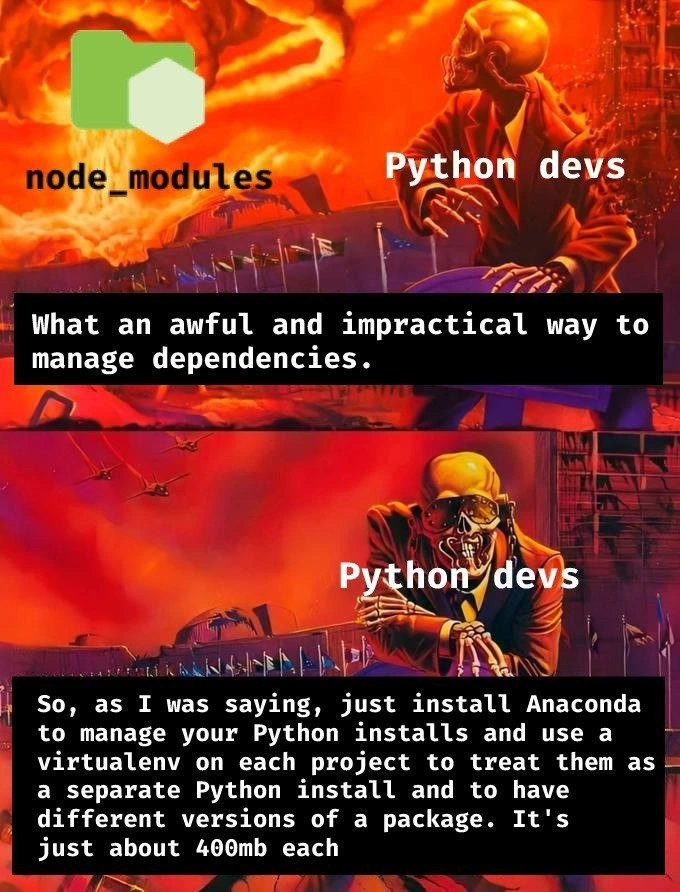
The meme makes its point by comparing this tech mix-up to something everyone knows is a bad idea: a pregnant woman drinking wine and smoking. The line “No it doesn’t effect my baby” is written on the image. The woman is confidently claiming her risky behavior won’t harm her unborn child, but we all know that’s wrong (and the misspelling of affect as effect even hints that maybe she’s not paying attention to important details 😬). Similarly, the developer asking to run PHP in Node is treating the health of their “baby” project cavalierly. The community’s response is essentially, “Buddy, you might think it’s fine, but it will affect your baby (project) – and not in a good way.” In short, the meme is highlighting a codebase health joke: mixing incompatible technologies is hazardous to your software’s well-being. Just like an expecting mom should avoid harmful substances for a healthy baby, a developer should use the right tools for the job to keep their project healthy. And if someone loudly claims “It’s totally fine!” while doing the opposite, well, that’s where the TechHumor kicks in for everyone watching.

Level 3: Runtime Roulette

Running a PHP codebase inside a Node.js environment is the kind of stunt that makes seasoned backend devs cringe. It's a prime example of an improper tech stack combination born from full-stack confusion. To a senior engineer, this question — “Is there any way to run PHP project using NODE.JS?” — sounds as risky as saying “No, it doesn’t affect my baby” while doing shots of tequila. Why? Because NodeJS and PHP are two very different beasts, each with its own runtime and engine. Node.js executes JavaScript using Google’s V8 engine, powering event-driven servers with a non-blocking event loop. PHP, on the other hand, runs on the Zend Engine (or similar) and traditionally follows a blocking request-response model (think of the classic LAMP stack with Apache handing off each web request to PHP). These two languages aren’t casually interchangeable – their runtime environments speak entirely different “languages” under the hood.

In concrete terms, Node.js simply cannot parse or execute PHP code natively. If you tried to feed a .php file to Node, it would choke immediately on PHP’s syntax. For instance, imagine running a PHP script with Node:

$ node hello.php
/home/dev/hello.php:1
<?php echo "Hello, World!"; ?>
^
SyntaxError: Unexpected token '<'

Node sees the <?php tag and basically goes “What the heck is this?!” 🤨. It expects JavaScript, and PHP syntax looks like gibberish to it. The only way to make PHP run “under” Node would be a grotesque hack – for example, using Node’s child_process to spawn the real php interpreter. That’s not running PHP in Node so much as making Node babysit a PHP process. It’s like strapping a gasoline generator onto a Tesla so you can fuel it with gas – technically you could, but why would any sane person do that? You end up with a Franken-stack: high complexity, slower performance (now you have two engines running), and a nightmare to debug. In other words, you're introducing something toxic into your project’s environment and pretending it won’t cause damage.

The developer community reaction (those 😂 and 😱 emojis with 32 likes and 30 comments) tells us this post was instantly recognized as a joke-worthy facepalm. This isn’t just BackendHumor; it taps into long-standing LanguageWars between Node and PHP folks. Many NodeJS devs have poked fun at PHP’s quirks over the years, and PHP devs side-eye the JavaScript hype – but one thing both sides agree on is that attempting to mix the two at runtime is bonkers. Each language has its domain: PHP powers millions of WordPress sites and legacy systems, Node.js runs scalable modern APIs and real-time apps. They can communicate over HTTP or APIs, sure – but running one inside the other is like trying to smoke a cigarette through a wine bottle: absurd and unhealthy.

Now, about that meme’s top panel: the pregnant woman drinking wine and puffing a cigarette. The caption reads, “No it doesn’t effect my baby,” notably using “effect” instead of “affect.” (Cue every developer’s inner grammar parser throwing an exception.) The misspelling is probably intentional, emphasizing the cluelessness or denial at play. In tech terms, the “baby” is the codebase or project health, and introducing a wild idea like running PHP in Node is the “toxin” that could mess it up. It’s a harmful dev practice metaphor: just as alcohol and nicotine can cause real harm to a fetus (contrary to the mother’s flippant denial), a misguided tech-stack mashup can jeopardize your application’s stability and maintainability – no matter how much one insists “It’ll be fine.” Seasoned devs have seen this pattern before: someone thinks they found a shortcut or a clever hack (maybe they dislike PHP’s setup and figure, “Hey, I know Node, can I just cram this PHP app into it?”). But the hard truth is, there’s no miracle solution here – you either run the PHP project with a PHP interpreter (the right way), or you undertake a full rewrite of the project in Node.js. Anything in between is just asking for trouble.

It’s worth noting that running software in an environment it wasn’t built for does have parallels in computing – for instance, Linux users use WINE (a compatibility layer humorously named “Wine Is Not an Emulator”) to run Windows apps. But WINE is a massive, complex undertaking by hundreds of developers, essentially re-implementing the Windows runtime on Linux. Node.js was never designed to be a PHP runtime, and no one in their right mind is building a full PHP-in-JS compatibility layer for production use – that’d be a colossal waste of time when you can just… run PHP. The meme’s dark humor compares a reckless coding idea to a reckless life choice, and the punchline lands because both are so obviously ill-advised. As a grizzled veteran might snark: “Sure, kid, go ahead and mix those – your codebase will be fine. What could possibly go wrong?🙄” It’s a tongue-in-cheek warning from the dev community: don’t play runtime roulette with your tech stack, or your “baby” project could end up suffering in ways you don’t expect.

Description

A two-panel meme that draws a harsh analogy. The top panel shows the torso of a pregnant woman holding a lit cigarette and a glass of red wine, with the caption, 'No it doesn't effect my baby' (with the grammatical error 'effect' instead of 'affect'). The bottom panel is a screenshot of a Facebook post in a group named 'NodeJS developers'. The post asks the question: 'Is there any way to run PHP project using NODE.JS'. The meme equates the profound technical misunderstanding in the question with the reckless and harmful behavior depicted in the image. For experienced developers, the humor lies in the absurdity of the request, as PHP and Node.js are fundamentally different server-side runtimes for different languages. The question reveals a complete lack of basic web development knowledge, making the comparison both brutal and, for some, hilariously accurate
Comments

13
Anonymous ★ Top Pick Yes, it's called 'spawning a child process that invokes the PHP interpreter.' It's the technical equivalent of putting a fish in a birdcage and wondering why it won't sing
  1. Anonymous ★ Top Pick

    Yes, it's called 'spawning a child process that invokes the PHP interpreter.' It's the technical equivalent of putting a fish in a birdcage and wondering why it won't sing

  2. Anonymous

    Sure, you can spawn PHP from a Node child_process and call it a “polyglot microservice” - just be ready to raise a codebase that inherits both callback-hell colic and legacy include-spaghetti tantrums

  3. Anonymous

    This is like asking if you can run your Kubernetes cluster inside a Docker container that's running on a VM that's hosted in another Docker container - technically possible with enough abstraction layers and child_process.exec(), but at that point you've created a Rube Goldberg machine that would make even the most patient SRE weep into their YAML files

  4. Anonymous

    This is the equivalent of asking 'Can I compile my Java code with the Python interpreter?' - a question that reveals a fundamental misunderstanding of runtime environments. While you *could* theoretically spawn PHP processes from Node.js via child_process.exec(), that's not 'running PHP in Node.js' any more than calling a REST API makes you a polyglot. The real tragedy is that 30 people felt compelled to explain why this violates the laws of runtime physics, when a simple 'they're different runtimes, friend' would suffice. Though honestly, after dealing with callback hell and then Promise chains and then async/await, maybe some Node developers are just looking for any excuse to switch to PHP's synchronous simplicity

  5. Anonymous

    Yes - just child_process.spawn('php -S') and call it “microservices”; congratulations, you’ve reinvented CGI, now with an event loop silently judging you

  6. Anonymous

    Sure, you can hide PHP-FPM behind Express and call it “migration” - congrats, you now own a polyglot monolith with two package managers, two runtimes, and one very tired on-call

  7. Anonymous

    Node devs: 'Just spawn('php', ['index.php']) - baby project's event-driven and totally unaffected.'

  8. @ZgGPuo8dZef58K6hxxGVj3Z2 4y

    😂😂😂😂😂😂😂

  9. @feskow 4y

    system ('php file.php') ?

  10. @dsmagikswsa 4y

    Technically can it be possible? Nodejs is written by C++, right?

  11. @PeGa041 4y

    this happened to me (ish)... a full nodejs project to manage the deployment of some docker images and underneath it all the logic were calls to pure bash commands. Took me a while to recover from that.

    1. @dsmagikswsa 4y

      Oh you are the man. You rewrite it with bash only?

  12. @PeGa041 4y

    nah, I'm just a sysadmin... I didn't have the power, just complained to my manager and kept going with my life

Use J and K for navigation