Skip to content
DevMeme
5301 of 7435
The Literal Interpretation of a Nintendo Switch
Networking Post #5814, on Jan 13, 2024 in TG

The Literal Interpretation of a Nintendo Switch

Why is this Networking meme funny?

Level 1: Not That Switch

This meme is funny because it’s mixing up two things with the same name – on purpose! Imagine you really love video games and you asked for the new Nintendo Switch (which is a cool game machine). But instead, your friend (who might be a silly computer person) brings you a different kind of switch – a plain electronic box that connects computers. That box isn’t for playing games at all. You’d probably say, “Hey, not that kind of switch!”

It’s like a little prank with words. One “switch” is a fun toy that lets you play Mario and other games. The other “switch” is basically a tool that helps computers talk to each other (with cables and blinking lights, but no games). The joke is showing the tool but calling it by the game’s name. It’s as if someone took something boring for most people and tried to pass it off as the fun thing everyone wants, just because they share the name.

Think of it this way: suppose you heard your parents say they were getting a “Jaguar”. You might think they mean the cool sports car. But what if, when you got home, you found a jaguar – the big cat – in your living room? 😮 Both a car and a big cat are called “jaguar,” but they’re totally different. You’d be shocked and probably laugh (after running away from the cat!). In the same way, hearing “Nintendo Switch” makes most people picture a game console, so seeing a computer network box instead is a silly surprise.

In the meme, the sysadmin (short for systems administrator, basically a person who takes care of computer systems and networks) is the one doing this joke. For them, that black network switch with 8 ports is kind of exciting because it helps make the internet and computers work faster at their job. But everyone else was expecting a fun game console. So the humor comes from that mismatch – the sysadmin is happy with a bunch of blinking lights, while everyone else was imagining playing games.

So, simply put: the meme is funny because the sysadmin intentionally misunderstood “Nintendo Switch.” Instead of a game console, they got a techie network device. It’s a bit of silly wordplay – the same word “Switch” refers to two wildly different things. It makes us laugh because it’s like a nerdy practical joke: using the wrong “switch” in the place you’d least want it (a data center isn’t for games, and a game console doesn’t belong in a data center!). Even if you don’t know much about networking, you can giggle at the idea of someone getting the completely wrong item because of a name mix-up. The sysadmin got a Switch alright – just not the Switch everyone else had in mind!

Level 2: Ethernet vs Entertainment

Let’s break down the two meanings of “switch” at play here, especially for those newer to networking or gaming. The joke revolves around two completely different devices that share the exact same name:

  • Nintendo Switch – a popular video game console made by Nintendo (category: Games). When people say “Nintendo Switch,” they’re usually talking about the portable/home console that lets you play games like Super Mario Odyssey or The Legend of Zelda: Breath of the Wild. It’s called “Switch” because you can switch between playing on a TV or in handheld mode. It has controllers (called Joy-Cons) that you use to play, it connects to the internet via Wi-Fi, and it’s designed for entertainment. Think of it as a fun gadget you’d keep in your living room or backpack to play games with friends.

  • Network Switch (Ethernet Switch) – a piece of networking hardware (category: Networking/Hardware) used in offices, data centers, or even at home, to connect multiple devices on a local network. When an IT person or sysadmin says “I need a new switch,” they mean this box with multiple Ethernet ports. You plug in devices (computers, servers, routers, etc.) using Ethernet cables (those cables with RJ-45 connectors that look like oversized phone plugs). The switch’s job is to forward data between devices so they can communicate. It operates at Layer 2 of the OSI model, which basically means it looks at hardware addresses (MAC addresses) to decide where to send incoming data packets. It’s a “smart splitter” for network cables: unlike a simple hub (which blindly repeats everything), a switch learns who is connected to which port and sends network traffic only where it needs to go. The result: efficient, high-speed local networking. This device usually sits in a rack or a network closet, quietly blinking away as data flows through it.

Now, the meme caption says: “When the sysadmin buys a Nintendo Switch for the data center.” The sysadmin (systems administrator – the person responsible for managing servers and network gear) hears “Nintendo Switch” and interprets it in the most literal, technical way. Instead of thinking about a gaming console, they think about improving their network. So they buy a brand new eight-port Ethernet switch for the company’s data center. (A data center is where companies keep their servers and network equipment – basically a big room full of racks of blinking machines that run websites, applications, etc.)

The humor is that everyone else would expect “Nintendo Switch” to mean the game system, but the sysadmin deliberately (and playfully) acts on the other meaning. It’s a cheeky example of wordplay: one word, two meanings. The sysadmin’s “new Switch” is useful for work (it’ll connect more servers or increase network capacity), but it’s absolutely no fun for gaming. You can’t play Mario on that Ethernet switch! At best, you can maybe enjoy the fact that your network speeds are better.

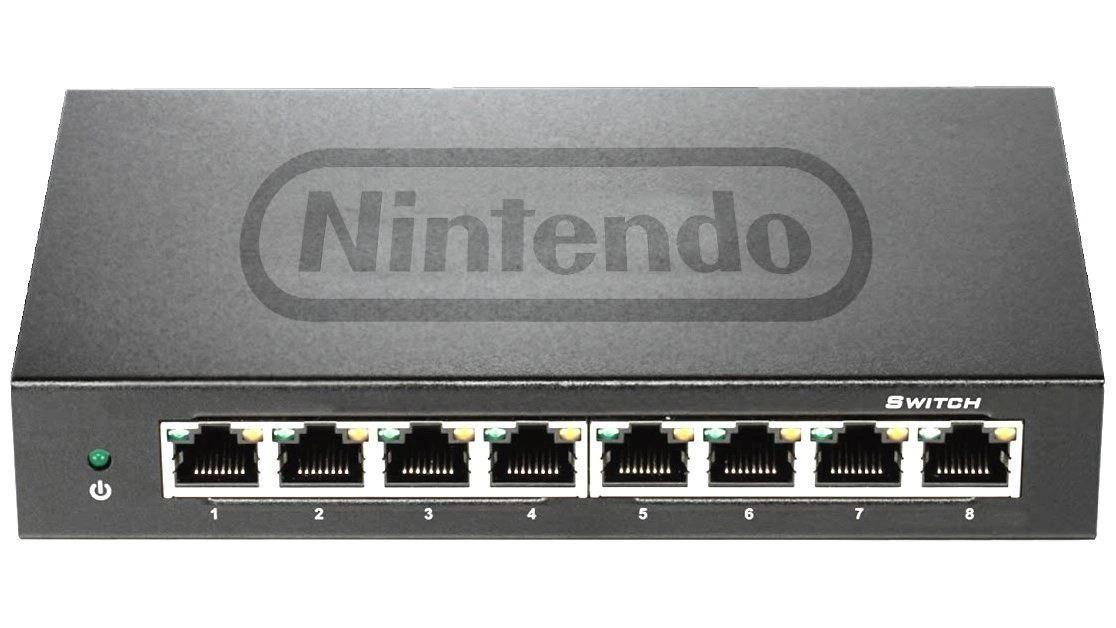
To make the joke obvious, the meme image literally has the Nintendo logo printed on a normal network switch. Visually, it fuses the two ideas:

  • The shape and features (ports, LEDs) are clearly an Ethernet network switch (any IT person will recognize the design).
  • The big “Nintendo” logo on top is something you’d only see on a Nintendo Switch console or games by Nintendo.

By combining them, the meme is saying: “Here you go, a Nintendo Switch… for your servers!” It’s like a visual pun.

Let’s compare the two “switches” to see how different they are:

Nintendo Switch (Console) 🌟 Network Switch (Device) 🔌
Purpose: Gaming and entertainment (plays video games) 🎮 Purpose: Networking infrastructure (connects computers) 🖧
Made by: Nintendo (a gaming company) Made by: Companies like Cisco, Netgear, etc. (network equipment makers)
Physical features: Has a screen (in handheld mode), Joy-Con controllers, game card slot, HDMI output to TV. It’s usually a sleek tablet-like device with colorful controllers. Physical features: A metal or plastic box with multiple RJ-45 Ethernet ports. Usually no screen (maybe a console port for configuration), just status lights and a power plug. Often colored black/grey and industrial looking.
Indicators: Maybe a power LED and the game graphics on screen. Indicators: Lots of little LED lights for each port (green/amber lights showing link status and activity) and a power LED. These LEDs blink when network data is passing – that’s a good sign in IT! 🔄
Usage location: Your living room, bedroom, or on the go. It’s a consumer device. Usage location: Server room or network rack. It’s a piece of IT equipment – not something you’d casually use on the couch.
What it “switches”: The name refers to switching play modes (handheld to TV dock) or switching players/controllers. It doesn’t switch network data. What it “switches”: Network traffic. It switches data packets between different ports so the right computers get the right data. The term “switch” is technical: it’s like a traffic director for local network data.
Who loves it: Gamers and kids – anyone who enjoys Nintendo games. 🎉 Who loves it: Network engineers, sysadmins – the folks who set up and maintain networks. 😁 (They get excited about reliable hardware and fast connections!)

As you can see, aside from the shared name “Switch,” these two things are completely different. One is about fun and games, the other is about connecting devices behind the scenes.

So why put a Nintendo logo on a network switch? It’s highlighting that shared word in a goofy way. The sysadmin in the scenario is making a joke: by placing a “Nintendo Switch” (logo and all) in the data center, they’re pretending that this networking gear is the latest fun gadget everyone’s been talking about. It’s as if the sysadmin is saying, “Look, I got the Switch you wanted!” while everyone else facepalms or laughs because they meant the gaming console, not this eight-port Ethernet hub. It’s a play on expectations.

For a junior developer or someone new to IT, there’s also a little lesson: tech is full of terms that can confuse. Always clarify! In everyday conversation “switch” might mean the Nintendo device, but in a tech context it often means networking hardware. This meme is a fun illustration of that ambiguity. It’s tagged as NetworkingHumor and HardwareHumor because only folks with some knowledge of IT hardware will get it immediately. But it’s also a GamingReference and PopCultureReference – because you need to be aware of the Nintendo Switch craze to fully appreciate why the mix-up is funny. It sits at the intersection of geeky server room culture and mainstream gaming culture.

Finally, consider the sysadmin angle: Sysadmins are known to have a dry, sometimes prankish sense of humor. They deal with serious equipment all day, so a lot of sysadmin jokes involve witty wordplay or literal interpretations. This meme’s caption could be the setup to a joke told in an IT office. Imagine a network engineer telling a colleague, “My kids kept asking for a Nintendo Switch, so I brought one… See?” and pointing to a newly installed network switch in the rack. It’s the kind of joke that would circulate on tech forums and at IT help desks.

In summary, at this level we see that the meme is a wordplay joke comparing a Nintendo Switch console to a network switch device. By knowing what each switch actually is, we understand why putting a Nintendo logo on an Ethernet switch and calling it a “Nintendo Switch for the data center” is humorous. It’s all about context: two worlds colliding in one word.


Level 3: The Great Switcheroo

In this meme, a simple word does a double backflip between two worldsgaming and networking. The image cleverly slaps the familiar Nintendo logo onto an 8-port Ethernet switch, creating a visual pun on the term “Nintendo Switch.” For a seasoned techie, this is an instant grin: it’s a classic case of homonym humor where context is king.

Why is this so funny to sysadmins and network engineers? Because when they hear the word “switch,” they don’t instinctively think of Mario Kart or Zelda. Their minds jump to blinking LEDs, RJ-45 ports, and VLAN configurations. To them, a “switch” is that unassuming black box which magically (well, through MAC address tables and ASICs) forwards network traffic at gigabits per second. It’s the silent workhorse of the data center – a layer-2 device that lives at the core of Networking. Now along comes the Nintendo Switch – a wildly popular gaming console – and suddenly the word “switch” has a whole new meaning in pop culture. This meme exploits that linguistic collision brilliantly.

Think about the phrasing: “When the sysadmin buys a Nintendo Switch for the data center.” It sets you up to imagine a shiny new Nintendo Switch console sitting among the servers – an absurd image. But the punchline is that the sysadmin’s idea of a “Switch” is entirely different: it’s a network switch meant for a server rack. It’s a perfect geeky bait-and-switch (pun fully intended) where the expected gaming gadget is swapped with enterprise hardware. The humor here is twofold:

  • Wordplay: The term “Switch” refers to two very different devices. This is textbook TechHumor built on a linguistic trick. We’re essentially witnessing a “great switcheroo” – the word stays the same, but its meaning is swapped.
  • Culture Clash: It’s a tongue-in-cheek nod to how differently an IT professional views the world. A gamer hears “Switch” and thinks fun, games, entertainment. A sysadmin hears “Switch” and thinks uptime, bandwidth, infrastructure. The sysadmin in the joke is gleefully literal, maybe even proud: they did get a Switch, just not the one everyone else meant.

The image details feed the joke’s realism. We see eight numbered Ethernet ports on the front (typical for a small office/network closet switch). Above each port, those tiny green and amber LEDs are link status indicators – when cables are plugged in and data is flowing, they blink like festive lights to a network engineer’s eyes. On the left, a little green-lit power button shows the device is on. And in the corner, the word “SWITCH” is printed, just in case it wasn’t clear. By Photoshopping the official Nintendo logo across the top, the meme-maker bridges the gap between a drab network appliance and a beloved gaming console. It’s as if this black box has suddenly become a coveted item – a Nintendo-brand Switch – which is utterly nonsensical and thus hilarious.

For the experienced crowd, there’s extra joy in the details. Notice the meme leans into a PopCultureReference (Nintendo’s console craze) while staying rooted in NetworkHumor. It reminds us that tech terms aren’t always exclusive. Today’s “Switch” isn’t just a device in a server rack; it’s also the thing your non-tech friends got for Christmas. This dual meaning leads to plenty of playful confusion. Many of us have joked in real life: “I told my family I was setting up new switches at work, and they asked if I brought Smash Bros. to the office.” 😅 The sysadmin in the meme is basically living that joke. Instead of Smash Bros., though, their new switch runs protocols like STP (Spanning Tree Protocol) or handles MAC address tables – decidedly less flashy than Super Mario, but critical for keeping the network running.

There’s also an undercurrent of sysadmin humor here: data center folks often treat new hardware with the same excitement a gamer has for a new console. Unboxing a shiny Netgear/Cisco switch for the server room can genuinely excite a sysadmin (“Check out this beauty – 8 ports, fanless, with PoE support! It’s the latest model!”). In their world, those blinking LEDs and reliable throughput are as thrilling as high FPS and game graphics are to gamers. So when the caption says the sysadmin “buys a Nintendo Switch for the data center,” it’s poking fun at that idea. The sysadmin gets their new toy – which is a Switch, just not the brightly colored one with Joy-Cons. In a way, the meme is saying: One person’s entertainment console is another person’s networking console. The contrast is delightful.

Finally, the absurdity of imagining a Nintendo Switch console in a data center racks up the silliness. Data centers are controlled, serious environments with cool air, loud fans, and rows of rack-mounted equipment. Plopping a handheld gaming console in there is laughably out-of-place. Conversely, bringing an eight-port network switch into your living room to play Mario is equally ridiculous (no HD graphics, only blinking lights – not much of a party). The meme lives in that absurd intersection. It’s wordplay at its best: simple, nerdy, and instantly relatable to anyone who straddles the line between IT work and gamer hobbies.

So, the senior perspective here appreciates how a single word can unite two totally separate reference frames. We chuckle because we’ve perhaps been in on similar jokes or misunderstandings. It’s a reminder that in tech, context is everything – and that even a Layer 2 in-joke can leverage pop culture to get a laugh. In summary: a sysadmin’s idea of a “Nintendo Switch” comes with Ethernet cables and blinking link lights, not Joy-Cons – and that clever subversion is exactly why we love this meme.


Description

A photorealistic image of a fake product: a Nintendo-branded network switch. The device is a standard-looking, 8-port, black metal network switch, seen from a straight-on front view. It has eight RJ45 Ethernet ports, numbered 1 through 8, with small indicator lights above each. On the far left, there is a green power indicator light. Subtly embossed on the top surface of the device is the iconic oval 'Nintendo' logo. In the bottom right corner, printed in a simple, white, sans-serif font, is the word 'SWITCH'. The humor comes from the literal, deadpan pun, combining the name of the popular Nintendo Switch video game console with a common piece of computer networking hardware. It's a visual gag that conflates consumer gaming culture with IT infrastructure

Comments

7
Anonymous ★ Top Pick Nintendo's online service performance finally makes sense if this is the hardware they're using in their data centers. It probably still uses friend codes for VLAN tagging
  1. Anonymous ★ Top Pick

    Nintendo's online service performance finally makes sense if this is the hardware they're using in their data centers. It probably still uses friend codes for VLAN tagging

  2. Anonymous

    Picked up the new Nintendo Switch for the data center - 8-player co-op via 802.3ad link aggregation, and finally a model with zero Joy-Con drift, unless STP misfires

  3. Anonymous

    Finally, a Nintendo Switch that actually improves latency instead of adding 30ms of input lag to your already questionable netcode implementation

  4. Anonymous

    Finally, a switch that supports both TCP/IP and Mario Kart 8 Deluxe. Guaranteed to deliver packets at 60fps with zero input lag, though firmware updates still require you to blow on the cartridge slot. VLAN tagging now supports red shells and blue shells for priority traffic, and spanning tree protocol has been replaced with Rainbow Road routing - packets may fall off the edge, but at least they'll respawn. Port mirroring works great, but only in split-screen mode

  5. Anonymous

    Finally, a Nintendo Switch that scales horizontally - 8 RJ45s, STP for party mode, and zero Joy‑Con drift; shame it’s forever stuck at Layer 2

  6. Anonymous

    Asked finance for a Nintendo Switch; they sent a Layer-2. On the bright side, Joy-Con drift is just STP reconvergence

  7. Anonymous

    The only Nintendo console with zero Joy-Con drift - just pure STP convergence and VLAN trunking bliss

Use J and K for navigation