Skip to content
DevMeme
1337 of 7435
The Guts of a Natural Language Parser
AI ML Post #1499, on May 6, 2020 in TG

The Guts of a Natural Language Parser

Why is this AI ML meme funny?

Level 1: Messy Wires, Same Sound

Imagine you have a bunch of toy train tracks that don’t exactly fit together, so you use tape and weird loops of track to connect them and make a full circuit. It looks silly – pieces are going in odd directions, looping back on themselves – but the train still manages to go around in the end. This meme is like that, but for language and computers. It’s saying that the way computers understand sentences can be as goofy and tangled as a bunch of wires twisted together. Just like a kid might plug cables from one thing into another all wrong yet somehow music is still playing, these NLP systems have a lot of crazy connections inside, yet somehow they still work. The humor comes from seeing something that’s supposed to be high-tech and fancy (an AI language parser) revealed to be a bit of a jerry-rigged contraption. It’s like peeking under the hood of a shiny robot and finding duct tape and rubber bands. In simple terms: even when something smart is happening (computer understanding language), behind the scenes it might be held together with loops and patches – and that contrast is both funny and a little comforting, because hey, we all make messy solutions sometimes!

Level 2: Untangling the Noodle Code

Think of Natural Language Processing (NLP) as teaching computers to read and understand human language. An NLP parser is a program that tries to break down a sentence into its parts – kind of like diagramming a sentence in grammar class, identifying the subject, verb, objects, etc., or figuring out the structure so the computer can work with the meaning. Now, in a perfect world, you’d write this parser with clear rules or a well-trained model, and the code would be nice and clean. But in real life, especially for complex tasks, the code can turn into a mess of conditions and special cases. We jokingly call that “spaghetti code.” Why spaghetti? Because, much like a pile of cooked spaghetti, the logic in the code is all tangled up – hard to follow, with pieces looping around unexpectedly.

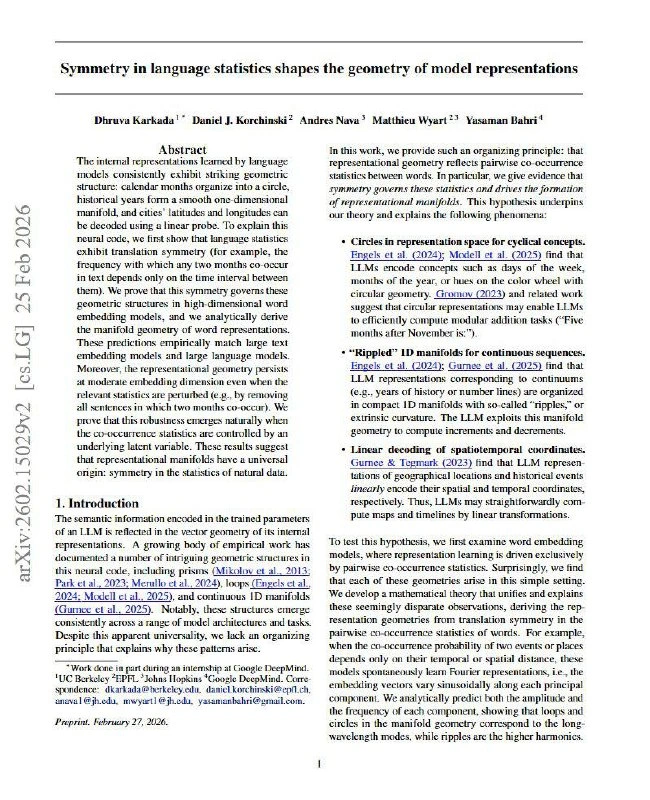
The meme shows an audio amplifier panel with ports labeled SEND, RETURN, EFFECTS, TAPE, HEAD PHONES. Normally, each of those jacks has a specific use:

  • Headphones: You plug your headphones here to get the audio output.
  • Send/Return (Effects Loop): You send audio out to some effect device (like reverb or delay) and return it back in, to add that effect into the amplifier’s chain.
  • Tape: Often an input/output for connecting to a tape recorder or another audio source. But in the picture, someone has plugged a headphone cable in and then looped it through an adapter into other jacks in a very improvised way. The cable even coils around itself. It’s immediately clear that this isn’t the normal, intended setup – it’s a hack. Maybe they’re trying to create some funky feedback loop or jury-rig a connection because they don’t have the right cable. It looks absurd and a bit confusing, yet apparently it’s doing something.

This is being compared to how an NLP parser often works internally. Instead of a neat, straightforward process (like text in -> parse -> result out), many parsers have to deal with all sorts of edge cases. An edge case is an unusual situation or input that the normal logic doesn’t handle well. For example, a simple parser might do fine with a sentence like “I love coding.” but get confused by something like “Alice, while Bob sang, nodded.” Humans can parse that sentence (it means Alice nodded while Bob sang), but a computer might get very mixed up by the commas and the word “while.” To handle cases like that, developers might add extra rules or code branches. Over time, as they add rule after rule, the code structure starts looking like a jumble of sections that jump around – very much like that cable plugging into places it doesn’t normally belong.

Let’s break down some terms and how they relate to this messy wiring:

  • State-machine logic: A state machine is a way to model logic by saying “if I’m in state A and see X, go to state B”. It’s like following a flowchart with many steps. Parsers often use state machines or similar concepts under the hood to handle sequences of words (especially older parsers or things like chatbots that had explicit states like GREETING, QUESTION, ANSWER). When we say convoluted state-machine logic, we mean this flowchart got really twisty. Perhaps there’s a state that unexpectedly jumps back to a previous state for certain words, much like taking a cable from an output and jamming it into an input to create a loop. That can make the flow hard to follow and debug.
  • Ad-hoc grammar rules: Ad-hoc means “for this specific case, not general or planned out.” Imagine writing a quick fix: “If you see the word ‘Buffalo’ repeated multiple times, handle it with a special routine.” That’s an ad-hoc rule. Grammar rules are normally systematic (like “a sentence can be a noun phrase followed by a verb phrase”). An ad-hoc grammar rule breaks that regularity to catch some weird scenario. Each of those is like adding another weird cable route in our amplifier – one more jumper to handle a corner case.
  • Spaghetti wiring (in the context tags) is basically the physical version of spaghetti code. The cables are tangled and looping, just like code logic can be.
  • Hacky parser workaround: a workaround is a makeshift solution to bypass a problem. Hacky implies it’s not the clean or official method, but it works. For instance, if an NLP model isn’t recognizing dates correctly, a hacky workaround might be to manually search the text with a regex (a mini pattern-matching program) for date formats and tag them before the main parser runs. It works, but it sure feels like taping an extra part onto the machine.

For a junior developer or someone new to NLP, the key point is: parsing human language is hard! There are so many exceptions and oddities. Developers start with a tidy plan, but every time something doesn’t fit that plan, they have to decide: Do we redesign the whole system (which is tough and time-consuming), or do we quickly jury-rig a fix? In fast-paced environments, the quick fix often wins. Those fixes accumulate and interconnect in strange ways over time. The meme’s humor is in visually showing such a quick fix in a very literal way. It’s saying “Natural language parsers be like this,” showing the guts as a chaotic audio wiring rather than some sleek microchip. Anyone who has peeked into a large, legacy NLP codebase (or really any complex system) will likely recognize that feeling: Oh, so this is what’s really happening under the hood… yikes.

To give a concrete analogy for a junior dev: Imagine you wrote a simple program to convert text to pig latin (a made-up example language). It works for basic words, but then you find it doesn’t handle punctuation or capital letters right. Instead of rewriting the whole conversion logic, you add a little code at the start to remove punctuation and save it for later, and a little code at the end to put it back. Then someone asks for handling of “qu” as a special case (since pig latin has a qu rule), so you add another special branch just for words starting with “qu”. A month later, your program is now full of these one-off branches – it’s harder to read, but it handles more cases. If you drew lines from each of those fixes to the part of the program they connect with or affect, it’d look like a web of connections. That’s basically what happens in real NLP parsers, only on a larger scale. The image with cables is just a funny physical representation of that tangled logic.

Level 3: Spaghetti Parsing Pipeline

In practice, building a natural language parser often feels like constructing a DIY sound rig with whatever cables you have on hand – even if you end up routing the HEADPHONES output into the TAPE input just to make it work. The meme nails this with that audio amplifier front panel, where the cable loops and adapters represent patchwork fixes. This is poking fun at how NaturalLanguageProcessing projects (especially older or rushed ones) tend to accumulate spaghetti code and bizarre data flows over time. Seasoned developers in AI/ML will chuckle (or cringe) because they’ve seen those “temporary” fixes in NLP codebases that somehow become permanent.

Why is it funny? Because outwardly, NLP systems are sold as high-tech AI magic – sleek neural networks or elegant syntactic graphs. But behind the scenes, many have a tangle of rules and hacks holding them together (AI hype vs. reality, indeed). It’s a classic piece of DeveloperHumor: the contrast between the polished API (“Just call parse(sentence) and behold the structured output!”) and the actual implementation (which might literally be a maze of if-else conditions, regexes, and special-case functions). The spaghetti_wiring in the image is a direct analog to a hacky_parser_workaround in code. Each loop of the cable can be seen as a loop or kludge in the logic flow. For example, maybe the parser normally goes from step A -> B -> C (like from tokenizing to parsing to interpretation), but someone discovered step B fails on a certain input. Instead of redesigning B, they wired the output of C back into A’s input for that case – a totally bizarre flow, yet it works for that one stubborn edge case. It’s like plugging the amp’s output back into itself to squelch a noise: unconventional, slightly dangerous, but if it stops the squeal, nobody asks questions.

In the NLP world, this happens a lot with edge_case_handling. Imagine a linguistic phenomenon that the system’s architecture didn’t account for – say, a sentence with a weird nested quote or an emoji in the middle of a parse. A robust solution might involve retraining models or extending the grammar properly, but that’s expensive. The quick fix? Add a preprocessing step that yanks the emoji out, or a postprocessing step that re-inserts something later. These are the questionable connections the meme mentions. They’re the kind of thing you’d be embarrassed to show on a system diagram, just like you’d be embarrassed to show off an amplifier wired like this unless it was a joke.

This image particularly screams “spaghetti code”, a term every senior dev knows and fears. Spaghetti code is code that’s tangled and twisted, hard to follow – just like that orange cable looped absurdly through the adapter. Many old-school NLP parsers (especially those built before modern MachineLearning took over) were essentially giant state machines with hundreds of states and transitions. Maintaining one eventually meant threading wires through the whole system: “Oh, if you see an acronym here, jump over to the ‘noun clause’ state, then come back.” There’s even a hint of a state-machine vibe on that panel: SEND -> RETURN suggests an effects loop, which in code might be like “call function, get result, then feed it back in for effect.” If you’ve ever debugged a language parser, you’ve probably seen weird flows like a function calling itself indirectly or a processing loop that revisits earlier steps when it finds something tricky (like detecting a name after processing, then going back to tag it as a proper noun). These feedback paths can feel as twisted as physically looping a headphone cable into an input jack.

For instance, a known pattern in some NLP pipelines is multi-pass parsing: you run a quick pass to mark obvious things (like sentence boundaries), then a deeper pass for structure. But if the second pass finds something unexpected, it might adjust the text and essentially reparse. One could joke that some parsers “turn the output back into input” just like that cable in the audio_amplifier_meme literally turns the audio output back into an input port. The meme exaggerates it, but not by much! A real-life example: Early chatbots and grammar checkers often had blocks of code like:

text = user_input
if contains_weird_phrase(text):
    text = fix_weird_phrase(text)  # hack: preprocess known weirdness
result = base_parser.parse(text)
if not result.success:  
    result = fallback_parser.parse(text)  # try a different strategy
if needs_special_treatment(result):
    result = post_process(result)  # hack: patch output for edge cases

Each of those steps is like another cable plugged into a jack out of necessity. Sure, the system eventually produces a parse, but the path it took is as hard to follow as a coil of cables. Senior engineers laugh (or groan) at this because we’ve all been guilty of writing such code under time pressure. It might happen late on a Friday, when a demo’s Monday and the parser keeps crashing on a particular sentence – so you insert a goofy workaround that you promise to revisit later. Spoiler: “later” often never comes. Over time, you accumulate so many band-aids that the whole NLP pipeline looks like a cable_loops labyrinth.

There’s also a bit of AIHypeVsReality commentary here. Modern NLP, with deep learning, was supposed to free us from all these manual rules, right? Just train a big model and it will understand language! In reality, even fancy neural parsers sometimes need help. Perhaps the model fails on certain rare syntax, so engineers slip in a rule-based corrector after it. Or they pipe the output through a knowledge base to fix obvious errors – essentially questionable connections between otherwise separate systems. It’s like bragging about your cutting-edge wireless Bluetooth sound system, but behind the cabinet, it’s literally wired with an old cable in a loop. The industry collectively winks at this because we’ve seen glossy conference presentations about end-to-end NLP, yet on joining the project we find a hidden folder named old_rules_backup that still runs in production “just in case.”

Why is fixing this properly so hard? Because language is endlessly complex. Untangling the spaghetti means understanding every quirky sentence people might throw at your system. It’s a moving target – fix one corner (remove one weird cable) and something else might break (suddenly you lost an effect you didn’t realize that loop was providing!). Plus, companies often prioritize working code over clean code. If the parser currently handles 99% of cases, who’s going to sign up to refactor and possibly break it for the sake of elegance? Thus, the tangle persists. The meme humorously exposes what we usually hide under the hood. It’s saying: “See that impressive NLP parser? It’s held together with duct tape and prayer.” For those in the know, it’s a simultaneously hilarious and painful truth.

Level 4: Context-Free Contortions

Deep in the theory of Natural Language Processing (NLP), there's a collision between elegant formal grammar and the chaotic reality of human language. In computer science terms, an NLP parser is meant to function like a kind of automaton that reads a sentence and builds structure from it. Ideally, we'd use a context-free grammar (CFG) — a set of production rules (like Backus-Naur Form) that can generate valid sentences in a language, much as a compiler parses programming code. In theory, a CFG parser should cleanly handle language syntax, much like an audio amplifier’s well-labeled ports (SEND, RETURN, TAPE) are meant for distinct, orderly signals. But natural languages, unlike programming languages, are not strictly context-free; they’re messy, ambiguous, and laden with exceptions. This fundamental mismatch forces engineers into creative workarounds that tie theoretical purity into literal knots.

Consider the formal limits: a simple finite-state machine (the kind used for lexical analysis or regex) can’t fully parse nested or recursive structures inherent in human grammar. We upgrade to a pushdown automaton (the theoretical model for CFG parsers) to handle nested clauses – akin to giving our parser a stack (or an extra "tape" of memory, if we nod to Turing Machines) so it can track context. But even then, languages like English gleefully violate context-free assumptions. For example, cross-serial dependencies in certain languages or the infamous ambiguous sentence “The old man the boats.” will tie a basic parser into loops. In academic terms, natural language often demands at least a context-sensitive grammar or other complex formalisms, which are computationally expensive (some parsing problems flirt with NP-completeness). Rather than solving an unsolvable general case, engineers hack around specific problems, creating ad hoc feedback loops and state entanglements that technically get the job done. The meme’s tangled cable perfectly visualizes a grammar in a ground loop: a parser feeding its output back as input in a convoluted way, much like a recursive rule that risks looping forever without careful limits. It’s a Rube Goldberg approach to linguistics – harnessing theoretical loopholes and side-channels to handle phenomena our elegant models weren’t built for. The result is a system that theoretically parses language, but under the hood it’s full of patch cords and jumpers connecting components in unconventional ways.

This image of spaghetti wiring also hints at historical approaches to NLP. Early rule-based systems (think 1970s and 1980s AI) relied on hundreds of handcrafted grammar rules. As linguists and computer scientists identified new edge cases (say, garden path sentences that mislead simpler parsers), they bolted on additional rules or exceptions. Over time, the formal grammar became less Chomsky Normal Form and more “Chomsky gone wild.” 😄 Every added exception was like wrapping another cable loop or plugging one more adapter between ports on the panel. In theoretical discourse, we talk about maintaining parse consistency and avoiding infinite recursion in grammar rules. But when a system is pressed to handle something fundamentally outside its design, you often see bizarre academic solutions: e.g., using a cascade of transducers or hybrid context-free and finite-state components that pass the baton back and forth. It’s as if the parser has multiple sub-brains wired together: one might handle general grammar, another a specific construction, and they feed into each other in a cycle until the sentence is fully processed (or the system crashes under the confusion!). Fundamentally, the humor emerges from this dissonance: lofty computational linguistics theory meeting gritty, spaghetti-code reality. The “questionable connections” in the meme reflect how even the most advanced language models or parsing algorithms might internally use perplexing interconnections that would make a software architect cringe, but a theoretician begrudgingly nod – because language in the wild is a lawless jungle that can force even the most logical parser into a corner.

Description

A meme with a white text overlay reading 'NATURAL LANGUAGE PARSERS BE LIKE' positioned above a close-up photograph of a jury-rigged audio connection. The photo shows the back of a black audio amplifier, with various input/output jacks visible, including 'EFFECTS', 'RETURN', and 'HEADPHONES'. The central focus is a 1/4-inch audio plug that has been crudely modified with bare copper wire wrapped around its contacts. This wire then splits to connect to two RCA plugs, creating a highly unconventional and fragile-looking adapter. The humor comes from the analogy: natural language is notoriously complex, ambiguous, and full of exceptions. Therefore, software built to parse it (Natural Language Parsers) often ends up being a collection of complex, ad-hoc rules, heuristics, and workarounds that feel as cobbled-together and prone to failure as the wiring in the image. It's a clever metaphor for the messiness of computational linguistics versus clean, logical programming

Comments

7
Anonymous ★ Top Pick I showed this to our NLP engineer. He said the wiring isn't complicated enough and needs more special-case handling for sarcasm
  1. Anonymous ★ Top Pick

    I showed this to our NLP engineer. He said the wiring isn't complicated enough and needs more special-case handling for sarcasm

  2. Anonymous

    Production NLP in 2024: BERT goes out the “SEND”, takes a quick regex loopback through legacy Perl, jumps a Prolog rule adapter, then re-enters on “RETURN” so one edge case from 2011 won’t tank the SLA

  3. Anonymous

    When the NLP model achieves 99.2% accuracy on the test set but production users keep asking it to "return the tape" and it starts outputting audio cassette inventory management systems

  4. Anonymous

    This perfectly captures the reality of NLP parsers: a beautiful theoretical framework in the whitepaper, but in production it's just 47 nested if-statements, three regex patterns that nobody understands anymore, a hardcoded list of 'special cases' that's longer than the actual grammar rules, and a comment that says '// TODO: refactor this properly' from 2019. The parser works, but like this copper wire contraption, you're terrified to touch it because you know one small change will bring the whole thing crashing down. And don't even get me started on handling contractions, sarcasm, or the phrase 'literally' used figuratively

  5. Anonymous

    Enterprise NLP: transformer in, 800 lines of regex/if-else in a Send→Return loop out - aka Heuristics‑as‑a‑Service

  6. Anonymous

    Natural-language parsing: start with a clean CFG, end with 300 “just add a rule” heuristics - non‑projective dependency arcs so tangled you end up routing them around the headphone jack

  7. Anonymous

    SEND to RETURN without a noise gate: the NLP parser's blueprint for ambiguity feedback, screeching all the way to production

Use J and K for navigation