Skip to content
DevMeme
4507 of 7435
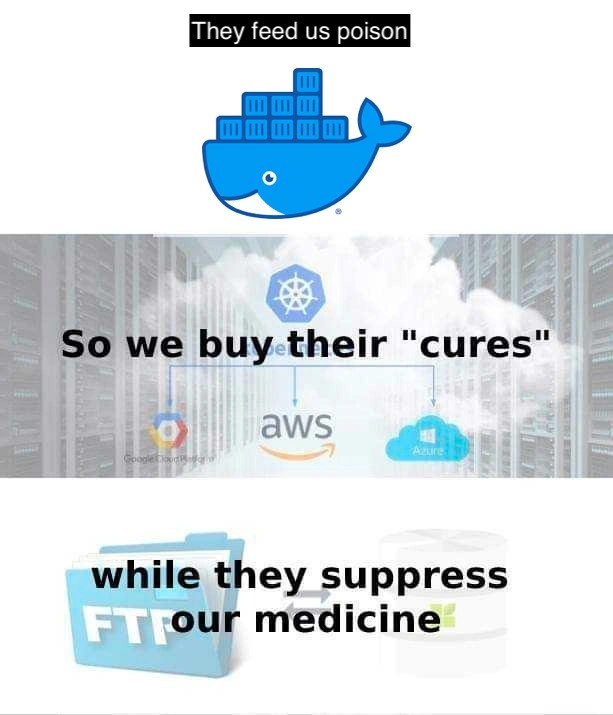
When your machine learning budget towers over the measly data quality funds
AI ML Post #4945, on Oct 20, 2022 in TG

When your machine learning budget towers over the measly data quality funds

Why is this AI ML meme funny?

Level 1: Fancy Car, No Gas

Imagine you have a friend who spends all their money to buy a super fancy sports car – it’s shiny, fast, the coolest car you can think of. But then you find out they only left a tiny bit of money to buy fuel for the car. They put in just a small amount of gas, or maybe the cheapest, low-quality fuel. What happens? The fancy car might start up and look impressive in the driveway, but when they try to drive it, it sputters, moves a little, and then stalls out. All that money on a great car, but it can’t go anywhere because it doesn’t have enough good fuel! Pretty silly, right?

This meme is laughing at the same kind of silly situation, but with computers. The “machine learning budget” is like buying that amazing car – it’s spending a lot on the high-tech project. The “data quality budget” is like the money for the fuel – it’s what you need to actually make the machine work well. In the meme’s picture, the machine learning budget is huge and strong (like the fancy car), and the data quality budget is tiny and weak (like barely any gas). The reason people find it funny is because it’s so obviously a bad idea to everyone: of course you shouldn’t spend all your money on the car and none on the gas! In real life, though, some companies do exactly that with technology, and the meme is poking fun at them. It’s pointing out in a simple, dramatic way that if you don’t take care of the basics, the expensive fancy stuff won’t work. Even a kid can get the joke: if you have an awesome toy but no batteries, it’s not much use. The big strong villain and the tiny pink guy make us laugh, because we instantly see who’s got all the strength. And we also immediately understand the little pink guy doesn’t stand a chance. It’s a fun way to remember that big plans need a strong foundation – otherwise, you end up with a cool car that can’t run anywhere.

Level 2: Mighty vs Measly

Let’s break down this meme in simpler terms. The tall, muscular character on the left is Bane, a villain from a Batman movie known for being very strong and intimidating. In the image, he’s labeled “The Machine Learning Budget.” This represents a company spending a huge amount of money on a machine learning project. Now, machine learning is essentially a type of AI where we teach computers to make predictions or decisions by showing them lots of examples data. Think of it like showing a computer tons of pictures of cats and dogs so it learns to tell a cat from a dog on its own. That kind of project – building a smart model – can get expensive: you hire specialists, buy powerful computers or cloud services, and invest in fancy software. So in the meme, Bane is big and dramatic because the machine learning budget is really large and powerful.

On the right, we have that small person in the goofy neon-pink full-body suit labeled “The Data Quality Budget.” This stands for the money (or resources) allocated to making sure the data going into the machine learning model is high-quality. Data quality work includes things like cleaning the data, fixing or removing incorrect entries, dealing with missing information, and verifying that everything is consistent and accurate. It’s like doing quality control on the ingredients before you start cooking a meal. In a tech team, data quality might be handled by data engineers or analysts who set up pipelines to prepare and check the data. But in this picture, the pink-suit character is tiny and kind of silly-looking – a visual way of saying the data quality effort is given a very small, almost laughable amount of attention or money compared to the machine learning effort.

So, basically the meme is showing an imbalance in spending priorities. Imagine a company that budgets, say, $1,000,000 for the shiny new machine learning project (that’s Bane – big, buff, expensive) and only $10,000 for cleaning up the data (that’s the pink guy – puny, cheap). That’s obviously extremely skewed. The picture exaggerates it comically: Bane is huge, standing in a triumphant pose under a waterfall of money (or in the actual image, water from the scene), while the pink-suited “data quality” figure is awkwardly copying the pose, but clearly out of his league. It’s like the meme is shouting, “Look how ridiculous this difference is!”

For someone early in their career, the lesson here is: a machine learning model is only as good as the data you feed it. If you feed a model bad or messy data, it will learn bad patterns and give poor results. We often use the phrase “garbage in, garbage out.” That means if your input data is garbage, the output (even from a fancy model) will also be garbage. In the real world, preparing and cleaning the data often takes a lot of time and effort – some estimates say data scientists spend up to 80% of their time just wrangling data to get it usable. It’s super important! But a newcomer might not realize that if they see companies only bragging about the cool AI model and not talking about the data prep. This meme is a funny reminder: don’t ignore the unseen groundwork.

The contrast is what makes it funny and pointed. You have this massive budget literally personified by a muscled-up villain, overshadowing a measly budget personified by a skinny guy in a pink suit. The pink suit is a bit of a clownish touch – it implies that the data quality budget is almost a joke in comparison. Seeing them pose the same way (arms spread out) highlights how one side is taking itself very seriously (big budget, big power) and the other is like a tiny parody of it (tiny budget, trying to keep up). This resonates with developers and data folks because many have experienced management focusing on the glamorous part (machine learning! AI!) and neglecting the boring part (making sure the data is correct). It’s both funny and frustrating because it’s so common.

To put it simply: the meme is saying “Companies spend tons on machine learning, but almost nothing on making sure the data is good.” And that’s a problem. If you don’t invest in data quality, your fancy ML project can fail or give wrong results. It’s like if you spent all your time and money building a high-tech robot but only gave it broken, error-filled instructions to learn from – the poor robot wouldn’t perform well, right? This meme uses humor to deliver that message. Even if you’re new to AI, you can understand the picture: one giant is training for a championship fight while the little guy next to him isn’t even getting proper training gear. In the end, if they actually had to fight (or if the machine learning model had to work with real-world data), the one with insufficient preparation (the tiny data budget) would be the weak link causing failure. So, the takeaway for a junior engineer is: don’t underestimate data quality. It might not be flashy, but it’s as important as the machine learning model itself – a fact this meme underscores with a big wink.

Level 3: Shiny Model, Dirty Data

For those of us in the trenches, this meme delivers a painful chuckle of recognition. It skewers a common scenario in industry: companies eagerly dumping huge funds into flashy AI/ML initiatives (the latest deep learning, AI research tie-ups, fancy cloud services) while giving only a token budget to the boring yet critical work of data cleaning and validation. It’s a classic case of AI hype vs. reality. Everyone wants to brag about the machine learning project with a massive budget – that’s the big masked villain taking center stage – but meanwhile the data quality effort is an undersized, almost comically overlooked sidekick. The result? Hype-heavy spending priorities where the shiny new model gets all the glory (and money), and the dirty data gets swept under an underfunded rug. Experienced engineers have seen this pattern so often it’s practically an industry trope. We know that without clean, reliable data, even the priciest models will crumble, yet time and again we watch management underinvest in data quality. The meme is funny-not-funny because it’s true: the budget mismatch is real, and we’ve lived the consequences.

The image itself is a perfect visual metaphor. The towering figure in tactical gear is Bane (the iconic Batman villain famous for his imposing presence). He’s labeled “THE MACHINE LEARNING BUDGET,” arms spread wide as if declaring “behold my power!” Next to him, way smaller, is a goofy-looking person in a bright pink morph suit labeled “THE DATA QUALITY BUDGET,” mimicking the pose in an almost pitiful way. The size and costume contrast says it all: one is a massive, formidable force and the other is… well, a tiny pink joke. This is exactly how the spending often breaks down. I’ve seen teams where the company hires a dozen PhD-level data scientists, buys premium GPU clusters, and subscribes to expensive ML platforms – yet the data engineering team is one overworked person with a collection of brittle scripts, begging for resources to triage messy datasets. It’s like putting Bane in the spotlight and dressing the data team in a silly outfit to perform miracles with pocket change. No wonder things break.

We can practically hear the conversation in such companies: “Boss, our model’s performance is tanking because the data is inconsistent.” And the boss responds, “We just gave you that multi-million dollar AI budget, what do you mean the data’s bad?!” 🙄 (Cue the data engineers facepalming.) The meme nails this disconnect. DataQuality issues aren’t obvious in glossy boardroom demos, so they get ignored until they bite hard. By then, the AI hype train has left the station with Bane-sized funding, and the pink-suit budget isn’t enough to clean up the trail of data chaos left behind. We have all these fancy models failing in production because someone wouldn’t spend a fraction of the ML budget on things like robust ETL pipelines, data validation, and monitoring. There’s an old quip among data scientists: “80% of our time is spent cleaning data, and the other 20% is spent complaining about cleaning data.” Now imagine allocating only 5% of the project funds to that cleaning — of course we’re going to complain! The priorities are upside-down, and the meme’s humor comes from illustrating that absurdity so starkly.

To put it in perspective, consider what each budget typically covers in real life:

  • Machine Learning budget: Hiring a squad of ML researchers and data scientists, renting massive cloud GPU instances, purchasing enterprise AI software licenses, and funding pilots of the latest algorithms. This budget buys tons of compute power and fancy math — think state-of-the-art neural networks, recommendation engines, etc. It’s the big, sexy line item that executives love to show off.
  • Data Quality budget: Maybe assigning one junior data engineer (or splitting someone’s time) to write data cleaning scripts, using a few open-source tools (because there’s no money for fancy data quality platforms), and often running on whatever spare server is around. Sometimes it’s literally just “we’ll fix the data later” or “the interns will clean it in Excel.” In other words, pennies for the thankless grunt work of fixing typos, missing values, and integration errors in datasets – the stuff that actually determines if the ML model will have reliable input.

Is it any surprise, then, when the machine learning project that cost a fortune starts giving bizarre results? We end up with models that technically “work” but churn out unreliable predictions because, say, half the input data was mis-labeled or coming from different sources with inconsistent formats. The situation becomes “we have a Ferrari engine (model) running on muddy water (data).” The senior folks seeing this meme are nodding (or shaking their heads) because they’ve been in the post-mortem meetings of these failures. It’s the “we told you so” moment for engineers: if you don’t invest in data quality, your fancy ML initiative will embarrass you.

The humor has an edge of cynicism: we laugh at the ridiculousness of a pink-suited DataQuality budget next to a jacked-up AI spend, but it’s laughter through gritted teeth. It hits on that shared frustration in tech: the disconnect between hype and practical needs. This meme basically says, “Sure, go ahead and make Bane-sized investments in machine learning – just don’t be surprised when your underfed data pipeline in the pink suit collapses on stage.” It’s a truth bomb wrapped in a joke. Every experienced data engineer and ML developer chuckles because they know the punchline from experience: neglecting the boring stuff (data prep, cleaning, validation) will come back to haunt you, budget cuts or not. Budget constraints that favor glam over groundwork end up costing more in the long run. The meme resonates because it visualizes that folly in one snapshot – extremely exaggerated, yet uncomfortably close to reality. We’re amused, and a bit exasperated, because we’ve all witnessed the mighty ML project that couldn’t get out of its own way thanks to neglected data quality. It’s funny, it’s tragic, and it’s 100% relatable.

Level 4: Bane of Good Models

At the theoretical extreme, pouring an enormous Machine Learning budget into a project while skimping on Data Quality isn’t just ironic – it defies fundamental ML principles. In machine learning theory, a model’s performance is bounded by the information content of the data. This is the academic backbone of the old saying “garbage in, garbage out.” No matter how advanced your architecture or how many TPUs you deploy, a model cannot exceed the quality of the data it’s trained on. There’s a formal notion of the Bayes error rate – the lowest possible error achievable given the inherent noise in the dataset. For example, if 5% of your training labels are wrong due to sloppy data handling, even an infinitely complex model can at best reach 95% accuracy. All those extra millions sunk into fancy algorithms hit a hard ceiling imposed by that data noise. In other words, bad data imposes a strict mathematical limit on model performance that no amount of budget can buy your way out of.

From an information theory perspective, you can think of training data as a channel carrying “truth” to the model. If that channel is noisy or low-bandwidth (i.e. full of missing values, errors, or bias), even a gigantic model cannot recover the lost signal beyond a point. It’s akin to Shannon’s channel capacity: a bigger model (more parameters, more layers) doesn’t increase the channel’s capacity to carry true information – it might just memorize the noise. In fact, lavish budgets often produce extremely complex models that overfit to imperfect data. Overfitting is when a model learns training examples too well – including all the random quirks and errors – so it fails to generalize to new data. A massive neural network given sloppy data will dutifully learn the nonsense patterns in that sloppy data. It’s basically putting lipstick on a pig: the pig (bad data) remains a pig, and the powerful model just emphasizes the blemishes. Researchers know that model capacity must be matched with data quality and quantity – otherwise you’re in diminishing returns territory. As the No Free Lunch theorem reminds us, no one model or approach universally wins; you can’t count on brute force budget to save you if the data itself isn’t up to par.

Ultimately, neglecting data quality is the bane of any sophisticated model. You could deploy the most state-of-the-art algorithm ensemble on a billion-dollar supercomputer – if half your input data is mislabeled or irrelevant, the sophisticated math simply churns out sophisticated nonsense. There’s a sort of law of conservation of data validity: you can’t magically create accuracy or insights that aren’t present in the source information. This is why seasoned ML scientists often focus on improving data hygiene and coverage; it tends to give more payoff than tweaking an already-fancy model. The meme’s core joke lands on this truth: that a bloated machine learning spend without a solid data foundation isn’t just humorously imbalanced – it’s fundamentally doomed by the laws of math and information. The neglected Data Quality effort becomes the silent deal-breaker, the hidden super-villain – truly the bane of good models.

Description

A dramatic cinematic scene shows a tall, muscular masked villain in dark tactical gear standing center-stage with arms spread wide while water crashes behind him in a dim industrial tunnel. Off to the right, a much smaller person in a full-body neon-pink morph suit imitates the same open-armed pose. Bold white impact-font captions overlay the figures: "THE MACHINE LEARNING BUDGET" sits across the large villain’s torso, and "THE DATA QUALITY BUDGET" sits across the tiny pink figure. The stark size and costume contrast visually lampoon the disproportionate investment many organizations make - lavish funds for sophisticated machine-learning projects versus token amounts for essential data-quality work. The meme resonates with engineers who know that without clean, validated data pipelines, the most expensive models quickly crumble

Comments

6
Anonymous ★ Top Pick Quarterly planning be like: $4 M to fine-tune a transformer on petabytes of clickstream noise, and a $25 Starbucks card for whoever figures out why “NULL” is a valid SKU in half the tables
  1. Anonymous ★ Top Pick

    Quarterly planning be like: $4 M to fine-tune a transformer on petabytes of clickstream noise, and a $25 Starbucks card for whoever figures out why “NULL” is a valid SKU in half the tables

  2. Anonymous

    We spent $10M on GPUs to train a model that predicts customer churn with 99.8% accuracy, which would be impressive if our data pipeline didn't think every NULL was a churned customer from 1970

  3. Anonymous

    Every ML team's budget allocation perfectly captures the industry's collective delusion: we'll throw millions at GPUs and the latest transformer architectures, but suggest hiring a data engineer to actually clean the training set and suddenly it's 'let's revisit this next quarter.' Turns out you can't BERT your way out of garbage data, but try explaining that to a VP who just read about ChatGPT on LinkedIn

  4. Anonymous

    Stakeholders flood the compute budget like Bane's waterfall, starving data pipelines - classic recipe for models that ace benchmarks but hallucinate in prod

  5. Anonymous

    Pro tip: if the data quality budget fits in a Jira subtask, your A100s will just optimize for missingness - turns out you can’t backpropagate integrity

  6. Anonymous

    Execs drop millions on GPUs, then wonder why the ‘SOTA’ model drifts whenever a vendor flips commas to semicolons - turns out gradient descent can’t backpropagate into broken data contracts

Use J and K for navigation