The Ultimate Flex: Choosing Redstone in a Facebook Interview
Why is this Interviews meme funny?
Level 1: Building Answers with Blocks
Imagine you’re taking a test and the teacher says, “You can use any tool you want to solve this problem.” Everyone else picks a pen or a calculator, but one student pulls out a big box of toy blocks and starts building a crazy contraption right there on the floor. At first, you’d think they were joking, right? But then this contraption actually lights up and shows the answer to the test problem on a little makeshift screen! You’d be stunned – it’s such a surprising and creative way to solve a question. That’s exactly the feeling this meme is going for. In a serious job interview, where someone is asked to write some code, the candidate instead uses Minecraft blocks (like digital LEGO pieces) to physically construct the solution. It’s funny because it mixes something very playful (building with blocks in a game) with something very serious (a big job interview). The interviewer is shocked and amused, kind of like that teacher would be. The core of the joke is the element of surprise and the cleverness: the candidate found a totally unexpected way to solve the problem, and it actually worked!
Level 2: Redstone 101
Let’s break down exactly what’s going on in simpler terms. Minecraft is a popular block-building game, and Redstone is a special element in that game used to create electrical circuits in a virtual world. Think of redstone like wires and batteries: you can lay down redstone dust to act as wiring, use redstone torches or repeaters as components that power or delay signals, and essentially build gadgets that respond to inputs. Players have used these tools to construct everything from simple automatic doors to working calculators – even rudimentary computers – inside the game. So when the interview candidate says, “I’ll write it in Redstone,” they’re cheekily treating Minecraft’s wiring system as if it were a programming language. In a normal coding interview, the interviewer expects you to write your solution in a known language like Python or Java. They usually say “any language of your choice” to let you use whichever you’re comfortable with. But here the candidate chose something way out of left field: not a typical coding language at all, but a game’s circuit-building feature. It’s like being asked to solve a math problem and opting to build an actual machine to do it, instead of writing equations.
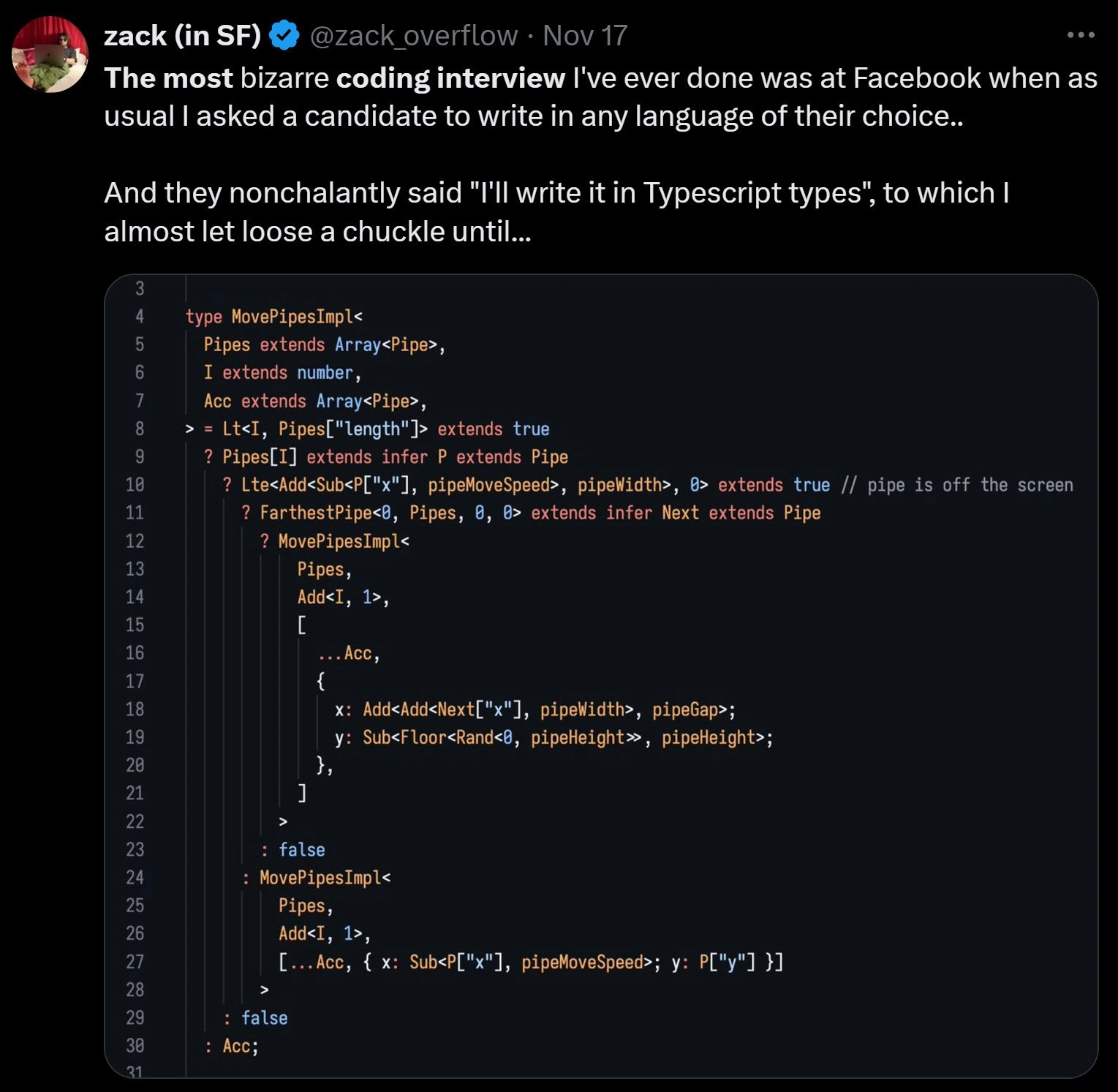
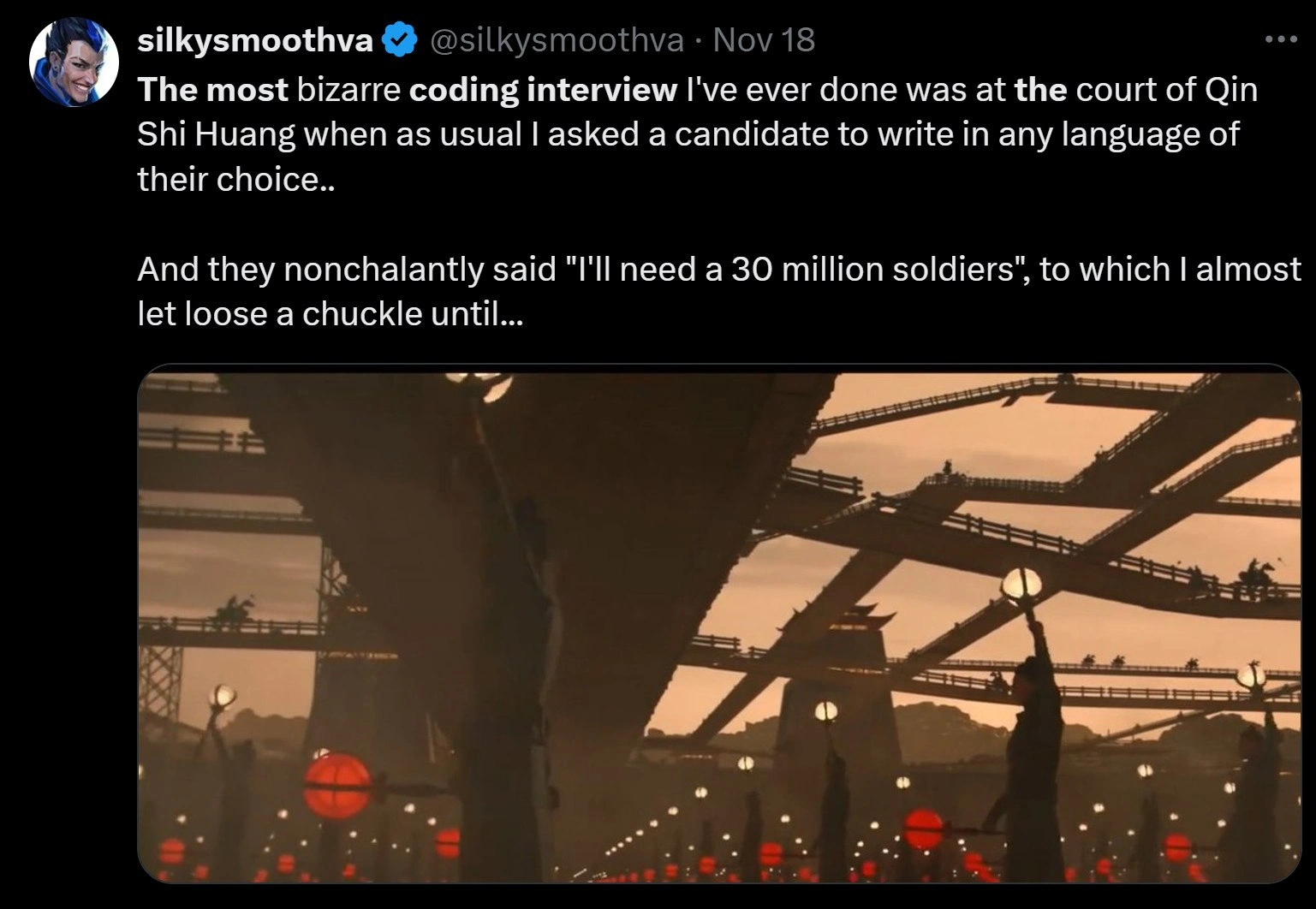
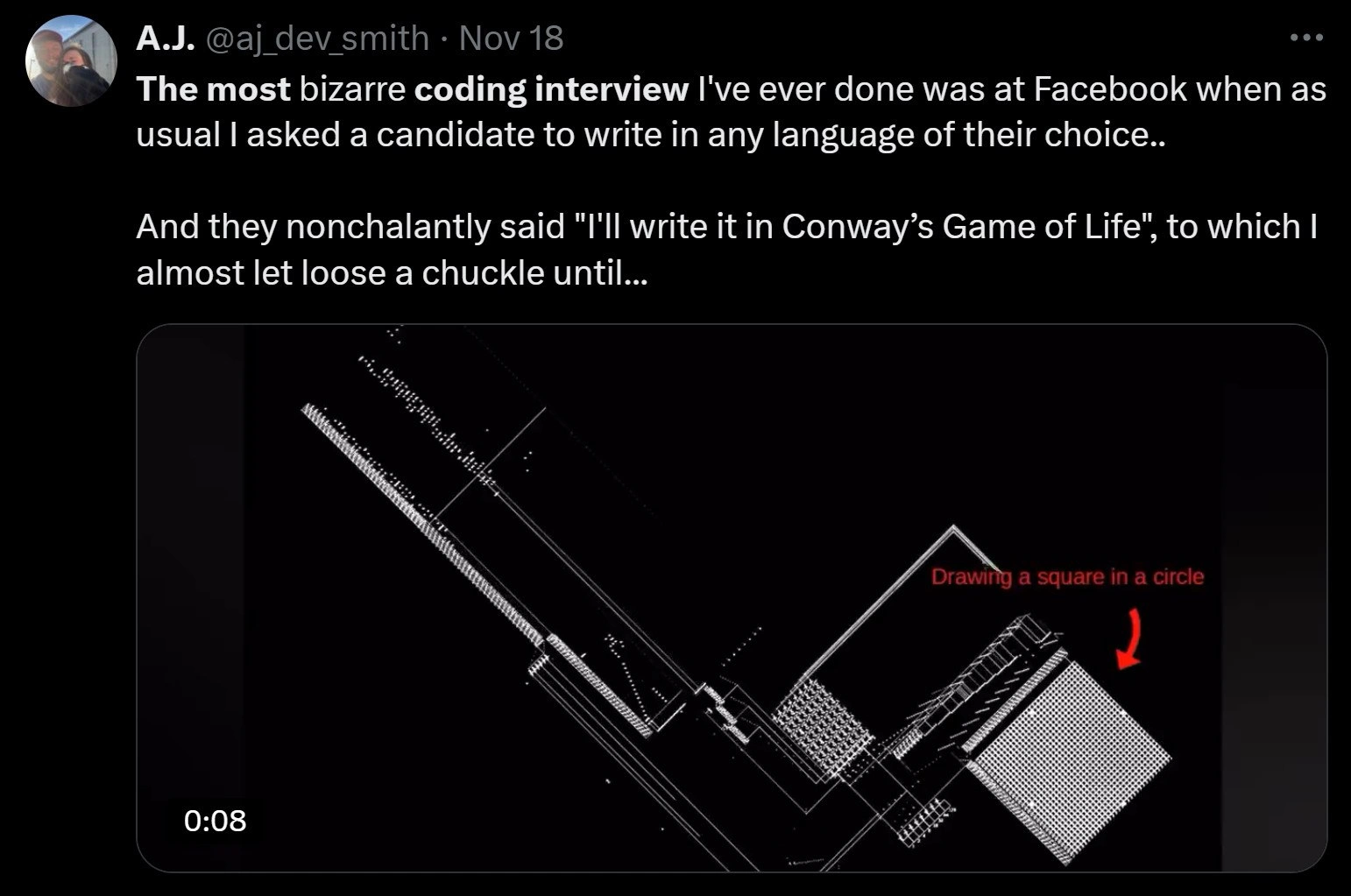
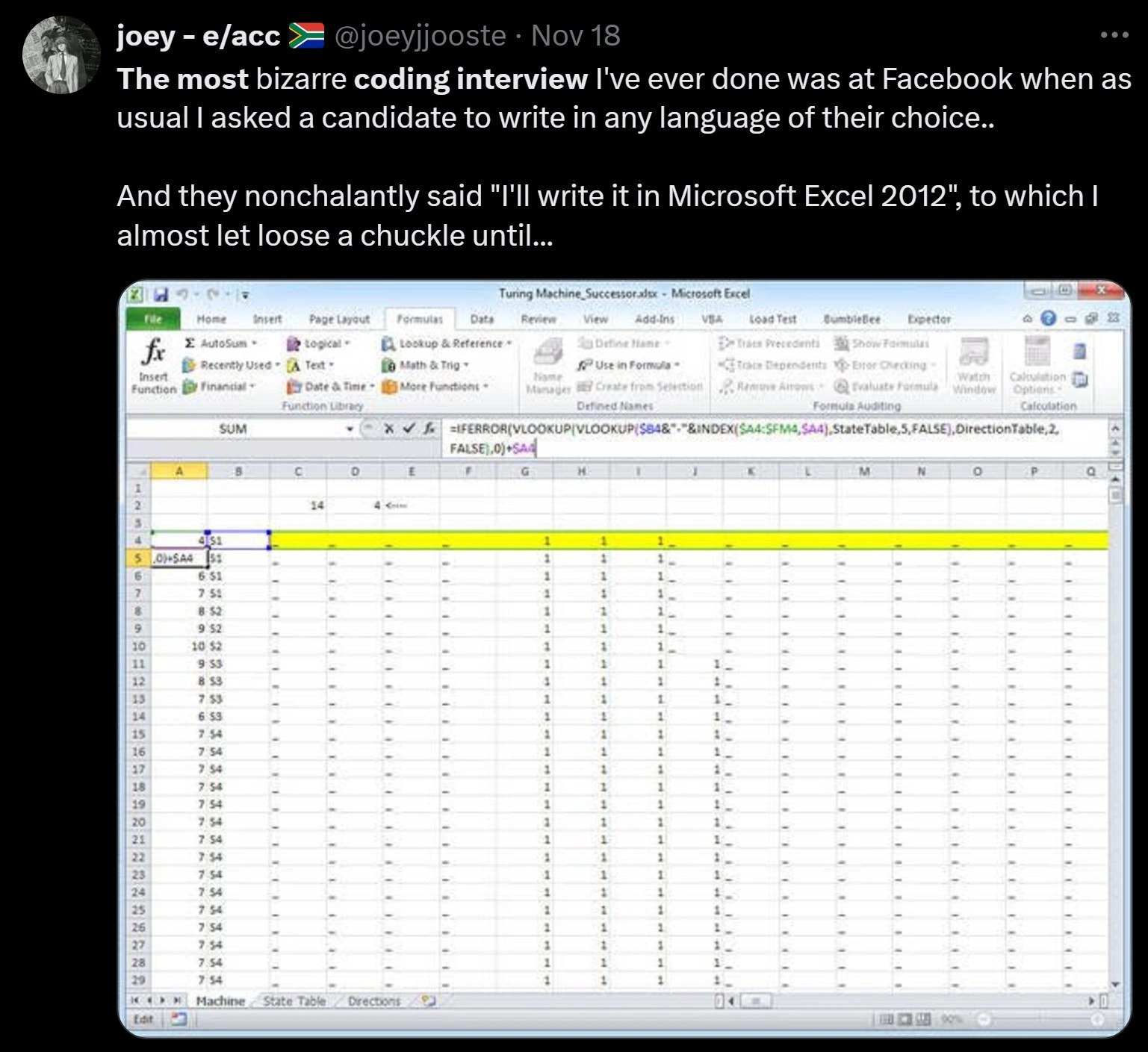
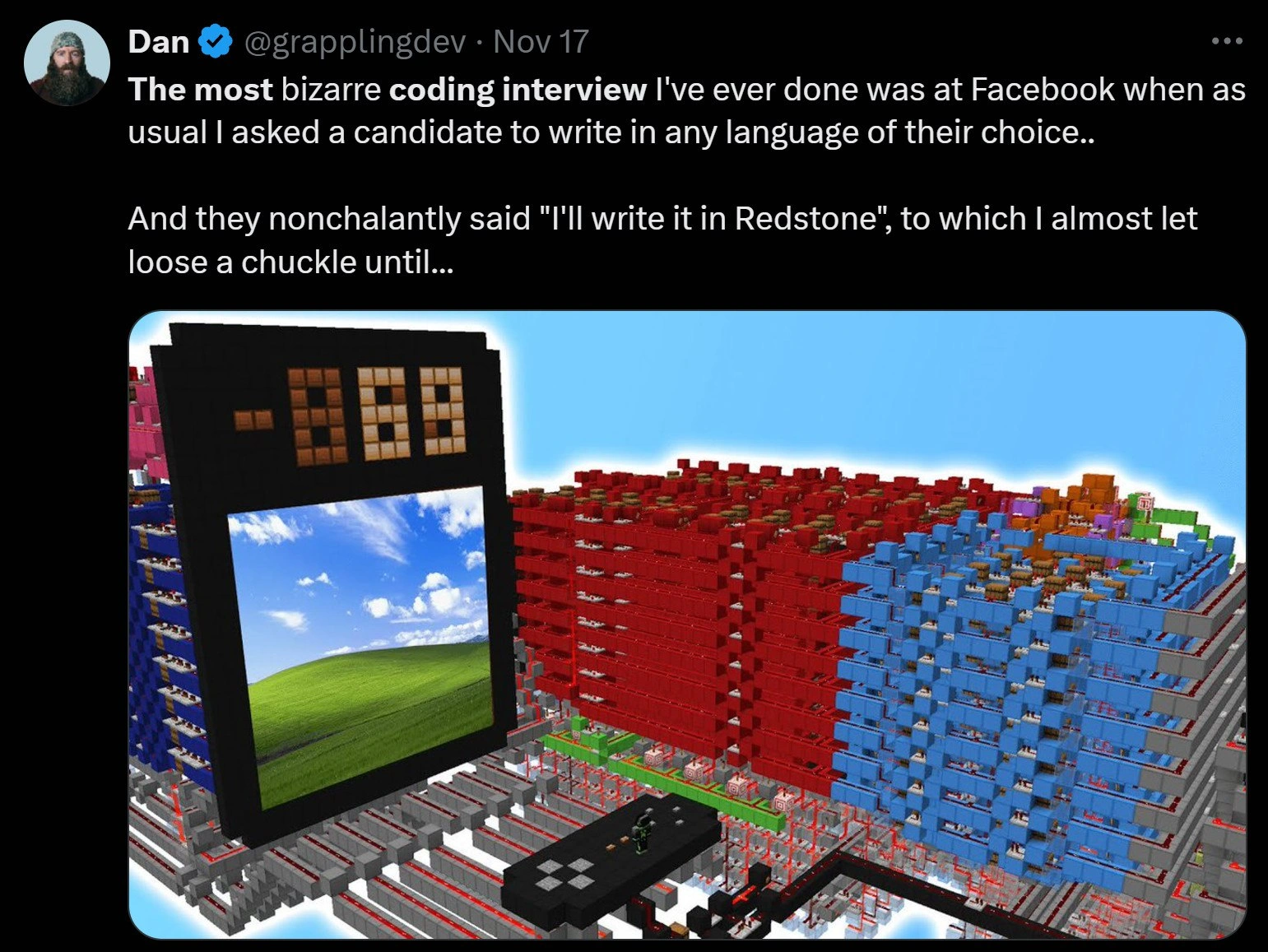
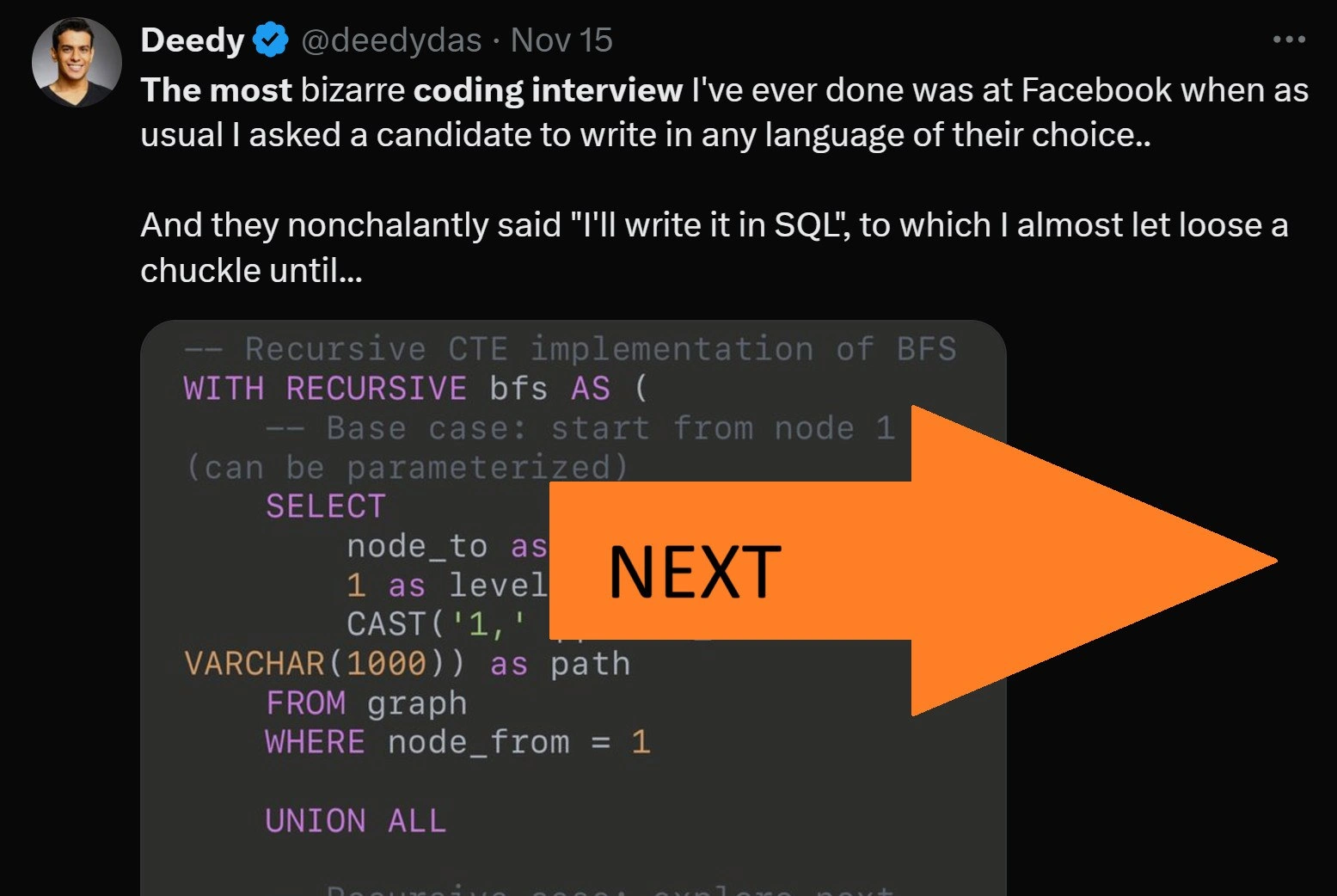
The tweet (a screenshot in the meme) sets the scene: this happened at a Facebook interview, and the interviewer (Dan, the person tweeting) says it was the most bizarre one he’s done. He gave the candidate the usual freedom of language choice, and the candidate casually replied with “Redstone.” The interviewer almost laughed because it sounded like a joke – after all, who would pick a video game mechanic as their coding language in a serious interview? But the ellipsis (“until…”) suggests the candidate went on to actually demonstrate something. The attached image shows a massive Minecraft Redstone computer. Let’s describe that image: We see a big black rectangle on the left that looks like a screen or monitor, displaying the famous Windows XP hill-and-sky wallpaper (the old default background for Windows computers). Next to it, there’s a huge assembly of colorful blocks – red, blue, pink, orange – stacked in layers with lots of little torch-like bits and connecting rails. Those are the Redstone circuits. The number “-88” in glowing segments at the top of the “screen” hints that this contraption might even be running a counter or some program. In simpler words, the candidate’s choice essentially meant, “I’m going to build the computer to run my solution.” That’s a wild idea!
This meme falls under developer humor and interview humor because it plays with the norms of a technical interview process. Interviews for software engineers often involve solving coding problems on the spot. By tradition, you pick a programming language you know and write code. If someone actually opened Minecraft in an interview and started placing Redstone torches, it would be both surprising and comical. It’s also a gaming reference – many programmers are familiar with Minecraft, or at least know of Redstone contraptions from internet videos. In the programming world, there’s a notion of esoteric programming languages – languages made more for fun or challenge than for practical use (like one called Brainf**k, which has a deliberately wild design, or one called Piet where programs are abstract art). Treating Redstone as a “language” is a similar kind of playful oddball choice. It’s an example of a candidate using an unorthodox tool in a context that usually has a standard set of tools. And that’s why it’s funny: it mixes a serious situation (a Facebook coding interview) with a playful, unexpected method (Minecraft Redstone engineering). Even if you don’t catch all the specific references, the idea of someone solving a coding problem with what looks like a giant LEGO-like machine is clearly a humorous twist.
Level 3: Gaming the Interview
From a senior developer’s perspective, this meme hilariously captures an “be careful what you ask for” moment in the technical interview process. It’s common interviewer patter to say, “Feel free to write your solution in any programming language you like.” Usually that means a mainstream language like Python, Java, or C++. But here, the candidate takes that offer to an extreme literal interpretation – choosing an esoteric “language” built out of Minecraft’s Redstone dust and torches. This unexpected answer mashes up developer humor with a gaming reference, leaving the interviewer momentarily stunned. The tweet’s author (@grapplingdev) describes nearly chuckling when he heard “I’ll write it in Redstone,” because on the face of it, it sounds absurd – Redstone isn’t a conventional language at all. It’s like a job candidate saying they’ll solve the algorithm by wiring up a physical circuit board on the spot. The punchline builds as we realize the candidate is dead serious and presumably capable of doing it – the attached image shows a jaw-dropping redstone computer complete with a retro Windows XP screen output.
This scenario is poking fun at both coding interviews and the wild creativity of devs who love Minecraft engineering. In real life, if an interviewee genuinely booted up Minecraft and started laying out redstone repeaters to solve a problem, the interviewer’s reaction would oscillate between disbelief and genuine impressed curiosity. It satirizes the notion that tech companies want candidates to think outside the box: well, this person thought outside the box by using sandbox game blocks. It’s an ultimate developer flex. Experienced engineers also recognize a bit of interview anti-pattern here: interviewers claim to be open-minded (“any language is fine!”) but are usually unprepared for something truly unconventional. This candidate exploits that loophole. It’s a humorous reminder that “any language” really means any. Few interviewers would be equipped to evaluate a Redstone contraption’s “code,” let alone follow a redstone circuit diagram solving, say, a sorting algorithm. The meme taps into that shared understanding: we’ve all heard of pranksters or brilliant rogues who solve tasks in crazy ways – like writing a coding challenge in Brainfuck or implementing fizz-buzz via SQL, but building a Minecraft redstone machine live is next-level.
There’s also a subtext about the culture of tech and play. Many developers are also gamers; Minecraft’s redstone is infamous in the community for enabling serious computational projects under the guise of play. By referencing a redstone-built pixel display showing the iconic Windows XP Bliss wallpaper, the meme merges nostalgia and absurdity. (If you’re an old-school dev, seeing that grassy hill in block form is both a trip down memory lane and a ridiculous sight in this context.) We’re essentially watching someone bring a hobbyist electronics project into an interview and say “Look, I made a fully working computer. Shall I solve your problem on this self-made 8-bit machine?” It underscores a shared feeling: software interviews can be so algorithm-focused and detached, but here comes a candidate who introduces literal blocky circuitry into the mix – a reminder that computing isn’t just code on a screen, it can be leveraged from any medium if you’re clever enough. That’s both funny and kind of inspiring.
For seasoned devs, there’s an extra chuckle at the practical implications. Imagine the interviewer trying to validate the solution: “Uh, do we... compile this? Or do I just watch you flip that lever?” The Facebook coding interview guidelines surely didn’t anticipate needing a Minecraft client on the interview laptop! It’s developer comedy gold: the absurd mismatch between big-tech interview norms and a sandbox game’s digital logic. In the back of our minds, we also recall that Facebook (now Meta) hires some of the world’s sharpest engineers – so a candidate brilliant (or quirky) enough to live-build a Redstone computer might actually be real “Facebook material.” The meme doesn’t show the conclusion, but the line “I almost let loose a chuckle until…” implies the interviewer’s laugh caught in their throat as the candidate proceeded to do something astonishing with Redstone. Maybe the contraption actually produced the correct output, or perhaps it literally displayed the text “HIRED” on that blocky screen. The humor works because it’s just plausible enough in a world where both game modding and coding interviews are everyday parts of developer life. It exaggerates a familiar situation to absurd heights, tickling that part of a programmer’s brain that loves both clever hacks and geeky crossover moments. In short, this meme is an interview humor masterpiece – blending technical audacity with gaming creativity, and leaving us imagining the look on that poor interviewer’s face as their question got answered in a way they never expected.
Level 4: Turing-Complete Sandbox
At the deepest technical level, this meme hinges on the concept of universal computation hidden inside a video game. Minecraft’s Redstone system is essentially a sandbox for building digital logic circuits using in-game elements like redstone dust (wires), torches (logic inverters), and repeaters (signal delay elements). In theoretical computer science terms, a system that can simulate arbitrary logic gates and memory is Turing-complete – meaning it can compute anything any conventional programming language can, given enough resources. Redstone qualifies: players have constructed fully functional 8-bit adders, ALUs, and even primitive CPUs within Minecraft’s blocky world. This is why a candidate cheekily choosing “Redstone” as their programming language isn’t just a joke; it’s technically plausible. The meme’s attached image of a massive Redstone machine with a pixelated Windows XP “Bliss” wallpaper on a blocky screen drives the point home: someone went as far as recreating a tiny working computer inside Minecraft. This nod to a real operating system (the old Windows XP desktop background) is an absurdly over-the-top visual punchline that says, “Yes, Redstone can literally render a desktop (in very low resolution) if you’re crazy enough!” It highlights the hardware architecture facet of this humor – the candidate isn’t writing high-level code at all, but constructing a circuit from the ground up. It’s a satire of levels-of-abstraction: while most programmers write code that runs on silicon chips, here our intrepid interviewee designs the silicon (well, redstone) itself inside a game. In effect, they’re demonstrating understanding of how a computer works at the binary logic level. This is computing within computing – a simulation of a CPU built inside a software environment – essentially building a computer out of virtual blocks. Seasoned devs recognize this as a whimsical nod to the Church-Turing thesis in action: as long as a system can flip bits and emulate logical rules (even Minecraft’s fanciful physics ticks), it can solve the same problems any “real” computer can. The humor sparkles in the sheer impracticality: a Facebook coding interview problem that might take 10 minutes in Python could take hours (and thousands of redstone torches) to solve by literally engineering a solution from logic gates. Yet, the fundamental computational equivalence of Redstone and a programming language is the brilliant, nerdy core of the joke. It’s a high-brow twist hidden in a low-res screenshot – a celebration of the idea that even a game about blocks can hide the power of a universal Turing machine.
Description
This image is a screenshot of a tweet from the user Dan (@grapplingdev). The tweet text reads: 'The most bizarre coding interview I've ever done was at Facebook when as usual I asked a candidate to write in any language of their choice.. And they nonchalantly said "I'll write it in Redstone", to which I almost let loose a chuckle until...'. Below this text is a large in-game screenshot from Minecraft. The screenshot displays a colossal and incredibly complex machine built from Minecraft blocks, predominantly red and blue, which represent Redstone circuitry. This virtual machine is so advanced that it's operating a screen, also built within the game, which is showing the classic Windows XP 'Bliss' wallpaper of a green hill under a blue sky. The meme's humor originates from the candidate's audacious choice of 'Redstone' as a programming language. Redstone is a component in Minecraft that mimics electrical circuits, and building functional computers with it is a known, but extraordinarily difficult, challenge that demonstrates a deep understanding of computer architecture and logic from first principles. It's a massive 'flex' on the interviewer, subverting the typical coding challenge with a demonstration of profound, albeit unconventional, engineering skill
Comments
7Comment deleted
HR: 'So, it says here your preferred language is Redstone?' Candidate: 'Yes. My build pipeline is just a series of pistons and my garbage collection involves lava.'
Told the candidate they could solve the problem in any language - four hours later I’m load-testing a fully-replicated Paxos cluster built in Minecraft Redstone and wondering if our AWS bill covers virtual TNT blasts
When your candidate's GitHub is just screenshots of Minecraft worlds but their understanding of race conditions comes from actual minecart collisions
When the candidate said they'd implement the solution in Redstone, the interviewer thought they were trolling - until they realized this person had literally built a Turing-complete computer in Minecraft and was about to demonstrate O(n²) complexity using actual physical blocks. Suddenly 'language of your choice' took on a whole new meaning, and the interviewer had to reconsider whether their LeetCode medium problem was even compatible with a 20Hz clock cycle and chunk loading limitations
Say "any language" and someone picks Redstone - now your whiteboard becomes timing‑closure: 3‑tick repeaters, torch fan‑out limits, and a cross‑chunk clock domain
Redstone interviews: Where Big O notation meets block update limits, proving every fizzbuzz is secretly a distributed systems exam
Next time I say "any language," I’m adding "except ones where Big‑O depends on chunk boundaries and the interview devolves into a CDC/ALU design review."