Gandalf's Memory Leak
Why is this Bugs meme funny?
Level 1: Forgetting to Clean Up
Imagine you’re playing with a bunch of toys, and every time you finish with a toy, you just drop it on the floor instead of putting it back where it belongs. You keep grabbing new toys to play with, one after another, but never clean up the old ones. After a while, your room is so full of toys on the floor that when you go to get a new toy, there’s no space left to play – you’ve run out of room! You stand in the middle of the chaos and say, “I have no space.”
That’s exactly what’s happening in this meme, but with computer memory. The program is like your room, and memory (RAM) is the space. When a program “forgets to free memory,” it’s like not cleaning up those toys. The program keeps using more and more memory without giving any back. Eventually, it has no memory left, just like you had no space left in your messy room. The funny picture of the wizard saying “I have no memory” is like the program throwing up its hands and admitting it can’t remember (or fit) anything else because of the mess. It’s a silly way to remind us: always clean up after yourself – whether it’s toys on the floor or memory in a program!
Level 2: Out of Memory
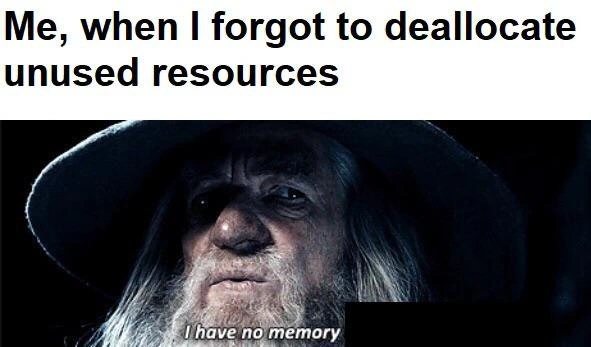
Let’s break down the meme in simpler terms. The top text says, “Me, when I forgot to deallocate unused resources.” In programming, deallocate means freeing up resources (like memory) that you no longer need. “Unused resources” here specifically means memory that the program is done with but hasn’t given back to the system. When you allocate memory (say, using a function like malloc() in C to get a new chunk of memory), you’re supposed to later free it (using free()) once you’re done. If you forget, that chunk remains occupied – the program is essentially hoarding memory it won’t use again. This is what we call a memory leak: memory that was allocated (reserved) isn’t being used anymore, but also wasn’t released. It’s like filling up a closet with stuff and never cleaning it out; eventually, you have no space left in the closet even if most of it is old junk.
Now, the image below the text is a well-known wizard character (that’s Gandalf from The Lord of the Rings). The subtitles on the image read:
I have no memory.
In the movie, Gandalf says "I have no memory of this place," because he’s temporarily forgotten the way. The meme cleverly cuts the quote to "I have no memory," playing on the double meaning. In computing, “memory” usually refers to RAM (the computer’s working memory). So when a program “has no memory,” it means the program ran out of available RAM to use. By pairing that with the wizard’s quote, the meme is personifying the program as if it’s dramatically saying, “I have no memory (left).”
Why would a program run out of memory? That’s where the joke’s setup comes in: “when I forgot to deallocate unused resources.” If a programmer (me) forgets to free up memory that’s no longer needed, those chunks stay occupied. Do this enough times (especially in a loop or over a long period), and the program will use more and more RAM, eventually exhausting what’s available. Imagine you have a simple loop: each iteration you do malloc(1000) to get some space, you use it briefly, but you never call free() for it. After 1000 iterations, you’ve allocated 1000×1000 bytes (about 1,000,000 bytes) and none of it was freed – even if you didn’t need the old chunks anymore! They’re just sitting there, marked as “in use.”
Here’s a tiny C-style pseudo-code example to illustrate a leak:
#include <stdlib.h>
#include <string.h>
void leakMemory() {
char *data = malloc(1024); // allocate 1024 bytes (1 KB)
strcpy(data, "Hello World"); // use the memory for something
// Oops, we forgot to free 'data' before this function ends!
} // after this function, we have lost the pointer to the allocated memory
In this snippet, malloc(1024) grabs 1 KB of memory. We use it to store "Hello World". Normally, we should call free(data) when we’re done with data. But we forgot. When the function returns, the pointer data is gone (out of scope), but the 1 KB it pointed to is still allocated on the heap. We’ve “lost” that 1 KB – the program can’t use it anymore (no reference to it) and won’t free it until the program completely ends. If this function is called repeatedly, each call leaks 1 KB. Do it 1000 times, and you’ve leaked ~1000 KB (~1 MB). In a long-running program, leaks like this accumulate and eat up memory.
So, when the meme says “I have no memory,” it’s a funny way of saying the program ran out of RAM due to such leaks. It’s as if the program itself is confessing, “I can’t remember anything (allocate more), because you never returned all that memory you took earlier!” This is firmly in the realm of LowLevelProgramming problems because higher-level languages (like Python or Java) have automatic garbage collectors that usually handle freeing unused memory for you. In C, C++, or doing manual allocations in something like Rust’s unsafe code, the programmer has to manage memory manually. If you don’t clean up, nobody else will until the program stops. The operating system will reclaim all memory when the process exits, but if your program is meant to run continuously (like a server or a long-running app), you can’t just restart it all the time – you need it to manage memory properly as it runs.
This meme is categorized under Bugs and Debugging_Troubleshooting because forgetting to free memory is a common bug that programmers have to troubleshoot. The moment when you realize your program is out of memory can be baffling: “How do I have no memory? I didn’t think I was using that much…” Then it hits you – maybe you forgot to free something. The text “Me, when I forgot to deallocate unused resources” suggests the meme’s author has experienced that d’oh! moment of realizing their mistake. The wizard’s blank look and statement “I have no memory” perfectly captures the mix of confusion and realization. It’s both a play on words (memory as in RAM vs memory as in remembering) and a representation of the program state.
Let’s also decode the pop culture bit: Gandalf the Grey (the wizard in the image) is a character known for wisdom and power, yet even he gets turned around in a scary mine and admits, “I have no memory of this place.” For developers, it’s a lighthearted parallel – even skilled programmers can get lost in a complex codebase and forget crucial things, like freeing memory. The lord_of_the_rings_reference adds an extra layer of nerdy humor. If you know the movie, you recall the scene and chuckle; if not, it’s still funny because you see a wizard looking confused saying he has no memory, which matches the programming joke anyway.
In summary, the meme uses a memory leak scenario to get a laugh. It’s saying: I, the developer, forgot to free some memory I wasn’t using, and now my program has “amnesia” (no RAM left). Silly me! It’s a scenario many new programmers learn the hard way when working in languages without automatic memory management. The image and caption turn that debugging headache into a humorous anecdote. After you’ve spent hours tracking down a memory leak, sometimes you just have to laugh at how a tiny oversight – one missing free() – caused your mighty program (your “wizard”) to stumble and utter, “I have no memory.”
Level 3: Leak in the Heap
Every seasoned developer who’s worked with lower-level languages can relate to the horror (and dark comedy) of a memory leak. The meme sets the scene: Me, when I forgot to deallocate unused resources – accompanied by the image of a befuddled wizard declaring, “I have no memory.” It’s a perfect storm of humor for anyone who’s chased down a mysterious MemoryLeaks bug at 2 AM. The joke lands because it ties a literal memory problem (the program running out of RAM) to the wizard’s figurative memory loss from a famous movie scene. In that scene (from Lord of the Rings, a reference almost every developer nerd loves), Gandalf momentarily can’t remember the right path. In our world, the program can’t proceed because it’s run out of memory to use – it has no memory available. Cue the facepalm and laughter, because we’ve all been Gandalf in the Mines of Moria at some point, staring at a log or debugger output in confusion, thinking, “I have no memory… what did I forget?”
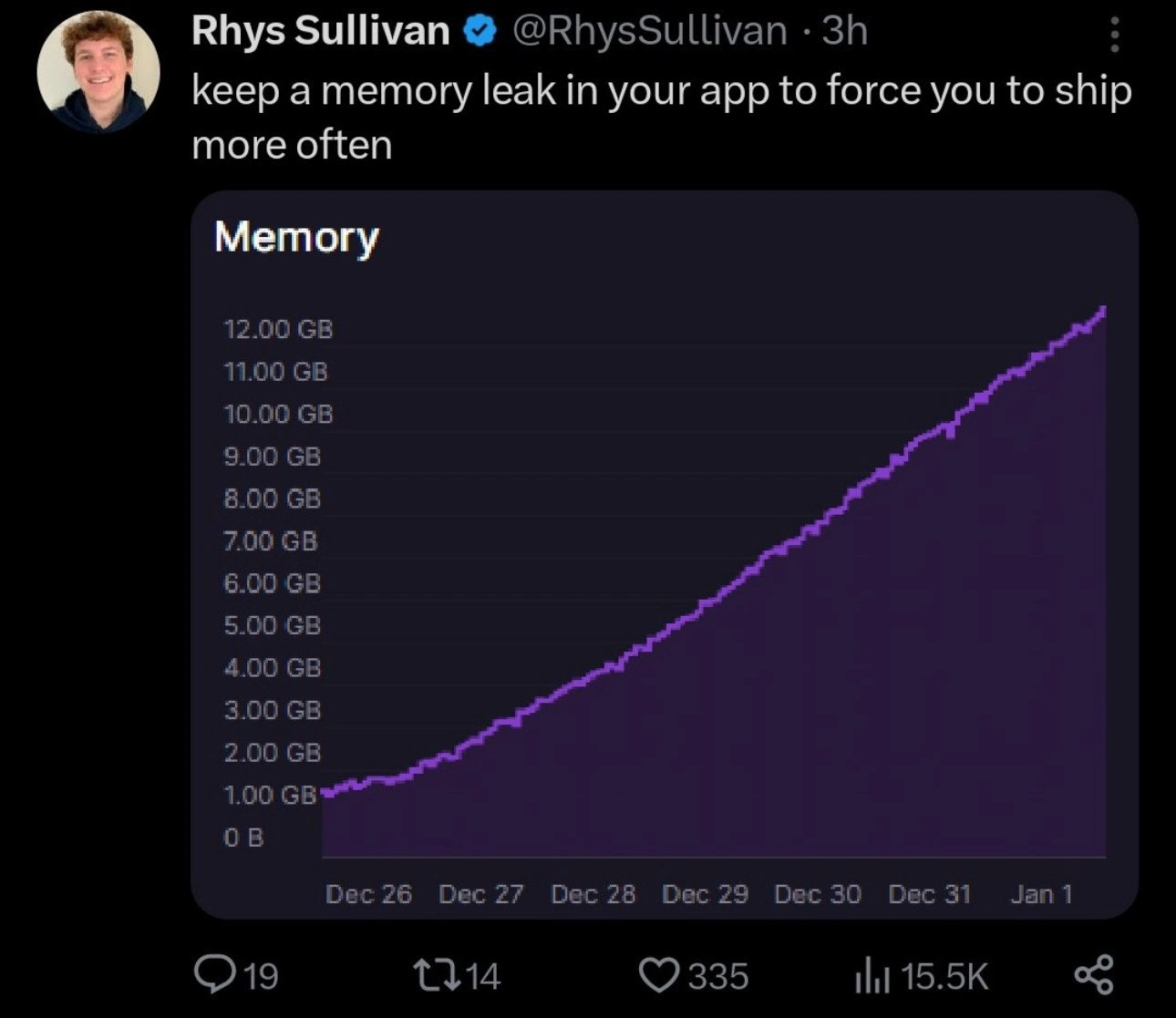
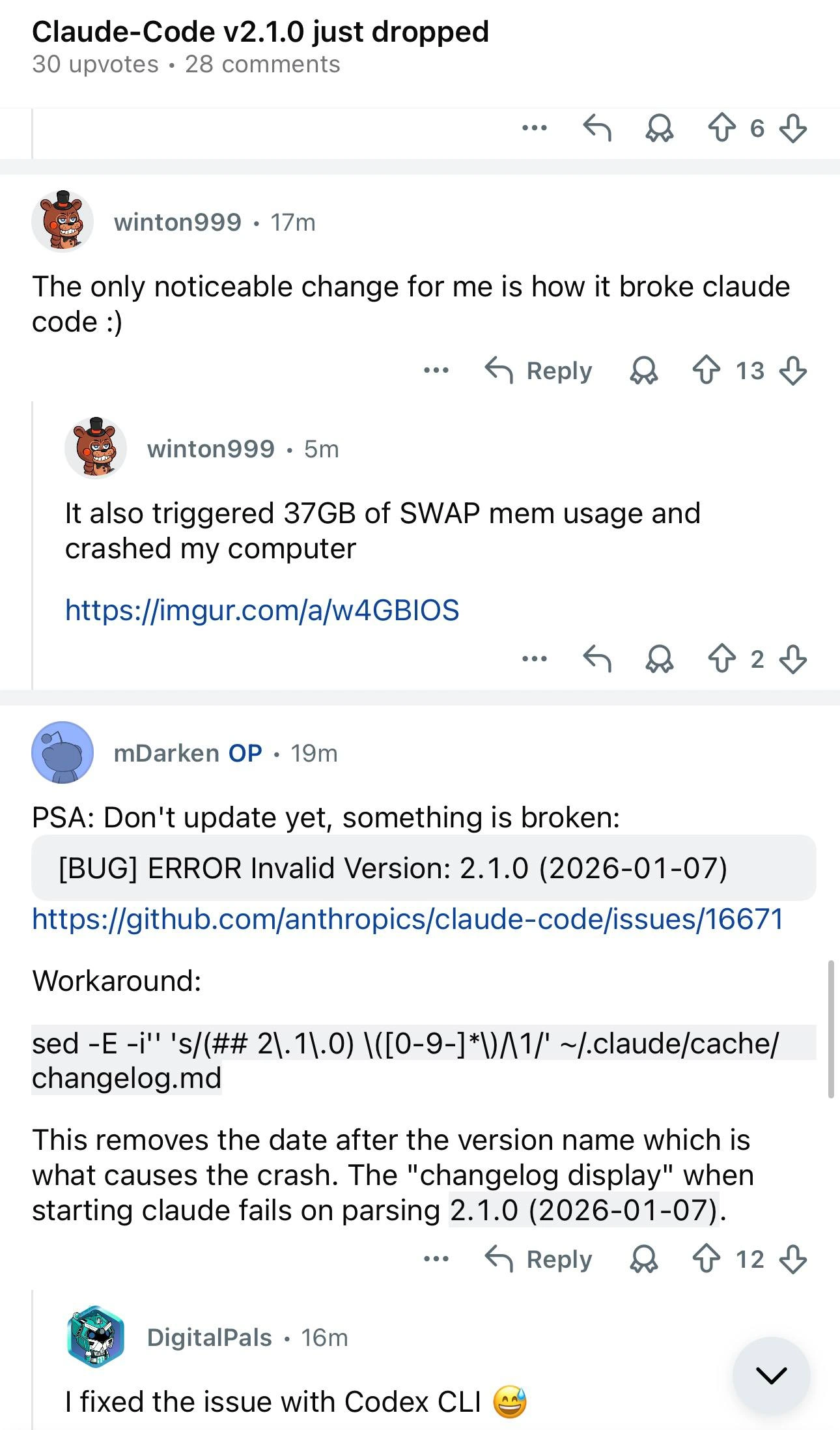
From a senior engineer’s perspective, this meme nails a classic Debugging_Troubleshooting scenario. A memory leak is one of those bugs that often starts small and innocuous – maybe you allocated a buffer for some data, forgot to free() it, and everything seemed fine in short runs. No crash, no immediate issue. But then your program runs for a longer time or handles more input, and gradually its memory usage climbs…and climbs. Eventually, something gives. The application slows to a crawl or crashes spectacularly with an “Out of Memory” error. If it’s a Linux server, the OOM killer might unceremoniously nuked your process (the dreaded “OOM-killer: Kill process #### (myapp) score over limit” message). If it’s a local program, you might just get an exception or a segmentation fault. Either way, it’s panic time: why is my app consuming 2 GB of RAM!?
The humor has an edge of shared pain: memory leaks are a rite of passage in LowLevelProgramming. Many of us remember our first C or C++ project that inexplicably ate all the memory. Perhaps you profiled the app and saw a steady climb in RAM usage. Your heart sinks: “Oh no… we have a leak.” Now comes the not-so-fun part: painstakingly reviewing code or using tools to find where you forgot to release memory. Senior devs will chuckle at the meme because they recall experiences like:
- Running Valgrind on their program and seeing lines of output detailing lost memory blocks – “Definitely lost: 500 bytes in 5 blocks,” etc. It’s like the tool is snarkily pointing out every instance of “you forgot to clean this up.”
- Peppering their code with debug logs or using breakpoints to trace allocations, trying to match every
mallocwith afree. (It feels like playing a matching game: did I free everything I malloc’d?) - Discovering that one code path – say, an error handling branch or a loop – allocates a little chunk each time but never frees it. The “unused resources” pile up like junk in an attic.
- The classic fix commits with messages like “Fix memory leak” or “Added missing free()”. These always give a mix of embarrassment and relief.
In a broader sense, this meme pokes fun at the eternal battle between developers and manual resource management. It’s DeveloperHumor with a whiff of PTSD: we laugh, but only because we’ve survived it. Why do memory leaks still happen even to experienced devs? Because in complex programs, it’s easy to lose track of who owns a piece of memory. Maybe a function allocates a buffer and returns it, expecting the caller to free it – but one caller forgot. Or you have an object that allocates something in its constructor but a bug skips the destructor. One tiny oversight, and you’ve got a leak. In big codebases, tracking every allocation can be like tracing Gandalf’s path through Moria without a map.
Modern C++ and other systems languages try to help: smart pointers and RAII (Resource Acquisition Is Initialization) mean memory is freed automatically when an object goes out of scope. But even then, you might form reference cycles (two objects referencing each other, preventing cleanup) or simply allocate with new because you’re mixing old-style code. Many legacy codebases are full of opportunities to leak memory if you’re not careful. And in languages like C, it’s all manual – you are the garbage collector. Miss one free() and that memory stays allocated forever (or until program exit). In long-running processes (like servers), that means a slow but sure depletion of available memory. It’s like a slow leak in a boat: eventually, you sink.
The meme also resonates because it’s fundamentally a pun. A wizard with amnesia and a program with no RAM don’t seem related – until you realize “memory” is the lynchpin word. The meme text “I have no memory” could be the program complaining when it tries to allocate and fails. It’s easy to imagine a weary developer in front of their screen, seeing an error log “Failed to allocate 1024 bytes: Out of memory” and groaning. The image of Gandalf is a stand-in for the developer (or the program itself) dramatically proclaiming the situation. It adds a layer of nerdy pop-culture to a dry debugging problem. This particular image is from Lord_of_the_Rings (Gandalf in the Mines of Moria, specifically) – a beloved reference among tech folks – which makes the meme even more chuckle-worthy. It’s a bit like the code is role-playing Gandalf: “I have no memory (left to give you)!”
In summary, for those of us in the trenches of software, this meme hits on a truth both funny and frustrating: forgetting to free memory is a SoftwareBug that can leave even the mightiest program feeling like a senile old wizard. We laugh because we’ve been there – our mighty application, reduced to a quivering mess that can’t remember what it was doing, all because we missed a free() somewhere in thousands of lines of code. This shared experience (and the relief of eventually fixing it) is what makes the meme instantly relatable in developer circles. We’ve all had that “Oh no, what did I forget to clean up?” moment. Seeing it expressed through Gandalf’s quizzical, weary face saying “I have no memory” is the perfect mix of humor and catharsis for the SoftwareBugs we fight. It’s a reminder that even wizards (and senior devs) sometimes slip up, and then it’s back to spelunking through code to find that missing piece – or as Gandalf might put it, “Fly, you fools (and go fix that leak)!” 🧙♂️💻
Level 4: Arcane Memory Management
At the lowest level, a memory leak isn’t just a silly bug – it’s a fundamental side-effect of how programs manage RAM under the hood. In a low-level language like C or C++, when you request memory (using malloc or new), the operating system hands your program a chunk of the heap (a dynamic pool of memory). The OS doesn’t ask questions; it assumes you know what you’re doing. The contract is that when you’re done, you’ll deallocate that memory (using free or delete) and return it to the pool. Forgetting to do so breaks the contract. The allocated chunk just stays reserved—like a library book you took out and never returned. The OS memory manager keeps that book “checked out” to your process, so no one else (no other part of your program or any other program) can use those pages of memory.
Over time, these unreturned allocations accumulate. The virtual memory system may give the illusion that there’s plenty of address space (thanks to tricks like paging), but physical memory is finite. Each leak is a little patch of memory marked “in use” that won’t be given back until the process ends. Eventually, your program’s heap grows and grows, encroaching on all available RAM. It’s as if the wizard kept casting “allocate” spells without any “free” incantations – the spellbook (memory) starts running out of blank pages. The endgame of a rampant memory leak is the dreaded out-of-memory condition. On modern OSes like Linux, an OOM killer (Out-Of-Memory killer) might swoop in like a grim reaper to slay your process when the system is critically low on memory. On other systems, new allocations will just fail (e.g., malloc returns NULL or C++ throws std::bad_alloc), effectively halting the program’s ability to function. The program collapses under the weight of memory it greedily hoarded but can no longer even address.
The wizard’s lament, “I have no memory,” is humorously apt at a deep level: the process’s address space might be vast (just as a wizard’s mind is old and expansive), but if all of it is filled with leaked, unusable objects, then effectively it has no free memory left to recall new spells (allocate new objects). The computer’s memory hardware has been exhausted; every last byte is tied up in some forgotten structure that the program lost track of. In low-level terms, these are definitely lost allocations – no pointers exist to them, so the program can’t even attempt to free them anymore. They’re orphaned blocks of RAM, haunting the heap like ghosts.
There’s a rich body of technical strategy for detecting and preventing such leaks. Tools like Valgrind’s memcheck or compiler sanitizers (e.g. GCC/Clang’s -fsanitize=address) act like Palantíri – crystal balls that watch memory allocations and shine a light on any that were never freed by the time the program exits. They’ll report, for example, “1024 bytes in 1 blocks are definitely lost”, pinpointing leaks so developers can go plug them. Advanced memory allocators and debuggers also sprinkle canaries or use red zones around allocations to detect if you overflow or misuse memory, but leaks are sneakier – the memory isn’t misused, just forgotten. Static analysis tools and linters can sometimes warn about missing free calls on all code paths, but detecting every leak is as hard as the general halting problem – it can be provably impossible to catch all of them at compile time because you’d essentially need to predict program behavior in all cases. Thus, practical leak detection relies on runtime monitoring or disciplined code reviews.
It’s fascinating to contrast manual memory management with automated garbage collection found in languages like Java, Go, or Python. Those runtimes periodically identify unused objects and free them for you (like an automatic librarian calling you to return overdue books). However, even GC isn’t foolproof – you can have logical memory leaks if you accidentally keep references to objects that you no longer need (preventing the GC from collecting them). Meanwhile, systems programming languages like C++ and Rust take a different path: they use deterministic destructors or ownership rules to free memory for you when an object goes out of scope. C++’s smart pointers (e.g. std::unique_ptr) and Rust’s ownership/borrow checker are like strict wizards’ guilds ensuring every summoned resource has a corresponding dismissal spell. Of course, if you bypass the rules – say, using Rust’s unsafe block or C’s raw pointers – you’re back in the wild west of manual memory management, where a single forgotten free can bring down the whole program. Even Rust can technically leak memory if you deliberately call std::mem::forget or create reference cycles with Rc<RefCell> that aren’t broken – it’s just a lot harder to do so by accident.
In essence, this meme pokes fun at a classic problem born of deep computer architecture and OS design. ManualMemoryManagement gives developers great power and flexibility, but with that comes great responsibility. A misplaced pointer or an extra allocation with no corresponding deallocation can lead to a program that’s literally forgetful – it can’t remember (allocate) anything new because it never released the old. It’s a low-level tragedy: the program’s memory is all there, tied up in knots, yet effectively unreachable – just as an ancient wizard might have all the knowledge of the ages yet suddenly blank out on a crucial detail. The humor hides in this interplay between a software bug and a fantasy scenario, but it’s rooted in very real technical stakes. The Bugs we laugh about in memes like this are the same ones that cause hour-long debugging sessions and production outages. When memory leaks strike, it truly feels like your program has been cursed with amnesia by some dark sorcery of C.
Description
A two-part meme that plays on a famous movie quote to describe a common programming error. The top section has white text on a black background that reads, 'Me, when I forgot to deallocate unused resources'. The bottom section is a screenshot of Gandalf from 'The Lord of the Rings', looking confused and disoriented in a dark setting. A subtitle at the bottom of the image quotes his line, 'I have no memory'. The humor is a technical pun: in the film, Gandalf is referring to his own recollection, but in the context of the meme, it represents a computer system that has run out of available RAM (Random Access Memory) due to a memory leak - a classic bug in languages with manual memory management like C or C++, where the programmer is responsible for freeing up memory that is no longer needed
Comments
7Comment deleted
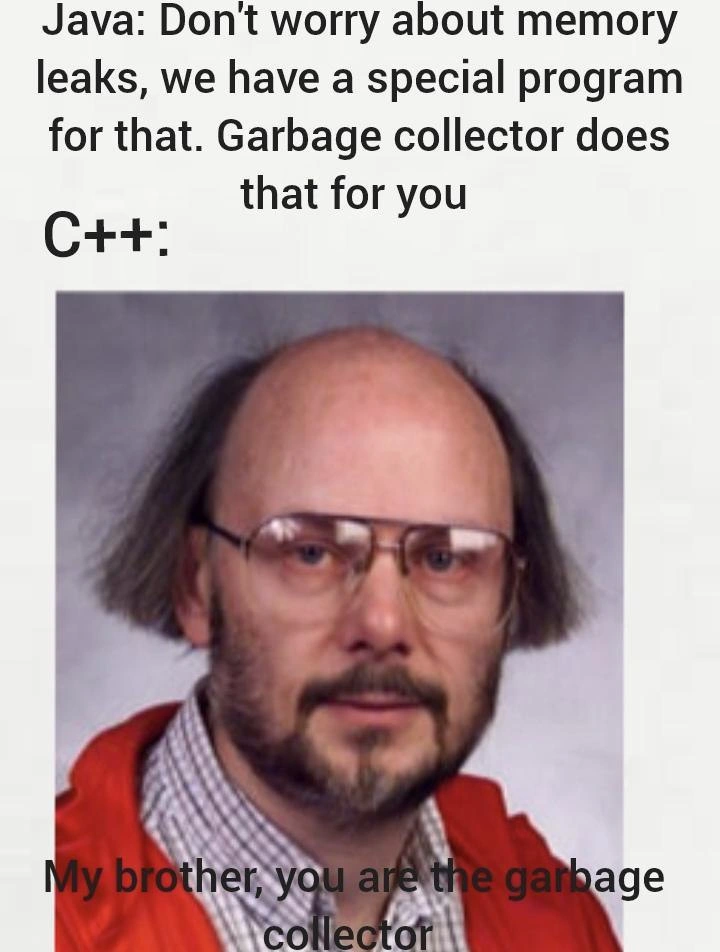
In high-level languages, the garbage collector is a watchful guardian. In C++, you are the garbage collector, and like Gandalf, you sometimes forget what you were supposed to do in Moria
Every malloc is a promissory note future-me can’t remember signing; six hours into the core dump I’m staring at /proc/$PID/maps like Gandalf: “I have no memory of this place.”
After 20 years in the industry, you'd think I'd remember to pair every malloc with a free, but here I am at 3 AM watching Grafana flatline while the OOM killer plays whack-a-mole with my microservices - turns out 'garbage collection' isn't just a Java luxury, it's what happens to your career when you ship memory leaks to production
The irony is that Gandalf actually has perfect memory spanning thousands of years, while our C programs can't even remember to call free() after malloc(). At least when Gandalf says 'I have no memory of this place,' he's not causing a production outage that requires a 3 AM restart to reclaim 47GB of leaked heap space
We don’t leak memory - we practice incident-driven garbage collection: let the OOM killer call free() at 3 a.m
One does not simply free() every malloc in a 20-year legacy codebase - hence Gandalf's eternal OOM lament
Skip RAII once and rely on “the OS will free it” - next thing you know, RSS is your fastest‑growing metric and the OOM killer is acting like your autoscaler