Skip to content
DevMeme
4794 of 7435
The Matrix's Clever Double Entendre: Accepting a Cookie from the Oracle
WebDev Post #5252, on Jun 19, 2023 in TG

The Matrix's Clever Double Entendre: Accepting a Cookie from the Oracle

Why is this WebDev meme funny?

Imagine you’re about to hear an important secret from a wise fortune teller, but before she says anything, she insists you take a cookie and eat it. Kind of odd, right? That’s basically what happens in this funny picture. In the movie The Matrix, a hero named Neo goes to see the Oracle (who is like a magical guide). She won’t give him the info he wants until he accepts a homemade cookie from her. Now, think about when you go to a website and a box pops up saying, “We use cookies, is it OK?” You usually have to click “yes” to continue on the site. This meme makes us laugh because it’s showing that even in a serious, sci-fi world, the hero has to do something as silly as agreeing to a cookie – just like we all do on the internet. It’s the mix of something epic (learning your destiny) with something everyday and annoying (those cookie pop-ups) that makes it so funny and easy to get. Even Neo can’t escape the cookie rule!

Level 2: Accept Cookies to Continue

Let’s break down why this situation is funny and what it all means in tech terms. First, a cookie on the web isn’t a baked good – it’s a small piece of data that a website asks your browser to remember. For example, when you log into a site, it might set a cookie to keep you logged in, so you don’t have to enter your password on every page. Technically, an HTTP cookie is just a string like "sessionId=ABC123" stored in your browser, and it gets sent back to the website each time you load a new page. Cookies are super useful in web development for maintaining sessions, storing user preferences, and tracking information between pages on what is otherwise a stateless protocol (HTTP).

Now, what’s a cookie consent banner? That’s the little (or sometimes not-so-little) notice you see on many websites saying something like: “This site uses cookies to improve your experience. By clicking accept, you consent to the use of cookies.” It usually comes with an Accept button (and sometimes a Settings or Decline option). This is all about data privacy and giving users control. Laws like the EU’s GDPR (General Data Protection Regulation) and the ePrivacy Directive require websites to get user consent before using certain cookies, especially those used for tracking or advertising. So, from a developer’s perspective, we had to start adding these banners to websites to comply with the law. It became a standard part of UX design and frontend development in the late 2010s: you load a page, and the first thing it does is check, “Has this user agreed to cookies? If not, pause everything and show the consent banner.” Only after the user clicks “Accept” (or otherwise consents) can the site activate those cookies for analytics, personalization, etc.

For users and developers alike, this can be a bit frustrating. If you’re new to building websites, imagine designing a beautiful homepage, and then being told you have to put a big popup on it before users can do anything – talk about messing with your design! But it’s done for a good reason: to respect user privacy and be transparent about data. Many junior devs first encounter this when they build a site or an app and suddenly product or legal teams say, “Hey, we need a cookie consent banner.” You learn that there are libraries and scripts to handle it, or you might code a simple one yourself: maybe it’s a bar at the bottom of the screen with a message and an “Accept” button that sets a flag like localStorage.setItem('cookiesAccepted', true). It’s practically a rite of passage in modern frontend development to implement one of these.

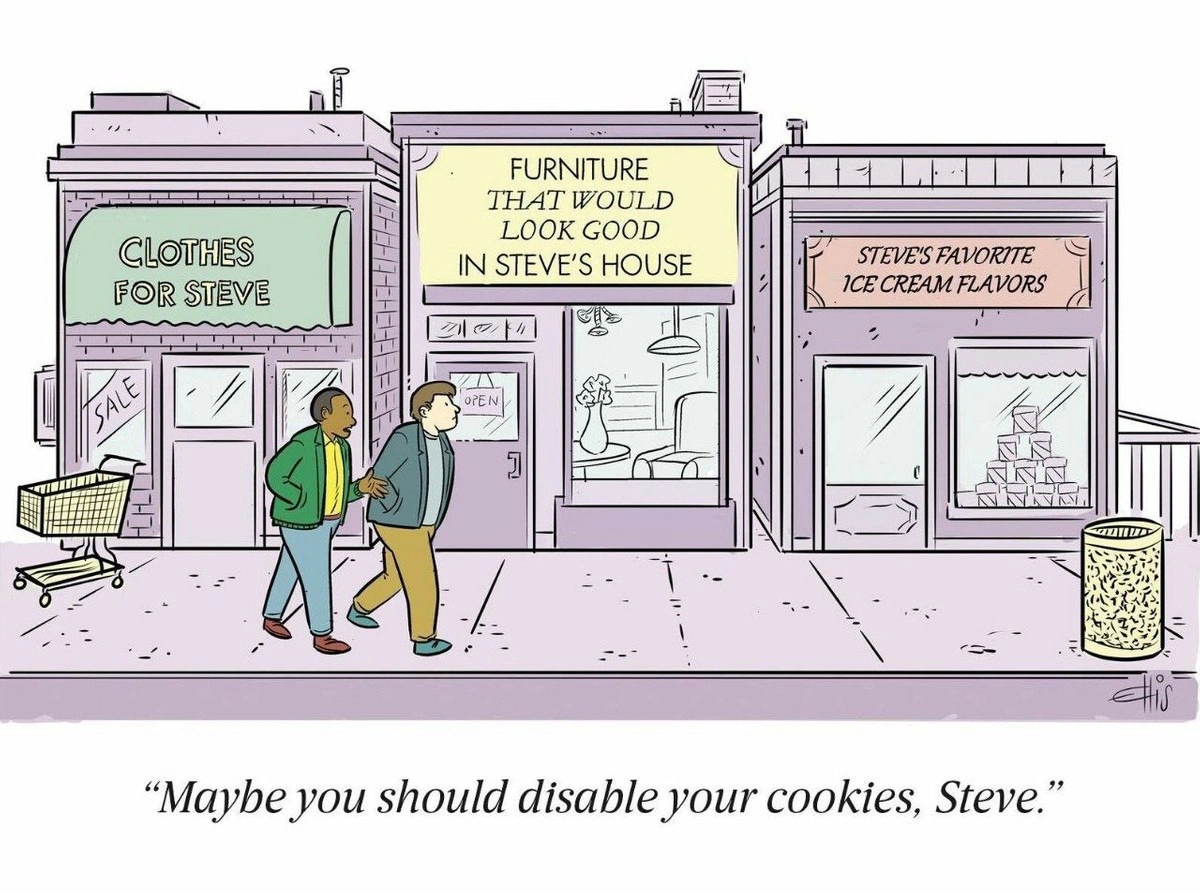
Now, the meme takes these concepts and maps them onto a scene from The Matrix. In that movie, the Oracle is a character (actually a program within the Matrix simulation) who guides Neo by predicting certain things. She famously gives Neo a literal cookie (an oatmeal raisin cookie, from the looks of it) at the end of their meeting, telling him, “By the time you’re done eating it, you’ll feel right as rain.” In the film’s context it’s a charming, humanizing gesture. But the meme caption reimagines it in tech terms: Neo “having to accept a cookie” before the Oracle will interact is just like a user having to click “Accept cookies” on a site before they can get info or proceed. It’s a pop culture analogy that clicks (no pun intended) because the Oracle is essentially a piece of software and Neo is essentially a “user” seeking information. The visual of her handing him a cookie aligns perfectly with the wording we use for digital cookies.

For a junior developer or anyone newer to these ideas, here’s why it’s amusing: we normally separate our epic sci-fi adventures from mundane web browsing tasks. But here they’re mashed together. It’s as if the Oracle has to follow some Matrix version of GDPR – she can’t share prophecies without first obtaining user consent in the form of Neo taking that cookie. It highlights the ubiquity of those cookie consent pop-ups: they’re everywhere, in every website scenario… and now, humorously, even in our classic movie scenes.

To sum up the key points in simpler terms:

  • HTTP Cookies are small data files websites use to remember stuff about you (login state, preferences, tracking info).
  • Cookie Consent Banner is a user prompt mandated by privacy laws, asking permission to use those cookies. It’s a major UX element web developers implement nowadays to be transparent and lawful.
  • The Matrix Oracle Scene shows Neo receiving a real cookie from a prophetic program (the Oracle). The meme jokes that this is like a site forcing a user to “accept a cookie” before proceeding.
  • It’s funny and relatable because dealing with cookie consent has become a common experience for anyone using the web, including developers who have to build that feature. Seeing it play out in a famous movie context is an unexpected crossover that makes us grin.

In this meme, web development meets The Matrix in a brilliantly nerdy way. It points out that the Oracle – a wise program in the movie – literally makes Neo accept a cookie before revealing her prophecy. This lands as premium tech humor because it satirizes our daily reality of cookie consent banners in websites. Every seasoned developer smirks here: we’ve all added that “Accept Cookies” popup to comply with data privacy laws like GDPR, knowing it annoys users. The Oracle scene cleverly mirrors this dynamic. It’s as if the Oracle has an in-universe cookie policy: no prophecy until you accept my cookie! This parallel is funny precisely because it’s so relatable – even The One (Neo) can’t escape that banal UX hurdle.

On a technical level, think of the Oracle handing Neo a cookie as a literal Set-Cookie operation in the Matrix’s code. The Matrix is essentially a giant software simulation, and the Oracle is a program within it. So when she says “Here, have a cookie,” a senior dev can’t help but imagine a header flying by: Set-Cookie: prophecy_accepted=true; Path=/oracle. It’s a sly nod to how HTTP cookies work. In web terms, a cookie is a small piece of data stored in your browser; the Oracle might be metaphorically planting a bit of data in Neo’s mind (like marking that he’s been given guidance). The meme text even calls this out as a “fun piece of program-related writing” – indeed, it feels like the film’s writers snuck in a programmer’s inside joke.

There’s also a historical irony here. The Matrix came out in 1999, when cookies on the web were a thing, but nobody was clicking “Yes, I accept” on banners yet. Fast forward to the 2010s: regulators crack down on tracking and suddenly every site implements a cookie consent workflow. Developers at companies worldwide had late-night sprints around 2018 to meet GDPR compliance, adding those banners or modals. It became an ubiquitous part of the user experience (UX), to the point of absurdity – browsing the web often felt like wading through endless “This site uses cookies” notices. This meme taps into that shared experience. Seeing Neo halted by a cookie requirement is like a flashback to all those frontend tickets where we had to block user interaction until consent was given. It’s tech relatability gold. As if choosing between the red pill and the blue pill wasn’t enough, Neo also had to click “Accept” on a cookie prompt to continue his journey!

From a senior perspective, the humor also lies in the necessary annoyance of it all. We implement cookie banners because we value data privacy and legal compliance, but we also know it’s a bit of a theatrical exercise – most users just smash “Accept” to make the banner go away. It’s a classic trade-off between doing the right thing and ruining a seamless UX. The Oracle scene exaggerates this: imagine if a god-like program can’t proceed without formal consent, as if bound by some Matrix-version of GDPR. It’s a perfect parody of the bureaucracy we’ve introduced into modern computing. You can almost picture the code running in the background of that scene:

// The Oracle's interaction protocol (satire)
function talkToOracle(neo) {
  if (!neo.hasAcceptedCookie) {
    console.log("Oracle: You must accept this cookie first.");  
    neo.click(acceptButton);  // Neo "Accepts" the cookie
  }
  return oracle.giveProphecy(neo);
}

In reality, of course, the Oracle giving Neo a cookie was about comfort and maybe a bit of symbolic code. But to devs, it’s an irresistible analogy. It underscores how pervasive cookie consent has become – so much so that we joke even fictional programs abide by it. This blend of a pop culture analogy with everyday developer life is what makes the meme hilarious. The Matrix’s mystical prophecy dispenser turns into a website with an annoying banner, and every developer who’s had to implement one of those banners (or click through hundreds of them) can’t help but laugh.

Description

A meme consisting of text above a still image from the 1999 film 'The Matrix'. The text reads, 'Neo having to accept a cookie before the Oracle will interact with him is such a fun piece of program-related writing.' The image below is a low-resolution shot from the movie, showing the character Neo (played by Keanu Reeves) looking down at a cookie he holds in his hand. This meme highlights a clever double entendre in the film's script. For a technical audience, 'accepting a cookie' is a fundamental concept in web browsing, where a client must accept a small piece of data (an HTTP cookie) from a server to establish a session and be recognized. In the movie, the Oracle, who is herself a program within the Matrix, literally gives Neo a baked cookie, which he must accept to continue their interaction. The humor is derived from this perfect parallel between a real-world technical requirement and its metaphorical representation in a sci-fi narrative

Comments

8
Anonymous ★ Top Pick That cookie was just a JWT with a 'prophecy' claim and an expiration set to 'right after you break the vase.'
  1. Anonymous ★ Top Pick

    That cookie was just a JWT with a 'prophecy' claim and an expiration set to 'right after you break the vase.'

  2. Anonymous

    The Matrix’s prophecy pipeline goes Oracle → CookieConsentMiddleware → Neo - proof that across all realities, legal introduces the only truly synchronous blocking call

  3. Anonymous

    The real red pill was realizing the Oracle's apartment was just a honeypot collecting browser fingerprints, and that cookie probably had a 10-year expiration with third-party tracking enabled across all Matrix instances

  4. Anonymous

    The Oracle's cookie wasn't just a philosophical test - it was the original third-party tracking mechanism. Neo thought he was choosing between red and blue pills, but really he was just accepting the terms of service. At least in 1999, cookies were still edible and didn't require a 47-page privacy policy written by lawyers who've never seen a Set-Cookie header

  5. Anonymous

    Matrix scriptwriters nailed GDPR compliance in '99: consent-gated wisdom, no exceptions for The One

  6. Anonymous

    Even the Matrix uses a CMP: the Oracle won’t run SELECT prophecy until Neo accepts a SameSite=Lax, HttpOnly session cookie - classic Oracle, destiny gated by compliance and vendor lock‑in

  7. Anonymous

    The Oracle’s endpoint returns 451 until consent=opt_in - destiny only resolves after document.cookie='consent=true; SameSite=None; Secure'; even simulated omniscience ships with a CMP

  8. @SamsonovAnton 3y

    Senior devops to a rookie: — And do not worry about the production server. — What server? — That server.

Use J and K for navigation