Skip to content
DevMeme
466 of 7435
Hacking the Sleep Cycle
DevCommunities Post #536, on Aug 9, 2019 in TG

Hacking the Sleep Cycle

Why is this DevCommunities meme funny?

Level 1: Blanket Fort Hacker

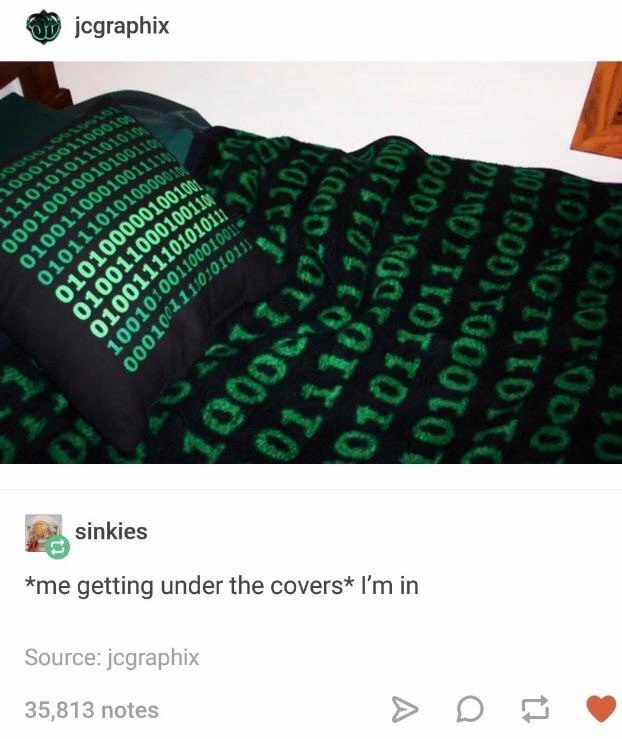
Imagine you have a special blanket that’s covered in cool-looking secret code, kind of like the glowing green stuff you see on computer screens in movies. Now picture someone pulling that blanket up over themselves at bedtime and pretending they just hacked into a big computer system, proudly saying, "I’m in!" in a serious voice. It’s a bit like a kid playing pretend – for example, putting a towel around their neck and saying they’re a superhero, or hiding in a pillow fort and acting like a spy on a mission. Here, the adult (who’s probably a programmer) is playing pretend in a jokey way: by getting under a “code” blanket, they act as if they’ve sneaked into a high-tech system. It’s funny because, really, they’re just going to sleep in their bed, but they’re treating it like some dramatic hacker victory from the movies. The blanket with all the 1s and 0s is what makes it feel “computer-y,” and saying "I’m in" is what movie hackers say when they succeed. So the whole thing is a silly make-believe scenario: a cozy bedtime moment imagined as a cool hacker achievement. Even if you don’t know much about computers, you can laugh because it’s someone having fun, turning something normal into a playful secret-mission moment.

Level 2: Binary Blanket Basics

Let’s break down why this meme is funny and what all its pieces mean, in simpler terms. The bed in the image has a pillow and blanket covered in binary code, which means lots of 0s and 1s. If you’re new to coding, binary might just look like random digits, but it’s actually the most basic language of computers. In Boolean logic (named after mathematician George Boole), everything is either true or false – in binary, we use 1 to mean true (or "on") and 0 to mean false (or "off"). All the data in your computer – every letter you type, every pixel in a photo, every song – ultimately gets turned into sequences of 0s and 1s. So those green zeros and ones on the blanket are a universal symbol for "hey, this is about computers!" The color scheme – bright green text on a black background – is famous from old computer terminals and especially from The Matrix, a popular sci-fi movie where code falls down the screen in exactly that style. In short, the bedding is tech-themed, screaming "hacker life" or "computer geek here". It’s not a random design; it’s meant to instantly remind us of hacker culture visuals.

Now, the text of the meme is written in a particular internet meme format: *me doing an action* followed by a quote. Here it says: *me getting under the covers* I'm in. The asterisks *...* around a phrase is a way people narrate an action informally (almost like stage directions or roleplay in chat). For example, *me eating the last slice of pizza* could be followed by a funny quote or feeling. It sets up what's happening in a very short script-like way. So the person is saying, "I'm getting under the covers," and then once under the covers, they declare: "I'm in."

Why "I'm in"? This is the punchline and it’s referencing a super common hacker movie cliché. In many movies and TV shows, whenever a hacker character manages to break into a computer system or a secure network, they dramatically say, "I’m in." It’s like hacker shorthand for "I’ve gained access!" For example, imagine a scene where someone is trying passwords or typing fast into a computer and suddenly all the files open up – that character might smirk and say "I'm in" to let the audience know they succeeded. It’s become a bit of a joke in the real tech community because actual hacking or coding is usually not that quick or viscerally exciting, but movies use that line to make it feel cool and decisive. So "I'm in" has turned into a meme on its own that implies "I’ve successfully accessed the system."

In the context of this meme, the person isn’t hacking a computer – they’re literally just getting into bed under a blanket. But (and here’s the joke) the blanket is covered in what looks like computer code (binary numbers). So the moment they get under this code blanket, they humorously announce "I’m in," as if they just infiltrated a top-secret mainframe. It’s a fun play on words: "under the covers" usually means hiding in bed or being undercover (sneaky), and here it also feels like being inside the code. The phrase fits perfectly because they are in — in bed, and in the "code" so to speak, since the blanket is all code symbols. It’s as if the blanket is their "system" and by getting under it, they "gained access."

For a junior developer or someone just learning about tech, there are a couple of layers to appreciate:

  • The binary/Matrix reference: If you’ve taken any intro to CS or even seen pop culture about hackers, you’ve likely encountered the idea of 0s and 1s being important, or seen that cool green text hacker aesthetic. This meme uses that to set the scene. It’s basically telegraphing, "this is hacker stuff," in a visual way that even a beginner can recognize. (Think of those scenes in movies where code is just streaming down the screen – that’s what this blanket design looks like.)

  • The "I'm in" trope: You might have even jokingly said "I'm in" after doing something trivial on a computer, exactly because it’s such a famous line. For example, getting the Wi-Fi password right on the first try and grinning, "I’m in." It’s the kind of line that’s become a goofy way to celebrate small tech victories. The meme plays on that familiarity.

  • Hacker vs. reality humor: Early in your dev journey, you start to notice that real programming isn’t much like the movies. Compiling code or debugging can be slow and tedious, and there’s often no dramatic payoff line. This meme is funny because it exaggerates that contrast: instead of a big high-stakes hack, the "hack" is literally getting comfy under a blanket. It’s poking fun at how *un-*dramatic actual coding life can be. As a developer, sometimes your end-of-day victory is simply closing your laptop and getting to bed. The meme kind of says "ha, got into bed, mission accomplished, time to rest" with the same energy as a hacker finishing a big mission.

  • Dev community inside joke: This image and caption were shared on Tumblr, a platform where lots of niche communities (including programmers) share memes and jokes. It gathered tens of thousands of likes/reblogs, meaning a lot of people found it funny or relatable. Even if you’re a newbie, this shows you how devs like to laugh at the stereotypes about themselves. We often take something silly from our work (like binary numbers or a common movie line) and mash it up with a normal life scenario for humor. It’s a way of bonding and saying "we all know this reference, and it’s fun to not take ourselves too seriously." Communities on Reddit, Tumblr, Twitter, etc., all have these DeveloperHumor moments where a meme captures a truth or joke about coding life.

So, to sum up at this level: The meme uses a binary-themed blanket to set a hacker mood, and the phrase "I’m in" to reference a well-known hacker phrase. It’s funny because it’s literally applied to going to bed, which is an everyday thing made to look like a top-secret hacking operation. If you know even a bit about computers or have seen hacker movies, you can get the joke. The more you know about the cliché, the funnier it gets. It’s a classic example of coding humor where understanding a little tech context (like what binary is, or that hackers say "I'm in") makes the punchline click. And even if you don’t code, you might find it amusing because you recognize that green-on-black code look from movies and you know people usually say "I’m in" in some spy or hacker scene. It’s a lighthearted parody of hacker dramatics, wrapped up in a cozy, geeky blanket.


Level 3: Bitwise Bedtime

This meme cleverly merges hacker movie clichés with everyday life, and it’s packed with references that seasoned developers and tech geeks can appreciate. The photo shows a bed dressed in a Matrix-like motif: black pillow and blanket covered in neon green 0s and 1s. Immediately, this binary code pattern screams "computer stuff!" It's a nod to the classic Matrix aesthetic – those cascading green characters on a black screen that every hacker scene loves to emulate. In the text caption, a Tumblr user quips:

sinkies: me getting under the covers I’m in

In one sentence, this nails a trope every programmer knows: the dramatic “I’m in” moment from movies. Typically, a Hollywood hacker furiously types for a few seconds, breaches a secure system, and then smugly declares "I’m in" as green code flashes on their screen. It’s an overused cliché in hacker culture portrayals – something real developers chuckle at because actual hacking or debugging is rarely so instantaneous or glamorous. Here the meme brilliantly literalizes the phrase. The person isn’t breaching a firewall; they’re literally sliding under a blanket of binary digits. Yet they triumphantly announce "I’m in" as if they’ve hacked the mainframe of comfort. It’s a perfect collision of movie fantasy and developer reality: after a long day of wrestling with code, getting into bed can feel as victorious as gaining root access to a high-security server. 🛌💻

This joke works on multiple levels. First, there’s the visual pun: the bed covers are printed with 0s and 1s, the fundamental symbols of all computing. It’s as if the person is physically immersing themselves in code. (Who hasn’t felt so deep in code that you’re practically swimming in binary?) By getting "under the covers," our protagonist is both literally under a cover and metaphorically undercover in a sea of data. Seasoned devs love this kind of wordplay because it ties a mundane routine (going to bed) to the epic drama of a hacking session. It’s like saying, "I’m inside the code now, time to execute sleep mode."

Secondly, it pokes fun at the HackerCulture we see in media versus real life. In a film, the moment someone says "I’m in", it’s usually after some flashy GUI hacking montage – perhaps 3D file systems flying around, or a progress bar that jumps from 0% to 100% in seconds. Real hackers or security engineers will tell you that breaching a system involves painstaking work: probing for vulnerabilities, writing scripts, waiting, troubleshooting failed attempts. No one in a real-world pentest stops to dramatically announce success with a one-liner catchphrase. In fact, actual hacks often happen quietly, and developers in the real world might only exclaim "I’m in!" ironically, perhaps when finally logging into a server after 10 failed SSH attempts or when a long build finishes without errors. So when a developer sees this meme, they’re in on the joke: it’s mocking that cinematic simplicity. The absurdity of saying "I’m in" about tucking yourself in with a blanket highlights how silly the movie trope can be.

Finally, the meme speaks to the dev community experience. It originated on Tumblr (credit to user jcgraphix for the binary bedding image, and sinkies for the witty reblog caption), garnering tens of thousands of notes. That’s a testament to how broadly it resonated. You don’t even need to be a hardcore programmer to get the humor – if you know that computers run on ones and zeros and that hackers in movies love saying "I’m in", you can laugh at this. But for those deeper in tech, there’s extra seasoning in the joke. The green-on-black color scheme is a throwback not just to The Matrix, but to old-school terminals and CS fundamentals. Seasoned devs might fondly remember green text on black monitors from early coding days or university labs. It has a retro vibe that screams “hacker” in pop culture. By wrapping a pillow in that imagery, the meme also taps into the reality that many of us literally eat, sleep, and breathe code. (Some might even have decor like this – a circuit-board bedsheet or a GitHub contribution graph poster on the wall – as part of our DeveloperExperience_DX at home!) It humorously personifies the idea that after a day of dealing with boolean logic and binary at work, a true enthusiast even sleeps enveloped in 0s and 1s.

To put it in perspective, imagine the meme format as a tiny scene in a geeky sitcom: Our hero comes home exhausted from squashing bugs all day. They see their inviting binary-print bed, crawl underneath like it’s a high-security vault, and deadpan to an imaginary headset, "I’m in." Cue laughter. It’s funny because it’s an anti-climax – the dramatic buildup leads to… a cozy nap. For veteran developers, there’s an extra layer of “I feel seen” humor here. How many times have we joked about “hacking” our sleep schedule or “decrypting” a particularly puzzling spaghetti code? We use tech metaphors in daily life, sometimes to laugh at how consuming our work is. This meme nails that vibe: it’s DeveloperHumor that reflects both our knowledge of tech meme formats and a shared acknowledgment that sometimes sliding into bed is the sweetest hack of all.

In short: The meme takes a core CS_fundamental (binary code), a staple of HackerCulture ("I’m in!"), and a relatable daily moment (bedtime), and combines them into a perfect in-joke. It’s the kind of thing you show your coding buddies at 3 AM during a deployment, and it gets a tired chuckle because it’s so silly and so spot on. After all, who wouldn’t want to don a binary_bedding cape and feel like a 1337 hacker under the covers? Access granted to a good night’s sleep. 😄


Description

A screenshot of a Tumblr post by user 'jcgraphix'. The top image displays a bed with a black pillow and a matching black fleece blanket, both covered in a pattern of green binary code (0s and 1s), evoking the 'digital rain' aesthetic from the movie The Matrix. Below the image, a comment from user 'sinkies' reads: '*me getting under the covers* I'm in'. The humor comes from a simple pun, equating the physical act of getting 'in' bed with the clichéd phrase 'I'm in' used by hackers in movies upon successfully breaching a system. It's a lighthearted joke that plays on the stereotypical media portrayal of hacker culture

Comments

7
Anonymous ★ Top Pick The binary blanket: '1' means you're dreaming about that elegant solution you'll never have time to implement, and '0' means you're just trying to forget the PagerDuty alert you know is coming
  1. Anonymous ★ Top Pick

    The binary blanket: '1' means you're dreaming about that elegant solution you'll never have time to implement, and '0' means you're just trying to forget the PagerDuty alert you know is coming

  2. Anonymous

    Finally found a security blanket made of 1s and 0s - AES-256 thread count. I crawl under it, whisper “I’m in,” and the SOC logs a successful penetration test

  3. Anonymous

    Finally, a production environment where sleeping on the job is the expected behavior and nobody questions why you're still running on a 25-year-old framework

  4. Anonymous

    Finally, a blanket that provides both physical warmth and the comforting illusion that your sleep schedule is just another system you've successfully compromised. Though let's be honest - with 35,813 notes, this has better uptime than most production deployments, and unlike your on-call rotation, getting under these covers is actually a privilege escalation you'll enjoy

  5. Anonymous

    Finally hit 100% coverage - the duvet kind; the first “I’m in” that doesn’t require bypassing MFA or filing a change request

  6. Anonymous

    Heisenbugs thrive here: peek under the covers, and they vanish faster than a quantum qubit

  7. Anonymous

    Security wanted encryption at rest; I bought a binary duvet and rotate keys nightly by flipping the pillow - under the covers, I’m in

Use J and K for navigation