Manhunt DRM That Would Not Die
Why is this Games meme funny?
Level 1: The Trap Stayed On
This is funny because a game had tricks to stop people from playing stolen copies, but those tricks may have stayed active for people who bought the game properly. It is like putting a fake broken stair to catch burglars, then forgetting about it and letting every invited guest trip on it for years.
Level 2: Copy Protection Backfire
DRM, or digital rights management, is software intended to control who can run, copy, or modify a program. Games have used many forms of DRM: disc checks, activation servers, license keys, encrypted files, online validation, and anti-tamper systems.
Anti-piracy measures can be obvious, like refusing to launch without a valid license. They can also be hidden. Some games detect suspected tampering and then quietly make the game impossible or unpleasant: enemies become unbeatable, saves break, doors stop working, or progress gets blocked. The idea is that people using unauthorized copies will blame the cracked version instead of the developer.
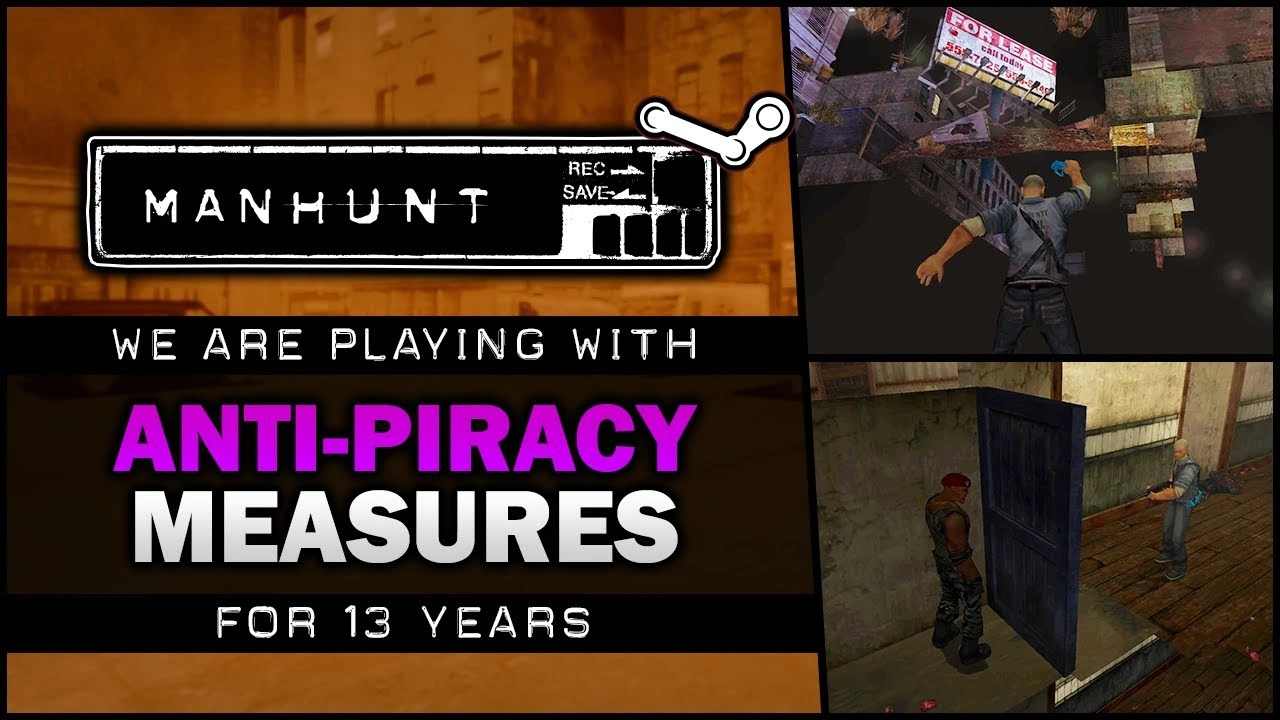
The visible thumbnail suggests Manhunt players were dealing with anti-piracy behavior for 13 YEARS. The Steam logo matters because Steam is an official storefront. If a game bought through a legitimate store still triggers old protection behavior, the joke becomes painfully clear: the system built to punish pirates may be punishing paying customers.
For newer developers, this is a lesson about hidden control flow. Imagine adding code like this:
if (license_check_failed()) {
disable_level_exit();
}
That might seem clever for a retail disc in one release cycle. Years later, someone ports the game, changes the launcher, removes a third-party DRM system, or ships through a new store. If nobody understands that hidden branch, normal players can hit the punishment path and everyone starts debugging the wrong thing.
This is why maintainable security work needs clear ownership. Protection code should be documented, tested, and designed so it can be removed or replaced. Otherwise it becomes a trapdoor in the codebase, and not the exciting spy-movie kind. The boring kind that breaks doors.
Level 3: DRM Outlives Intent
The thumbnail says:
WE ARE PLAYING WITH ANTI-PIRACY MEASURES FOR 13 YEARS
That line sits beside the distressed MANHUNT tape-style logo, a white Steam logo, and gameplay screenshots showing awkward blocked spaces, including a visible FOR LEASE sign in one corner. The image is styled like a YouTube exposé thumbnail, but the technical joke is sharper than the format suggests: the anti-piracy system allegedly kept punishing legitimate players long after the piracy battle it was designed for had faded into software history.
This is one of the more bitter categories of DRM humor. Digital rights management is supposed to stop unauthorized copying, cracking, or tampering. But when DRM is woven into the game itself, it can become hard to remove cleanly. The copy protection may not just live in an installer or license check. It can influence save behavior, doors, enemy logic, mission progression, scripting triggers, or other gameplay systems. At that point, DRM is no longer a wrapper around the product. It is a secret second game engine whose design document says "make the customer wonder if the level is bugged."
The Manhunt context is especially funny because the game's own aesthetic already includes surveillance, recording, and exploitation. The visible REC and SAVE markings on the logo fit the game's VHS-snuff-film style, while the Steam logo adds the modern storefront layer. So the thumbnail visually stacks three systems of control: the game's fictional recording motif, Rockstar's distribution history, and DRM logic that may have survived into an official digital release.
From a software-maintenance perspective, the nightmare is anti-tamper code as legacy code. A protection branch written for a retail PC release can become obscure tribal knowledge years later. The original developers move on. The publisher changes packaging. A storefront migration removes one DRM layer but leaves another behavioral trigger inside the executable. QA then sees doors failing, progress blockers, or strange gameplay bugs and may classify them as compatibility issues on newer operating systems. The actual cause is worse: the game may be faithfully executing a sabotage path meant for cracked copies.
That is why this meme belongs with security and legacy systems, not only games. Any defensive code that intentionally degrades behavior must be documented, isolated, and removable. Otherwise the software becomes hostile to its maintainers. The anti-piracy code did not merely protect intellectual property; it created a future archaeology project where fans and reverse engineers have to ask, "Is this a bug, or is the game accusing me of theft?"
The oldest lesson in the thumbnail is that clever punitive mechanisms age poorly. A normal bug can be fixed once someone understands it. A hidden punishment path has to be discovered first, and everyone debugging it starts from the wrong assumption: that the official copy is supposed to be trusted. Beautiful. The DRM reached end users, survived distribution changes, and then kept doing its job in the stupidest possible context.
Description
A YouTube-style thumbnail about Rockstar's Manhunt fills the frame, with the game's distressed "MANHUNT" tape logo on the left and a white Steam logo over it. The main text reads, "WE ARE PLAYING WITH ANTI-PIRACY MEASURES FOR 13 YEARS," with "ANTI-PIRACY" highlighted in bright magenta and "MEASURES" in large white block letters; the game UI text "REC" and "SAVE" is also visible. On the right are two in-game screenshots, including a rooftop scene with a "FOR LEASE" sign and another scene showing two characters separated by a doorway. The technical relevance is DRM and anti-tamper logic persisting long enough to become a legacy-software artifact in a game distribution context.
Comments
2Comment deleted
The most persistent enemy in Manhunt turned out to be a DRM branch with better backward compatibility than the game itself.
Оригинальное видео на русском (Original in Russian): https://youtu.be/-TnkuEEUT14 Comment deleted