The All-Consuming Memory Leak
Why is this Bugs meme funny?
Level 1: Everything Is Fine
Imagine you accidentally left a faucet running in the bathroom and water is spilling over the sink, pouring onto the floor. It’s making a huge puddle that’s creeping out into the hallway. Now picture you just sitting on the couch in the next room, arms crossed, whistling and acting like nothing’s happening, even though a big wet mess is obviously spreading everywhere. Pretty silly, right? That’s basically what’s going on in this meme! The “water leak” in our story is like a big problem in a program (called a memory leak), and the person ignoring it is the developer who made that mistake. The funny part comes from the mismatch: there’s a huge, glaring issue (like the cheerleader dancing or the water flooding) but the person who should respond is just pretending all is well. It’s like seeing a big mess and calmly sipping your drink saying, “Nope, I don’t see any problem!” We find it funny because we know the problem isn’t going to disappear on its own – the water’s going to keep flooding, and in the meme, the bug’s going to keep causing trouble. It’s a bit like a child covering their eyes thinking if they can’t see you, you can’t see them. In real life, when something’s obviously wrong, ignoring it doesn’t help – but sometimes we do it for a moment anyway. This meme makes us laugh by showing that goofy moment of denial. The developer is basically saying “Everything is fine,” while a cheerleader-sized problem is waving in their face, and we all know eventually they’ll have to get up and mop the floor.
Level 2: At 3AM, Mistakes Were Made
Let’s break down what’s happening in this meme in simpler terms. We have a developer (labeled “me”) and a big, flashy problem labeled “the massive memory leak from that function I wrote at 3:00 am.” MemoryLeak is the key term here. A memory leak is basically a bug where a program uses up memory but never gives it back. Think of a program like a kitchen that takes ingredients (memory) to cook with – a memory leak is like cooking a bunch of dishes and never cleaning up or throwing out the trash. Over time, the kitchen counters fill up with old ingredients and containers, until there’s no space left to cook (the program runs out of memory or slows to a crawl). In coding terms, if you allocate memory (reserve some RAM to store data) and forget to free it (release that RAM when you’re done), that memory stays occupied. Do this repeatedly, and the used memory accumulates. Eventually, you get a performance hit or even a crash because the system says “hey, you’ve taken too much!”
Now, why 3:00 am? The meme explicitly says the leak is from a function written at 3:00 am. LateNightCoding is notorious in developer culture – it’s when you’re up super late, probably tired, possibly on your Nth cup of coffee, trying to solve a problem or meet a deadline. At that hour, mistakes are more likely. You might not be thinking clearly enough to manage memory properly or follow best practices. So the meme is poking fun at the idea that of course a function written at 3AM would have a silly mistake like a memory leak. It’s a relatableDevExperience: many developers have looked back at their late-night code and found flaws (hence the tag 3am_coding_regret). It’s akin to sending a text when you’re half-asleep – you might cringe at it the next day. Here, the developer wrote a function (a reusable block of code) in the wee hours and somewhere in that function, they likely did something like allocate memory and not free it, or used an object without properly disposing of it.
In languages like C or C++, you manually manage memory. For example:
// Example of a simple memory leak bug in C:
#include <stdlib.h>
void doSomething() {
int *data = malloc(1000 * sizeof(int));
// ... (use the allocated array for something)
return; // Oops! We exited without calling free(data)
}
// Each time doSomething() runs, 1000 ints worth of memory remain allocated.
// Eventually, that adds up to a massive leak if not freed.
In the above snippet, malloc reserves memory, but there’s no free(data) to release it. If doSomething() is called repeatedly, memory usage will keep growing. In higher-level languages like Java or Python, you don’t call malloc or free directly – a garbage collector tries to free memory for you. But you can still leak memory by accidentally holding references to things you no longer need. For example, maybe that 3AM function keeps adding items to a global list and never removes them. The program will hang on to all those items forever, thinking you still need them, and memory usage will balloon. This is why even in languages with automatic memory management, you can have a “memory leak” in practice (it’s not the language failing – it’s the code logic keeping unnecessary data around).
So what about the cheerleader and courtside image? The meme reuses a funny photo format (the courtside_meme_format) where someone important is sitting in the front row of a basketball game looking unfazed while cheerleaders perform right in front of them. Here, the developer is the guy sitting labeled “me,” and the cheerleader is labeled as the memory leak. The cheerleader is bright, moving, impossible to miss – symbolizing how obvious and attention-grabbing the bug is. The dev sitting with folded hands is acting like it’s not even there. This visual gag is saying: I, the developer, am pretending nothing’s wrong, totally ignoring the huge problem that’s basically in my face. It reflects a kind of developer self-deprecation – making fun of oneself for ignoring an obvious issue. There’s even a bit of cheerleader_distraction concept: in sports, a focused player might ignore distractions like a cheerleader or noisy fans. In the dev world, though, the “distraction” is actually a serious issue (the leak) that the developer really should pay attention to, but they’re humorously behaving as if it’s just a distraction.
We also see references to Debugging_Troubleshooting and Performance issues. A massive memory leak definitely causes performance problems: as memory fills up, the program can slow down (since the computer has to work harder to manage all that used memory, sometimes moving data around or using disk swap if RAM is full). Debugging a memory leak can be frustrating – you have to track down where in code you allocated memory and didn’t release it or find what object is growing uncontrollably. It’s like a little detective mission through your code. The meme implies the author of the bug might not be facing that mission yet – they’re in denial stage, not debugging it, just ignoring it. But eventually, someone (maybe an on-call engineer or the developer themself) will have to troubleshoot it. If this happened in a production environment (the live system users interact with), it can even become an OnCall_ProductionIssues situation. That means the developer (or their teammate on call) might get an alert in the middle of the night (ironically, maybe again at 3AM but on a different night!) that memory is running out on the server. That’s the “courtside attention” – in a company, a big production bug like this gets noticed by everyone (up to managers). It’s front-and-center, much like a courtside performance at a game.
The text on the meme, “Your 3 AM memory leak gets courtside attention while you pretend nothing’s wrong”, summarizes it well. The massive memory leak is not subtle – it’s performing with pompoms – but the developer pretends it’s not their issue. Why would someone do that? Partly humor, partly truth: sometimes developers feel debugging frustration or even shame when they realize they caused a bug. It’s tempting to stay quiet initially, hoping it maybe resolves or someone else notices first. It’s a procrastination/denial mix that many can chuckle at because we’ve all been there. We know, logically, ignoring a bug won’t make it disappear. But in that moment, especially if you’re tired or stressed, you might delay addressing it. It’s like hearing a weird sound in your car engine and turning up the radio – you know it’s not really fixed, but you get a brief moment of pretend peace.
In more straightforward terms: The meme uses a funny picture to convey the idea that “I made a big mistake in my code late at night, and now it’s a very obvious problem (like a cheerleader in front of me) but I’m acting like everything’s fine.” It’s highlighting a common developer behavior of pretending all is well even when you suspect (or know) you messed up, which is the relatable and self-deprecating part. For a junior developer or anyone new to coding, the lesson here is: memory leaks are bad news and hard to ignore. Eventually, you have to deal with them, and it’s better to catch them early (maybe by not coding critical stuff when you’re extremely tired!). It also shows a bit of the culture: devs often joke about their own mistakes to cope – it’s better to laugh and then fix the bug than to panic. Part of learning debugging is learning to notice these “cheerleader” clues (big obvious signals like rapidly increasing memory usage) and not ignore them. If something in your program is “dancing” for your attention – an alert, a log, a performance issue – you’ll want to investigate it, not do what our meme-persona is doing. The meme is a lighthearted warning wrapped in humor: don’t be that person ignoring the big bug that everyone can see.
Level 3: Elephant in the Heap
For seasoned developers, this meme hits a nerve because it captures a scenario that’s all too real: late-night coding coming back to haunt you in broad daylight (or really, the next morning’s stand-up meeting). The image shows “me” sitting courtside, hands folded calmly, while a cheerleader (wearing bright team colors) performs an attention-grabbing routine right in front of him. That cheerleader is labeled “The massive memory leak from that function I wrote at 3:00 am.” The humor arises from the stark contrast: the developer (me) is outwardly calm and pretending nothing's wrong, even as a glaring bug is effectively doing cartwheels inches away. It’s the software equivalent of ignoring the elephant in the room – or in this case, the elephant in the heap. Every experienced dev has been in this situation: you push some sketchy fix or new code in the bleary-eyed hours of the night, and later you notice something is wildly off (CPU usage spiking, memory graph climbing like a rocket, logs scrolling with ominous warnings). And what do you do initially? If we’re honest, a lot of us have instinctively tried to play it cool, hoping it’s a false alarm or will miraculously resolve itself. We fold our hands, maybe refresh the monitoring dashboard in denial. “Massive memory leak? What massive memory leak? Everything’s fine, I swear.” This meme takes that shared industry experience and gives it a literal, comedic form.
Why is this funny to a senior engineer? Because it’s painfully relatable. The 3:00 am code scenario screams OnCall_ProductionIssues: maybe you were on call, nervously deploying a hotfix at 3AM to quell an incident, or hacking away at a pet project deep into the night. You know that’s prime time for mistakes – your brain’s garbage collector is exhausted, running in degraded mode. Sure enough, in the haste to patch things, you introduced a leak. Now the next day (or a few days later if you’re unlucky), the issue has become a full-blown Performance problem in production. Memory usage is through the roof, response times are lagging, and the once-smooth system is showing hiccups. This bug isn’t subtle about its presence: monitoring tools are likely screaming, dashboards lit up like a Christmas tree, maybe an alert woke someone up. In the meme, that’s the cheerleader front and center – the heap_overflow_horror unfolding in plain sight. Meanwhile, “me” – the developer who wrote that function – is sitting right there, perhaps in a meeting or at their desk, acting uncannily composed. It’s dark humor: the developer’s body language says “nothing to see here” while the bug is practically pom-pom’ing in their face.
This situation satirizes a blend of debugging frustration and human nature. When a massive bug is your own fault, especially from a lapse like a 3AM coding spree, there’s a cocktail of emotions: dread (oh no, did I do that?), embarrassment, and a bit of desperate hope that maybe it’s not as bad as it looks. The meme’s text pairing encapsulates developer self-deprecation: we’re laughing at ourselves for the times we’ve tried to ignore a problem that we secretly know is our fault. It’s a form of coping through humor. Seasoned devs also recognize the corporate theater aspect here: sometimes in a meeting or daily stand-up, everyone’s noticing a big issue in the product (“memory usage has been spiking... any ideas?”). All eyes might turn to you if you touched that part of the code. In that moment, you might put on your best poker face, much like the meme’s character, even as internally you’re thinking, “Please, not now... maybe if I don’t move, they won’t see me.” It’s an ordeal many want to forget, except it’s so common it’s become inside-joke material.
Another layer to this is the technical debt / quick hacks culture. Senior engineers know the mantra “Don’t deploy at 3AM” for good reason. Best practices and reality often diverge under pressure. Ideally, you’d write tests for memory usage or at least run a leak-check tool (Valgrind, anyone? or runtime profilers) before merging that code. But at 3AM during an on-call emergency, who has time for thorough testing? You’re in “just make it work” mode, possibly even cup-of-coffee number five mode. The result is a bug that isn’t immediately obvious (the function probably works fine superficially – it just doesn’t free memory). It passes whatever quick functional tests you had. So you ship it and head to bed, thinking you saved the night. Little did you know, you’ve sown the seeds of another incident. This is a classic case of one bug leading to another, an ironic chain of events where you fix one fire at 3AM and leave smoldering embers that ignite later.
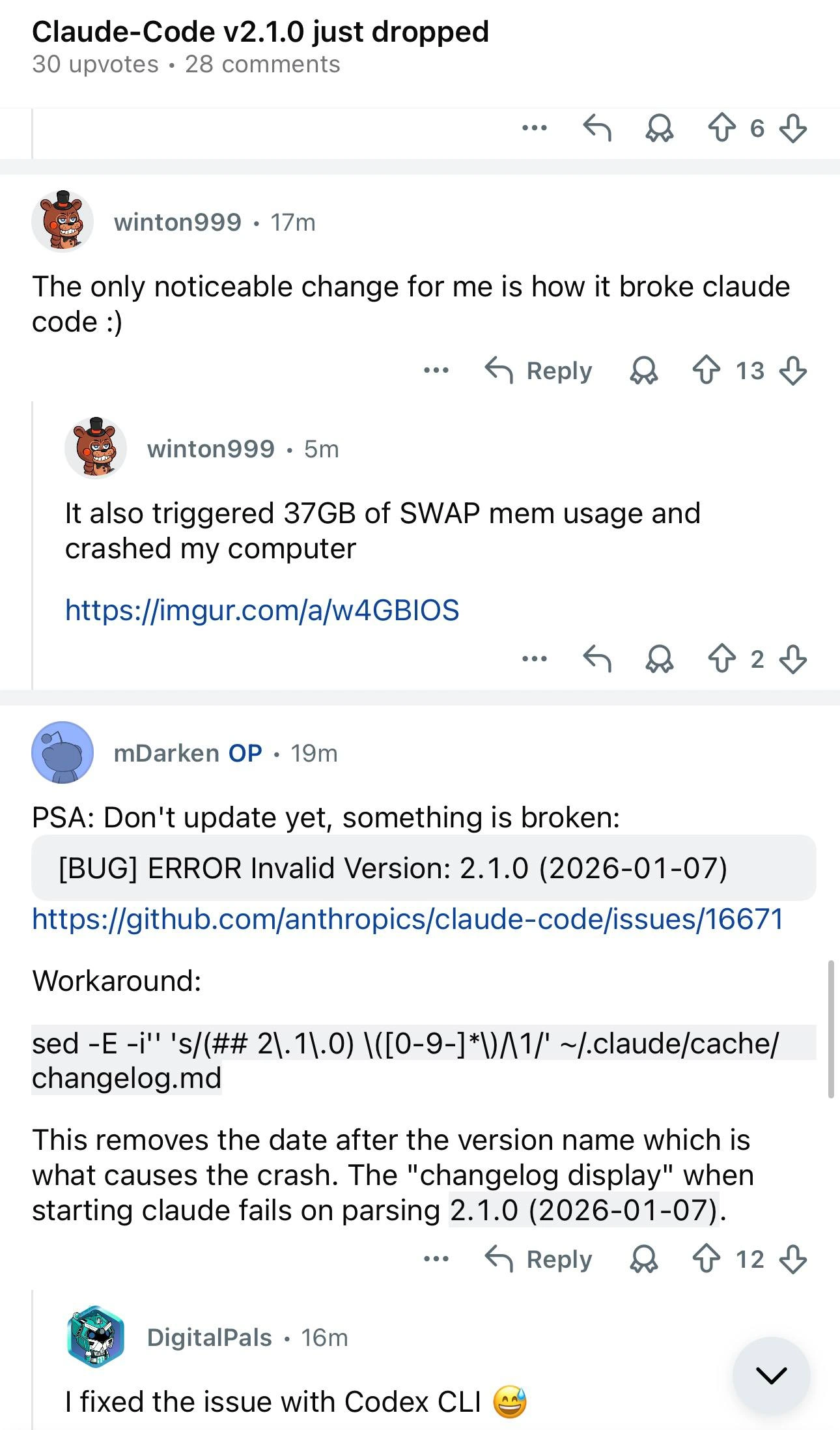
The meme specifically calls out a memory leak, which among Bugs is notoriously one of the more sneaky and troublesome types. Unlike a clear crash or an exception, a memory leak starts out nearly invisible – the code runs, produces correct results, so you think all is well. But hours or days later, it becomes a performance nightmare. Production might run fine for a while and then suddenly slow down or crash once enough memory has leaked. Because of this delayed fuse, developers sometimes genuinely don’t notice the leak at first. It’s only when the problem has grown massive (like the cheerleader in your face) that it garners courtside attention from everyone. At that point, ignoring it isn’t an option – but here comes the twist: the meme jokes that the developer is still ignoring it, which is comedic exaggeration. In reality, by the time a leak is massive, you’re usually scrambling to mitigate (e.g., restarting the service to clear memory, racing to patch the code). However, there is a grain of truth even in the exaggeration: on some teams or in some corporate cultures, folks will go into denial or deflection mode – “It must be a library issue… maybe the OS is acting up… anything but my 3AM function!” They might sit uncomfortably, much like our suited friend in the meme, hoping someone else takes the initiative to point it out or fix it.
We also see a commentary on how obvious the bug is versus how much the dev wants to downplay it. The cheerleader is literally performing, analogous to how a memory leak in production isn’t subtle – metrics dashboards will show a clear upward trend in memory usage (a big neon sign). It’s as if the bug is screaming “look at me!” with high CPU and memory alerts, similar to a cheerleader waving pom-poms. The developer’s strategy of feigned ignorance is humorously inept – everyone can see the issue, just like everyone at the game can see the dancer, but the dev sits stoically as if sitting out a distraction. (In sports, players sometimes try to ignore distractions from cheer squads or fans; here the dev is like a player trying not to get distracted by the obvious, except the “distraction” is actually something he should pay attention to!).
This meme also jabs at the fact that some bugs are so flamboyant that ignoring them is a losing battle. A “massive memory leak” will continue to consume memory. If you don’t acknowledge it, sooner or later it’s going to force the issue – perhaps by crashing your app or triggering an alert to your boss. It’s akin to ignoring a fire alarm; eventually, someone is going to yell at you to get out of the building. The veteran humor here is that the developer might wishfully think, “maybe if I don’t look, it’s not real.” It’s a form of tech debt denial. We’ve all done a bit of that – maybe a quick hack triggers some warnings in logs, and we mute the alerts temporarily, convincing ourselves we’ll handle it in the next release. That’s the garbage_collection_denial mindset: acting like the problem will clean itself up. Seasoned devs laugh (perhaps bitterly) because they have scars from when such denial backfired. The phrase “courtside attention” in the title of the meme even suggests that this bug has the spotlight – it’s courtside, front-row, the star of the show – while the dev is pretending to be an idle spectator. It’s a classic relatable dev experience: the more you try to act casual, the more obvious it becomes that something’s off. Everyone who’s been on a dev team during a major bug can recall that person who sits there with a poker face, silently praying nobody asks “Hey, could this be caused by that change you made?”
In summary, at the senior engineer level, the meme lands because it exaggerates a truth we know well: bugs, especially ones born of sleep-deprived coding, have a way of announcing themselves loudly, and developers sometimes respond with comedic levels of denial or feigned ignorance. It pokes fun at our coping mechanism – staying cool on the outside while a crisis dances in front of us – and the absurdity that entails. This blend of Bug humor, On-call nightmare scenario, and Performance issue all wrapped in a single courtside photo is just chef’s kiss for anyone who’s lived through a production leak. We laugh because we’ve done the “ignore and hope” routine, even though we know that in tech, hope is not a strategy. The meme basically says: “Here’s me and my monstrous 3AM mistake: one of us is making a scene, and one of us is pretending it’s someone else’s problem.” And as any jaded dev will tell you, that’s funny because it’s true.
Level 4: Out-of-Memory Experience
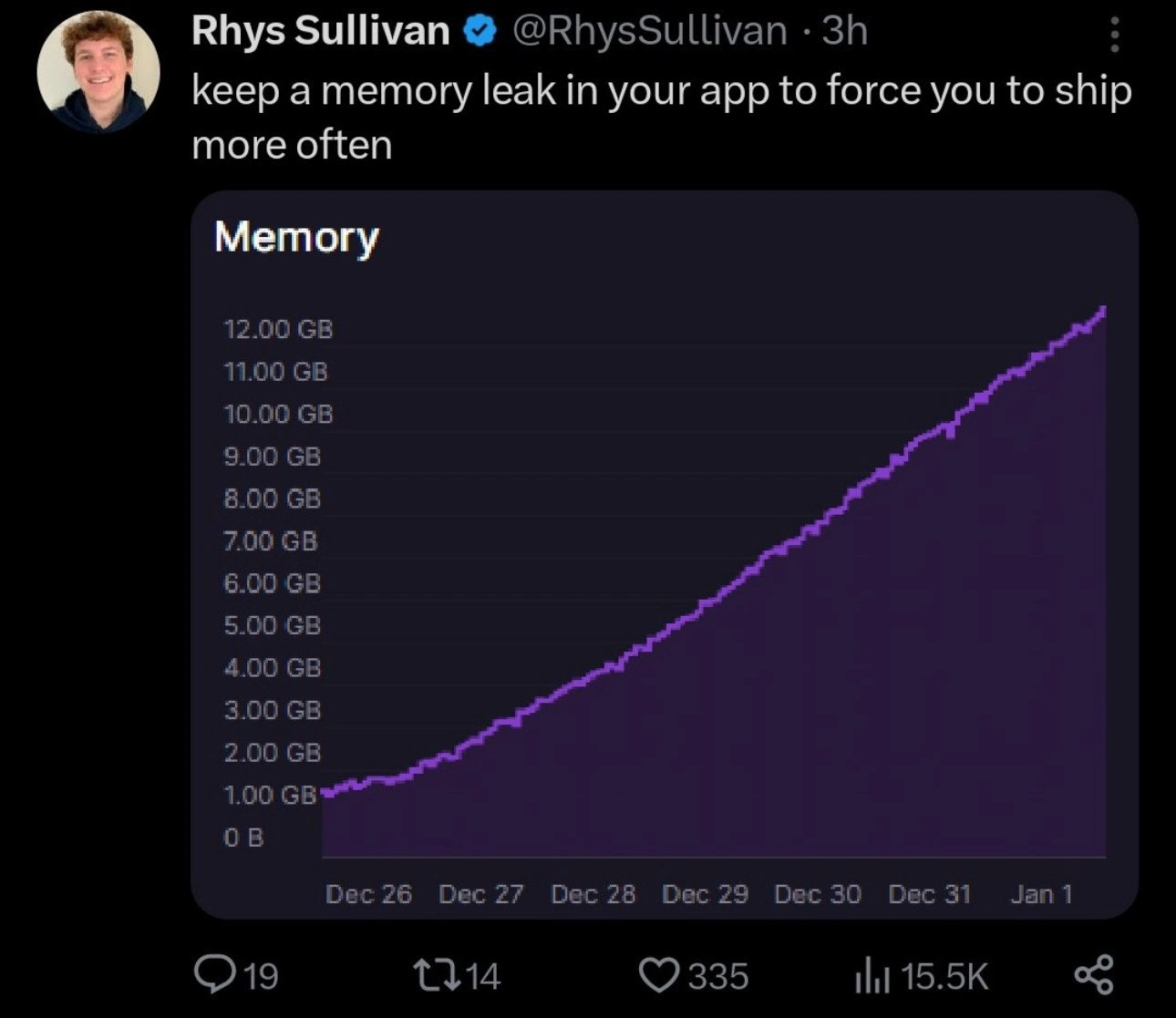
At the lowest level, this meme points to the brutal realities of memory management and how a sloppy 3AM coding session can defy the laws of computing. A memory leak isn’t just an embarrassing bug – it’s a slow dagger into the heart of your system’s heap. When a program continuously allocates memory without releasing it, that reserved memory accumulates on the heap (dynamic memory area) and never gets returned to the operating system. Over time, the process’ memory footprint inflates like an overfilled balloon. Eventually, it pressures the OS for more pages, and that’s when the real fun begins: cache lines get evicted as the working set grows, leading to frequent cache misses. Each miss forces the CPU to reach out to main memory (several orders of magnitude slower than L1 cache) for data it could have cached if the footprint were lean. The result? Critical slowdown as the CPU spends more cycles waiting on memory fetches rather than executing instructions. If the leak is massive enough (as our cheerleader’s bold text suggests), the process might exhaust physical RAM and spill into disk swap space. This induces paging: constant swapping of memory pages to and from disk, affectionately known as thrashing. The system’s performance nosedives because disk I/O is sluggish – imagine trying to dance in quicksand. Eventually, if this runaway allocation continues unchecked, the process can hit an Out-Of-Memory (OOM) condition and crash or be killed by the OS’s OOM killer. In short, a memory leak transforms a program into a memory black hole: it keeps sucking in RAM and never lets go, inevitably bending the machine’s resources to breaking point.
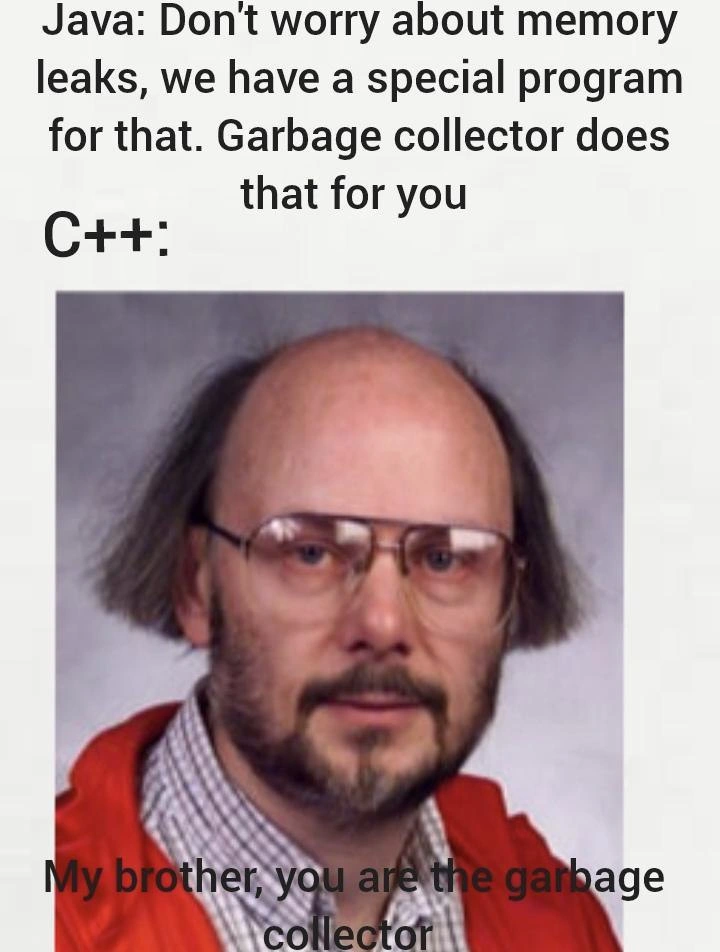
From a theoretical perspective, memory leaks violate the expectation of finite resource usage in well-behaved programs. Operating systems trust processes to either free their allocated memory or terminate, at which point the OS can reclaim it. But while running, the OS can’t magically “garbage collect” a misbehaving process’s allocations – it's the program’s job to release memory. In languages without automatic memory management (like C/C++), the programmer explicitly calls free() or delete to release heap memory. Forgetting to do so in one teeny tiny 3AM function means that memory remains marked as in-use. The OS’s memory manager, often using algorithms like a buddy allocator or slab allocator under the hood, will keep granting new blocks of memory on subsequent allocations, because the old ones are still flagged occupied (thanks to our leak). Over time, fragmentation can worsen the issue – little chunks of leaked memory scattered around prevent large blocks from being reused, so the allocator requests even more memory from the OS. The phrase “steals CPU cache lines and paging bandwidth” from the description hints at these deep side effects: as more memory is consumed, more cache lines are needed to map it, and once those caches overflow, the system starts churning through memory and I/O just to keep up, stealing cycles that should be doing actual work.
Even in languages with automatic memory management (Java, C#, Python, etc.), you’re not entirely safe. True, you don’t explicitly call free(), but you can still unintentionally create a leak by holding references to objects that are no longer needed. The garbage collector only reclaims memory for objects with no references. If your 3AM function stuffed data into a global list or never closed a resource, the GC will shrug and leave it be – a phenomenon one might dub garbage_collection_denial (the runtime “denies” there’s garbage to collect because, technically, you insist you’re still using it). So the leak lives on, long after the author has gone home, and the heap keeps growing. Fundamentally, the academic side of this humor is that computing resources are finite and subject to physical and mathematical constraints. If you keep allocating memory without releasing, you’re pushing a system to an unsustainable state – there’s no free lunch and no infinite RAM hack; even in cloud environments, eventually the bill comes due (literally, if you auto-scale). The absurdity of the meme is rooted in the inevitability of these constraints: no matter how much we pretend everything is fine, a memory leak obeys only the laws of physics and queueing theory – memory will fill, caches will overflow, performance will degrade, and something’s gotta give. It’s a sobering truth wrapped in a funny package: the cheerleader is doing an obvious dance, just as the leak triggers obvious system alarms at a low level. Ignoring either is futile because you can’t negotiate with the CPU’s cache hierarchy or the OS’s pager – they will mercilessly expose your 3AM mistake.
Description
A popular meme format using a photograph taken at a basketball game. In the foreground, a cheerleader in a blue and white uniform is seen from behind. In the background, sitting courtside, are two men in suits (Lorne Michaels and Jimmy Fallon) looking intently in the cheerleader's direction. Text labels have been added to the image. A white label over Lorne Michaels reads 'me'. A larger label over the cheerleader reads 'The massive memory leak from that function I wrote at 3:00 am'. The meme personifies a severe technical problem - a memory leak - as a distracting and unavoidable spectacle. The humor lies in the developer's captivated and concerned expression, perfectly illustrating how a critical bug, especially one created during a late-night coding session, can completely consume one's attention and become the only thing they can focus on, dwarfing all other priorities
Comments
7Comment deleted
A memory leak is just your application's way of saying it has commitment issues with the garbage collector
Nothing improves your basketball seats like realizing the real show is your orphaned object graph sprinting past the GC like it’s headed for a fast break
The memory leak is performing better than expected - it's been running for three weeks straight without a single garbage collection cycle
That 3AM function is like a zombie process - it refuses to die gracefully and just keeps consuming resources until someone finally kills it with prejudice. The real tragedy is that future-you will spend twice as long debugging it as past-you spent writing it, all while wondering what kind of memory allocation decisions seemed reasonable at that hour. Pro tip: if your commit message is just 'fix stuff' at 3AM, you're not writing code - you're creating archaeological artifacts for your Monday morning self to excavate
Not a leak - it's a self-replicating closure, feasting on heap like that unclosed Cursor session at dawn
Turns out the GC doesn’t collect objects you’re still pinning in a global map - it just collects my sleep when the OOM killer pages me at 4 a.m
Our self-healing strategy: ship the 3am helper that never frees, let Kubernetes OOMKill the pod, and call the restart a resilience win