Skip to content
DevMeme
889 of 7435
The Perilous JavaScript Library Drinking Game
Languages Post #1004, on Jan 27, 2020 in TG

The Perilous JavaScript Library Drinking Game

Why is this Languages meme funny?

Level 1: Candy for Every Word

Imagine you have a huge candy store that carries every flavor of candy you can dream of. There are common flavors like chocolate and strawberry, but also super weird ones like broccoli candy, pizza candy, or toothpaste-flavored candy. Now, a friend suggests a silly game: open a dictionary to a random word, and for whatever word you land on, you must eat a candy of that flavor. So you flip the pages, point to a word like "shoe" or "rainbow," and you have to find a shoe-flavored candy or a rainbow-flavored candy and eat it. The joke is that this candy store is so gigantic that almost every word you can think of has a matching candy. If you actually played this game, you'd end up eating way too much candy and feel really sick! In the meme, the candy flavors are like JavaScript libraries (little pieces of pre-made code named after all sorts of things). There are so many of them that for any random word you pick, there’s a “something.js” piece of code. The funny (and crazy) part is imagining someone taking a drink (like drinking a juice or soda) every time they find one – they’d drink so much they'd get sick. So the meme is joking that JavaScript has so many pre-made bits of code (one for every idea, just like candies for every flavor) that trying to consume them all is a recipe for disaster. It’s a silly way to say “there’s way too many of these!”

Level 2: There's a .js for That

At this level, let's break down what’s going on in simpler terms. The meme is talking about JavaScript and the huge number of libraries (reusable code packages) available for it. It jokingly suggests a "drinking game": you take a dictionary, pick a random word, then search online for "<word>.js". In programming, it's common for JavaScript libraries to have names that end in .js (since .js is the file extension for JavaScript files). The idea is that for almost any random word, you’ll find a JavaScript library with that name. If you do find one, you take a drink. The joke is that this will happen so often (because there are so many libraries) that you'll end up drinking far too much. In reality, it's a playful way to point out “Wow, there’s literally a JavaScript package for everything!”

To understand why that's funny, you need to know about npm (Node Package Manager) and the concept of dependencies in software. JavaScript is a programming language, and npm is basically a giant public library of JavaScript code that developers can use. A package (or library) is a chunk of code someone else wrote that you can include in your own project so you don't have to write it from scratch. For example, if you need to format dates or do complex math, there's probably a package out there that does it. Your project’s dependencies are all those packages that your project depends on to work. Managing those packages is called package management. In JavaScript, npm makes it super easy to install a dependency – you type npm install <package-name> and boom, that code is now in your project.

Now, over the years developers have created an enormous number of JavaScript packages and uploaded them to npm. We’re talking about hundreds of thousands of packages. Some are big, like frameworks (for example React.js or Angular.js), which help build entire applications. But many are very small, single-purpose packages. For instance, there have been packages literally just to check if a number is even or odd, or to add left-padding to a text string. These are things a programmer could write in a few lines themselves, but because npm makes sharing so easy, people have published packages for them. Sometimes developers prefer to reuse code that’s already tested or just save a few minutes, so they grab a package from npm instead of coding it manually. This has led to a culture of “there's a package for that” – meaning whenever you need something, you assume someone else has already made a library for it.

The meme is making fun of how excessive this has become. By saying "open a dictionary at random and search <word>.js", it humorously suggests that any word you can think of might be the name of a JavaScript library. Often library names can be common words or quirky terms. For example, if you searched for "pizza.js", there's a good chance some developer somewhere made a library with that name (maybe a game about pizzas or a tool that has nothing to do with actual pizza, who knows!). The point is, the JavaScript ecosystem has so many packages that it feels like every concept or word already exists as a library. That's what we call an overabundance of packages.

So when the meme says "If it’s a JavaScript library, take a drink", the joke is that you would be taking a lot of drinks because you'll almost always find a library for that word. It's using a drinking game as a metaphor. Of course, drinking in real life every time you find a JavaScript package would be a terrible idea – you'd get drunk very fast! The punchline is, "The winner is the last person to go to the hospital with alcohol poisoning." This is very dark humor! It sarcastically implies that everyone playing would end up extremely sick because there are so many <word>.js libraries to find. In other words, the JavaScript package landscape is so bloated that playing this game is basically self-destructive. The meme is not actually encouraging anyone to do this; it's exaggerating to make a point. In a way, it's saying: there are so many JavaScript libraries out there that it's absurd.

For a newer developer (or someone not familiar with JavaScript), here’s the takeaway: The JavaScript world has an enormous number of libraries (npm packages). This can be great (you can find code to do almost anything), but it can also be a bit crazy. Developers joke about “dependency hell”, which is what happens when you have too many dependencies or the wrong ones – things can conflict or break, and it becomes a nightmare to manage. This meme riffs on that idea by equating the overload of packages with a ludicrous drinking challenge. It’s a form of coding humor that also gently pokes at our own habits: instead of solving a simple problem ourselves, we often just install another library. The result is a giant pile of dependencies – and here, that pile is so huge it’s comically dangerous.

In summary, There's a .js for that is a lighthearted way to say that in the JavaScript community you can find an npm package for almost anything (serious or silly). The meme exaggerates the consequences of that fact for comedic effect. It’s basically a nerdy joke warning, “Hey, maybe we have too many packages out there!”

Level 3: Drinking from the Firehose

This meme describes a darkly comic JavaScript drinking game that no seasoned developer’s liver could survive. The rules: flip to a random dictionary word, search for that <word>.js on the internet, and if you find a JavaScript library by that name, you must take a drink. Given the sheer number of npm packages out there, you'd be hammered (or hospitalized) long before you run out of dictionary pages. It’s poking fun at the explosive growth of JavaScript’s package ecosystem – a tongue-in-cheek commentary on the overabundance of libraries for almost anything imaginable. In other words, this is highlighting dependency sprawl and JavaScript library overload at its finest (or worst). Experienced devs are chuckling and cringing because they know how absurdly true this feels.

Why is this funny to a senior developer? Because it's barely an exaggeration. In the JavaScript world, if you can name it, there's probably a <name>.js for it. We’ve got modules for everything from the serious to the completely trivial. Need to left-pad a string with spaces? Sure, there's a package for that (hello, left-pad). Want to check if a number is even? Of course there's an is-even library – which hilariously depends on an is-odd library. This meme takes that reality to an extreme: imagine literally picking any random word (like "banana", "unicorn", or "flapjack") and finding a library named banana.js, unicorn.js, flapjack.js on npm. Seasoned devs laugh because it's often true – the JavaScript package registry is so oversaturated that even obscure words tend to have a namesake library. The result is a never-ending game of "There's a package for that!", turned into a lethal drinking contest.

This situation didn’t arise out of nowhere – it's a product of how package management in Node.js works and the culture around it. The barrier to publishing a new module on npm is practically zero: run npm publish and your code (no matter how trivial) is out there for the world to npm install. JavaScript developers also embraced a philosophy of tiny, single-purpose modules. Instead of one comprehensive utility library, you often have dozens of little packages doing one small thing each. This has led to a dependency explosion: as of 2020, there are hundreds of thousands of packages on npm (literally any word + .js might already exist as a project). Every new web framework or tool pulls in a constellation of these micro-packages. Your project’s node_modules folder can swell with hundreds of transitive dependencies, many of them with playful or downright random names. Maintaining a modern JavaScript project sometimes feels like wrangling an entire dictionary of packages.

Seasoned developers find humor here because they've lived through the downside of this npm overabundance. The meme hints at “hospitalization” from the drinking game – an obvious hyperbole – but it resonates as a metaphor for the pain of dealing with so many dependencies. More libraries means more risk: one update can break dozens of downstream projects, one yanked package can bring builds to a halt. The infamous left-pad incident in 2016 is the classic example: a developer removed a tiny 11-line package called left-pad (used to pad text with spaces) from npm, and hundreds of thousands of applications and builds suddenly failed. It was as if someone pulled a Jenga block and collapsed half the tower. Many of us were on call scratching our heads at broken builds because, surprise, our projects indirectly depended on this trivial package. That night, the JavaScript community collectively learned how fragile our dependencies can be. The term "dependency hell" — normally referring to the frustration of managing complex interdependent software — got a new layer of meaning in the npm era. This meme’s dark joke (“the winner is the last person not in the hospital”) wryly echoes that feeling: that wrangling JavaScript packages can be hazardous, if not to your health, then at least to your sanity and project stability.

To drive home how ridiculous the situation can be, consider an example in code form. Why write a simple function yourself if there's an npm package, right? 😏

// Instead of writing a simple function...
function isEven(n) { return n % 2 === 0; }

// ...some devs will import a tiny package for it:
const isEven = require('is-even');
console.log(isEven(4)); // true

// Yes, there's really an 'is-even' package on npm 
// (which ironically depends on an 'is-odd' package!)

Experienced engineers see the humor in this because we’ve watched newcomers (and ourselves, at times) pull in absurdly small libraries rather than write five lines of code. It's a convenience trap that the JavaScript ecosystem fell into: why reinvent the wheel when wheel.js might already exist? The meme exaggerates this to comedic effect by suggesting literally opening a dictionary to find your next dependency. It's a send-up of the "there's a library for that" mindset. In reality, no one would (or should) actually play this drinking game – it's dark humor. But the core joke lands because the JS ecosystem’s glut of packages is a well-known double-edged sword. For all the amazing innovation and DeveloperHumor it provides, it also causes headaches: version conflicts, abandoned projects, security breaches in obscure dependencies, and paradoxical situations where a huge application might break due to one 𝘵𝘦𝘦𝘯𝘺-𝘵𝘪𝘯𝘺 package upstream.

In summary, at the senior-dev level this meme is a cynical toast to JavaScript’s wild package bazaar. It humorously warns that our habit of installing random_word.js for everything is essentially a form of technical debt binge-drinking. The last coder standing in the game (i.e. the one whose system hasn't crashed and whose liver hasn't given out) is the “winner,” implying that no one really wins when you go to such excess. It's a bitter laugh at the state of modern JavaScript development: fun, fast-moving, and absolutely overflowing with packages – to the point of being dangerous in excess. We laugh because it's true… and then maybe double-check that our own projects aren’t pulling in something ridiculous like toaster.js or spoon.js (which, let’s face it, probably exist). Cheers (with coffee, please) to an ecosystem where even Hello World might come with a few hundred node modules! 🥂

Description

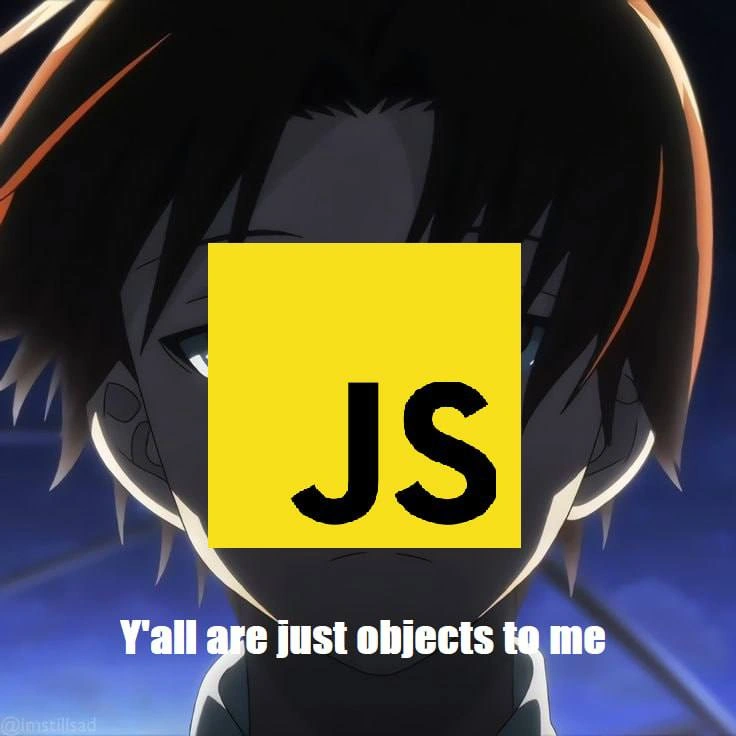
A screenshot of a social media post by Pete Heard. The post outlines a 'JavaScript "drinking game"'. The rules are simple: 'Take a dictionary, open it on a random page, and pick a random word. Now google for "<word>.js". If it's a JavaScript library, take a drink.' The punchline is a dark but humorous conclusion: 'The winner is the last person to go to the hospital with alcohol poisoning.' This meme is a satirical commentary on the explosive and seemingly endless proliferation of JavaScript libraries and frameworks. The humor lies in the high probability that almost any random English word followed by '.js' will correspond to an actual library, reflecting the oversaturation and 'framework fatigue' many developers feel within the JS ecosystem
Comments

7
Anonymous ★ Top Pick I played a version of this game with my `node_modules` directory. I'm now the majority shareholder in a local distillery
  1. Anonymous ★ Top Pick

    I played a version of this game with my `node_modules` directory. I'm now the majority shareholder in a local distillery

  2. Anonymous

    I npm-installed “selfcontrol.js” to quit the game - 45 MB later it had 1,300 transitive dependencies and two critical CVEs, so we took three more shots and called it a supply-chain attack on our livers

  3. Anonymous

    The real drinking game is trying to find a .js library that actually does what its name suggests without requiring 47 peer dependencies and a PhD in webpack configuration

  4. Anonymous

    This drinking game perfectly captures the JavaScript ecosystem's Cambrian explosion of libraries - where every conceivable English word has been claimed as a package name with '.js' appended. The real joke is that after 15+ years in the industry, you realize the 'winner' who survives isn't the one who avoided the hospital, but the architect who successfully convinced their team to stick with vanilla JS and avoid the dependency black hole entirely. The hospital reference is darkly apt: just as alcohol poisoning results from overconsumption, production incidents often stem from dependency trees 47 levels deep, each introducing its own CVEs and breaking changes

  5. Anonymous

    Senior variant: if google('<word>.js') returns nothing, you must publish a 7-line micro-lib, add 120 transitive deps, write an ADR declaring it 'the standard' - everyone else drinks

  6. Anonymous

    "word.js" drinking game? It’s supply-chain risk with bourbon - each shot is another micro-package with a bus factor of 1 and a postinstall surprise

  7. Anonymous

    In JS, the dictionary isn't a lexicon - it's npm's package name generator, ensuring your bundle ships the etymology of every edge case

Use J and K for navigation