Skip to content
DevMeme
1616 of 7435
The Unforeseen Side Effects of JavaScript
Languages Post #1805, on Jul 27, 2020 in TG

The Unforeseen Side Effects of JavaScript

Why is this Languages meme funny?

Level 1: Playing Dress-Up

Imagine two friends decide to try something new together, like playing a cool new game or joining a fun club. One friend says, “Hey, want to try this with me?” and the other says “Sure!” They expect it will just be a little activity for fun. But then, just a short time later, both friends have completely changed how they look and act, almost like they’ve been playing dress-up in totally different costumes. It’s a big, silly surprise!

In the picture, that’s what happens: the two developer friends start coding in JavaScript (which is just a type of computer work) thinking it’s no big deal. But a little while after, one friend is dressed all in black like a goth character, and the other friend is dressed in a bright pretty outfit like a princess or a fashion model. They look nothing like they did before. This is funny because nobody expects writing some computer code to make people suddenly act or dress like they’re in a costume party! It’s like if you and a buddy said “Let’s watch this new TV show,” and a week later you’re wearing superhero capes and your friend is wearing a wizard robe, just because the show was that exciting and life-changing.

The meme is joking that JavaScript, the thing they tried, has such a wild and crazy world around it that it magically changed them. In simple terms: they got so into it that they each picked up a whole new style. One became dark and edgy, the other became bright and creative. It’s an exaggeration (a big make-believe) that makes us laugh. The idea is that sometimes when you get really involved in a new hobby or trend, it can feel like you’ve changed a lot – and here the picture makes that feeling literal by showing the friends in totally different outfits. It’s just like kids playing pretend and getting really carried away with costumes. The humor comes from how over-the-top the change is compared to the small question “Hey bro, wanna do this?” In the end, it’s a playful way to say: trying new things (like coding in JavaScript) can lead you to discoveries that might even change who you are – or at least make for a funny story!

Level 2: JavaScript Makeover

So what exactly is going on in this meme, and why do these two coders look so different after a few weeks of JavaScript? Let’s break it down in simpler terms.

JavaScript is a programming language, one of the core languages of the web (along with HTML and CSS). It started as the thing that makes web pages interactive – like making buttons click or images move on your favorite sites. But over the years, JavaScript grew far beyond its humble beginnings. Now there’s a whole JavaScript ecosystem, which means not just the language itself, but a huge collection of tools, libraries, and communities around it. This includes front-end frameworks (like React, Angular, Vue), back-end platforms (like Node.js, which lets you run JS on servers), package managers like npm (Node Package Manager, which gives you access to countless ready-made pieces of code), and build tools like Webpack or Babel (which help manage and transform your code). It’s a lot! And it’s always changing – new versions and libraries pop up frequently. People joke that in the JavaScript world, something new is always trending, almost like fashion trends in clothing. This rapid change can be exciting, but also a bit overwhelming, especially for newcomers.

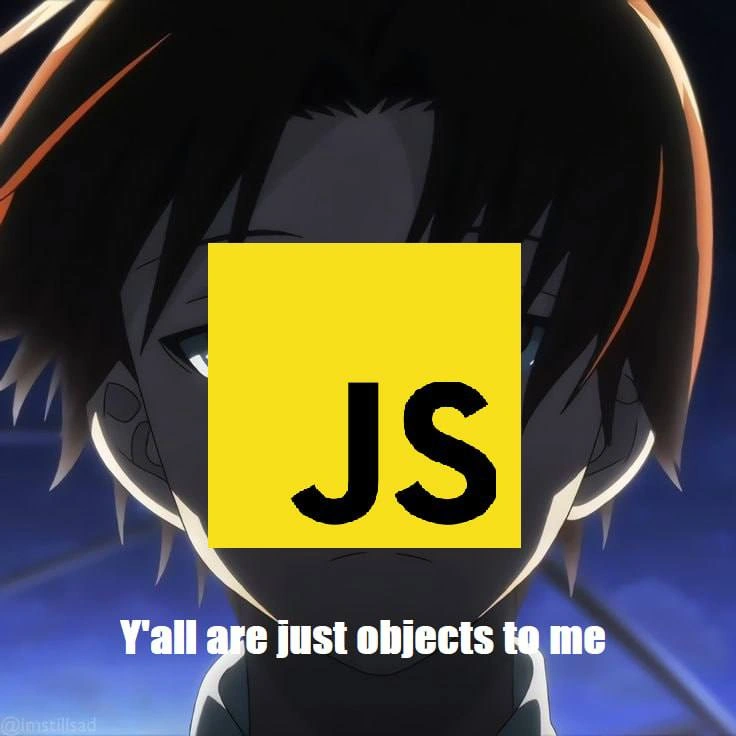
Now, imagine our two developer characters. In the beginning (top panels), they look like pretty normal developers. The first guy in the beanie with a cigarette looks a bit like a tired, old-school programmer – let’s call him the “bro” who’s maybe been around the block (the meme draws him as a Wojak character representing a jaded coder). He asks his friend, the blonde bearded guy (who looks confident and optimistic), if he wants to code “some JavaScript™” – the little symbol is joking that JavaScript is a big, branded deal. The friend enthusiastically says “Yes!” likely thinking, “Sure, I’ll write a bit of web code, how hard or life-changing can that be?”

The twist comes “...a few weeks later.” In the bottom panels, the cartoon shows that those few weeks of coding JavaScript have completely transformed both of them, almost as if they went through a dramatic makeover or identity change:

  • The first guy (our beanie-wearing bro) now has shoulder-length black hair, dark eye makeup, a black choker necklace, and an all-black outfit. He looks like an emo or goth version of himself. In internet meme terms, he resembles the “Doomer Girl” or an emo Wojak – basically someone who’s embraced a darker, moodier style.
  • The second guy (the confident friend) has changed even more unexpectedly – his beard is gone, now he has long flowing blonde hair, a bit of light makeup, and he’s wearing a pretty blue patterned dress. He appears more traditionally feminine in style, like he’s expressing a softer or more creative side. He kind of looks like an “e-girl” or just a stylish, happy person.

So why would coding JavaScript do this to them? Of course, in reality it doesn’t literally change your hair or clothes! This is a silly exaggeration. The meme is using this visual gag to say: learning and working with JavaScript can change a developer in big ways. The “change” is mostly about their developer identity and habits, but it’s made literal in the comic for humor.

Here are some reasons behind the joke, explained for a newer developer or someone not deep in the scene:

  • Fast-moving tech means new styles: The JavaScript world evolves so quickly that developers often have to adopt new techniques and tools just to keep up. For a junior dev, this might mean today you’re learning basic JavaScript, and a month later you’re expected to know a front-end framework like React, how to use a bundler like Webpack, and maybe even a new language that compiles to JavaScript (like TypeScript or JSX for React). Each of those things can change how you code and even how you think about coding. It’s almost like trying on new outfits or personas. One framework might encourage a very structured, strict way of coding (think of this like wearing a formal suit), while another might be very loose and creative (like wearing casual or artsy clothes). After experimenting with several, a developer’s “style” might mix and match, just like clothes.
  • The many faces of a JavaScript developer: JavaScript is used for both frontend and backend development nowadays. Frontend means the part of applications that runs in the browser – building what users see and interact with (buttons, layouts, visuals). Backend means the part that runs on the server – handling data, logic, databases, etc., usually behind the scenes. A few weeks working with JavaScript might see a developer doing a bit of both, which can feel like playing very different roles. On the frontend side, you might delve into design, user experience, and making things look good (that could correspond to the second dev’s more colorful, polished new look). On the backend side, you might deal with server logic, databases, and debugging runtime errors at odd hours (sometimes a gritty, tough experience – represented by the first dev’s grungey emo appearance). It’s as if each part of JS development has its own subculture and vibe!
  • JavaScript culture & community: The meme also nods to the idea of “JavaScript culture”. There’s a running joke in the developer world that JavaScript developers are always chasing the newest thing – today it’s all about a library like React, tomorrow everyone’s talking about something like Svelte or a new testing framework. This can lead to something called “JavaScript fatigue”, where you feel tired trying to learn one thing after another. A new developer might start out thinking “I’ll just use JavaScript to make a cool webpage,” but then they keep hearing they should use this framework, then that build tool, then this state management library… pretty soon they’ve changed their code so many times, and possibly picked up new habits (like using lots of npm packages or adjusting to a particular coding style guide). It’s a lot like someone updating their fashion after every new trend – first you buy sneakers because they’re in, next month it’s boots, then suddenly you’re into goth punk attire. With JavaScript, one week the advice is “use callbacks,” the next it’s “callbacks are out, use Promises,” then “actually, use async/await,” and you keep adapting. It’s no surprise the developers might feel like almost different people after a crash course in all that.
  • The humor and irony: Finally, let’s appreciate the pure humor. Two guys agree to do a seemingly straightforward thing (“code some JavaScript”), and the joke is that it was anything but straightforward – it changed everything about them! The dramatic “before and after” is like those over-the-top makeover TV shows. It’s funny in an almost absurd way: obviously real coding won’t put you in a dress or eyeliner, but it might change your favorite text editor, your sleep schedule, or how you label yourself as a programmer (“I’m a frontend guy now” or “I became a full-stack engineer”). The meme just personifies those internal changes as external, visible ones for comedic effect. It’s also riffing on a bit of stereotype: JavaScript devs, especially in web startups, often do have distinct personal styles (tech conferences are full of folks in quirky t-shirts, colorful hair, or distinct geek fashion). It’s a diverse and vibrant community, so the idea of JavaScript turning people into more expressive versions of themselves isn’t entirely off-base, just exaggerated here.

To sum up, in this meme JavaScript is portrayed almost like a magic potion that instantly gives our two friends a huge makeover. The “few weeks later” text is key – it implies that it really didn’t take long for the changes to happen. The comic is joking that the web development journey (especially in JavaScript, with its rapid changes and expansive ecosystem) is so wild and transformative that even a short stint leaves these developers practically unrecognizable. It’s as if they joined a subculture or a fandom where everyone ends up dressing the part. For a junior dev or someone new to coding, the meme might be saying: “Buckle up! When you say yes to JavaScript, you’re in for a wild ride – you might come out of it with a completely new style (or at least a new way of thinking about code).” And even if you don’t literally start wearing black nail polish or flowery dresses, you’ll definitely gain some new developer “fashion accessories” – maybe a GitHub sticker on your laptop, VS Code themes, a preference for dark mode, or a collection of strange JavaScript inside jokes you suddenly understand. It’s all part of the transformation that many web developers go through, and that’s what makes the meme both funny and resonant.

Level 3: Framework Fashion Week

At first glance, this meme uses the well-known Wojak comic format to lampoon the transformative journey of coding in JavaScript. In the top panels, a weary, hooded Doomer-looking dev asks, “hey bro wanna code some JavaScript™”, and his confident bearded friend (the classic Yes Chad meme face) agrees with a simple “Yes.” By the bottom panels (just “…a few weeks later”), both characters have radically changed their look: the once-downtrodden smoker emerges as a full-blown goth/emo coder (dark hair, eyeliner, black choker), and the bearded Chad has morphed into a bright-eyed blonde sporting a stylish blue dress. This absurd visual punchline speaks to how diving headfirst into the fast-moving JavaScript ecosystem can fundamentally alter a developer’s personal style and perspective – as if each new framework or tool comes with its own dress code.

On a deeper level, the meme is poking fun at how JavaScript’s ever-evolving landscape can induce a kind of identity crisis (or at least a framework-induced makeover) in developers. Seasoned devs will chuckle knowingly here: we’ve all seen colleagues (or ourselves!) go from relatively orthodox programmers to opinionated JavaScript wizards proudly wielding the newest libraries, build tools, and design philosophies. The transformation can be dramatic. One week you’re a back-end engineer dabbling in a little front-end scripting; a few weeks later you’ve embraced the latest JavaScript framework du jour, reconfigured your entire tooling setup, and perhaps even started using dark theme everything to match your newfound edgy expertise. In meme terms, the beanie-wearing “bro” has gone full Doomer (cigarette replaced by existential angst over node_modules size), and the assured Chad has unexpectedly tapped into his inner creative, donning an artsy new style (maybe he discovered the joys of CSS and design systems along the way!).

Why is this so relatable? Because JavaScript is notorious for its rapid churn of technologies and trends. The language itself is dynamic and flexible, but its ecosystem moves at breakneck speed. A developer can start a project expecting to write “just some JavaScript,” only to find themselves pulled into a vortex of front-end frameworks, transpilers, and package managers. Each new tool or framework often comes with its own community ethos and aesthetics:

  • One minute you’re using plain old ES5 syntax; a few weeks later, you’re writing purely in => arrow functions, embracing functional reactive programming, and arguing the merits of immutability. Your coding style (and perhaps your vibe) has shifted.
  • Maybe you began with a simple <script> tag, then discovered Node.js for server-side JavaScript. Next thing you know, you’re up at 3 AM wrestling with Webpack configs, wearing all black like you’ve joined the dark side to debug a production issue. (Callback hell and tricky asynchronous bugs can definitely give one a goth outlook 😅.)
  • Meanwhile, your friend might have plunged into front-end UI frameworks like React or Vue. Fast-forward a few weeks and he’s passionately discussing font pairing and CSS preprocessors, looking ready for a front-row seat at a fashion show (hence the flamboyant new outfit). He refactored his personality along with his code, with a fresh coat of stylistic flair – quite literally a CSS-inspired makeover.

The joke lands especially well with experienced devs because it exaggerates a real phenomenon: JavaScript fatigue. This term refers to the exhaustion developers feel trying to keep up with the incessant stream of new libraries, frameworks, and best practices in the JS world. What starts as excitement (“Sure, I’ll try this new JavaScript thing!”) often leads to being neck-deep in tutorials for TypeScript, state management patterns, testing frameworks, and whatever flavor-of-the-month tool just dropped on Hacker News. Each adoption can subtly shift how a developer thinks and behaves. It’s almost like changing outfits to fit in with the “in-crowd” of a framework:

  • Adopting Angular in 2015 might have turned you into a full enterprise-style architect (the bearded Chad maybe), but switching to React and hooks in 2019 could morph you into a functional programming enthusiast wearing trendy startup swag.
  • Some devs go all-in on static typing with TypeScript, becoming more meticulous and structured (trading the chaotic hoodie for a crisp new look).
  • Others dive into the Node.js backend and the world of Microservices, developing a darker sense of humor (and perhaps a darker wardrobe to match the endless night of debugging 😈).

Let’s not forget the visual metaphor of “two devs emerge with entirely new aesthetics.” It brilliantly captures how JavaScript’s culture encourages constant reinvention. For instance, the goth look on the left could symbolize the edgy, jaded veteran persona one might adopt after wrangling with JavaScript’s quirks (like dealing with weird undefined behavior or the infamous == vs === dilemma). The right-hand dev’s flowery new attire embodies the opposite: a carefree, expressive spirit that might come from crafting whimsical front-end features or embracing the creative chaos of CSS. In real developer life, these two extremes can even coexist in one person – JavaScript lets you play both the tortured artist and the creative designer. One day you’re in the depths of a webpack configuration in dark mode, the next you’re tweaking a beautiful UI component library in light mode. No wonder a short project can leave you feeling like you’ve lived multiple lives (and dressed for each one)!

It’s also worth noting the after “JavaScript” in the first panel — a tongue-in-cheek detail. It’s as if “JavaScript™” is a brand or a drug; the meme implies this simple offer comes with fine print: use at your own risk of transformation! In tech culture, adding “™” jokes about how buzzwords or technologies are treated like branded lifestyle products. Here, “some JavaScript™” hints that the language isn’t just code – it’s a whole way of life that you unwittingly sign up for. The ellipsis “...a few weeks later” is the classic storytelling device in memes that signals a comically accelerated outcome. And indeed, any senior developer can attest that it only takes a few weeks in JavaScript-land to feel like everything has changed – your project, your tools, your coding habits, maybe even your sleep schedule and wardrobe choices.

In summary, this level of the joke resonates with experienced coders because it exaggerates a truth: working with JavaScript can be an intense rollercoaster that leaves you changed. From the meme’s sly use of Wojak characters (Doomer to Doomer Girl, Chad to E-Girl transformation) to the real industry trend of devs rapidly cycling through toolchains, it’s shining a light on the shared absurdity we’ve all seen. JavaScript, for better or worse, has a way of making even the most confident programmers reinvent themselves. The framework fashion show is in town, and if you say “Yes” to that invite, don’t be surprised when you barely recognize yourself by the end of the sprint.

Description

A two-panel, four-character Wojak comic meme illustrating a surprising transformation. In the top panel, a 'Doomer Boy' character, wearing a black beanie and smoking, asks a blonde, bearded 'Chad' character, 'hey bro wanna code some JavaScript™'. The Chad simply replies, 'Yes'. Below this, a caption reads, '...a few weeks later.'. The bottom panel shows the result of their JavaScript coding session: both characters have transformed into female Wojak characters, specifically an 'E-girl' (dark hair, choker) and a 'Trad Girl' (blonde hair, floral dress). The meme is a surreal and humorous take on programming language stereotypes, absurdly suggesting that coding in JavaScript can lead to a complete change in one's appearance and identity. For senior developers, the joke lands as a satirical commentary on how deeply a developer's identity can be tied to their chosen tech stack, and the sometimes arbitrary cultural stereotypes associated with different programming languages, especially the perceived differences between frontend (JavaScript) and other domains
Comments

7
Anonymous ★ Top Pick They say JavaScript is weakly typed, but I didn't realize that applied to the developers themselves
  1. Anonymous ★ Top Pick

    They say JavaScript is weakly typed, but I didn't realize that applied to the developers themselves

  2. Anonymous

    JavaScript: the only runtime where your personal identity becomes a transitive dependency - and gets recompiled every time someone runs “npm audit fix.”

  3. Anonymous

    The real JavaScript fatigue isn't from learning new frameworks - it's from explaining to stakeholders why the 'modern' stack you chose six months ago is now considered legacy tech and needs a complete rewrite

  4. Anonymous

    Ah yes, the classic JavaScript journey: Day 1 - 'How hard can it be?' Day 14 - You've installed 47 packages to center a div, your node_modules folder has achieved sentience, you're debugging why 'this' isn't 'this', and you're seriously considering whether COBOL developers had the right idea all along. The trademark symbol really captures it - JavaScript™: Now with 100% more build tools than actual code!

  5. Anonymous

    Accepted the JS invite; now it's a Vite monorepo with Tailwind waifus and Zustand state for their blushes - true prototype pollution

  6. Anonymous

    JavaScript: you say “sure, let’s code,” and three sprints later you’re mediating a custody battle between Webpack, Vite, Babel, TypeScript, and CSS‑in‑JS over who owns primary-700 in prod

  7. Anonymous

    You say “sure, some JavaScript,” and two weeks later you’re debating Vite vs Webpack, TC39 proposal statuses, and why package.json has 1,800 transitive deps - none of which fix the bug

Use J and K for navigation